Leather Furniture: The Hierarchy of Hides
Introduction
I once paid $600 for a leather sofa. Three years later, it looked like a shedding reptile. What I had bought wasn’t leather; it was vinyl glue mixed with leather dust. I learned the hard way that “Bonded Leather” is the hot dog of the upholstery world.
If you have ever sat on a sofa in a showroom and thought, this feels great, you are not wrong. The problem is that most of the pain shows up later, when the cushions stop bouncing back, the frame starts talking, the fabric pills or peels, and the seat turns into a shallow bowl that you keep falling into.
I am writing this because I got tired of guessing. I am not a designer and I do not sell furniture, I am just someone who has owned enough disappointing seating to learn what actually predicts whether a sofa will still feel good in five years.
You do not need to memorize construction terms to avoid getting ripped off. You need a few simple checks you can do in the store, a few questions that force straight answers, and a willingness to walk away when a salesperson tries to steer you back to vibes and color swatches.
The goal of this guide is not to find the one perfect sofa. It is to help you spot the failure points before you pay for them, so you can spend your money on things that hold up, like a solid frame, a support system that will not sag, cushions that can be maintained or replaced, and an upholstery material that matches how you actually live.
When you are shopping, assume the floor model is in its best moment. Ask what happens when the cushions lose a little loft, when someone flops down on the same spot every night, when sunlight hits the arm for a year, and when you have to clean something gross out of the fabric.
In the next sections I will walk you through how I evaluate a sofa in a showroom using my hands, my ears, and a couple of blunt questions. I will also tell you where marketing terms tend to hide the truth, starting with upholstery, because that is where my bonded leather mistake began.
The $600 Lie
There is no such thing as a $600 leather sofa.Here is the simple math that snapped me out of the fantasy. A single cowhide costs a few hundred dollars in the real world, and a full size sofa needs multiple hides once you account for matching color, usable sections, and the fact that you cannot magically stretch one skin around every curve without waste. By the time you do that, the raw skin alone can easily cost more than the entire price tag on that “leather” sofa.
So when you see a too good to be true price, I assume the upholstery is plastic pretending to be leather, or it is a leather byproduct glued to a fabric backing that will eventually peel like old tape. The store will still call it leather because the word is in there somewhere.
What you can do in the showroom is stop asking, “Is this leather?” and start asking, “Is this full grain or top grain leather on every surface I sit on, or is it a match?” If they say “leather match,” that usually means the parts you touch are leather and the sides or back are vinyl. That is not automatically evil, but the price should reflect it, and you should decide if you are okay with vinyl aging differently than leather.
Then ask the one question I wish I had asked: “What is the exact upholstery content, in writing?” I do not mean a vibe like “genuine leather” or “Italian leather feel,” I mean the tag language, or a spec sheet that says top grain, full grain, split leather, polyurethane, PVC, bonded leather, or “man made material.” If they cannot produce anything specific, I treat that as the answer.
I also look under the cushions and behind the sofa for the law tag and any sewn in care labels, because marketing names on the sign are often cleaner than the truth on the tag. If the tag mentions polyurethane, PVC, or “composition leather,” I assume I am buying a plastic surface that will eventually crack or peel, especially on the seat front edge and the arms where your skin oils and friction live.
If you want a fast physical check, use your fingertips and your nose. Real leather usually feels slightly varied from panel to panel and it does not have that uniform, cold, glassy slickness. Plastic often has a perfectly consistent grain stamp and a faint chemical smell, especially if you press your nose near a seam or the underside where it has not aired out.
If you are on a budget and you still want the look, I would rather you buy a great fabric sofa than a fake leather sofa. Fabric can stain, but it usually does not peel into confetti, and you can choose a tight weave or a performance fabric that fits your life instead of gambling on a thin coating that fails all at once.
The way I keep myself honest is this. If the price screams bargain and the salesperson keeps repeating the word leather without defining it, I assume I am being sold the idea of leather, not the material itself.
The Hierarchy of Hides
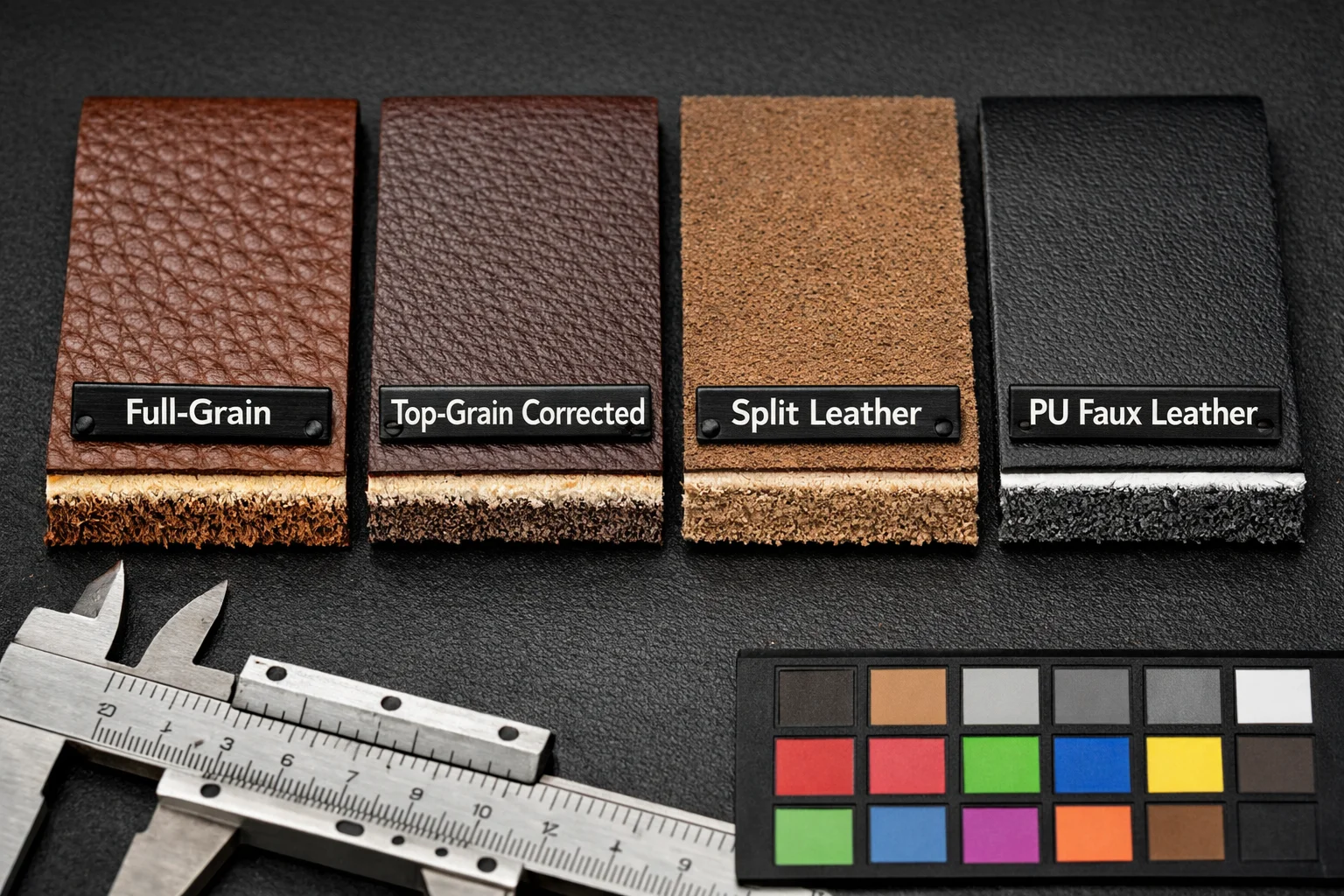
When a tag says “leather,” it is not telling you the grade, and the grade is what decides whether your sofa ages gracefully or falls apart all at once. In a showroom I treat leather like denim, the label matters less than how the material was made and what was done to its surface.
The cleanest way to think about it is this. Full grain is the real outer skin with the surface left intact, top grain is that same top layer but sanded and usually coated to look more uniform, and bonded leather is not a hide at all, it is leather leftovers glued together and dressed up to look like a sheet.
Full Grain Leather (The Holy Grail)
Full grain means you are looking at the outer layer of the hide with no sanding to erase the story. If you see small scars, healed scratches, bite marks, or little wrinkles that do not repeat in a perfect pattern, that is usually a good sign, not a defect.
In the store I run my hand across multiple panels and I look for slight variation in texture and sheen. Full grain rarely looks identical from cushion to arm to back, and it tends to feel warm and a little grabby instead of slippery.
The reason people love full grain is that it can take decades of use and still look intentional. It will pick up a patina, which is just a fancy way of saying the high touch areas darken and soften in a way that reads like character instead of damage, as long as it is real full grain and not a thin coating pretending to be.
If you want this, you need to be emotionally okay with it looking “lived in.” I would not buy full grain if you want every seat to look the same forever, because the whole point is that it changes.
Top Grain Leather (The Industry Standard)
Top grain is still real leather, but the surface has been sanded to remove imperfections and then it is commonly finished with a protective coating. In a showroom it usually looks smoother and more consistent than full grain, which is exactly why it sells so easily.
My quick check for top grain is to look for a uniform appearance combined with a slightly sealed feel. It can still feel nice, but it often has less of that natural drag under your fingertips, and the grain can look more “printed” across large areas.
This is the category I see most families end up happy with because it is easier to keep looking clean. The tradeoff is that it usually does not develop that rich patina in the same way, and once a heavy coating is damaged you can get cracking or light peeling at the worst wear spots, especially the front edge of the seat and the outside of the arms.
If you are considering top grain, I would ask a very specific question that salespeople cannot fluff. “Is this top grain, and is it top grain on all seating surfaces, including the seat fronts and inside arms, and what is the finish type?” If they cannot answer beyond “it is genuine leather,” I assume it is a lower tier or a mix.
Bonded Leather (The Garbage)
Bonded leather is where I got burned. It is made from leather scraps and leather dust ground up, mixed with binders, and applied to a backing, so what you are sitting on is basically a coated sheet that happens to contain some leather fibers.
In a showroom bonded leather can feel smooth and look convincing from a few feet away, but up close it often has a slightly plastic smell and a too perfect, too consistent texture. If you pinch it gently near a seam, it can feel more like a coated fabric than a skin, and it does not have that subtle stretch that real leather has.
The failure mode is what makes it a deal breaker for me. It does not slowly wear like leather, it tends to crack and peel, and once the surface starts letting go you cannot condition your way out of it, it just keeps shedding.
If you take one action from this section, make it this: if the tag or spec sheet says bonded leather, blended leather, reconstituted leather, composition leather, or anything that sounds like an engineered product, I walk away unless you are treating it like a short term purchase and the price truly reflects that.
The other action that saves you is to ask for the exact wording from the law tag or manufacturer spec, then read it yourself. I have heard “it is leather” said confidently about bonded, split leather coated to feel like plastic, and leather match setups where the parts that wear out fastest are not actually leather.
If you want leather that lasts, I would rather you buy a smaller sofa in a better leather grade than a big “leather” sofa that is really a peeling project. The upholstery is the part you touch every day, and it is usually the part you cannot economically replace when it fails.
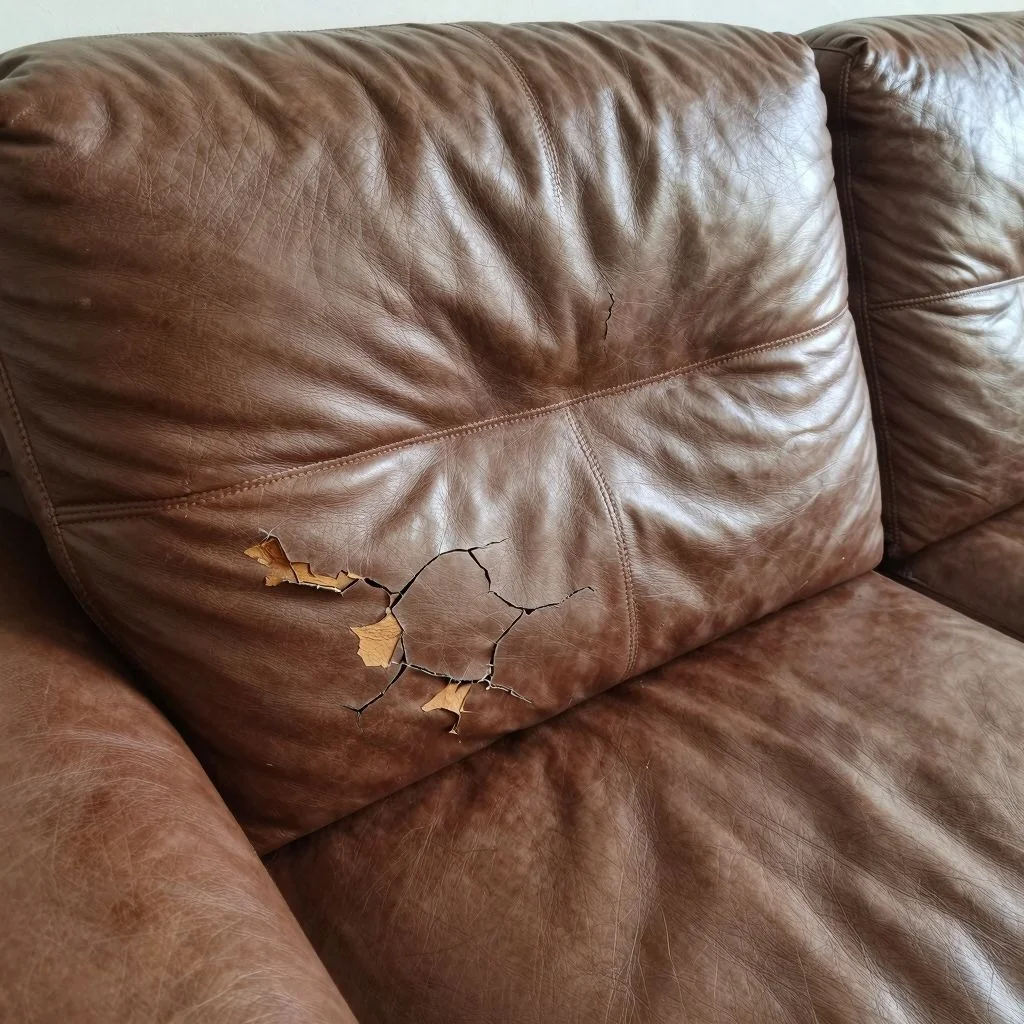
When bonded leather fails, it usually fails exactly like this photo. The top layer lets go, it flakes off in strips, and what is left behind is a fuzzy fabric backing that was never meant to be seen.
This is why I treat bonded leather as non repairable for normal people. You can’t condition it back to life because the thing that is failing is not dryness, it is the bond between layers, and once that starts separating it tends to keep going anywhere your body rubs and flexes the surface.
If you are standing in a showroom trying to decide whether something is real leather or an engineered sheet, I focus on the spots that will be punished first. I press and rub the front edge of the seat cushion, the inside arms where your forearm sits, and the outside arm cap where people grab to stand up, because bonded leather shows its weaknesses there early.
I also look hard at the seams and piping. If the material looks like it is wrapping a fabric core and the “leather” layer seems like a thin skin sitting on top of something else, I get suspicious, and I go hunting for the actual tag language instead of trusting the sign.
If the salesperson tells you peeling is “just from not conditioning it,” I would not accept that as an explanation. Real leather that is neglected tends to look dry, stiff, and cracked, but it does not usually delaminate into sheets that reveal a textile underneath, and that delamination is the tell that you are dealing with a coated product, not a hide.
The most actionable thing you can do is decide up front what kind of failure you can live with. Stains and scratches are annoying but they are part of the life of a material, peeling is a total loss because it turns your sofa into something you cannot unsee, and you end up covering it with throws to hide a problem you already paid for.
If you still like the look and feel of the floor model, I would ask you to slow down and get the upholstery content in writing before you buy. If it says bonded, reconstituted, composition, blended, or anything that reads like a manufactured “leather product,” I personally treat the pretty showroom surface as a temporary costume, not a long term upholstery.
Dyeing: Aniline vs. Pigmented
Once you get into real leather grades, the next thing that decides how your sofa lives in your house is the finish on top. I used to think “aniline” was just a fancy upsell word, but it is really a warning label about how easily the leather will show life.
Pure aniline, sometimes called naked aniline, is basically leather with no real protective topcoat. It is the softest, most natural feeling option, and it is also the one that will take a stain the fastest because there is nothing stopping liquids and oils from soaking in.
In a showroom, I check for aniline by doing something simple. I rub one spot with my clean, dry fingertip for ten seconds, then look for a darkening or a change in sheen that shows up immediately. If it reacts quickly, that is a clue you are looking at a more absorbent finish, and you need to be honest about whether you can live with that.
I also ask the salesperson to describe, in plain language, what happens if you spill coffee or drop a slice of pizza on it. If the answer is basically “you blot it and pray,” that is an aniline lifestyle, and it is best for adults who want patina and are not trying to keep a sofa looking uniform.
Pigmented leather is the opposite strategy. It is leather with an opaque color layer and a protective coating, so you are sitting on something that is more sealed, more consistent, and usually easier to clean without drama.
My quick pigmented check is the feel and the look. It tends to feel a little stiffer and a little more “finished,” and the color looks very even from panel to panel. If you have kids, pets, or you eat on the sofa, this is the type that usually saves your sanity because it buys you time to wipe a spill before it becomes permanent.
I do not treat pigmented leather as invincible though, I treat it as forgiving. If the coating gets scratched through, or it starts to crack on high flex areas like the front edge of the seat, you are no longer dealing with a simple “condition it” situation, you are dealing with finish damage that can look lighter, rougher, or flaky over time.
Semi aniline is the compromise, and it is the one I personally aim for when I want leather to feel like leather but still behave like a family material. It usually has more of that natural look than fully pigmented leather, but it still has a light protective layer that helps with everyday spills and skin oils.
If you want one practical way to keep yourself from being talked into the wrong finish, ask this exact question and wait for a real answer: “Is this pure aniline, semi aniline, or pigmented, and what is the recommended cleaning method for an ink mark and for a grease stain?” If they cannot tell you the finish type, or they wave it off with “just use leather conditioner,” I assume they do not actually know what is on the surface.
Before you buy, I also try to picture the first year, not the first day. If you have a sunny room, if you sit in the same spot every night, or if you have a dog that likes to launch onto the cushions, pure aniline can go from “buttery and luxurious” to “why is there a dark halo there” surprisingly fast, and that is not a defect, it is the material doing what it does.
If you love the aniline feel, I would ask to see a hidden swatch or an extra sample and do a tiny test with a single drop of water. If it darkens and stays dark for a while, you are signing up for absorbency, which can be beautiful if you want patina, and stressful if you want spotless.
If you want the easiest day to day ownership, pigmented or semi aniline usually makes more sense, and you can still get a nice hand feel if the leather itself is decent. What I try to avoid is buying a naked, absorbent leather because it felt amazing for thirty seconds under showroom lighting, then acting surprised when it behaves like a sponge at home.
The ‘Leather Match’ Scam
The "Leather Match" Scam
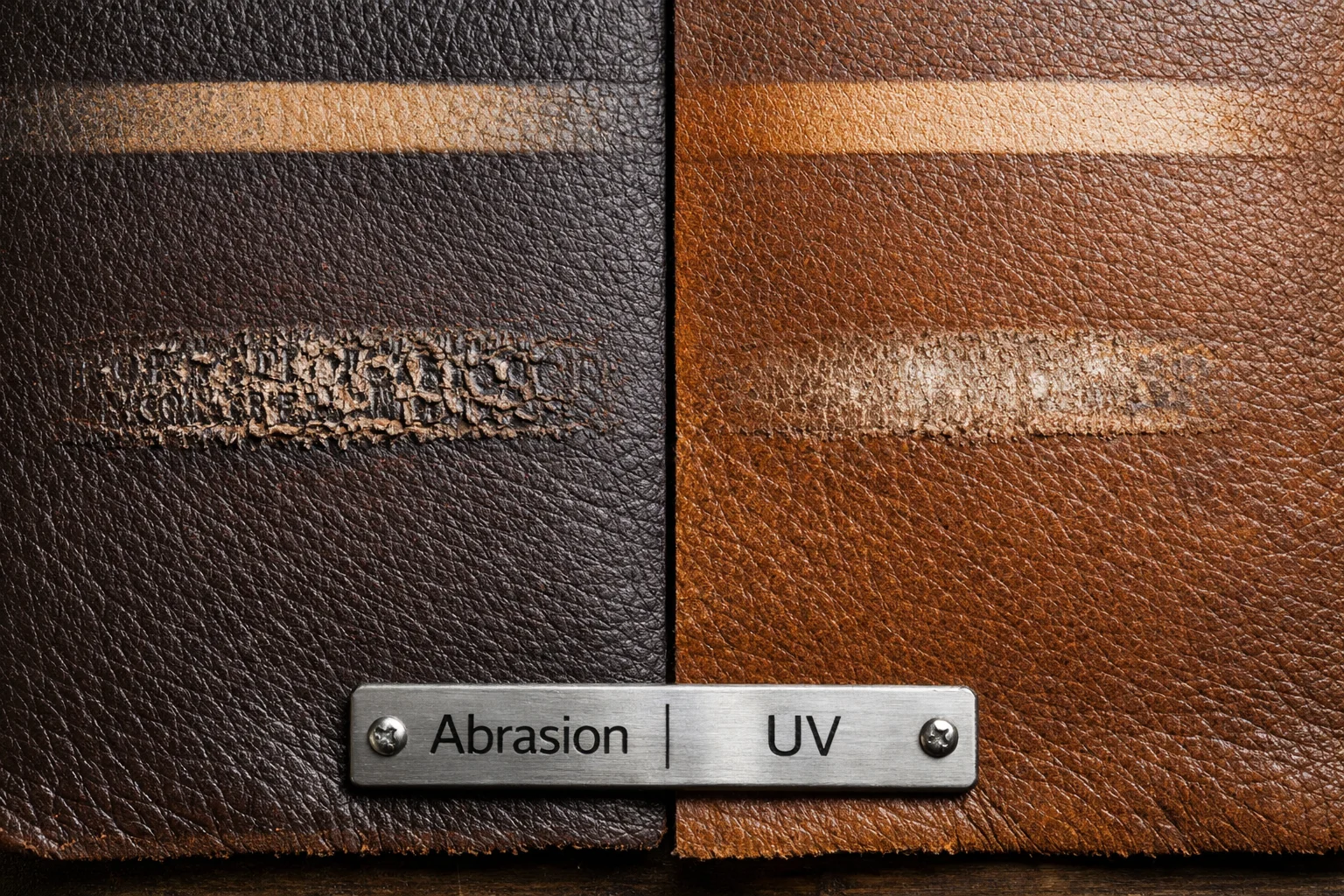
Watch out for the term "Leather Match" or "Leather Seating Area." What it usually means is that the parts you sit on are real leather, but the sides and back are vinyl or another man made material. The common failure is not that it falls apart instantly, it is that the vinyl and the leather age differently, so you end up with a sofa that looks like it came from two different sets after a few years, especially if sunlight hits one side more than the other.If you only remember one thing here, remember that “leather match” is not a leather grade, it is a cost cutting layout. I have found it most often on sofas that look like a deal for the size, because they save money by putting real leather only where you are most likely to touch it in a quick sit down.
The reason I call it a scam is not because leather match is always unacceptable, it is because it is often presented like you are buying a leather sofa, period. In reality you are buying a mixed material sofa, and mixed materials rarely fade, stretch, and shine the same way over time.
In the showroom, I do a simple walk around before I do anything else. I put my hand on the outside arm, then the back panel, then the inside back, and I pay attention to whether the feel changes from warm and slightly grippy to cold and slick.
Then I look at the grain, not from two feet away, but from close up on multiple panels. If the seat and inside arms look a little irregular, but the side and back look too perfect and repeated like a stamped pattern, that is a big clue I am touching vinyl on the wraparound panels.
I also press my nose near a seam on the side or back where the air does not circulate as much. If I get that sweet chemical “new shower curtain” smell on the side but not on the seat, I assume I am dealing with a match, even if the hang tag is trying hard to keep things vague.
The most useful question I ask is annoyingly specific, and I ask it while I am standing at the side of the sofa with my hand on the outside panel. “Is the outside back and outside arms real leather, or is it a polyurethane or PVC match, and can you show me where it says that on the spec sheet or law tag?”
If they respond with “leather seating area,” I do not let that phrase slide. I ask them to point to the boundary, meaning I want them to tell me exactly which panels are leather and which panels are not, because “seating area” can be narrower than you think and sometimes excludes the outside of the arms, which is one of the most abused parts of a sofa.
After that, I decide based on where the sofa will live in your home. If this sofa will float in the middle of a room where you see the back every day, or if it will sit in a bright room where one side gets sun, I treat leather match as a high risk choice because the mismatch will be visible fast.
If the sofa is going to be against a wall and you truly will not see the back, leather match can be a reasonable compromise if the price honestly reflects it. What I do not accept is paying near full leather pricing for a sofa that is only leather on the front facing touch points.
One more thing I watch for is warranty language that quietly tells you the truth. If the warranty separates “leather” from “vinyl” or “PU” in different sections, that is confirmation that you are buying a mixed upholstery sofa even if the sales sign just said “leather.”
If you are tempted anyway, I would rather you make that choice with your eyes open. I would have the salesperson write down, on the invoice or order sheet, “top grain leather on all seating surfaces, vinyl match on outside arms and outside back,” or whatever the exact breakdown is, so you are not arguing later about what you were told in the moment.
What I personally do when I am on the fence is imagine year three, not day one. If the sides are vinyl, you can get peeling, or you can get that dull, slightly chalky fade, while the leather seat gets shinier and darker where your body oils live, and those two aging patterns rarely look intentional together.
Technical Summary: The Purchase Rule
If you cannot afford top grain leather, I want you to stop hunting for “cheap leather” and buy fabric instead. A decent fabric sofa can breathe, feel comfortable across seasons, and realistically give you around a decade of normal use if the rest of the sofa is built well, and you are not fighting a surface that is designed to peel.Bonded leather is the trap I wish you would skip entirely. It tends to feel clammy, it can make you sweat because it behaves more like a coated sheet than a hide, and in my experience it ages in a brutal, short timeline that feels more like a two year countdown than a long term upholstery. It also costs more than it is worth, because you are paying for the word leather while getting a failure mode that fabric usually does not have.
If you want a quick showroom reality check, I do a simple scratch and rub test on a discreet spot, like the underside edge of a cushion or the back corner. I lightly scratch with my fingernail, then rub with my thumb. If the mark softens and blends back in with that little bit of thumb oil and warmth, I treat that as a good sign you are dealing with real leather, not a brittle coating that is about to hold the scratch forever.
I do not use that test as a license to buy blindly, but it helps me spot the obvious fakes fast. If the surface looks permanently scored, or it turns into a lighter streak that will not calm down when I rub it, I assume there is a heavy finish or a synthetic layer involved, and I go right back to the tag and the spec sheet before I let anyone talk me into “it is basically the same thing.”
Explore Technical Reference
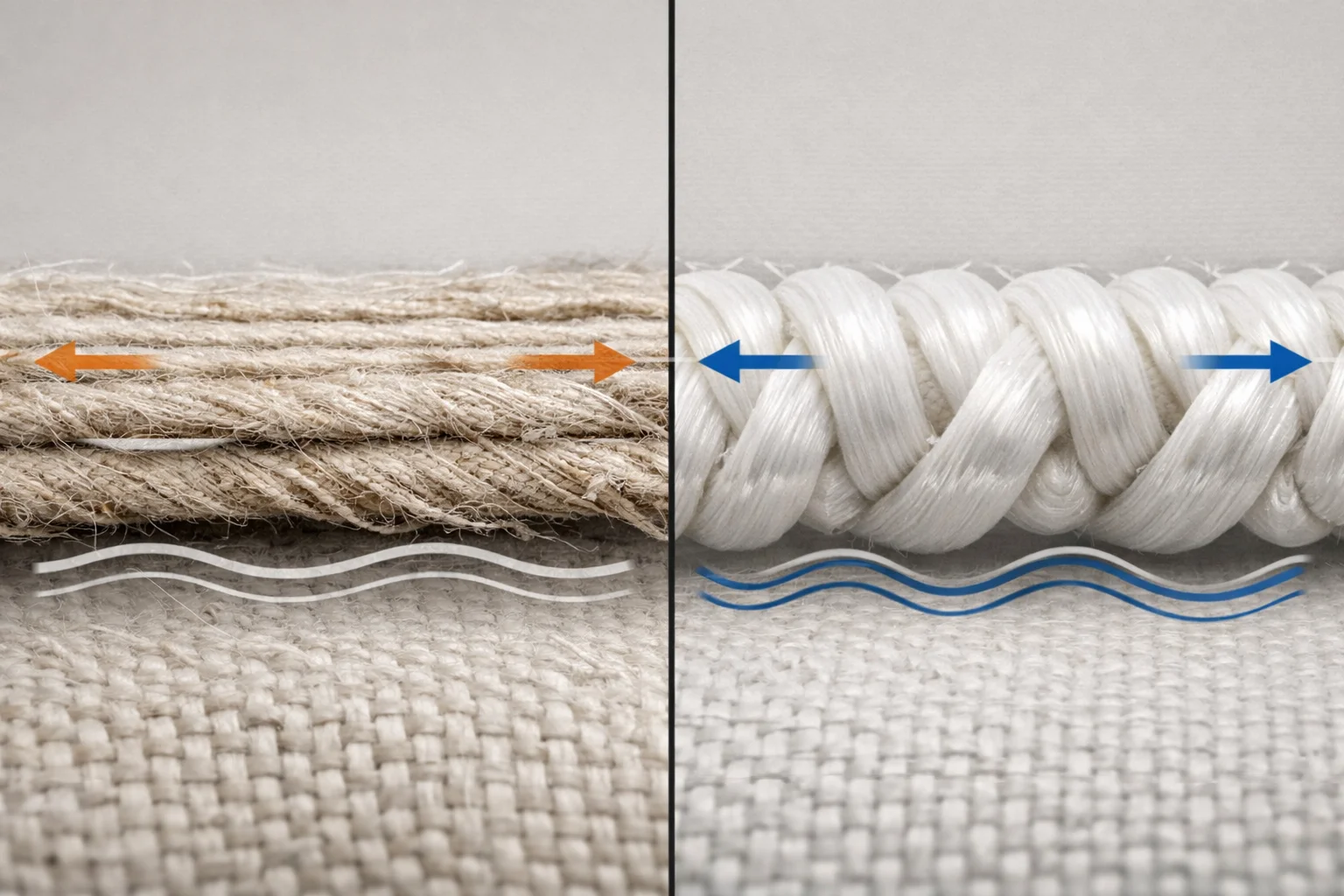
Fabric Stretch: Why Your Sofa Wrinkles
Why some fabrics hold their shape while others permanently puddle. The physics of natural fiber stretch versus synthetic memory and how to choose accordingly.
Analyze Details →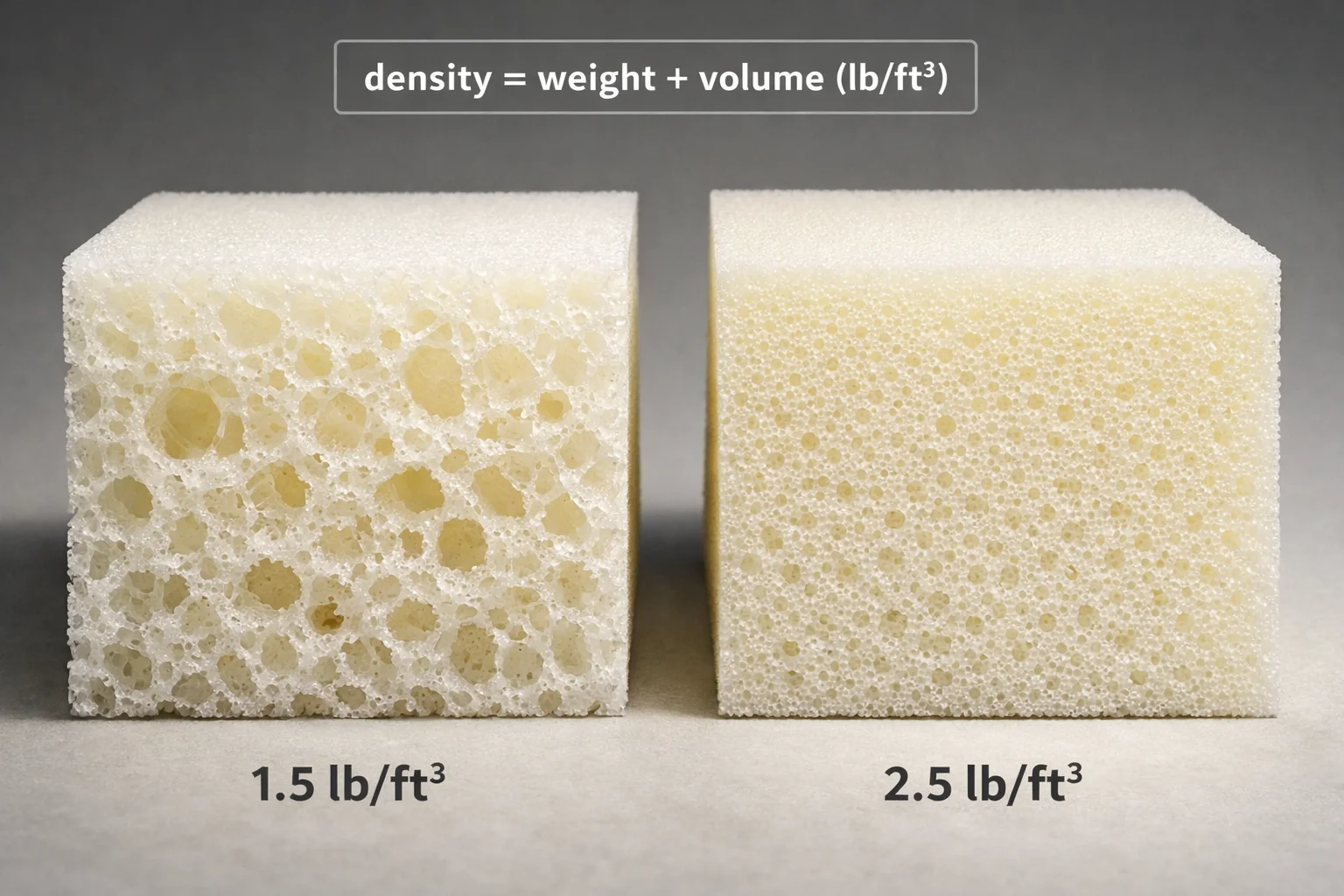
Foam Density vs. Firmness: Decoding the "4-Digit" Specs
A deep dive into the specific numbers. What 1.8 lb, 2.5 lb, and 3.0 lb foam actually feels like.
Analyze Details →