Frame Failure: Is It Fixable?
Introduction
I learned that day that sofas usually do not fail all at once. They give quiet warnings long before anything snaps, and most of us miss them because the showroom never teaches us what to feel for.
What shocked me was how little abuse it took. I was not jumping on it or moving it around. I was just sitting and leaning the way a normal person does, and the structure underneath could not handle that.
After that, I started paying attention every time I sat on a sofa in a store or at a friend’s house. I noticed the same patterns over and over. The ones that aged badly always felt fine at first, but something subtle was off if you knew how to check.
I am not a designer or a repair expert. I am just someone who got tired of paying for furniture that quietly gives up a few years in. What I can share is how I now test sofas with my hands and body before I buy, using nothing more than common sense and a little suspicion.
This guide is about spotting the problems that are already baked in before you bring a sofa home. If you can catch those early signs in a showroom, you can walk away before the damage becomes your problem.
The Economics of Total Loss
This is the part nobody tells you in a showroom. Once a main frame rail breaks, the sofa is effectively totaled for most normal owners, even though it might still look fine from the outside.
To fix that kind of damage properly, the entire sofa has to be stripped down. All the fabric comes off, the foam comes out, and the springs are removed just to expose the broken wood. That alone eats hours of skilled labor before anything is even repaired.
The wood repair itself is not a simple glue job. It usually involves reinforcing or replacing sections of the frame so it does not fail again in the same spot. Then everything has to be rebuilt in reverse, with the upholstery pulled back on and aligned so it does not look sloppy or stretched.
When you add that up, you are easily looking at around a thousand dollars in labor, and that is assuming nothing else is wrong. At that point, unless the sofa originally cost well over four thousand dollars, repairing it makes no financial sense. That is why a broken frame is basically game over.
What this means for you as a buyer is simple and uncomfortable. You are not shopping for something that can be reasonably fixed later. You are shopping for something that must not fail in the first place.
That is why I treat the frame as disposable but expensive. If it breaks, I am done with the sofa. Knowing that changes how picky I am before I ever hand over my money.
In a showroom, this means I never ignore small warning signs. A faint creak when I lean back, a twist when I sit on one corner, or a feeling that the sofa settles unevenly under my weight all matter. Those are not cosmetic issues. They are early hints of a structure that may not survive normal use.
I also keep the price honest in my head. If a sofa is priced like a midrange purchase, I do not give it luxury benefit of the doubt. I assume it needs to be solid from day one because I will not be repairing it later.
Once you understand that a frame failure turns a sofa into a financial loss, the goal becomes very clear. You are not buying comfort alone. You are buying time, and the only moment you can protect yourself is right there on the showroom floor.
The Three Stages of Death
When a sofa frame fails, it almost always follows the same slow path. I think of it as three stages, and once you learn them, you can feel where a showroom sofa already sits on that timeline.
The first stage is what I call the wiggle, and this is the only moment where a sofa is still innocent. You sit down and there is a tiny shift, almost like the floor moved. If you are not paying attention, you will miss it.
What is happening here is usually simple. The glue in one or more joints has cracked, but the wooden dowels or fasteners are still holding things together. Nothing has pulled apart yet, which is why the sofa still looks square and feels mostly fine.
If this were your sofa at home, this would be the golden window. You could flip it over, tighten any bolts you can reach, and add glue to seams if they are exposed. In a showroom, though, this stage is already a warning. I take it as proof that the joints are stressed under normal sitting, and I walk away because I know I will not be catching it early once it is in my living room.
The second stage is the lean, and this is where the damage starts becoming permanent. You feel the sofa settle unevenly, or you notice that sitting on one side feels different than the other. Sometimes you can even see it, with one arm sitting slightly lower than its twin.
At this point the frame is no longer holding its shape. The dowels or fasteners have started to pull out, and the wood is grinding against itself every time weight shifts. That grinding slowly turns tight round holes into loose ovals, which means the joint will never be tight again without taking everything apart.
If you feel this in a store, do not talk yourself out of it. This is not a break in issue. It is a geometry problem, and fixing it requires disassembly and re clamping that costs more than most people should ever spend on a repair. I have learned to treat any lean as a hard stop.
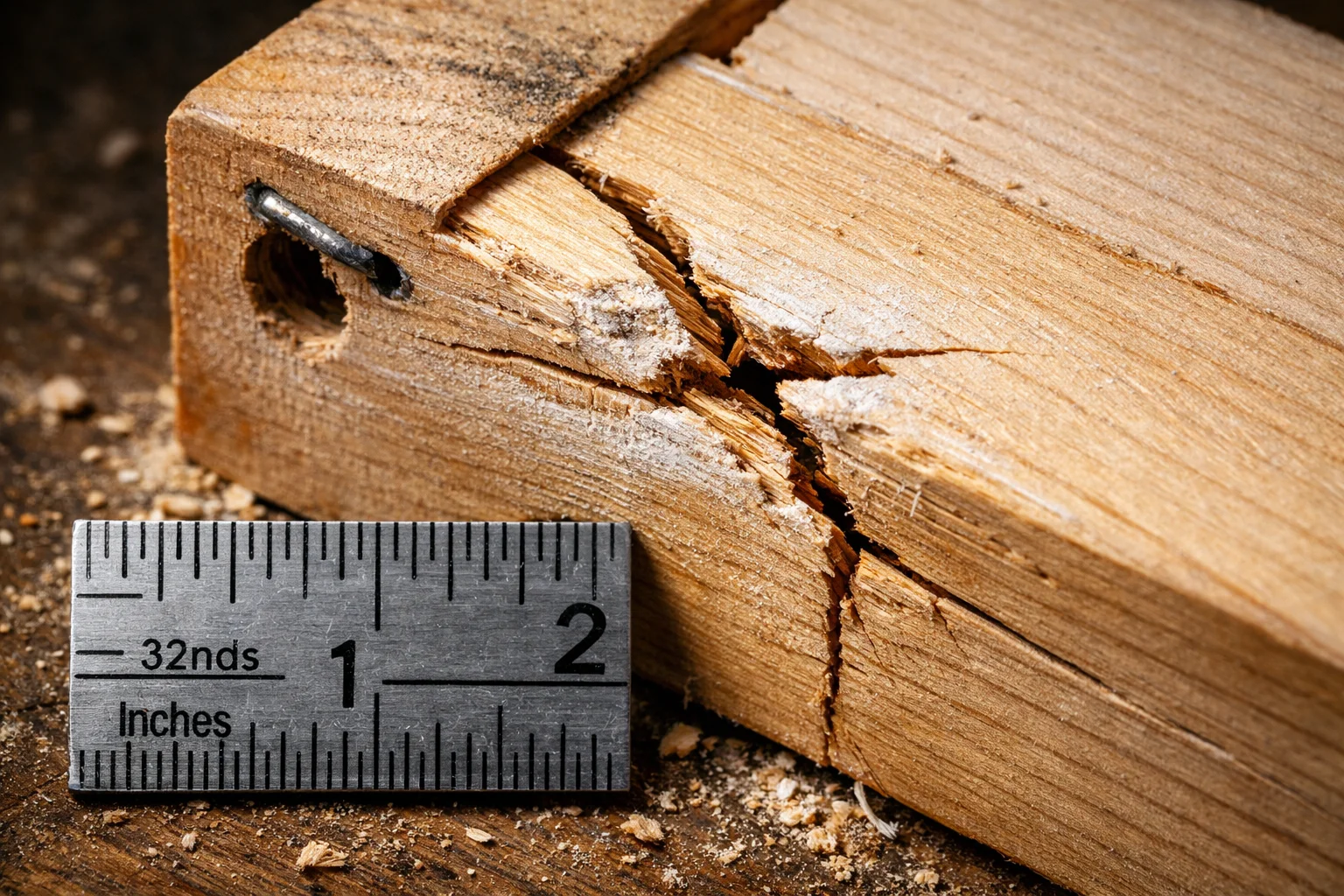
The final stage is the snap, and this one announces itself loudly. You hear a crack, feel a sudden drop, and the sofa becomes dramatically loose in one corner or along one side. This is the moment a frame rail actually breaks.
Once wood snaps under load, there is no real fix for a normal owner. Gluing a broken board does not restore its strength, and reinforcing it with a sister board adds bulk that often throws the whole frame out of alignment. Comfort suffers, appearance suffers, and the sofa never feels right again.
In a showroom you will rarely encounter a full snap, because those pieces usually get pulled from the floor. What you will encounter are the earlier stages that lead there. My rule is simple. If I can feel even the beginning of that story, I do not wait around to see how it ends.
Understanding these stages changed how I sit on sofas when I shop. I do not just check softness or back support. I shift my weight, I sit on the edge, and I pay attention to how quickly the frame settles and whether it settles evenly.
A good sofa feels boring in this test. It does not react to you in interesting ways. It just sits there, square and quiet, like it expects to be used for years without drama. That is the feeling I am looking for, because anything else is already on its way to the last stage.
Diagram showing the ‘Twist Test’ to check for frame rigidity
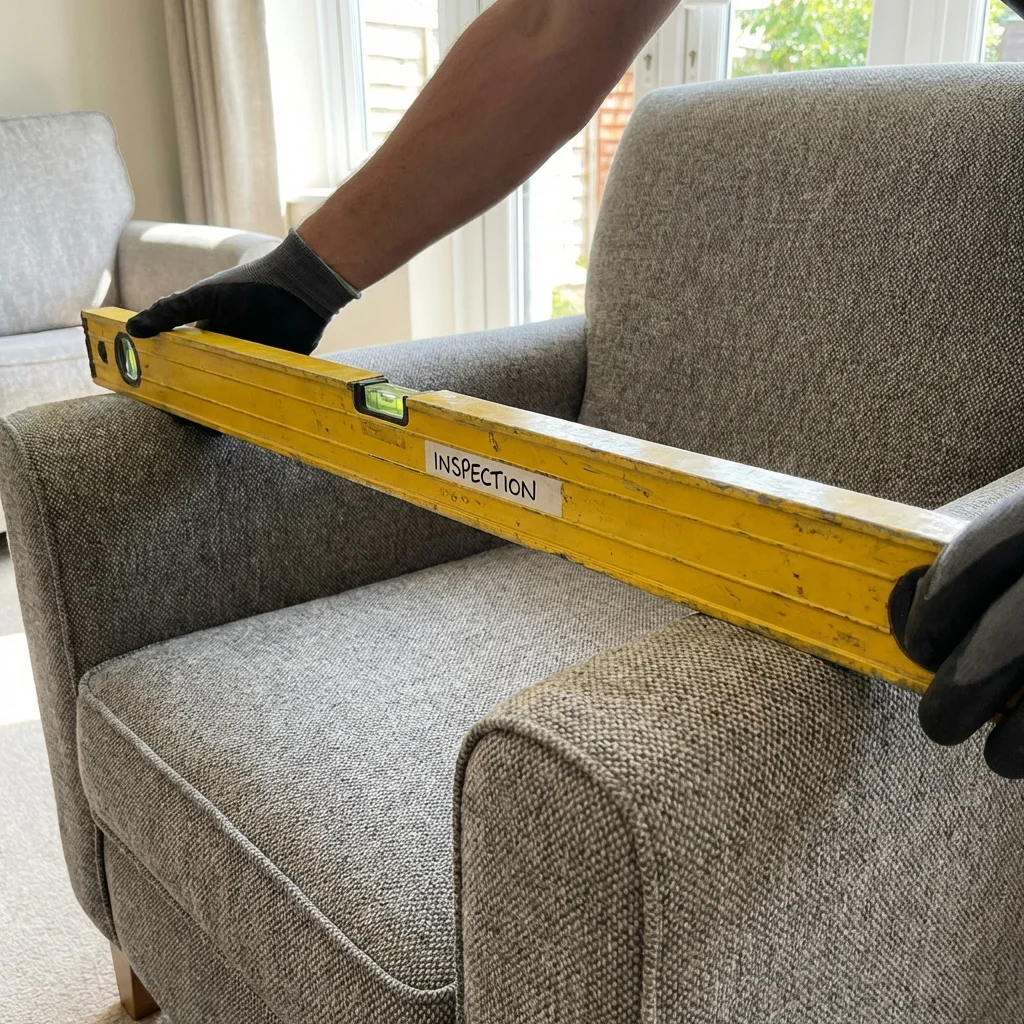
This is the single fastest test I do in a showroom, and it tells me more about the frame than any sales pitch ever could. I call it the twist test because you are checking whether the frame stays square under a small, controlled imbalance.
I do this at the front corner of the sofa, usually the left, because it is easy to reach without looking dramatic. I place one hand under the front left corner and lift it just an inch or two off the floor, no more than that.
What I am watching is the opposite front corner. On a solid frame, the front right corner should start to lift almost immediately, even if it barely leaves the floor. That tells me the frame is acting like one rigid box instead of a collection of loosely connected parts.
If the corner I am lifting rises but the opposite corner stays planted, that is a problem. It means the frame is twisting instead of moving as a unit, and that twist is stress going straight into the joints every time someone sits down on one side.
I want to be clear about something here. I am not testing strength by trying to lift the sofa high. I am testing geometry. A good frame does not need force to reveal itself. It responds correctly to very little input.
Sometimes you will feel a soft delay where the second corner lifts, but only after a moment. I treat that as a yellow light. It suggests the joints are holding for now, but they are already flexing more than I like under a tiny load.
If you hear a creak or feel a gritty movement during this test, I stop immediately. Sound means friction, and friction inside a wooden joint means wear that cannot be undone without taking the sofa apart.
I also pay attention to how the sofa comes back down. When I lower the lifted corner, a good frame settles quietly and evenly. A bad one often lands with a tiny clunk or bounce, like parts are catching up with each other instead of moving together.
I have done this test on very expensive sofas and on cheap ones, and price does not guarantee a pass. What matters is whether the frame was built to resist racking, which is the twisting force that slowly destroys joints over time.
If you are worried about looking strange in the store, I understand that feeling. What helped me was realizing that this movement is gentler than what happens every time someone plops down on one cushion. If a sofa cannot handle this quietly, it will not age well in a real home.
When a sofa fails the twist test, I do not negotiate or ask questions. I thank the salesperson and move on. There are too many sofas in the world to gamble on one that is already telling you it does not want to stay square.
When a sofa passes, nothing exciting happens. It lifts, it settles, and it feels boring. That boredom is exactly what you are paying for, because boring structure is what survives years of daily life without turning into a problem you cannot afford to fix.
When to Salvage vs. Dump
This is the decision I wish I had understood earlier, because it changes how forgiving you should be with problems. Not every wobble means a sofa is trash, but most frame failures are not worth saving once they cross a certain line.
I think about salvage only when three things line up at the same time. The frame has to be real kiln dried hardwood like maple or oak, not mystery wood. The sofa has to have been genuinely expensive when new, not just marked up, and the problem has to be small and localized.
A loose leg is the classic example of a salvageable issue. If a leg wobbles but the surrounding frame feels solid and square, that is often just a bolt that backed out or glue that cracked at a single joint. That kind of problem can usually be tightened or re glued before it spreads.
Minor glue failures fall into the same category. If you feel a faint wiggle but no lean, no twist, and no sound, that is the early stage where intervention can actually stop further damage. This only makes sense if the underlying wood is strong enough to hold fasteners again once tightened.
Price matters more than people want to admit. If a sofa originally cost well over three thousand dollars, there is enough value there to justify a few hundred dollars in repair if needed. That math collapses quickly as the original price drops.
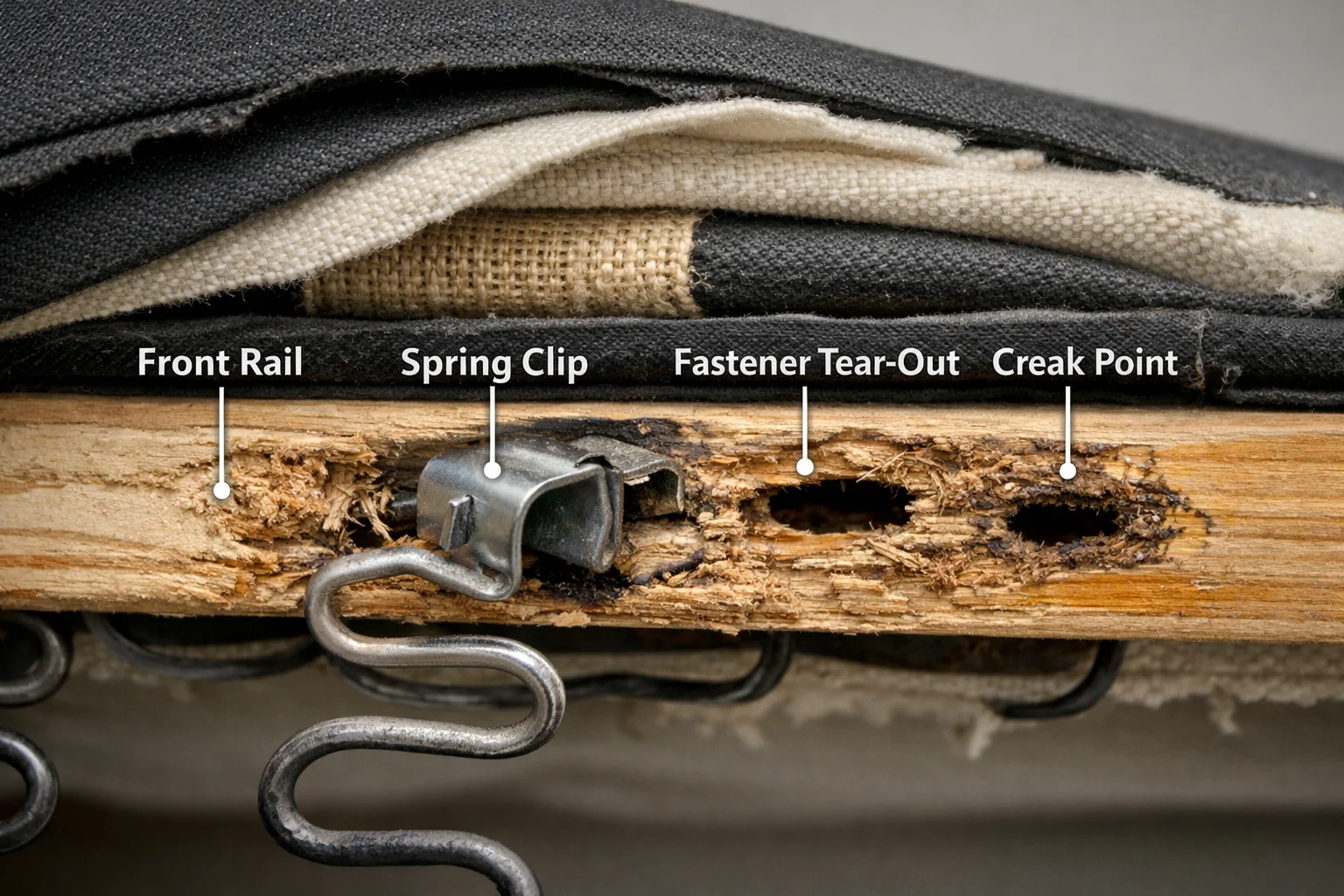
Now here is the uncomfortable part. Most sofas people ask about are not salvage candidates, even if the damage looks small. Once the frame is made from particle board, MDF, or cheap soft pine, the wood itself is the weak link.
When that kind of material cracks or snaps, it does not fail cleanly. It crumbles, splits, and loses its ability to hold screws or glue. You can patch it, but you cannot restore its original strength in a way that lasts.
A snapped rail is where I personally stop all discussion. Even if someone tells you it can be fixed, what they mean is that it can be made to hold together for a while. It will almost never return to feeling solid, and it will often fail again right next to the repair.
Cracked arms fall into the same dump category for me. The arm is a structural lever, not just padding, and once it cracks the forces get redistributed in ugly ways. That is how small cracks turn into full frame twists later.
Original price is the reality check I use to stay honest. If the sofa cost under fifteen hundred dollars new, it was never built with the expectation of major repair. Spending serious money to save it usually just delays the inevitable.
This matters even when you are buying new. If you are standing in a showroom and notice early warning signs on a mid priced sofa, do not tell yourself it is probably fixable later. The economics say it almost certainly will not be worth it.
What I take from all this is simple. I am either buying a sofa that must survive without needing repair, or I am knowingly buying something disposable. Once you see that choice clearly, it becomes much easier to walk away from the wrong piece.
If you remember nothing else from this section, remember this. Strong hardwood frames with small, early issues can be worth saving. Weak frames with visible damage are already telling you their story, and it usually ends with you paying twice.
Technical Summary: The Diagnosis Algorithm
When I am short on time in a showroom, this is the mental shortcut I use to protect myself. It is not about finding perfection. It is about quickly ruling out sofas that are already on a path to failure.
I start with the lift test, which you have already seen. I lift one front corner just an inch or two and watch the opposite corner. If the frame twists instead of moving as a unit, I treat that as joint failure in progress and I move on. That twist means the joints are already flexing under light, uneven load, which is exactly how people actually use a sofa at home.
Next I do the lean test, and this one is even more revealing because it mimics real behavior. I sit down near one arm and gently push that arm sideways with my body, the way someone does when they get comfortable. If the arm wobbles or the sofa feels like it shifts independently from the seat, I assume the glue in the joints has failed or is close to it. A solid frame resists that sideways pressure quietly and without drama.
Finally I pay attention to sound, because sound is the last warning before a real break. I shift my weight, lean back, and listen closely. If I hear a crunching or grinding noise instead of a soft creak, I stop immediately. That sound usually means wood fibers are fracturing or rubbing inside a damaged joint, and that kind of damage only gets worse with use.
I want to be very clear about this part. If you ever hear a true crunch from a sofa, whether in a store or at home, stop using it. A frame that has started to fracture can collapse unexpectedly, and that can cause real injury, not just discomfort.
What I like about this simple sequence is that it does not require strength, tools, or technical knowledge. You are just lifting, leaning, and listening, the same things a sofa experiences every day in a normal home. If it fails those checks under gentle input, it is not going to magically improve once you own it.
I do not argue with myself when a sofa fails one of these tests. I do not ask for a discount or assume it is a one off. I remind myself that I am buying time, not just cushions, and these tests are telling me how much time the frame is likely to give me.
When a sofa passes all three quietly, nothing exciting happens. It does not impress you. It does not react. It just sits there, square and boring. That is the outcome I trust, because boring structure is exactly what survives years of real life without turning into an expensive regret.
Explore Technical Reference
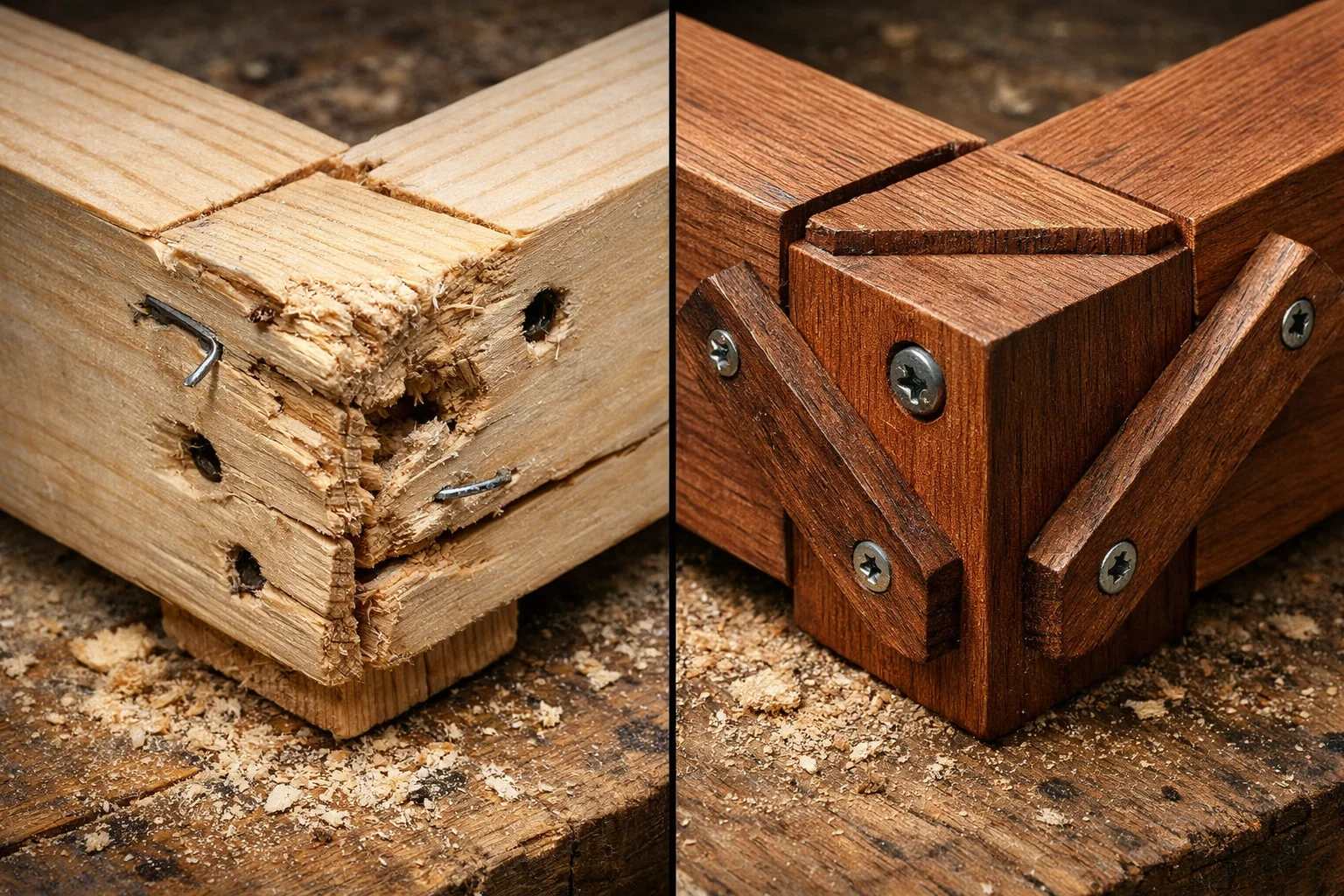
Solid Wood Frames: When "Natural" Means Weak
Why solid wood can warp, twist, and crack. Understanding dimensional instability and why joinery matters more than raw material selection.
Analyze Details →
Fabric Types: The Durability Hierarchy (Pet & Kid Proofing)
Understanding the durability hierarchy from microfiber to silk. Why velvet is tough and cotton is fragile despite common assumptions.
Analyze Details →