The Three Families of Foam: Poly, Memory, and Latex
Introduction
I learned the hard way that firmness is just a feeling in the showroom. It tells you almost nothing about how a sofa will feel after six months of nightly use. What fooled me was that a hard cushion can come from cheap foam that is simply overstuffed, and it can still collapse fast.
Once I stopped pressing cushions and started asking what was inside them, everything got clearer. Most seating failures I have lived with did not come from fabric wear or broken frames. They came from what was hidden under the upholstery and how those materials age.
I am not going to turn you into a chemist or a furniture engineer. What I can do is show you how to spot the common traps that sales floors are full of, and how to ask a few specific questions that actually matter.
When you sit on a sofa in a store, I want you to pay attention to how quickly it pushes back and how evenly it supports you. Then I want you to imagine that same cushion after thousands of sits, because that is where the real quality difference shows up.
This guide is about separating comfort from durability in a way you can actually use. By the end, you should be able to walk into a showroom, ignore the marketing language, and decide with confidence whether a sofa is built to last or just built to feel good for ten minutes.
The Vocabulary Cheatsheet
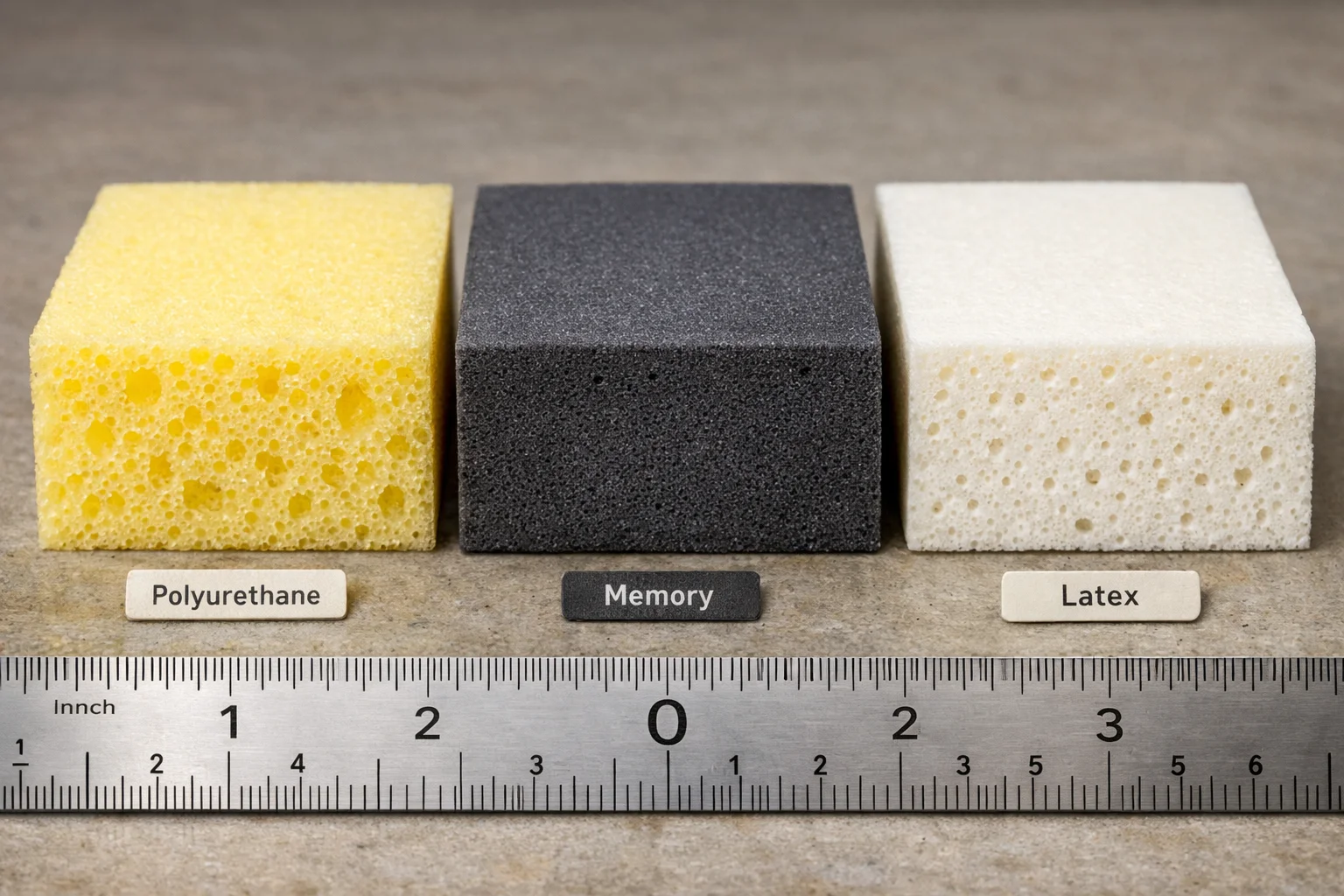
When a salesperson says the cushions are foam, they almost always mean polyurethane. I think of it as the yellow sponge because that is exactly what it looks like when you unzip a cushion. It feels lively in the store and it is cheap to make, which is why it shows up in almost every sofa. What you need to do is press down with your hand and see how fast it comes back, then ask how long it is expected to hold that bounce. If they cannot give a straight answer, assume it will soften fast.Memory foam is the slow moving stuff that feels like it melts under you. I have found it comfortable for short sits but frustrating for everyday seating because it does not push back. When you stand up, it stays dented for a moment, which is exactly what it does over years of use on a larger scale. If a sofa uses this in the seat, I always ask what else is layered with it, because memory foam alone tends to feel dead and uneven over time.
Latex foam is rubber, usually white or off white, and it snaps back instantly when you press it. This is the only foam I have sat on that feels almost the same years later as it did on day one. It is expensive, so if a sofa really uses it, the price will reflect that and the seller will usually say it proudly. If the price seems too low, I assume it is either a thin layer or not latex at all.
What matters to you is not memorizing these terms, but using them to guide a short conversation. I ask what the seat core is made of, whether it is one material or a stack, and which part is doing the actual support. If the answer is vague or wrapped in branding language, I take that as a warning sign and move on.
1. Polyurethane (The Workhorse)
Most sofas you sit on will be built around polyurethane foam, whether they say it clearly or not. I think of it as the default cushion material, not because it is great, but because it is cheap, flexible, and easy for manufacturers to tune for showroom comfort.
Here is the part that matters to you. Polyurethane can be either disposable or durable, and they feel almost identical when new. The difference only shows up after months of use, which is why so many people feel burned later.
The lower quality version is what I call standard poly. It often feels stiff and springy at first, almost like it is fighting your weight. That stiffness is not strength, it is chemical tension, and once it breaks in, it tends to break down fast.
If you buy a sofa with this foam, expect visible sagging and soft spots within a few years, sometimes sooner if you use it daily. I have owned cushions like this that looked fine but felt hollow and unsupportive long before the fabric wore out.
The better version is called high resiliency poly, often shortened to HR foam. This is the only polyurethane I trust for long term seating. It pushes back evenly, feels buoyant instead of stiff, and does not collapse into a dish shape when you sit in the same spot every night.
When you sit on HR foam, notice how it lifts you rather than just stopping you. When you stand up, it should rebound quickly and evenly, without leaving a hand shaped dent. That bounce is what keeps the cushion usable years later.
In the showroom, I always ask a very direct question. I ask whether the seat cushions use standard polyurethane or high resiliency polyurethane. If they hesitate, reframe it, and ask for the foam density.
You do not need to memorize exact numbers, but the response tells you everything. If they say something in the low one range, I walk away. If they say two point five or higher and say it confidently, I stay and keep asking questions.
If the salesperson cannot or will not answer, I assume it is standard poly and priced accordingly, even if the sofa itself is expensive. Price does not protect you from bad foam.
My rule is simple. Standard poly is rental quality, meant to look good for a short time. HR poly is owner quality, meant to survive daily life. If you remember nothing else in this section, remember that distinction and ask the question out loud before you buy.
2. Memory Foam (The Trap)
Memory foam has a great origin story, and salespeople love to mention it. I have nothing against it in general, but I have learned to be very cautious when it shows up in a living room sofa.
When you first sit on memory foam, it feels luxurious. Your body sinks in slowly, the pressure fades, and it feels like the cushion is hugging you. In a showroom, that sensation is incredibly persuasive.
The problem shows up when you stay put. After fifteen or twenty minutes, I start to feel trapped. The foam has molded to me so closely that there is no lift left, and I am sitting in a shallow hole instead of on a supportive seat.
I call this the quicksand effect. The foam responds to heat and pressure, so the longer you sit, the deeper you sink. When you try to shift your position or stand up, the cushion does not help you at all.
Pay attention to this when you test it. Sit down normally, then try to get up without pushing off the arms. If you feel like the sofa is stealing your momentum, that is memory foam doing exactly what it is designed to do.
Another issue I have noticed is heat. Memory foam holds warmth, which is fine for sleeping but frustrating for long evening sits. If you tend to run warm, this can turn a cozy sofa into something you avoid.
The long term issue is more subtle. Memory foam does not really rebound. When you stand up, it slowly creeps back into shape, and that slow recovery is what leads to permanent body impressions over time.
In a mattress, that is acceptable because your weight is spread out and you are lying flat. On a sofa, your weight is concentrated in the same spot, night after night. That is why memory foam seats often end up feeling uneven and tired even if the cover still looks good.
When I see memory foam mentioned on a sofa tag, I do not immediately walk away. What I do is ask where it is used and how thick it is. A thin layer on top of a supportive core can be fine. A thick block doing the actual support is a deal breaker for me.
If the salesperson says the seat is all memory foam, I move on. If they say it is just a comfort layer over a resilient foam or springs, I sit longer and test it more carefully.
Here is my simple rule. Memory foam should add comfort, not structure. If it is responsible for holding you up, you will pay for it later in effort, heat, and uneven wear.
I have owned sofas that felt incredible on day one and exhausting on year two because of this material. That is why I treat memory foam as a warning sign, not a selling point, when I am buying something meant for everyday sitting.
3. Natural Latex (The Tank)
Natural latex is the only cushion material I have encountered that truly feels built for decades instead of seasons. It comes from rubber tree sap, not petroleum, and it behaves nothing like the foams most sofas rely on.
The first thing you will notice when you sit on latex is speed. It pushes back instantly, not slowly and not stiffly, but with a kind of lively resistance that feels alert. When I stand up, the cushion snaps right back without hesitation, and that is exactly what it still does years later.
This is where latex earns its reputation. It does not take a permanent set the way polyurethane does, and it does not slowly creep and sag like memory foam. If a sofa uses a real latex core, the odds of you complaining about seat collapse a decade from now are very low.
The downside is impossible to ignore. Latex is heavy, dense, and expensive, often several times the cost of standard foam. When you lift a latex cushion, you feel it immediately, and when you look at the price tag, you feel it again.
In the showroom, I treat price as a clue. A full latex seat will never be cheap, no matter how simple the design is. If the sofa is priced like an average foam model but claims latex comfort, I assume it is a thin layer at most.
I also pay attention to how the salesperson talks about it. When a sofa truly uses natural latex, they usually say so clearly and without hesitation. Vague phrases like latex feel or latex inspired comfort usually mean something else is doing the real work.
If you can unzip the cushion, look inside. Natural latex is usually off white and solid, not crumbly or layered like shredded foam. Press it with your hand and notice how evenly it resists you across the surface.
Another thing I test is edge support. I sit near the front edge and see if it holds me up or collapses. Latex tends to perform extremely well here, which matters more than people realize when you get up and down every day.
There are a couple of tradeoffs you should be honest about. Latex feels different from the plush sink that many people expect, and some interpret that bounce as firmness. If you like to melt into a sofa, this may feel too energetic for you.
Weight is another practical concern. Latex cushions are not something you casually flip with one hand, and moving the sofa itself can be more work. That is not a deal breaker for me, but it is something you should know before it shows up at your door.
My advice is simple. If your budget allows it and you like a responsive seat that stays consistent over time, natural latex is the closest thing I have found to a buy it once cushion. I see it less as a luxury and more as a refusal to replace a sofa every five years.
When I encounter a latex sofa in a showroom, I slow down instead of rushing. I sit longer, shift positions, and pay attention to how supported I feel without sinking. If that sensation feels good to you now, it is very likely to feel good to you a long time from now.
If you are deciding where to spend your money, this is one of the few materials where I believe the higher price genuinely buys you more life, not just more marketing.
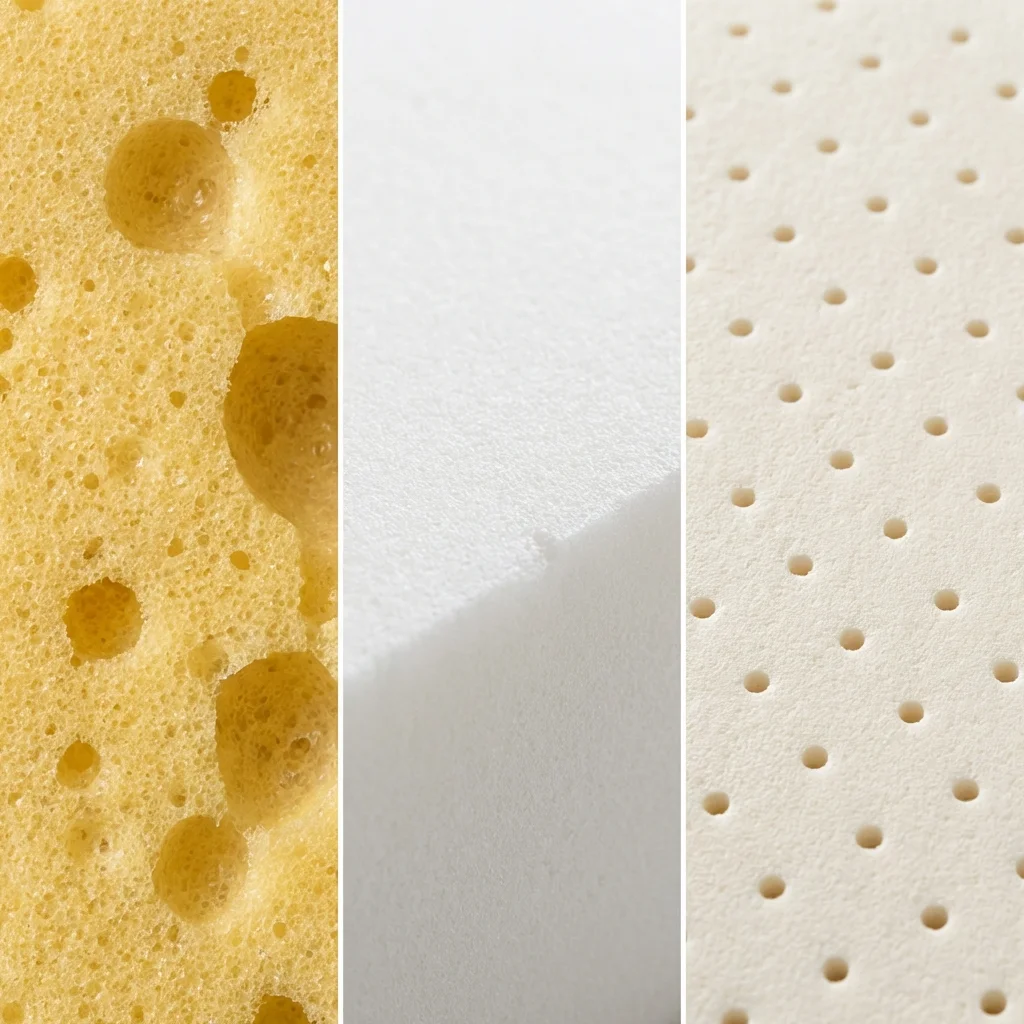
When I first saw a chart like this, it finally explained why some sofas felt fine in the store but awful at home. This image is not about comfort preference, it is about how quickly a cushion recovers after you sit on it. That single behavior predicts more long term satisfaction than most showroom tests.
Look at the rebound speed and imagine real use. Every time you sit down, stand up, shift your weight, or plop onto the same spot at night, the foam is being asked to recover. The faster and more completely it rebounds, the less permanent damage each sit causes.
Latex snapping back instantly is why it ages so well. It does not linger in a compressed state, so it does not learn your body shape and keep it forever. When I sit on latex, I feel supported right away and I feel the same support when I get up an hour later.
Polyurethane sitting in the middle explains why it can be good or bad depending on quality. A fast rebound tells me the foam is still elastic and doing its job. A sluggish rebound tells me it is already on its way to becoming a dent.
Memory foam being slow is not a flaw for what it was designed for, but it is a warning sign for sofas. That slow recovery means the cushion spends most of its life compressed, warm, and stressed. Over time, that turns into the dead zones people complain about.
You can test this behavior yourself without any tools. Press your hand firmly into the seat cushion and lift it away. Watch how fast the surface returns to flat and whether it does so evenly or in stages.
Then sit down and stand up immediately. Notice whether the cushion looks ready for the next sit or if it still shows a shadow of you. That visual cue matters more than how soft or firm it feels in the moment.
What I want you to take from this image is simple. Speed equals resilience. Slow response equals comfort now and problems later.
When I am torn between two sofas that feel similar, I choose the one that recovers faster every time. I have learned that my body adjusts to feel, but it never adjusts to sagging.
This comparison also helps you see through blended marketing claims. If a sofa says it combines multiple foams for optimal comfort, watch which behavior dominates when you test it. The slowest material usually wins in the long run.
I do not need a chart in the store anymore, because I carry this idea with me. I press, I watch, and I imagine thousands of repeats. That habit has saved me from buying more disappointing sofas than any warranty ever has.
The “Hybrid” Trick
This is one of the most common ways I see brands make a bad cushion feel good just long enough to sell it. They call it a hybrid seat and present it like a best of both worlds solution, but what is really happening is much simpler and much cheaper.
The core of the cushion is usually low density polyurethane, the kind that collapses quickly. To hide that, they wrap it in a thin layer of memory foam or feather blend so the first thing you feel is softness instead of weakness.
In the showroom, this works incredibly well. Your body sinks into the soft wrap, pressure disappears, and your brain decides the sofa is comfortable. What you are not feeling yet is that the core underneath is already giving up.
I have owned cushions like this, and the timeline is frustratingly predictable. The soft outer layer stays soft, but the center stops supporting you, so you end up sitting in a hammock made of comfort with nothing holding you up.
This is why people describe these sofas as looking fine but feeling awful. The wrap masks the failure instead of fixing it, and no amount of fluffing brings the support back.
You can spot this trick if you know how to test for it. When you sit down, notice whether the cushion feels like it has a firm base underneath the softness or if it just keeps sinking until something hard stops you.
I also use my hands. I press down slowly and try to feel where the resistance comes from. If there is a soft inch and then a sudden dead stop, that usually means a cheap core hiding under a comfort layer.
Another giveaway is weight. Hybrid cushions with feather or memory wraps often feel surprisingly light when you lift them. A supportive core usually has some mass to it, even if it is polyurethane.
You should also ask a very specific question and listen carefully to how it is answered. I ask what the core foam density is and how thick the wrap layer is. If they talk only about the wrap and avoid the core, that tells me everything I need to know.
If the salesperson says the support comes from the inner foam and the wrap is just for comfort, I keep listening. If they say the comfort layers are doing most of the work, I mentally prepare to walk away.
Do not let the word hybrid impress you. It does not guarantee balance or durability. It just means multiple materials are involved, and the weakest one usually decides how long the cushion lasts.
My rule with hybrids is simple. I want the core to be something I would trust on its own. The wrap should make it nicer to sit on, not rescue it from collapse.
If you remember that, you will stop paying for softness that disappears and start paying for support that stays. That shift alone will save you from the most disappointing sofa purchases I have ever made.
The Specification Algorithm
When people ask me what they should actually buy, this is the shortcut I wish I had years ago. I do not think in terms of brands or price tiers anymore. I think in terms of how you sit, how your body reacts over time, and which material best matches that reality.If durability is your top priority and you want something that holds up to daily use without drama, I look for high resiliency polyurethane with a density around 2.8. In the showroom, that translates to a seat that feels buoyant instead of stiff and rebounds quickly when you stand up. I ask directly for the density and I only trust the answer if it is given clearly and without deflection.
If you are a sloucher who lounges, tucks legs under, or changes positions constantly, I have found that down wrapped polyurethane can work well if the core is good. The wrap takes the edge off and makes the seat forgiving, but only if there is real support underneath. I always press past the softness and make sure I can feel a resilient core pushing back evenly.
If you deal with back pain or you just know you need consistent support, natural latex is what I point you toward. I personally prefer a firmer latex seat because it keeps my pelvis from sinking and my spine from rounding. When you sit on it, you should feel held up immediately, not slowly lowered into place.
There is one thing I almost always avoid, and that is memory foam being used as the main seating material. I have learned that unless you genuinely enjoy warmth and that sinking feeling, it creates more problems than it solves in a sofa. When it shows up, I want it thin and secondary, never responsible for holding my weight.
This is not about chasing perfection. It is about matching the material to how you actually live. When I stop thinking about comfort as a single moment and start thinking about it as thousands of repeats, the right choice becomes much easier to see.
What I want you to notice is that this algorithm is not about taste. It is about behavior. The same sofa can be a great buy for one person and a daily annoyance for another depending on how it is used.
When you are in a showroom, try to place yourself honestly into one of these patterns. Do you perch neatly or sprawl. Do you get up easily or do you push off the arms. Do you sit for ten minutes or three hours at a time. Those answers matter more than any sales pitch.
I have found that once I frame the decision this way, I stop second guessing myself. I am no longer tempted by something that feels nice but contradicts how I actually sit. That alone has saved me from buying sofas that impressed me briefly and disappointed me for years.
If you feel overwhelmed, come back to this section before you buy. Ask yourself which description fits you best, then verify that the cushion material truly matches it. If the sofa cannot pass that simple test, I let it go and keep looking.
Technical Summary: The Ideal Core
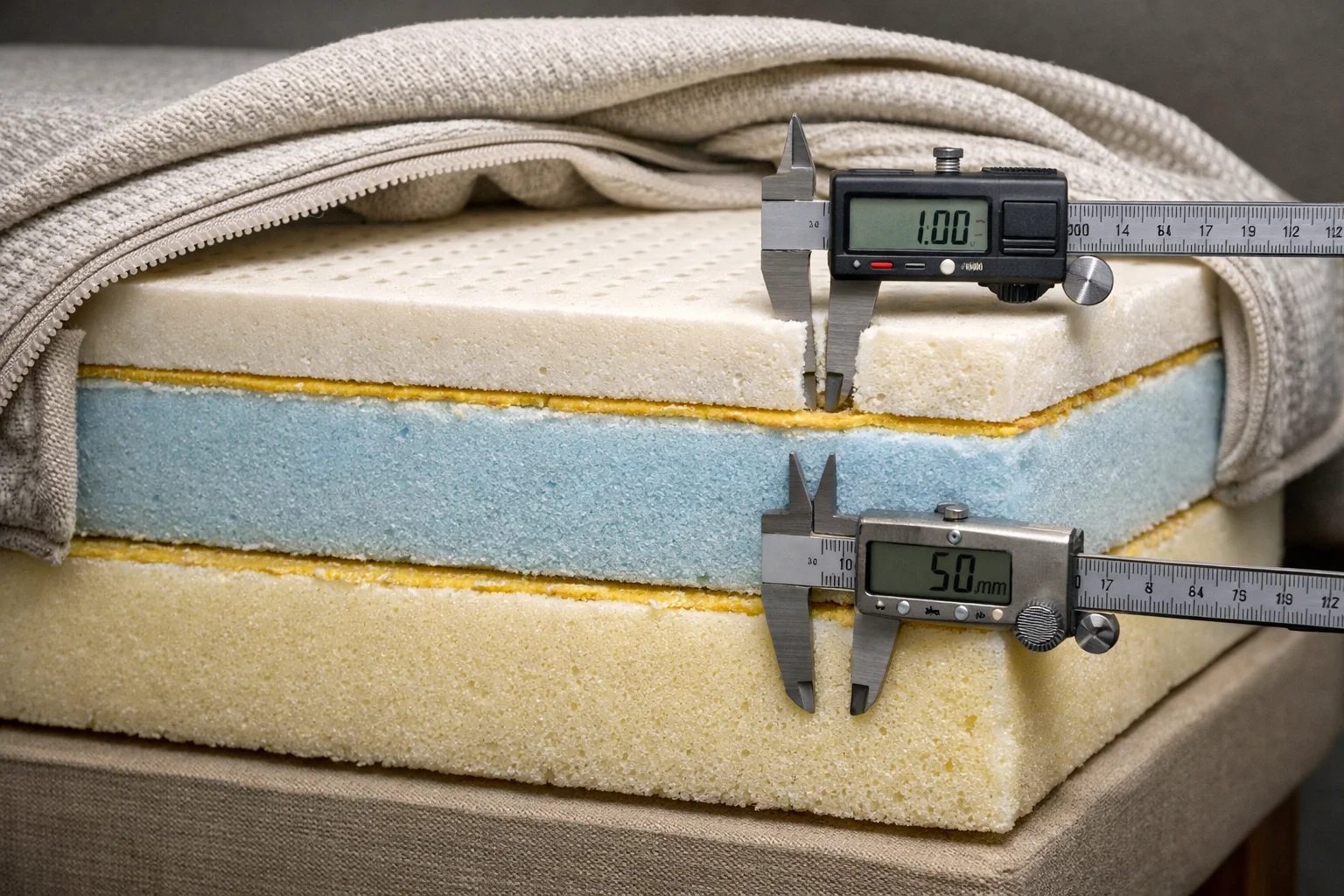
When people ask me to boil all of this down to one reliable answer, this is where I land. Unless you have a medical reason to choose memory foam or the budget and preference for full latex, I stick with high resiliency polyurethane foam in the 2.5 to 2.8 density range, finished with a bonded dacron wrap.This combination works because each part has a clear job. The HR poly does the real supporting and takes the daily abuse without collapsing. The bonded dacron softens the surface just enough so the seat does not feel hard or abrupt when you sit down.
In practical terms, this is what I look for in a showroom. When I sit, the cushion should lift me evenly instead of letting me sink. When I stand up, it should recover quickly and look ready for the next sit without needing fluffing.
I also pay attention to how it feels across the whole seat, not just the center. HR poly tends to resist that dished out feeling where the middle dies and the edges stay tall. That evenness is what keeps a sofa feeling normal years later instead of lumpy.
The reason I like bonded dacron specifically is that it stays where it is put. Loose fiber wraps migrate, clump, and need constant maintenance. Bonded dacron is attached to itself, so it keeps a consistent surface and does not hide core failure as easily.
If you hear a salesperson say this kind of cushion lasts fifteen years, I do not take that as a promise. What I take it as is a realistic upper range if the foam is truly high density and you use the sofa like a normal human. That is a very different expectation from the five year burnout I see with cheaper builds.
When you are standing in front of a sofa, this summary gives you a script. Ask if the seat core is high resiliency polyurethane. Ask the density and listen for something comfortably above two and a half. Ask what the wrap is and whether it is bonded or loose.
If they can answer those questions clearly and without switching topics, you are probably looking at a seat built for ownership, not turnover. If they dodge, rebrand, or talk only about softness, I assume the core is not something they want to discuss.
I do not believe in perfect sofas. I believe in materials that fail slowly and predictably instead of quickly and quietly. This core setup has been the most boring and dependable option I have lived with, and boring is exactly what I want from a seat I use every day.
If you remember one takeaway from this entire guide, let it be this. Buy the support first and the comfort second. When the core is right, almost everything else becomes a matter of taste instead of regret.
Explore Technical Reference
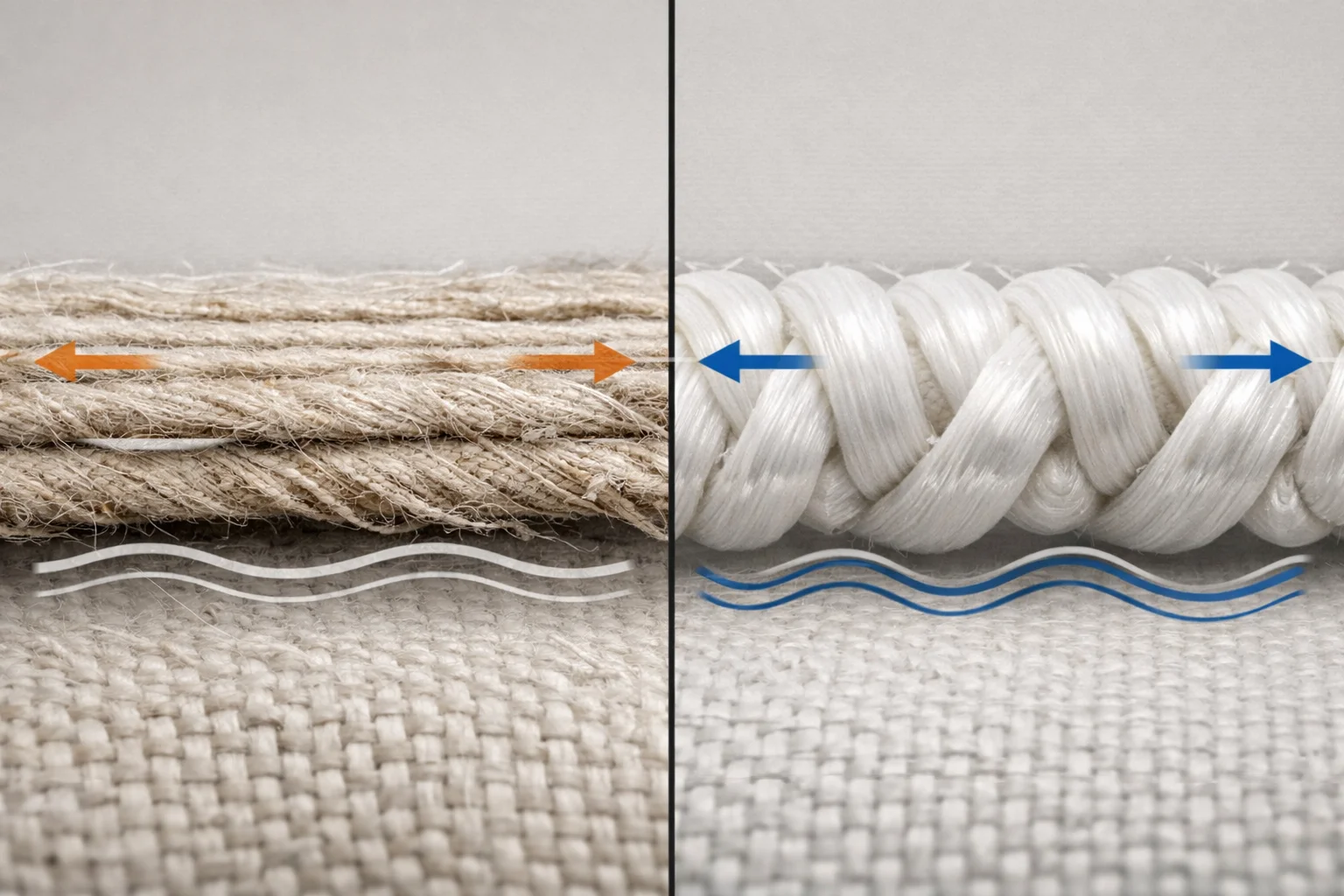
Fabric Stretch: Why Your Sofa Wrinkles
Why some fabrics hold their shape while others permanently puddle. The physics of natural fiber stretch versus synthetic memory and how to choose accordingly.
Analyze Details →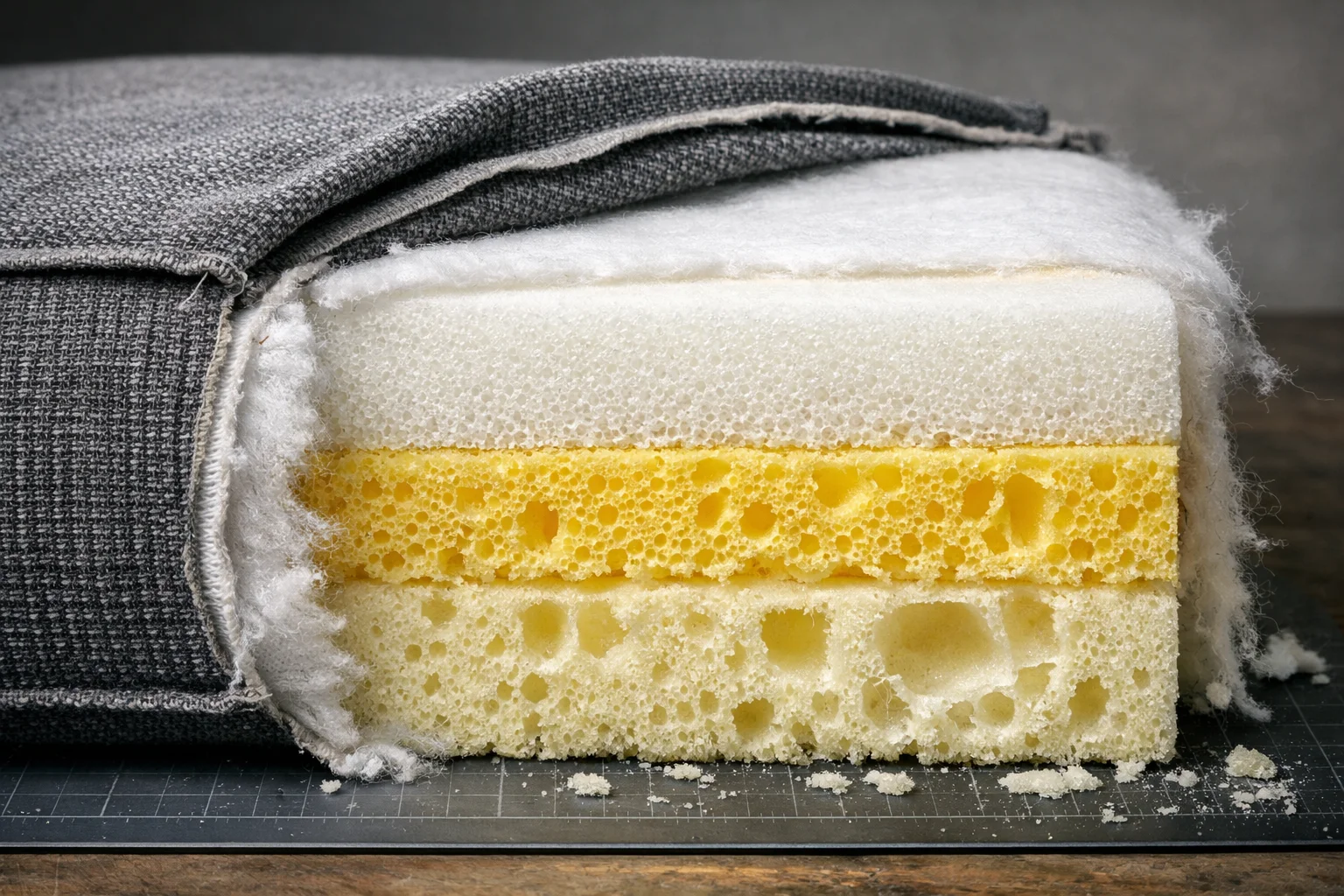
Foam Lifespan: Predicting When Your Sofa Will Die
How long should a cushion last? Understanding the density-to-duration ratio and the phases of foam death.
Analyze Details →