Daily Sofa Bed Use: The 5-Year Decay

Introduction
If you live in a studio, I get why the sofa bed starts to feel like the only “responsible” choice. You need seating during the day, a real place to sleep at night, and you do not want your whole home to look like a bedroom.
What I wish someone had told me earlier is that a sofa bed is not just a sofa that happens to open up. It is a machine with cushions on top, and the moving parts and thin mattress are living on a timer called a cycle life rating, meaning it is designed for a certain number of open and close cycles before things loosen, bend, squeak, or fail.
When you use one every night, you burn through those cycles fast. In practical terms, the “15 year sofa” you thought you were buying can act more like a 5 year consumable, because nightly sleeping does not just wear the fabric, it also works the hinge points, the support deck, the frame joints, and the mattress.
So the point of this guide is not to scare you away from sofa beds. It is to help you walk into a showroom and treat the sofa bed like a primary bed purchase, not an occasional guest setup, and to show you what I would physically check and ask about before I let a salesperson steer me toward whatever is on promotion.
If you only remember one idea as you shop, remember this. A sofa bed that feels fine for ten minutes can still be a bad everyday sleeper, and the way to avoid getting ripped off is to test it the way you will actually use it, then make the store prove what parts are serviceable when, not if, something wears out.
The "Cycle Fatigue" Calculation
Most high-end sofa bed mechanisms are rated for 2,000 to 2,500 open and close cycles. That sounds huge until you translate it into your life, because every open and close is like spending from a fixed mechanical budget.If you only open it for guests, say around ten times a year, you could technically go generations before you run out of cycles. That is why so many sofa beds feel “perfect” in a showroom and even for the first few years in a guest room, since the mechanism is barely being asked to do anything.
If you plan to sleep on it every night, the math flips on you. One open and one close per day adds up fast, and you can burn through that 2,000 cycle range in roughly five and a half years. That is the part I always keep in my head while I shop, because it explains why a sofa bed can still look clean and “like new” up top while the mechanism underneath is already getting sloppy.
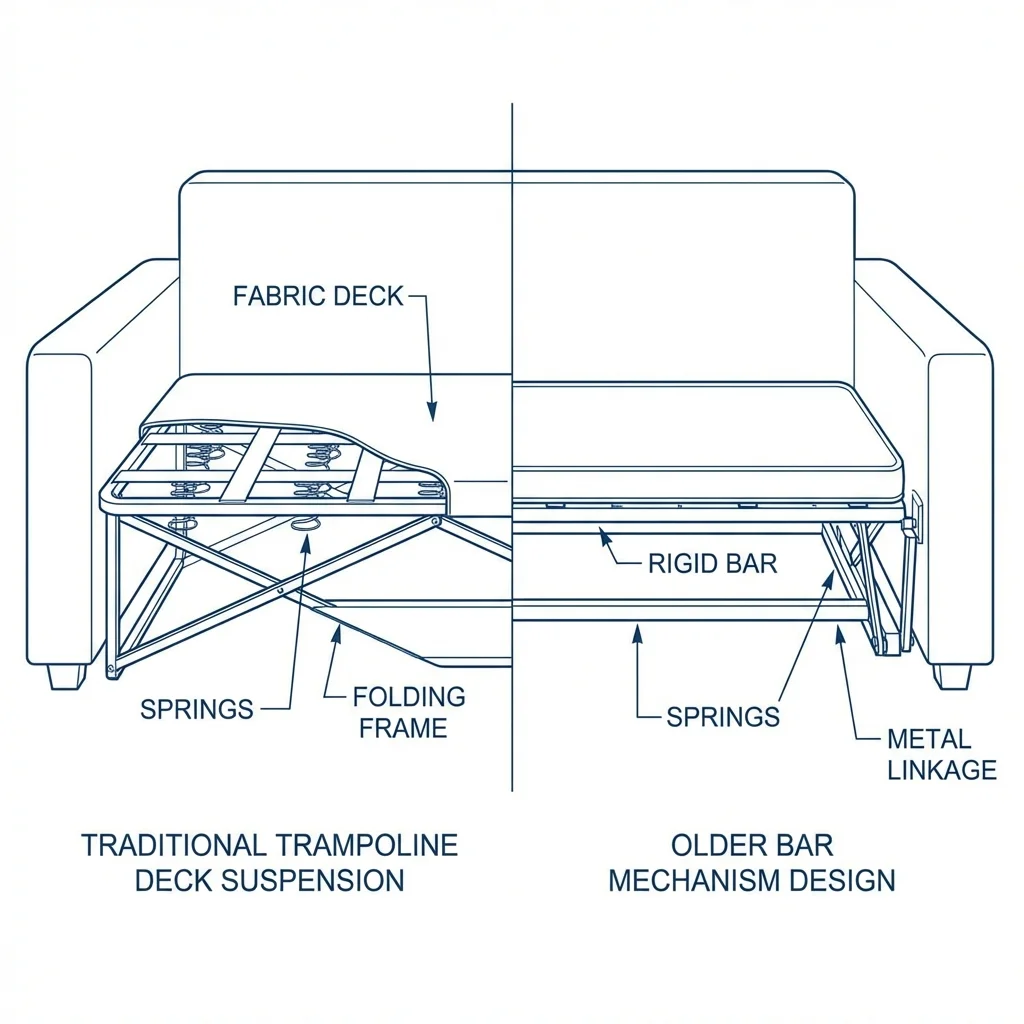
When cycle fatigue hits, it rarely fails in a dramatic, clean way. What I have seen is the bed starts needing a little extra shove to latch, then it starts closing slightly crooked, then you get the awful moment where it will not fold flat because something is twisting out of alignment. The common endgames are rivets in the scissor links shearing or loosening, or the whole frame racking, meaning it twists, so the geometry stops lining up.
So here is what I would do in the showroom to protect yourself. I would tell the salesperson, directly, that I intend daily use, and then I would ask what the cycle rating is for that exact mechanism, not “most of them” or “they are all the same.” If they cannot give you a number or a spec sheet, I treat that as a warning sign that you are buying vibes, not a product that was meant to be serviced.
Then I would open and close the bed multiple times myself, not just once. I pay attention to whether it tracks straight, whether the latches engage cleanly without me lifting one side, and whether it makes sharp clicking noises at the same points in the motion, since that can hint at sloppy joints that will get worse with use.
Finally, I would ask the unsexy questions that matter when the mechanism ages. I ask whether the scissor link assembly is sold as a replacement part, whether a tech can swap it without rebuilding the whole sofa, and what the real warranty covers, meaning whether it covers the mechanism under daily use or only “occasional” use language that gives them an escape hatch. If they dodge those questions, I assume I will be on my own when the folding action starts fighting me.
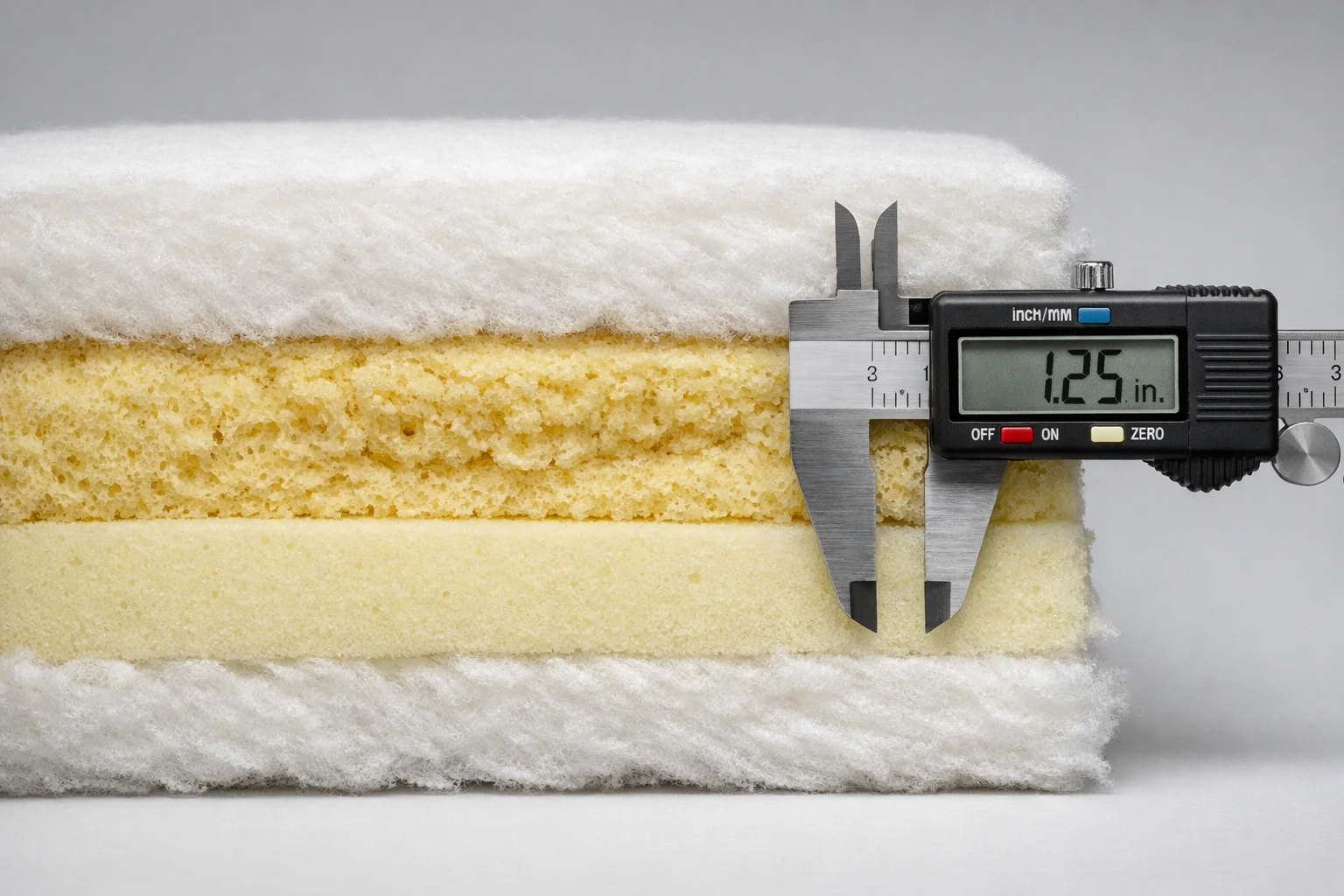
That photo is the cushion problem I see most often in real homes, the foam looks fine at first, then daily sitting and sleeping crushes the cells and it never fully rebounds. Once that permanent set happens, the cushion gets shorter, you start feeling the bar or the deck sooner, and you end up chasing comfort with toppers and extra pillows.
In a showroom, I try to predict this by doing a slow, mean test with my own body weight. I sit in the exact spot I know I will default to, I stay there for a full minute, then I stand up and look from the side to see how quickly the cushion comes back and whether it comes back evenly, not just in the center but across the front edge where your thighs live.
Then I do something that feels a little awkward but saves me money later, I unzip the seat cushion cover and look at the foam. If they will not let you, or the cushion is not removable, I treat that as a durability red flag because it usually means you cannot replace the foam cleanly later.
When you can see the foam, you are looking for two practical things. I want to see a thick slab that is one piece or a well made layered stack, not a thin topper over a bunch of cheaper fill, and I want it to feel resilient when you pinch it, meaning it pushes back instead of feeling dead and spongy.
I also press hard on the very front edge of the seat cushion with my palm. If that edge collapses easily, that is the part that will look flattened first, and it is the part that makes a sofa bed feel like it is pitching you forward over time.
Now tie this back to the sofa bed reality, because the bed mode adds long duration loading that regular sofas do not get. If you are sleeping on it nightly, you are compressing the same materials for hours, so I ask the salesperson what the seat foam density is and whether the cushions are designed to be re-foamed, not just refluffed, when they eventually pack down.
If they cannot tell you the foam spec, I fall back to what I can physically verify. I choose the model with removable zippered cushions, I prefer cushions that can be rotated and flipped if the design allows it, and I avoid anything that already shows a visible dent after I stand up, because that dent is basically a preview of your future seat map.
The Biological Compromise: Moisture Trapping
This is the hidden failure of nightly sofa bed use that has nothing to do with springs, and it is the one I almost never hear discussed in showrooms. Your body puts a surprising amount of moisture into a mattress every night through breathing and sweat, even if you do not feel sweaty.
On a normal bed, that moisture has a fighting chance because the mattress sits out in the open all day. Air moves around it, light hits it, and whatever humidity built up overnight can slowly dry out.
A sofa bed flips that situation in the worst way. You wake up, fold the mattress in half, and trap it inside a dark steel cavity with almost no airflow, exactly when it is at its most damp. Do that night after night and you create a little high humidity box that encourages internal mildew in the mattress and starts pushing the metal parts toward oxidation, meaning rust, especially at joints and rivets where coatings get scratched.
If you want to shop smart, I would treat ventilation like a feature you are paying for, not an afterthought. In the showroom, I put my head near the opened bed and look at what is under the mattress, because some designs sit on a more open metal grid and some sit on panels or tight decking that block airflow. I cannot measure humidity in a store, but I can choose the design that at least gives the mattress somewhere to breathe.
Then I ask a very specific question that tends to separate real answers from sales talk. I ask what the manufacturer recommends for drying the mattress after sleep, and whether it is acceptable to close it immediately every morning. If they look at you like the question is weird, that is your clue that the product was mainly designed around occasional guest use, even if the salesperson is telling you it is “fine for every day.”
I also pay attention to whether the mattress cover is removable and washable, because you cannot see internal mildew early, and you do not want your only option to be replacing the entire mattress when it starts smelling off. If the mattress is a proprietary size and the brand will not sell replacements, I assume you are one bad humidity season away from an annoying, expensive problem.
At home, the habit that protects you is simple, but it is not always convenient. I would plan on leaving the bed open for a while after you wake up, even if it is just long enough to make coffee and shower, so the mattress can dump some moisture back into the room instead of into the sofa’s metal cavity. If you know your space runs humid, I would also budget for a small dehumidifier, because you are not just protecting comfort, you are protecting the mechanism from living in a damp microclimate.
What I do not do is try to “solve” moisture with perfume sprays or fabric refreshers. If a sofa bed has a persistent musty smell, that is usually biology and trapped humidity, not a cleaning problem, and I treat it as a sign the mattress and the cavity design are working against you.
If you remember the buying takeaway, it is this. A sofa bed that will be used nightly needs a plan for drying, and you can partially shop for that by choosing an under mattress support that looks open and breathable, and by insisting on clear answers about mattress replacement and care, instead of trusting that a closed steel box will somehow stay fresh on its own.
Structural Erosion of the “Sofa” Function
When you use a sofa bed daily, you are not just wearing out the bed mode, you are slowly breaking the sofa mode too. The part that gets you is that the sofa parts were designed around short sitting sessions, not hours of body weight pressing down in the same spots.
What I watch for is foam bottoming, which is just the moment the cushion stops behaving like a cushion and starts behaving like a thin pad over something harder. Sleeping on the sofa surface in a click clack setup, or climbing and stepping on the seat to get in and out of the bed, puts long, steady pressure into the same foam and it does not get the recovery breaks it expects.
In a showroom, I try to recreate that kind of stress in a small, honest way. I sit in my usual spot, then I shift into a semi reclined sprawl and stay there long enough that the foam warms up and relaxes, because that is when weak foam shows itself.
Then I do a very unglamorous check for early bottoming. I press down with my fist near where my hips would land if I napped on it, and I pay attention to whether I quickly hit something firm underneath, like a deck, bar, or edge of the mechanism cavity.
The next problem is what I call the step down, where the seat height slowly shrinks as the foam takes a permanent set. If you are using the same cushions as both seating and sleeping surface, that set can show up fast, and when it does the sofa stops feeling like a sofa.
You can screen for this by paying attention to geometry, not just softness. When you sit, your knees should not be noticeably higher than your hips, and you should not feel like you are sinking into a low bowl that makes you brace to stand up.
I also look at the front edge of the seat cushions because that is where real life abuse happens. If the front edge collapses easily under my hand, I assume it will look tired first, and once that edge goes, the whole sofa starts feeling like it is sliding you forward.
If the design has loose cushions, I lift them and look underneath, because the construction tells you whether the sofa is prepared to stay a sofa. I prefer seeing a supportive, even platform and a layout that does not force the cushion to bridge large gaps or sit on narrow rails that concentrate pressure in one line.
If the salesperson is claiming it is good for everyday, I ask a direct question that forces a real answer. I ask what the brand expects to happen to the seat cushions under daily sleeping, and whether replacing just the foam later is considered normal service, or if they expect you to replace entire cushions at a premium.
I also ask whether the seat cushions are standard sizes the brand will sell again in a few years. If they cannot or will not supply replacement inserts or cushions, I treat the sofa function as disposable, because once the cushions pack down you will be stuck choosing between living with the sag or improvising with toppers.
The practical buying takeaway I keep in mind is simple. If you are going to sleep on it nightly, you need a sofa bed that still feels supportive as a sofa after the cushions have lost some height, because they will, and you will feel every inch of that loss every single day.
That diagram is the part I wish every showroom had taped to the wall, because it explains why “it looks fine” can still turn into squeaks, stiffness, and rusty hardware underneath. The worst moisture is not evenly spread, it concentrates where your torso and hips were, and that is usually right over the fold and hinge zone.
What bites you is folding it while it is still warm. Warmth makes moisture more mobile, then you close the bed and the moisture gets trapped against the mechanism area where coatings get scratched and bare steel lives at joints and rivets.
In a showroom, I use this picture as a checklist for what to physically inspect. I open the bed and look closely at the metal right under where a sleeper’s midsection would be, because that is where early discoloration, hazing, or tiny rust freckles tend to show up first on floor models.
I also run my fingers along the hardware edges and fasteners, not to be dramatic, but to see if there is any gritty residue or orange staining that suggests the finish is thin or already compromised. If the store model is already showing oxidation, I assume your daily use in a real apartment will be harsher, not gentler.
Then I pay attention to the fabric and mattress cover in that same “red zone.” If it already smells even slightly sour or musty when the bed is opened, I treat that as a ventilation warning, because a clean showroom should be the easiest environment for it to stay fresh.
When you are talking to a salesperson, this is a good moment to ask a question that forces the conversation into reality. I ask whether the mechanism parts are stainless, plated, or painted steel, and what exactly is covered if corrosion starts causing squeaks or binding under daily use, because a lot of warranties quietly treat rust as “environmental” and therefore “not their problem.”
At home, if you buy a sofa bed for nightly sleep, I would build your morning routine around not closing it immediately. Even a short open time helps, and if your space is humid, that small habit matters more than buying a thicker mattress that still gets folded wet.
If you cannot leave it open, the buying move is to choose the sofa bed that makes drying easiest. I look for a design that opens in a way that lets the mattress lie flatter and breathe, and I avoid anything that sandwiches the mattress tightly between upholstery and metal with no air gap, because that is basically inviting the humidity trap to become your normal.
The “20-Minute Vent” Rule
The "20-Minute Vent" Rule
If you must sleep on a sofa bed nightly, you have to manage the moisture you are adding to that mattress every night, because the biggest damage happens in the hours after you get up, not while you are asleep.The rule I follow is simple. I never close the bed immediately after I get out of it.
What I do instead is leave the bed fully open for at least 20 minutes. The point is not magic, it is just giving the mattress time to cool down toward room temperature and letting that surface dampness evaporate into the room while it still has access to air, instead of being folded and sealed into the chassis while it is warm and humid.
If you want this to actually work in your life, you need to shop with the habit in mind. In the showroom, I look at how annoying it will be to leave the bed open without it blocking the whole room, because if it is a huge obstacle course, you will stop doing the vent routine within a month.
I also pay attention to whether the mechanism opens smoothly enough that I will not resent leaving it open. If opening and closing already feels fussy on a floor model, it is not going to get more pleasant when you are tired and doing it twice a day.
At home, I tie the 20 minutes to something you already do. I leave it open while I make coffee, shower, or answer messages, and only then do I fold it up, because otherwise “I will do it later” turns into “I closed it right away again.”
If you live with someone and you are both using the bed, this is one of those dumb little coordination points that matters. I try to agree in advance that nobody closes it the second the first person gets up, because the whole benefit disappears if it gets folded warm and damp.
If your apartment runs humid, the vent rule is still worth doing, but I treat it as the minimum, not the solution. In that situation I am more likely to crack a window for a few minutes or run a dehumidifier after I get up, because you are trying to get moisture out of the room, not just off the mattress.
When I am buying, I ask a question that tells me whether the brand understands daily reality. I ask if they have any care guidance that explicitly mentions airing out the mattress before folding, because if the answer is basically “just close it,” I assume they are not thinking about nightly use and you are going to be on your own when the smell, rust, and stiffness show up.
Daily Use Maintenance Checklist
I treat daily use maintenance like brushing your teeth, it is boring, but it is how you keep a sofa bed from quietly rotting in the dark. The key is to focus on the few actions that actually prevent the common failures, moisture funk, squeaks that turn into binding, and loose hardware that turns into misalignment.
For airing out, I do it every day for about 20 minutes, and I do it with the bed fully opened, not half folded. If you are shopping, you should literally ask yourself, “Can I leave this open in my space without hating my life,” because if the open position blocks your only walkway, you will skip this and the mattress will stay damp more often than not.
For flipping the mattress, I do it every couple of weeks if the mattress design allows a true flip, or at least a head to foot rotation if it does not. The practical reason is simple, the foam and quilting compress where your hips and shoulders land, and if you never change orientation, you carve a permanent sleep map into a thin mattress fast, which makes the bar feel worse and makes the folded crease zone break down sooner.
In the showroom, I ask the salesperson to show me, not tell me, whether the supplied mattress is meant to be flipped, rotated, or neither. If the tag or care sheet says “do not flip” and the mattress is thin, I assume you will be replacing it earlier, so I immediately shift to asking whether replacements are sold in the exact size, and how hard it is to get the old one in and out of the mechanism without scraping fabric or busting knuckles.
For the rivet check, I look once a month when the bed is open, and I am hunting for gritty metal dust, shiny new scrape marks, or tiny curls of metal near pivot points. If you see that, it often means two parts are moving against each other in a way they were not meant to, and you are watching the early stage of a joint slowly egging out and getting sloppy.
This is also where I do a quick wiggle test with my hand. I grab the mechanism near a joint and see if there is a new side to side looseness compared to last month, because looseness is what turns a smooth fold into a crooked fold, and crooked folds are what start bending things.
For pivot lubing, I do it a few times a year, but I am careful about what I put where. I do not spray mystery lubricant all over upholstery, and I avoid soaking anything, because you do not want oily overspray turning into a dust magnet, or wicking into fabric and staining.
In a store, I ask a question that tells me whether this is a serviceable machine or a disposable contraption. I ask what lubrication points, if any, the manufacturer recognizes, and whether doing basic lubrication affects the warranty, because some brands quietly prefer you never touch it, then blame you when it squeaks.
For frame torque, meaning tightening the bolts that hold the mechanism to the wood frame, I check once a year, usually when I am doing a deeper clean. What I care about is not making it insanely tight, it is catching the slow looseness that creates flex, noise, and eventual cracking around fasteners.
If you are buying, you can screen for this without tools by asking to see how the mechanism mounts to the frame. I like seeing real bolts and brackets into solid wood or substantial blocking, because if the attachment looks like a few small screws into questionable material, that is the kind of connection that loosens and wallows out under daily open and close cycles.
The big picture is that this checklist only works if the sofa bed is designed to be accessed. If the salesperson cannot show you the hardware clearly when it is open, or everything is buried behind stapled fabric with no practical way to inspect it, I assume maintenance will not happen, and that means you should buy something that can tolerate neglect better, or choose a different sleep solution.
Explore Technical Reference
Futon Comfort: The Density/Flexibility Paradox
Why most futons feel terrible and what construction features separate comfortable futons from disappointing ones. The material and design choices that determine daily comfort.
Analyze Details →
Futon or Sofa Bed: The Conversion Conflict
Comparing the two main approaches to dual-purpose seating and sleeping furniture. Why the choice depends on priorities rather than either being universally better.
Analyze Details →