Uneven Sectional Seats: The High-Traffic Chaise
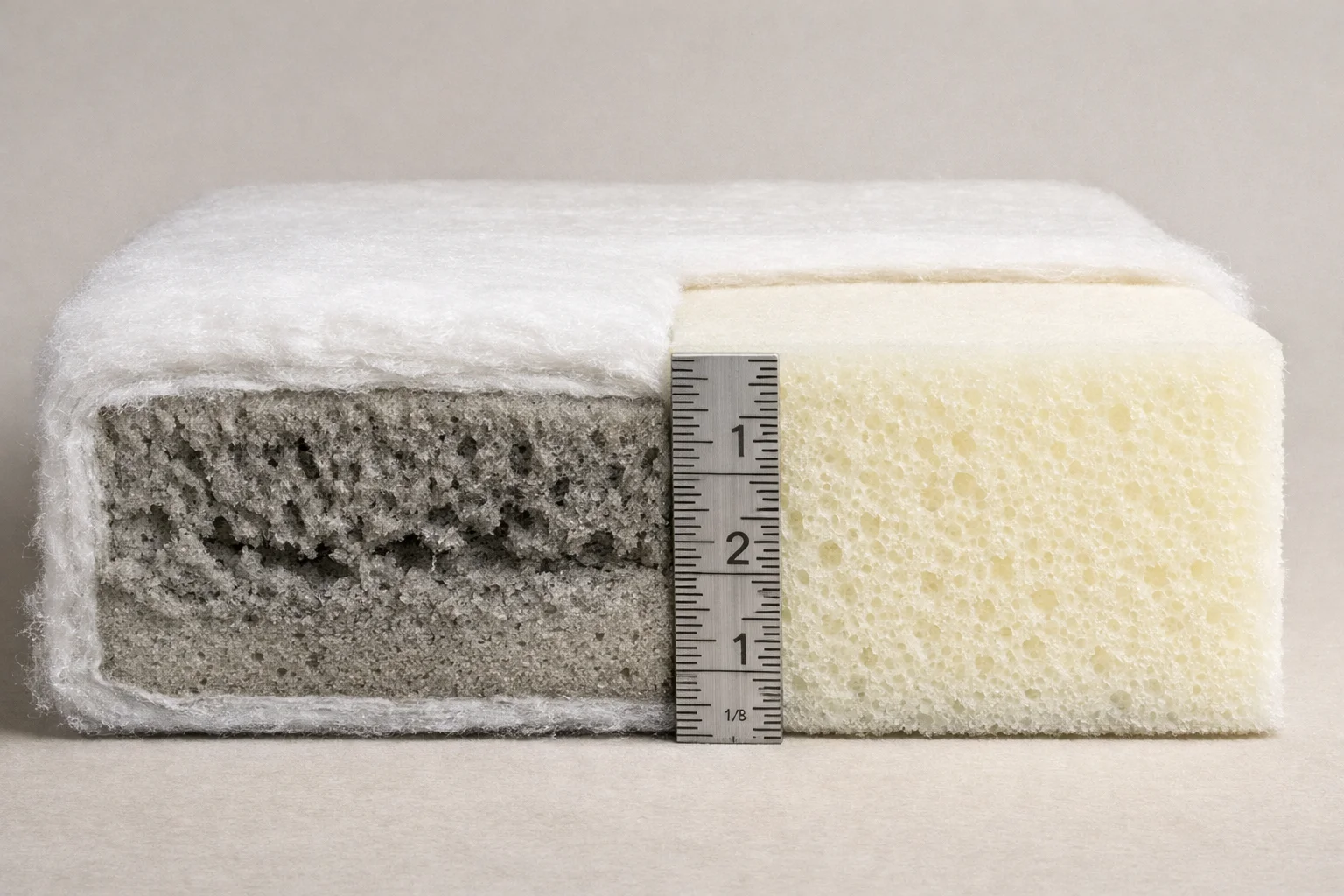
Differential Wear
Differential wear is the thing I see most often with sectionals after a few years, and it is not because the whole sofa is “bad.” It is because the layout quietly forces everyone into the same two spots, usually the corner seat and the chaise, so most of the real load lands on a small slice of the cushions and frame.
In a showroom, I stop thinking about how the sectional looks staged and I picture your actual routine. If you already know who gets the chaise, who takes the corner, and where guests naturally land, you are already predicting which cushions will soften, slump, and wrinkle first.
The first thing I do is sit exactly where you will sit at home, then I pay attention to what I feel under me. If that favorite spot feels noticeably softer than the neighboring seat on a brand new floor model, I treat it as a warning sign, because the same construction that lets it “give” early will usually keep giving until it looks tired.
Then I do a simple comparison test on adjacent cushions. I press down with my hand in the center of the chaise cushion and then in the center of the next cushion over, using similar pressure, and I notice whether one rebounds faster, feels mushier, or bottoms out sooner. When two cushions in the same sofa feel different on day one, you are signing up for visible mismatch later.
I also watch what happens to the fabric when I stand up. If the cover stays baggy, shows deep ripples, or the seams look like they are being pulled into a smile shape in the most popular seat, that is often differential wear starting early, not just “break in.”
You can reduce the problem by choosing a configuration that does not create a single throne. I look for sectionals where the “best” seat is not obviously the corner and where the chaise is either reversible or can be swapped left to right later, because being able to change the traffic pattern is one of the only real ways to spread wear.
If the salesperson says the cushions are “all the same,” I still confirm what “same” means in practice. I ask whether every seat uses the same cushion core and the same support underneath, because some sectionals quietly upgrade the chaise or the corner, which can feel great at first but can also make the mismatch look worse as the softer piece relaxes faster.
I also ask how the chaise is built underneath, because a lot of differential wear is not just the cushion, it is the support. If the chaise is basically a big span with weaker support, it can develop a different feel and height than the regular seats, and once that happens you notice it every time you sit.
The most honest self check is to think about whether you are the kind of household that will rotate cushions and swap seats. If you know you will not, I would not buy a sectional where the cushions are shaped, clipped, or zippered in a way that locks each cushion into one position forever, because that guarantees the “favorite” spot takes all the aging.
If you do want a sectional but hate the idea of one seat wearing out first, I would rather you buy comfort that looks a little less perfect in the showroom and feels consistent across all seats. Uniform support, uniform cushion feel, and the ability to rearrange the layout later usually matter more than a dramatic corner lounge that everybody fights over.
The "Ghost Seat" Problem
In a standard 5-piece sectional, the armless middle chair is the ghost seat, because it looks like a normal seat but almost nobody actually uses it day to day. The chaise can easily see a couple thousand sit downs in a year in a typical home, while that middle spot might only get used a handful of times, like when you have guests or someone is trying to stretch out.The predictable result is that after a year or two the chaise and the corner have compressed and relaxed, while the middle cushion is still sitting tall and crisp. In real life that becomes a visible step down between seats, and it can be an inch or two of height difference that you notice every time you look at the sectional from the side.
The sensation is what makes people swear the sofa is “lumpy.” When you lie across the sectional or slide from one seat to the next, you feel a hard bump right at the seam, not necessarily because anything is broken, but because you are crossing from a worn, lower cushion onto a higher, firmer one.
What I do in a showroom is stop treating that middle seat as “extra capacity” and treat it as a future mismatch. I sit on the chaise for a minute, then I sit on the armless middle seat for a minute, and I pay attention to whether the middle already feels taller, firmer, or more upright.
Then I do a simple edge check. I put my hand on the seam between the chaise cushion and the next cushion over, press down right near the piping or welt, and I ask myself whether that seam would become a ridge if one side softened faster, because that ridge is exactly what you feel when you sprawl across the sectional later.
If the sectional has loose, swappable seat cushions, I ask you to treat that as non negotiable, not a nice perk. If the armless middle cushion can trade places with the chaise cushion, or at least rotate with adjacent seats, you can force the ghost seat to do some work a few times a month and keep the heights closer over time.
If the cushions are fixed, clipped, or shaped so they only fit one spot, I assume the ghost seat problem is going to happen unless you truly use every seat evenly. When I hear “attached cushions keep everything looking neat,” I translate that to “you will not be able to equalize wear,” and I decide whether that trade is worth it to you.
I also ask one specific question that cuts through a lot of sales talk, which is whether the armless middle unit uses the exact same seat support as the seats that get used most. Sometimes the middle chair sits on a different internal layout, or it lands on a join between modules that makes it feel firmer, and that difference shows up as a bump later even if the cushions are technically identical.
If you love the look of a 5-piece sectional but you hate the idea of the ghost seat, I would rather you choose a configuration where the “middle” is something you actually use, like a corner wedge that becomes the default hangout, or a layout where the armless piece is easy to swap with a standard seat. The goal is not to find a sectional that never changes, it is to avoid a design that guarantees one seat stays new while the seat you love gets tired.
The Failure of the Non-Reversible Cushion
Most chaise sections use an L shaped or T shaped seat cushion that only fits one way, and that single design choice can decide how the sectional looks in three years. On a normal sofa, I can flip a cushion, rotate it, or swap it side to side to share the abuse.
On a chaise, you lose those options. You cannot flip it in any meaningful way, you cannot move it to a less used position, and you cannot “even it out” with the other seats, so the same patch of foam takes the same load every single night.
That is why the chaise is where I expect foam to bottom out first. Even if the foam is decent, it is doing all the work in the same spot, and once it starts to collapse, you feel it as a low hammock zone that never really comes back.
In a showroom, I do not just sit on the chaise, I sit where your hips would land if you lie down at home, because that is the high compression zone that will get punished. If I can already feel the support layer under the foam, or I feel a sudden firmness change like I am hitting a platform, I assume you will hit that feeling a lot sooner than you want.
Then I try a simple rotation reality check with the salesperson watching. I ask you to unzip the chaise cushion cover if it has a zipper and look at the shape of the insert, because if it is a hard L or a T, you are locked in, even if the tag says “loose cushions.” If the salesperson says “you can flip it,” I ask, “flip it to what orientation,” because most of the time the only “flip” is turning the same worn zone back onto the same frame in a different direction.
I also look at how the chaise cushion is prevented from shifting. If it is held in place with a shaped deck, clips, or a cutout, that usually means the cushion is married to that exact spot forever, and you should buy it assuming the chaise will age differently than every other seat.
If you want the chaise look but you do not want to be stuck with one doomed cushion, I look for a design where the chaise is made from a standard seat plus a movable ottoman. When the “chaise” is really an ottoman you can slide around, you can move the wear to a different cushion, or you can take the ottoman out of the lineup when you have company and force the room to use the sofa more evenly.
If you are shopping a true chaise module, I would rather you choose one that is reversible at the configuration level, meaning you can swap the chaise to the other side later, not just on delivery day. Even if you never change it, simply knowing you can change the traffic pattern later makes it a safer long term bet.
The last thing I do is a blunt comfort test that predicts the bottoming out feeling. I press down with both hands right where the chaise will get the most pressure, hold for a second, then let go and watch how fast it regains height compared to the adjacent seat cushion. If the chaise rebounds slower or looks like it stays dented, I assume it will be the first cushion you complain about, because it has no way to share wear with the rest of the sectional.
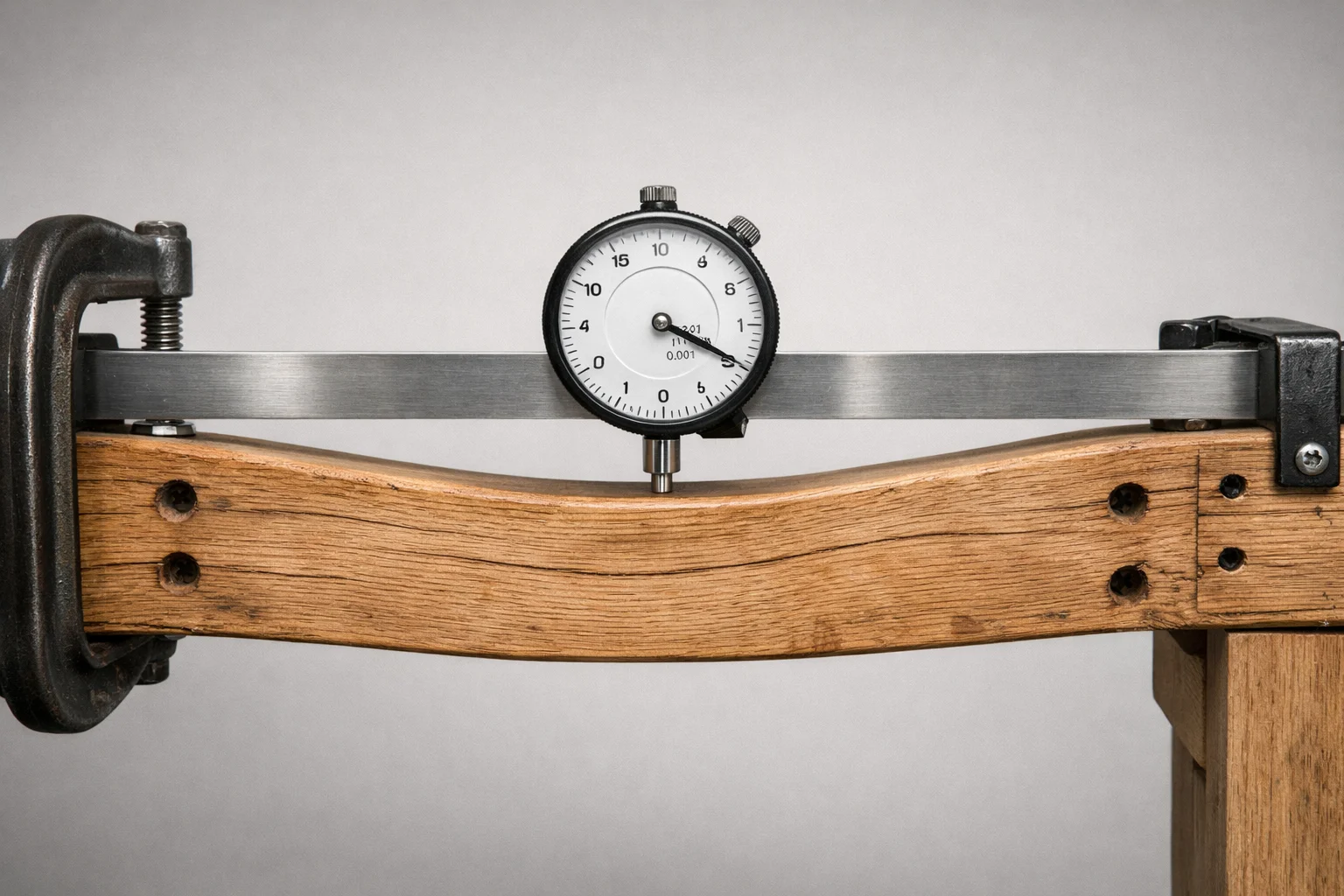
When a chaise starts to feel “lower” than the rest, a lot of people blame the cushion first, but I have learned to suspect the long side rail under the chaise. That rail is basically a long span that can slowly take a set, so even a decent cushion can end up feeling off because the platform underneath is no longer flat.
In a showroom, I do a low tech version of what that photo is showing. I kneel at the chaise edge, put my hand under the front rail area if there is clearance, then I push down on the seat near the outer front corner and watch for extra travel and a soft, springy return that feels different from the neighboring seat.
Then I do the “rock test” with my weight. I sit near the outside edge of the chaise, shift my hips a few inches inward, and pay attention to whether the seat feels like it tips, flexes, or changes height across that span, because a solid support system feels boringly consistent when you move around.
If the chaise has a skirt or panels that hide everything, I still look for clues. I press along the front edge from the inside corner toward the far end and notice whether one section feels firm and another section feels like it is bridging across air, because that is the sensation that often turns into a visible dip later.
When I can see underneath, I am looking for what is actually holding up that long run. If the support looks widely spaced, or if there is a big open bay with not much structure in the middle, I assume that rail is being asked to do too much work for too long, especially in homes where people flop down on the chaise end.
This is also where I ask a very specific question that tends to get a real answer. I ask whether the chaise has a center support under that long side, or whether it is relying on the corners only, because corners only support is exactly how you get the slow bow that makes the chaise feel like its own separate, lower seat.
If you love a chaise layout but you want to reduce the risk, I steer you toward designs where the “chaise” is created with an ottoman or with a shorter span that is clearly supported in the middle. I am not looking for perfection, I am looking for a build that does not depend on one long piece of wood staying straight for years while it gets sat on more than every other seat.
The Bridge-Rail Sag
The bridge rail sag is what happens when the chaise is basically a long, unsupported stretch of wood that is asked to stay straight while it carries the most-used seat on the whole sectional. On the main sofa section, the back and the rest of the frame act like a box that resists flex, but the outer half of a chaise is often more like a diving board with a single end rail and not much helping it in the middle.
What that means for you is that the chaise can age in a way the regular seats do not. Even if the cushion is still decent, the platform under it can slowly settle into a permanent bow, and that is when you start saying the chaise “feels lower” or “leans outward” compared to the next seat over.
I do not try to measure it in a showroom, I try to feel whether the design is forcing the wood to do something unrealistic. I put my hand on the outside edge of the chaise, right above where that long side rail would be, and I press down hard with my body weight while watching the seam lines in the upholstery. If the outside edge dips noticeably more than the inside edge, or if the piping line along the front goes from straight to slightly smiling when I load the corner, I assume that rail is already flexing and it will not get stiffer with age.
Then I do a very simple comparison that tells me a lot. I sit on the far end of the chaise for ten seconds, stand up, then sit in the nearest regular seat for ten seconds, and I pay attention to whether the chaise has a softer, springier “bridge” feel under my thighs. A solid chaise feels boringly similar to the regular seat, and a risky one feels like it is spanning a gap.
If you are allowed to look underneath, I am trying to answer one question, which is whether that long side is supported anywhere except the corners. I look for a real middle leg, a vertical support, or an obvious cross member that lands weight to the floor, because a long rail that only has help at the two ends is the exact setup that tends to take a set over time.
If the underside is fully covered, I still try to infer what is going on by pressing along the front edge in multiple spots. When I press near the inner corner it should feel about as firm as when I press near the far end, and when it changes from firm to hollow as I move outward, that is the bridging sensation that often turns into a visible dip later.
This is also where I get very literal with the salesperson, because vague answers do not help you. I ask, “On the chaise, what supports the long outside rail in the middle, is there a leg or a post under there, or is it corners only,” and I wait for a concrete explanation. If they cannot tell you, or they steer the conversation back to fabric and color, I treat that as a sign the structure is not something they are proud to show.
If you want a chaise but you want to dodge this specific problem, I would rather you buy a setup where the “chaise” is a regular seat plus an ottoman, because the long span disappears and the load is shared by a normal seat box. If you are set on a true chaise module, I personally look for one that clearly stands on more than four points and does not feel like the outside edge is doing all the work, because once that rail creeps into a bow, you cannot un-sag it with cushion fluffing or fabric tightening.
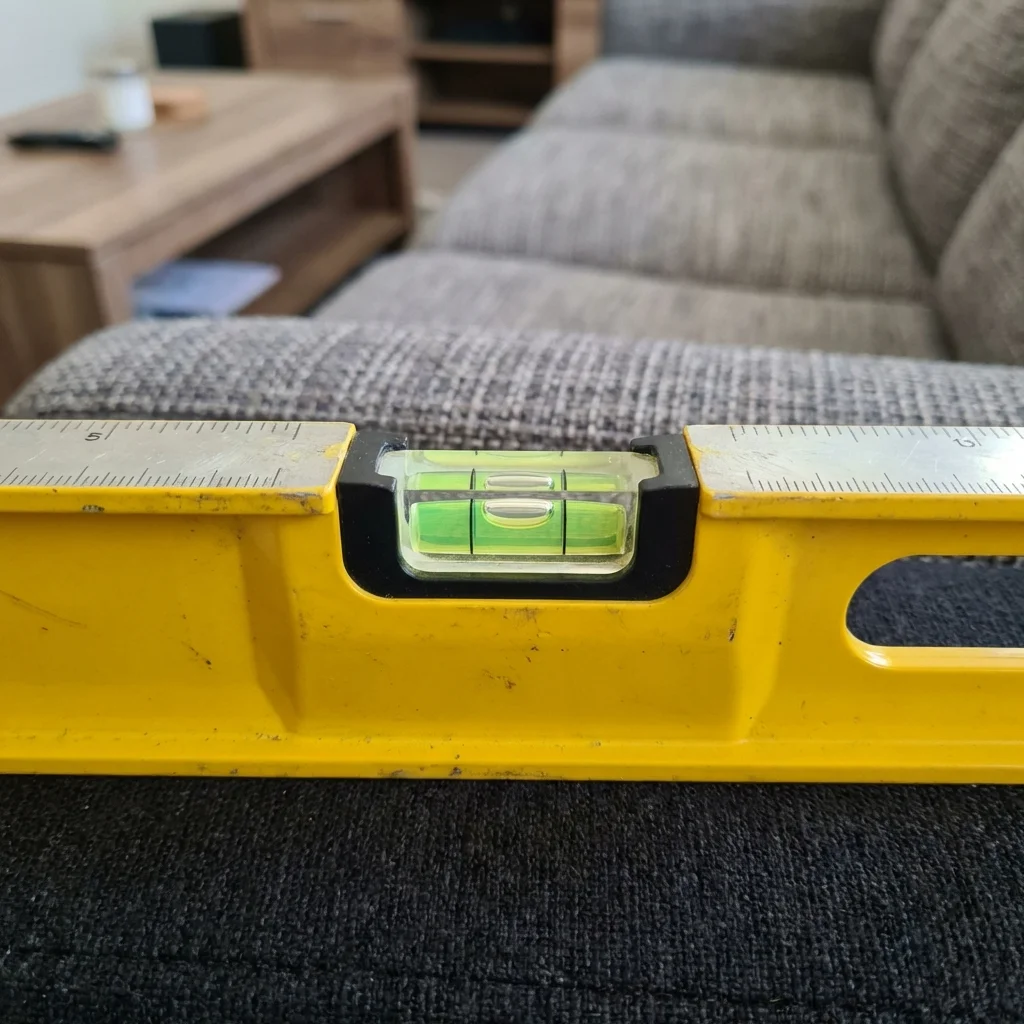
When I look at a sectional, I mentally draw a wear map like that image, because it explains why “the couch wore out fast” usually means “one spot wore out fast.” Your chaise zone and the outside end seat are where people drop their full weight, lounge for hours, and twist in and out, so they get punished in a way the middle seats simply do not.
In the showroom, I treat the hot zone like a separate product that I have to approve. I sit on the chaise where your hips will land, then I scoot toward the outer edge and do the same, because the outside edge is where a weak rail and a tired cushion team up and create that low, rolled outward feeling.
Then I do a quick height check that does not require tools. I stand back a few feet and sight along the top of the seat cushions from the side, and I look for a gentle downhill slope toward the chaise end on a floor model, because if it already looks like the chaise is sitting “relaxed,” you are seeing the future.
I also use my hand to compare resistance across the hot zone in a way that mimics real use. I press down firmly where your tailbone would land, then I press a hand width away, and I pay attention to whether the foam feels uniform or if there is a soft crater surrounded by firmer edges, because crater foam is what turns into a permanent hammock once it has no rotation options.
If the sectional uses a bench cushion across multiple seats, I do not assume that solves the problem. A bench can hide differential wear for a while, but the hot zone still compresses more, and later you end up with a long cushion that looks fine at the seams but feels like it has a single worn pocket you cannot swap out of the lineup.
The most actionable thing you can do with this wear map idea is to ask yourself whether the hot zone can be moved, even a little. If the chaise is reversible, if the ottoman can swap sides, or if the modules can be rearranged later, you have a real lever to spread out that ten times wear, and if everything is locked to one layout forever, you should buy it assuming the chaise end will be the first place that looks and feels older.
I also ask the salesperson to confirm something that matters more than any fabric pitch. I ask whether the chaise cushion core is the same build as the standard seat cores, and whether the support under the chaise is the same style as the support under the other seats, because the fastest failures happen when the highest use zone quietly has different, weaker structure underneath.
If you remember one thing from this image, I want it to be this. You are not shopping for how the sectional feels when it is evenly used, you are shopping for how it will feel when one spot gets ten times the life, and that means you should judge the whole purchase by the worst case seat, not the best case one.
The "Cushion Core Swap" Trick
When I get stuck with a chaise cushion that cannot be flipped or rotated, I look for one escape hatch, I see whether the sectional lets me do what I call a cushion core swap. This is not about swapping whole cushions around, it is about swapping the foam inside, so the high traffic chaise cover gets a fresher, firmer core without you buying anything.The first thing I check is whether the seat cushions have zippers that let you access the insert without tearing anything open. In the showroom, I will actually ask you to unzip the chaise cover and one of the least used seat covers, usually that armless middle chair, because I want to see whether we are dealing with simple, standardized foam blocks or a one off sculpted shape that makes swapping impossible.
If the sectional uses standardized square or rectangle cores for the inner part of the cushions, and the differences are mostly in the cover shape, you have a real long term maintenance move available. What you are hoping to find is that the “ghost seat” core is the same thickness and general footprint as the core that lives in the high wear zone, because that means you can move the firm, underused foam into the chaise cover later and bring the chaise back up to a more even feel.
What I mean in plain terms is that you are borrowing life from the least used seat and giving it to the most used seat. You are not fixing a broken frame, and you are not magically making cheap foam good, but you are often able to equalize that annoying height mismatch where the chaise feels tired and the middle seat still feels tall.
In a showroom, I do a fast “swap feasibility” check without making a mess. I look for a zipper that opens wide enough to actually remove the insert, I check whether the insert looks like one simple foam slab or a complex layered burrito, and I notice whether there is Dacron wrap or a fiber layer that is sewn to the cover in a way that will make re stuffing a wrestling match.
I also pay attention to whether the brand uses any internal tricks that prevent a clean swap. If the insert is glued to a topper, if it has a built in gel pad that is stitched in place, or if the foam has a notch or bevel that keys it to one specific cover, I assume your future core swap will be frustrating or impossible, even if there is technically a zipper.
When the salesperson tells you “the cushions are not reversible,” this is the follow up I use to get a real answer. I ask, “Are the foam cores inside the chaise and the armless chair the same size and thickness, or are they different,” because if they are the same, you can plan to swap cores later when the chaise starts to slump.
If you want to be extra practical, I would decide right in the store whether you would actually do this later. If the covers are tight, the fabric is grippy, and it already takes effort for two people to get the insert back in cleanly, I treat the core swap as a nice theory that you will never use, and I go back to judging the chaise as if it has to survive on its own.
If the swap looks easy and the foam blocks look standardized, I treat that as real value, because it gives you a way to correct the most common sectional aging pattern without calling for parts. It is not glamorous, but it is one of the few realistic ways you can keep the chaise from becoming the permanent low spot while that middle cushion stays weirdly new.
Maintenance Schedule for Uneven Wear
Once you bring the sectional home, I treat uneven wear like something you manage on purpose, not something you discover one day when the chaise suddenly feels lower. The goal is to keep grit from grinding the fabric, keep the cushions sharing the abuse, and keep the modules sitting level so one piece does not start living as the permanent low spot.
Monthly, I deep vacuum the seams and especially the valley between seat cushions. I do not mean a quick pass over the top, I mean using the crevice tool and slowly working along the seam lines where crumbs and dust pack down, because that trapped dirt behaves like sandpaper when one cushion compresses and rubs against its neighbor.
Quarterly, I flip any rectangular cushions that actually allow it, and I only count it as a real flip if the same face is not landing back in the same direction. If your cushions are boxed and symmetrical, you can usually turn them over and also rotate front to back, and that is one of the few low effort ways to prevent the “favorite seat” from developing a permanent dish while the ghost seat stays tall.
Annually, I do the cushion core swap if the design makes it realistic. I open the zipper, pull the foam, and move the fresher core into the highest traffic cover, usually the chaise or the outside end seat, then I put the more compressed core into the lower use position, because that keeps the whole sectional feeling closer to one consistent height and firmness.
Every two years, I check whether the modules are still sitting in vertical alignment with each other, especially at the join where the chaise meets the next seat. If I can see or feel one section sinking lower, I look at the connector brackets and tighten them so the sections pull back into level, because once one module settles and stays there, you start feeling that ridge at the seam and the whole sectional reads as lumpy even if the cushions are not the main problem.
Explore Technical Reference

Sectionals: The Architecture of the Corner
Before purchasing a large sectional, understand the corner seat problem, connection hardware, and why 'Right Arm Facing' confuses nearly everyone ordering furniture.
Analyze Details →
Recliner Foam: The Apex Stress Problem
How recliner geometry creates unique foam stress patterns. Understanding
Analyze Details →