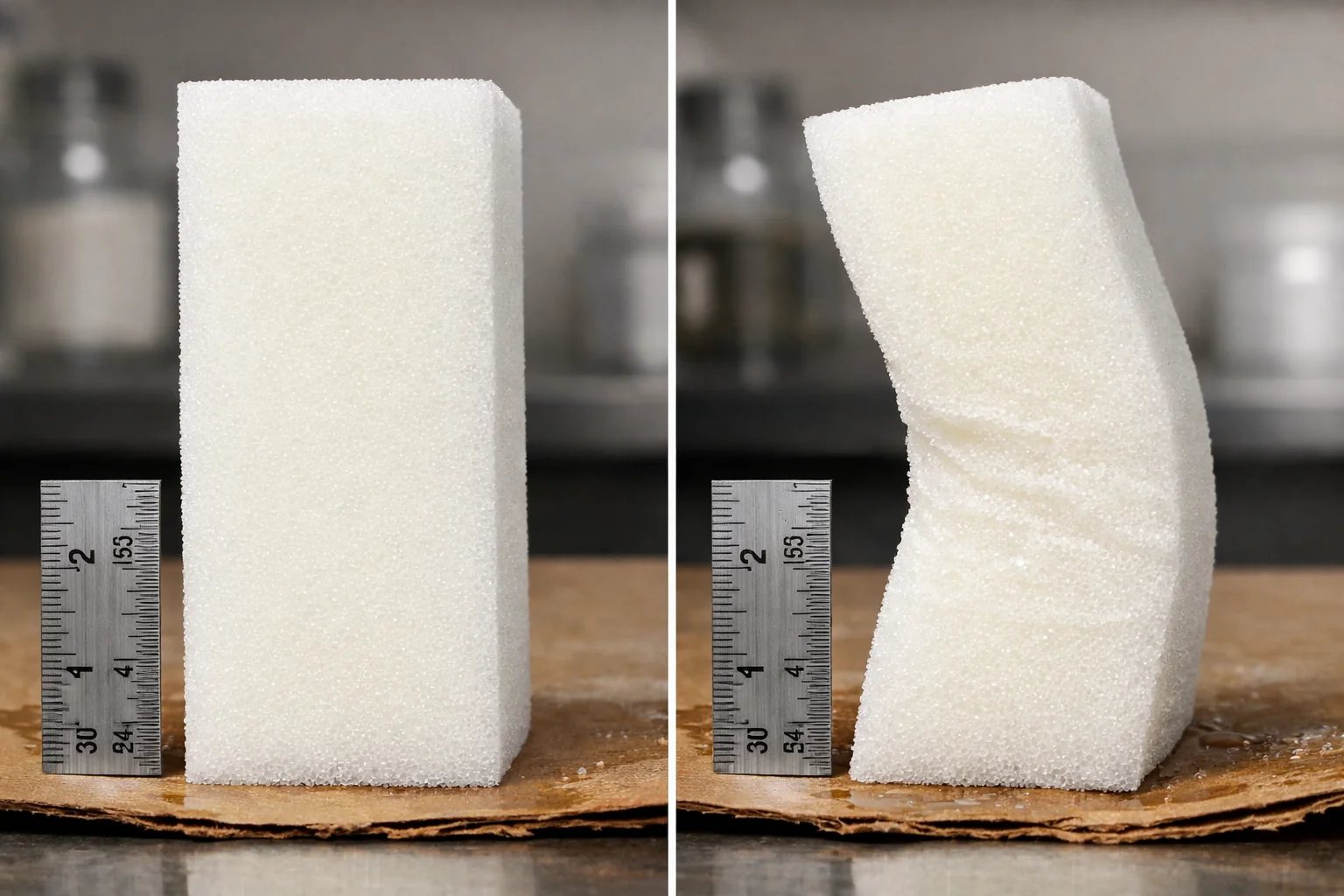
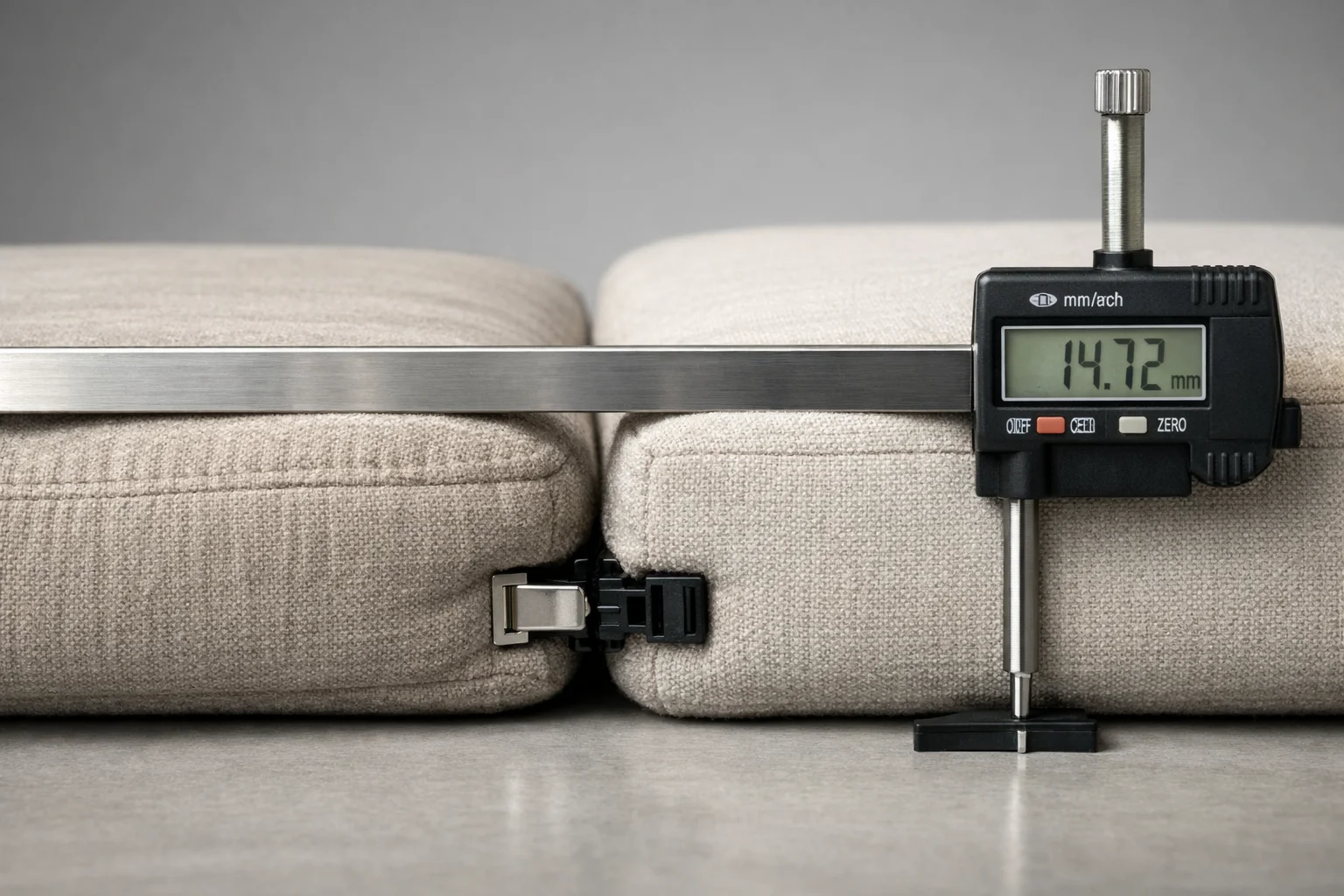
Recliner Problems: The 4 Core Mechanical Failures

Introduction
I learned the hard way that a recliner is not just a chair you sit on. It is a moving machine that you ask to lift your legs, tilt your weight, and lock itself in place thousands of times. When it fails, it usually does so in ways that feel sudden, but were actually predictable from day one.
Because a recliner is a high motion machine, it encounters physical problems that static furniture never faces. These issues are not random defects or bad luck. They usually come from simple mechanical stress where the design, materials, and your body weight all collide.
When you shop for a recliner, the showroom makes everything feel smooth and effortless. I have learned to treat that moment as a test, not a promise. The chair has not proven anything yet, because it has not been used, warmed up, or flexed under real life conditions.
This guide is about helping you spot warning signs before you buy. I am not trying to turn you into an engineer. I want you to know where recliners usually fail and what you can physically check in the store so you do not pay for comfort that disappears in a year.
If you understand that every recliner is fighting gravity, leverage, and repeated motion, your expectations shift. Instead of asking which one feels best for five minutes, you start asking which one is built to survive daily use. That mindset alone will save you from most expensive mistakes.
1. The "Wall-Scuff" Geometry Failure
The most common problem I see with recliners has nothing to do with build quality. It is a room layout mistake that almost everyone makes at least once.A standard rocker recliner does not just lean back. As you recline, the entire back travels rearward in an arc that can be well over a foot. In a showroom this is invisible because the chairs are usually floating in open space.
When you put that same chair near a wall at home, the top of the backrest hits the drywall before the mechanism finishes its motion. You might notice scuffed paint first, but the real damage is happening inside the chair. That contact creates back pressure that fights the footrest linkage every time you try to close it.
If you have ever struggled to push a recliner shut with your legs, this is often why. You think the mechanism is weak or worn out, but it is actually being forced to work against the wall on every cycle.
Before you buy, I always tell you to ask for the full recline depth and then physically picture that distance in your room. Most recliners need close to six feet from the wall to the front edge when fully open. If that sounds excessive, it is because the movement is larger than people expect.
In the showroom, I step behind the chair and watch how far the back travels as I recline it. If the salesperson looks confused by that behavior, that is already a warning sign. At home, I make sure the chair lives far enough from the wall that it never touches, even when slammed back by a tired body at the end of the day.
This single geometry mistake shortens the life of a recliner faster than almost anything else. Giving the chair enough space costs nothing, but ignoring it can make a perfectly decent mechanism feel broken within months.
2. The Shifted Center of Gravity (Tipping)
Another failure that surprised me the first time it happened was how easy some recliners are to tip when fully open. This is not about abuse or rough use. It comes from how the chair balances your weight once you are reclined.
When you lean back, your body weight moves toward the rear of the chair. The only thing keeping you upright is the weight and footprint of the base underneath you. If that base is too small or too light for the mechanism and your body, the balance point moves outside the chair’s support area.
You feel this most clearly when you sit near the top of the backrest or rest your head hard against it. I have also seen it happen when a child climbs onto the back of an open recliner. The chair does not slowly warn you. It suddenly wants to go over.
In the showroom, I always test this in a controlled way. I fully recline the chair, then press my upper back into the headrest and notice whether the base feels planted or floaty. If the front of the chair feels light or the whole thing rocks backward, that is not a good sign.
Pay close attention to swivel base recliners. A circular base looks solid, but it often provides less resistance to tipping than a fixed base with wide legs. I am not saying all swivel recliners are unsafe, but many trade stability for movement, and you feel that tradeoff when reclined.
I also look at the base itself, not just the upholstery. I crouch down and see how wide it actually is compared to the width of the chair. A narrow base under a tall backrest is a red flag, especially if the mechanism looks heavy and complex.
If you live with kids, pets, or anyone who leans, climbs, or plops down unpredictably, this matters even more. A stable recliner should feel boring when fully open. It should not react dramatically to shifts in your upper body weight.
At home, I place recliners where the back has clear space and the base sits fully flat on the floor. Even a slight tilt from uneven flooring can reduce stability when the chair is open. Gravity always wins, and I would rather notice that in the store than during a fall backward I did not expect.
3. The “Stick-Slip” Noise Effect
One of the most irritating problems I have dealt with is the high pitched squeak that shows up when you shift your weight. Most people assume it is metal rubbing inside the mechanism. In my experience, it is usually the upholstery itself.
This happens most often with leather and vinyl recliners. When two padded surfaces press together, like the seat cushion against the inside of the arm, they can grab each other instead of sliding smoothly. As you move, they repeatedly stick and release, and that vibration turns into a squeak you can hear across the room.
In a showroom, I test for this by sitting down and slowly shifting side to side without reclining. I listen closely near the arms and the seat seam. A brand new chair should be almost silent during small movements, not just during full recline.
I also pay attention to how tight the upholstery is pulled. Very tight leather looks great under showroom lights, but it increases friction at contact points. When you sit, the surfaces compress harder against each other, which makes noise more likely over time as the leather warms up and softens.
If the chair already squeaks in the store, that is not going to improve at home. Movement noise tends to get worse as materials break in and lose their factory stiffness. I walk away from any recliner that makes noise before it has even been used.
At home, this issue is often fixable, but I would rather not start my ownership with a workaround. A light dusting of talcum powder or a proper leather conditioner applied carefully to the contact areas can reduce friction. I avoid oils and sprays on fabric surfaces because they attract dirt and can stain or weaken the material.
The key takeaway is that squeaking is not just annoying, it is a signal. It tells you that parts of the chair are fighting each other instead of moving cleanly. When I shop, I listen as much as I sit, because a quiet recliner usually means less stress on the materials over time.
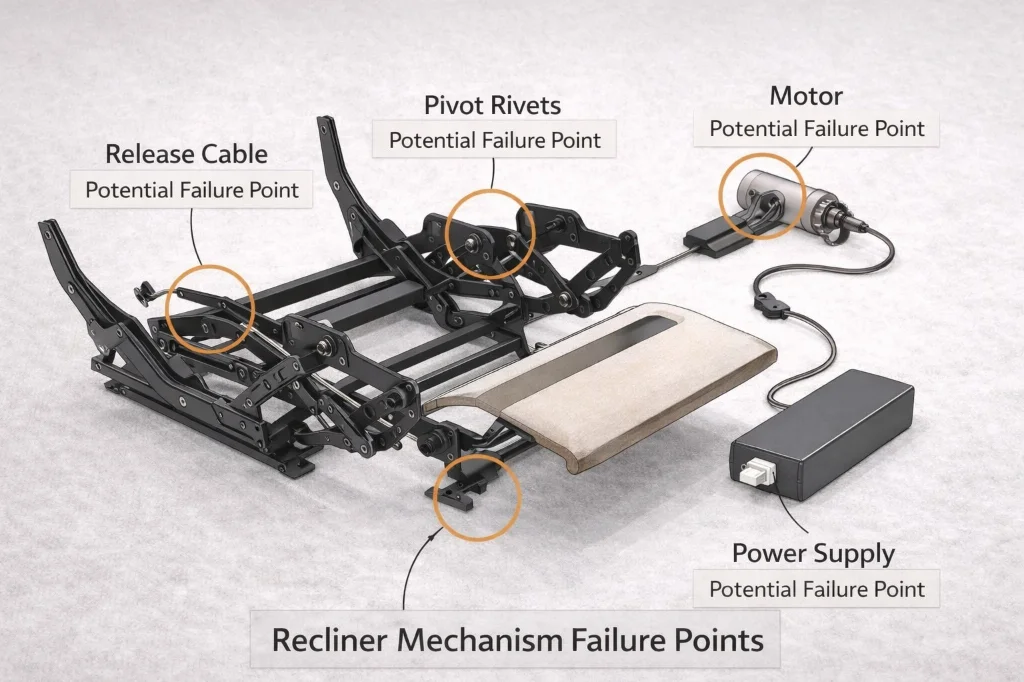
When I look at this diagram, I think about how invisible this failure is to most buyers. You never see bent linkage in a showroom because the chair is not fighting anything behind it. The damage only starts once the back hits a wall and your legs keep pushing the mechanism to finish its motion.
What matters for you is not the term counter torque. What matters is understanding that the chair is being asked to do two opposite things at once. Your legs are pushing to close the footrest while the wall is pushing back on the top of the chair, and something inside has to give.
In the store, I recreate this mentally by watching the arc of the back as I recline. I imagine a solid wall exactly where the back would land at full extension. If that imaginary wall is anywhere near the chair, I already know this model will be stressed in my room.
I also check how hard it is to close the recliner at the very end of the motion. If the last few inches require a sharp shove even in open space, that tells me the linkage has little tolerance for extra resistance. Add a wall at home and that stress multiplies every single day.
If you are considering a wall hugger style recliner, I am even more cautious. Some truly stay forward, but many still let the top of the back drift rearward under load. I lean my head back firmly and watch whether the chair subtly slides or flexes backward as I recline.
At home, I treat wall clearance as part of the purchase price. If I cannot give the chair the space it wants, I do not buy it, no matter how good it feels. A recliner that never touches the wall will age slowly and predictably. One that does will quietly bend itself out of shape until one day it stops cooperating.
This image is why I never judge a recliner by comfort alone. I judge it by whether it can complete its full range of motion without fighting my room. If the chair and the space are not compatible, the mechanism will lose that argument long before you think anything is wrong.
4. Fastener Fatigue (The "Clunk")
If you hear a loud clunk when the footrest snaps shut, I want you to pause and listen to what the chair is telling you. In my experience this sound almost never means a broken mechanism. It usually means something simple has started to loosen.
What is happening is not dramatic failure. Every time the footrest closes, the mechanism slams to a stop and that impact slowly shakes the bolts that hold the steel frame to the wood. They do not back out visibly, but even a tiny amount of looseness is enough to let parts shift and collide instead of landing cleanly.
In the showroom, I test for this by reclining and closing the chair several times in a row. I am not gentle about it, because real use is not gentle either. A healthy recliner closes with a solid, muted thump. If I hear a sharp clack or feel a jolt through the seat, I assume the fasteners are already working loose.
I also pay attention to whether the sound comes from one side. An uneven clunk often means one mounting point is taking more stress than the others. That tells me the wood frame or the bolt placement is not very forgiving once things start to shift.
This problem gets worse quietly over time. As the bolts loosen, they start to oval out the holes in the wood. Once that happens, tightening them later does not fully fix the issue because the fastener no longer has solid material to bite into.
At home, I treat this like basic maintenance rather than a repair. About twice a year, I flip the chair carefully and put a wrench on the main mounting bolts that connect the mechanism to the frame. I am not cranking them down aggressively. I am just bringing them back to snug before movement turns into damage.
When you are buying, ask the salesperson if the mechanism is bolted directly into hardwood or into softer engineered wood. You do not need a technical answer. You are listening for confidence versus vague reassurance. A solid answer usually means the manufacturer expects these fasteners to hold long term.
The clunk is not something to ignore or explain away. It is a warning sound that tells you the chair is absorbing shock where it should be moving smoothly. I would rather hear nothing at all, because silence usually means the fasteners are staying tight and the forces are being spread the way they were meant to be.
Advanced Troubleshooting Checklist
When a recliner starts misbehaving, I try to read the symptom like a clue instead of assuming the whole chair is junk. Most problems announce themselves in very specific ways, and those patterns can tell you what kind of design you are dealing with before you buy the same mistake again.
If a footrest will not stay closed, I think about what is supposed to hold it there. In many recliners, a spring helps pull the footrest back into its latch at the end of the motion. When that spring is weak or when the latch track is dirty, the footrest pops back out even though you pushed it all the way down.
In a showroom, I test this by closing the footrest and then lightly tapping it with my heel. A healthy latch stays put and feels decisive. If it creeps back out or feels vague, I assume the closing force is marginal and will only get worse with use and dust.
If a power recliner moves in little jerks instead of one smooth motion, I pay close attention. That behavior often means the motor is working harder than it should and stopping to protect itself. From a buyer’s perspective, that tells me the mechanism is already operating near its limit.
I test this by holding the button and listening to the motor. A smooth, steady sound usually means the load is reasonable. A pulsing sound or stuttering movement tells me friction or resistance is high, which translates to more wear over time and a shorter life for the motor.
When a chair leans to one side, even slightly, I treat that as a structural warning. Recliners rely on mirrored linkages to move evenly. If one side drops lower or feels softer, something is no longer sharing the load.
In the store, I sit squarely in the middle and then shift my weight side to side. If the chair responds unevenly or looks twisted when reclined, I walk away. That kind of imbalance tends to get worse, not better, as parts wear and loosen.
A loose recline handle is another small sign that I do not ignore. The handle is connected to a cable that pulls the latch open, and that cable stretches over time. When it does, the handle feels sloppy and the recline action becomes unpredictable.
I check this by pulling the handle slowly and noticing how much free movement there is before anything happens. A good chair responds quickly and consistently. A handle that flops around before engaging tells me the system already lacks adjustment range, which means future stretching will be harder to compensate for.
None of these issues mean a recliner is about to fail catastrophically. What they tell me is how much margin the design has. Chairs with generous margins feel boring and consistent. Chairs without them feel fussy, inconsistent, or slightly wrong even when new.
When you are shopping, I want you to use these behaviors as filters. You are not diagnosing to fix the chair. You are diagnosing to decide whether this model deserves a place in your home. If a recliner already needs excuses in the showroom, it will demand patience later, and I have learned that comfort is not worth that trade.