Power vs. Manual Recliners: The Actuator Conflict
Introduction
When you are standing in a showroom and the salesperson says power is “just a luxury upgrade,” I want you to mentally correct that. You are not just choosing a nicer button versus a handle, you are choosing between two different ways a chair or sofa fights gravity and moves your body.
A manual recliner is basically spring assisted leverage. Your body weight and a set of springs help swing the mechanism through an arc, so it tends to move in a couple of familiar positions and it likes momentum. In the store, that translates to this: you should pay attention to how much force it takes to start the recline, whether it “pops” into motion, and whether it feels like it wants to slam into the end of travel instead of settling gently.
A power recliner is linear actuation. A motor turns a screw or pushes a rod and the chair inches along wherever you stop it. In the store, that means you should focus less on the “wow” factor and more on how the motor behaves under load, whether it groans, pauses, or changes speed when you are actually sitting in it, and whether the motion feels smooth or slightly jerky like it is binding.
Here is the practical reason I care about the principle, not the marketing. Manual mechanisms tend to be simpler, and when they wear you often feel it as looseness, clunking, or a footrest that will not stay tight. Power mechanisms add wiring, switches, and a motor or actuator, so when they wear you often see it as uneven movement, one side lagging, or a recliner that “works” but no longer lifts or closes with confidence.
So as you read the rest of this guide and test sofas in person, I want you to keep one question in your head. Do you want something that relies on your push and a spring to swing into place, or something that relies on a motor to push itself into position, and are you comfortable owning the failures that come with that choice.
The ‘Binary’ Problem
The "Binary" Problem
Manual recliners are basically binary in the way they behave. The mechanism is built around a high tension spring system that is either latched upright or released into recline, so there usually is not a truly stable middle position you can relax in without constantly bracing with your legs or shifting your weight.Power recliners feel completely different because the motor and screw drive can hold the chair wherever you stop it. In practice that means you can land at a small angle that takes pressure off your lower back or shoulders, and it will actually stay there instead of drifting forward or snapping back.
In a showroom, I test this by trying to “live” in the in between. I recline just a little, then I stop, I let my legs relax, and I pay attention to whether the chair holds me or whether I have to keep fighting it with calf pressure or a weird tense posture.
With a manual recliner, you will often feel the mechanism hunting for one of its two comfortable states. If it feels like it wants to fall into the next notch, or if you feel a constant push trying to close you back up, that is the binary behavior showing itself.
This matters more than people think because your body usually does not want fully upright or fully reclined for long stretches. If you watch yourself at home, you probably shift every few minutes, and the “almost reclined” angle is where you read, scroll, watch TV, or try to take pressure off a sore hip without going flat.
So here is what I would do with your own body in the chair. Sit normally, then recline only until you feel your lower back pressure ease a bit, and stop. If you cannot stop there and relax because the chair is either springing you forward or urging you backward, you are signing up for a recliner that will be used in two positions, even if you thought you wanted lots of positions.
If you are considering manual because you want simplicity, I would still make this binary test part of your decision, especially if you have back issues, reflux, or you like to nap lightly rather than fully sprawl. If you are considering power, I would not just click buttons fast, I would stop at three random in between angles and make sure it actually holds steady without slowly creeping or making you feel like the mechanism is flexing under you.
One last detail I look for is whether the chair feels secure when I shift my weight side to side in that in between position. A recliner that is happiest only at the endpoints often feels a little wobbly in the middle, and that wobble is the kind of thing that tends to feel worse six months later, not better.
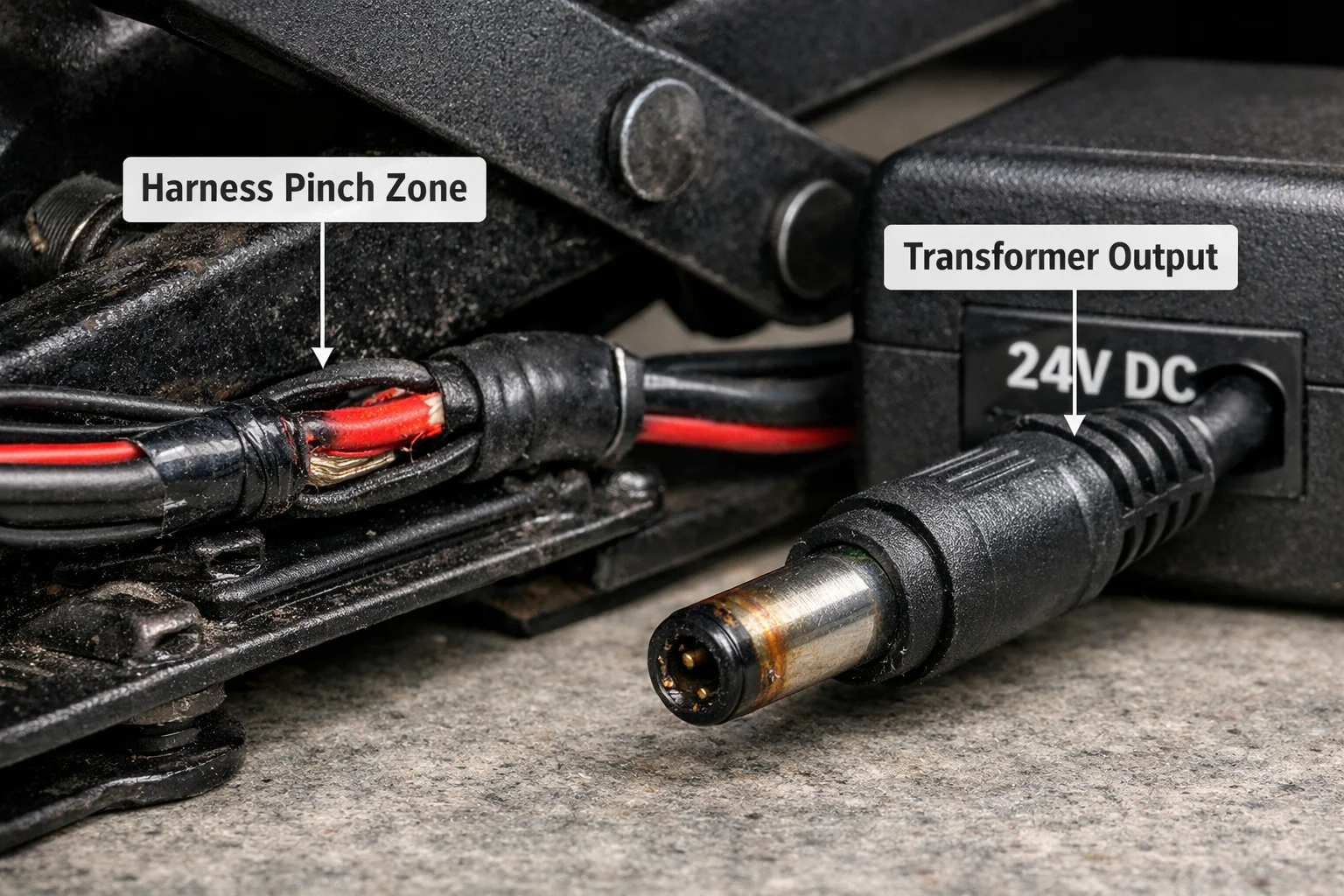
When I see a power recliner fail early, it is often not because the motor was weak, it is because the wiring was treated like an afterthought. That photo is the kind of thing I look for in person, a harness that gets bent, pinched, or tugged every time the frame moves.
In the showroom, I get down and look under the seat with my phone flashlight while the chair is moving. I am not trying to diagnose electronics, I am checking whether any wire bundle is draped across a scissor joint, rubbing a sharp metal edge, or pulled tight like a guitar string when the footrest goes out.
I also pay attention to where the transformer and plugs sit. If the transformer is hanging in midair by its cord, or the connector looks like it could get kicked, vacuumed, or snagged when you slide the sofa, I treat that as a durability red flag because those are the exact “it worked yesterday” failures that are miserable to chase.
While you are running the recline in and out, watch the harness the whole time and see if it has slack in every position. If the wire gets tense at the end of travel, that tension has to go somewhere, and over time it usually shows up as intermittent power, a recliner that stops halfway, or a switch that suddenly does nothing until you jiggle the plug.
If you cannot see much under the sofa because it is sealed up, I take that as a cue to listen harder and test longer. I would run it through a few full cycles back to back, then stop in the middle and shift my weight a bit, because a strained harness sometimes announces itself as a tiny cut out or a faint clicking relay sound when the wire moves.
Before you buy, I would also ask the salesperson to show you, right there on the floor model, how the chair is supposed to be plugged in and where the transformer is meant to live. If their answer is basically “it just goes somewhere under there,” I assume you will be the one troubleshooting it later, and I either negotiate harder or I choose a model with cleaner routing and better strain relief.
The Manual Mechanism: The Ejector Seat
A manual recliner is basically a spring loaded catapult with a trigger, and the trigger is that handle or lever you pull. In the showroom it can feel satisfyingly simple, but I always remind myself that the simplicity is doing a lot of work through spring tension.
The part most people do not test is the close. When you close a manual recliner, you are not just “putting the footrest down,” you are using your legs and body weight to overpower the kick out springs so the mechanism can climb back into the locked upright position.
This is where I see real world disappointment, because the chair can recline easily and still be hard to shut. If you have knee pain, arthritis, a knee replacement, or you just do not like straining with your calves, that last inch of closure can become a daily fight.
In the store I test closure like I would at home, not like I am trying to impress a salesperson. I recline, then I try to close it while keeping my back against the seat and my feet in a normal position, and I pay attention to whether it takes a smooth push or a sharp hard shove right at the end.
If it only closes when you scoot forward, brace, and do a strong leg press, I would treat that as a warning sign. Even if you can do it today, that motion is exactly the kind of thing people start avoiding when they are tired, sore, or carrying a sleeping kid, and then the recliner just lives open and becomes annoying.
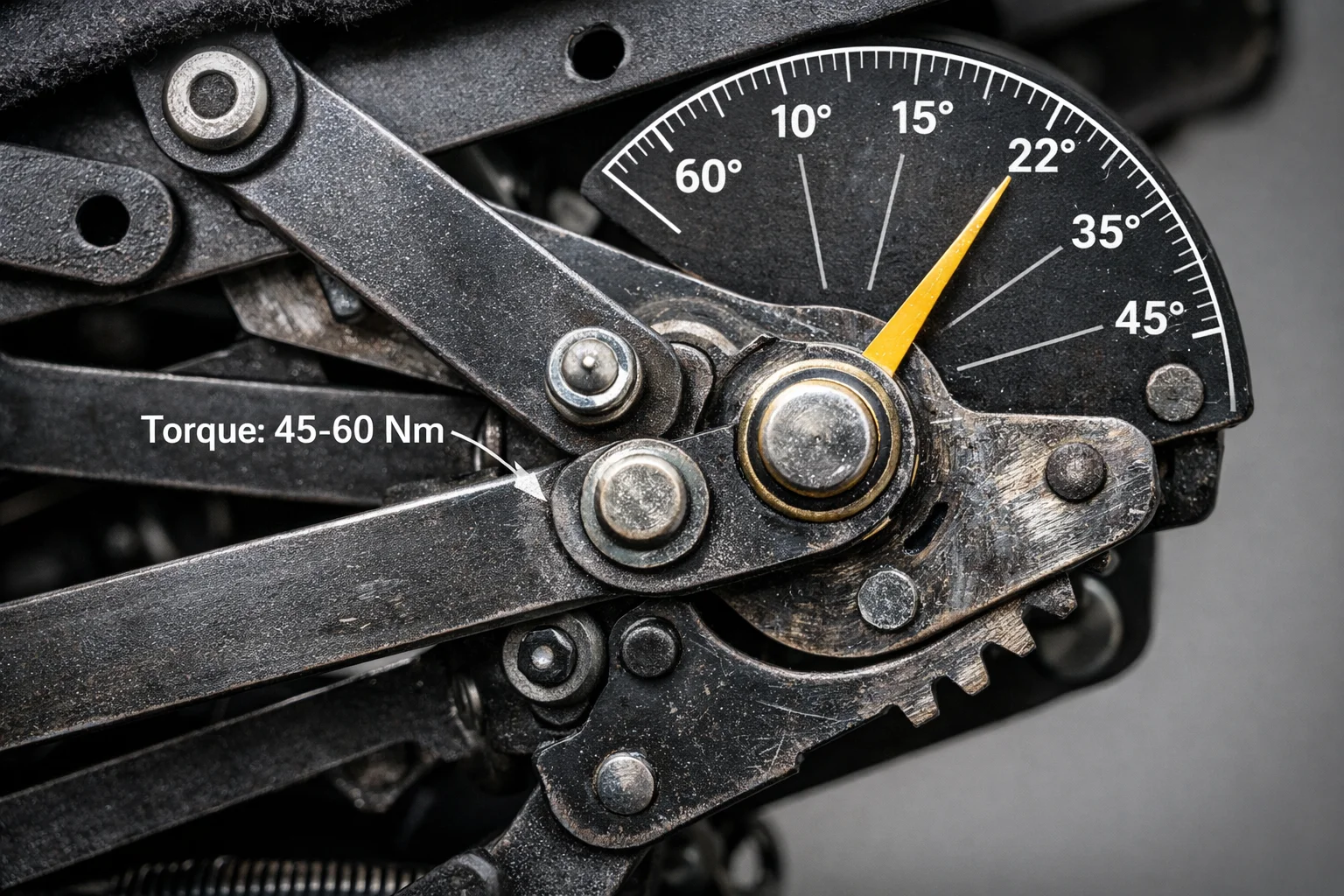
I also watch for the “almost closed but not latched” situation. If the footrest tucks in but the chair will not lock fully upright without one extra kick, that is the torque threshold problem in plain language, and it is the kind of problem that turns into service calls later because it feels like something is broken when it is really just demanding more force than you want to give.
There is one place where manual really is better, and it is getting out fast. A manual recliner can fling you back to standing in a second or two, and if you are the type who hates waiting for a motor to whir, you will love that.
But I would still do a reality check on exit, because speed is not the same as control. I put it in a reclined position, then I close it and stand up as if I am getting up to answer the door, and I notice whether the chair helps me up or whether it snaps forward in a way that makes me catch myself.
If you want manual, my advice is to shop with the weakest day in mind, not the strongest day. If you cannot close it easily and repeatedly without thinking about your knees or calves, I would not buy it, because you will not magically enjoy it more after six months of use.
The Power Mechanism: The Linear Actuator
When you choose power, the heart of what you are buying is a 24V DC motor driving a linear actuator. I think of it as a slow, strong pushrod that moves the chair in a straight line instead of flinging it through an arc like a spring loaded manual mechanism.
What makes it powerful is the gearing, usually a worm gear turning a screw inside the actuator so the motor can push a lot of weight without needing a huge electrical draw. In a showroom, I translate that into a simple test: I recline with my full weight in the seat, then I shift my hips and lean back a little harder while it is moving and I listen for strain.
You want the sound and speed to stay consistent as the chair lifts you. If it starts smooth and then bogs down near the end of travel, or it pulses like it is binding, I assume the mechanism is working harder than it should and that tends to age poorly.
Power is also slower by nature, and I actually want you to notice that instead of being surprised later. A lot of power recliners take around eight to twelve seconds to go from fully reclined to upright, and in real life that feels like waiting when someone rings the doorbell or your kid needs you right now.
So I do a timing test in the store that matches real life. I fully recline, then I hit “close” and I ask myself if I would be annoyed doing this several times a day, and I also ask myself if the chair brings my body forward in a way that helps me stand or if it just slowly folds the footrest while leaving me sunk in the seat.
The good news is that the actuator itself is often not the fragile part. These are usually sealed units made to run for lots of cycles, so when people say “the power died,” I immediately suspect the boring stuff first, the transformer brick, the connectors, or a wiring harness that got pinched by the moving frame.
In the showroom, I confirm that by looking for a few practical details while the chair is in motion. I want to see the wire bundle routed with slack so it never gets pulled tight at full recline or full close, and I want the plugs to look protected instead of hanging where a vacuum, a shoe, or sliding the sofa could smack them.
I also check where the transformer is meant to live, because that little brick is a common failure point and it is also the part you are most likely to disturb during cleaning. If it is just dangling by the cord, I assume you will eventually get intermittent power from a half loosened connection, and those are the failures that feel “random” at home.
One more test I do is the “stop and hold” test that manual mechanisms cannot really pass. I stop the chair at an awkward in between angle, then I keep my finger off the button and I wait, and I pay attention to whether it creeps or relaxes down a bit as if it cannot hold position under load.
If it holds steady, that is what you are paying for with power. If it drifts, chatters, or needs constant button pressure to stay put, I treat it like a warning that either the actuator is struggling or the frame is flexing enough that the mechanism is unloading and reloading as you sit.
If you are trying to decide between two similar sofas, I would rather you buy the one with a slightly slower, steadier motion than the one that moves faster but sounds stressed. In my experience, smooth and consistent is what still feels good a year later, and strained and jerky is what becomes a service call.

When I look at a diagram like this, I do not treat it like trivia, I treat it like a cheat sheet for what will annoy you after the honeymoon phase. The manual side is basically you supplying the energy, and the power side is the chair supplying the energy, which is why the failure modes feel so different in real life.
If you are leaning manual, I want you to focus on whether the chair asks for the same effort every time. In the showroom, I do three open and close cycles in a row and I pay attention to whether the third close suddenly feels harder, because that is the kind of thing that turns into “I hate this chair” once you are tired, sore, or distracted.
When you pull the handle and recline, notice whether it takes a clean, predictable body shift or whether you have to do a little launch to get it to go. That little launch is you brute forcing friction and spring tension, and it is exactly what tends to feel more abrupt and less graceful as the linkage loosens over time.
If you are leaning power, I want you to stop thinking of the motor as the whole story and start thinking of it as one piece in a chain. In the store, I listen for a steady pitch from the actuator the whole way through, because the worm gear style drive is supposed to be smooth and self holding, and big changes in sound or speed usually mean the mechanism is fighting alignment or load.
Here is a test that has saved me from a bad buy more than once. I recline, then I stop halfway, then I let my legs go heavy and I shift my hips like I would at home when I are getting comfortable, and I watch whether the chair holds position without any micro slipping. If it settles or creeps, that is not a minor quirk, it is a sign you may be relying on a motor and gearbox that is already working too close to its limits.
This diagram also explains why lift assist features can be great or disappointing depending on the execution. A manual spring system can snap you upright fast, but it cannot gently, steadily raise you into a stand the way a powered actuator can, so if you need controlled help getting up, I would not assume a random manual recliner will feel supportive just because it reclines.
On the flip side, if you like power because it feels “strong,” remember that strong is not the same as confident. I would rather you buy a chair that moves a little slower but sounds calm and consistent, because that usually means the gearing is not being pushed hard and the frame is not twisting while the actuator tries to do its job.
If you take one practical thing from this image, let it be this. When you test a manual recliner, you are testing your body’s willingness to do the work every day, and when you test a power recliner, you are testing whether the chair does the work smoothly without drama, even when you shift and fidget the way you will at home.
The Cord & Battery Logistics
Power recliners introduce a new failure mode that I have learned to hate, the tether. Unless you have a floor outlet exactly where the sofa will live, you are committing to a power cord that has to reach the wall, and that cord tends to become both a trip hazard and a layout constraint that quietly dictates where the whole seating group can go.In the showroom, I want you to stop thinking “does it recline nicely” for a moment and instead picture your actual room. Ask where the nearest outlet is, then look at the side of the recliner where the cord exits and imagine the path to power. If that path crosses a walkway or will get run over by a vacuum head every week, I treat it as a durability issue, not just an aesthetic one, because cords fail at the points where they get bent, pinched, or yanked.
I also ask the salesperson to show me the cord length on the floor model and how it is meant to be managed. If the answer is basically “just run it under the rug” or “you can figure it out,” I assume you will eventually snag it with your foot, a pet, or when you slide the sofa to clean, and the first thing that gets flaky is often the low voltage connection at the transformer or the plug at the chair.
If you love the idea of power but hate the tether, this is where a battery pack can be a real quality of life upgrade. Many modern power recliners can take a lithium ion battery pack so you can keep the cord tucked behind the sofa and only plug in occasionally to recharge, which can eliminate the everyday tugging and tripping problem.
What I do in person is ask two very specific questions before I get attached to the model. I ask whether the battery is an official option for that exact reclining system, not just “a battery exists,” and I ask where the battery physically mounts, because a battery that ends up dangling or getting kicked is just a different kind of annoyance.
I also pay attention to how the chair behaves when it is lifting you, because weak battery packs often show themselves under load. If you can test the floor model on battery, recline it with your full weight, then run it back toward upright and listen for the motor slowing or sounding strained near the hard part of the lift. If the chair moves confidently on wall power but feels hesitant or pulsy on battery, I assume the battery is marginal and you will feel that more as it ages.
If the salesperson starts talking specs, the only one I personally use as a quick filter is capacity, because tiny packs tend to be the ones that feel “strong” for a week and then turn annoying. I would not buy a battery pack that is rated under about 2,000 mAh, and I would rather go higher if you use the recline frequently or you have a heavier occupant, because the lift phase is where the system asks for the most from the battery.
The last thing I want you to do is a simple practicality check that no one mentions. Ask yourself how you will charge it. If recharging means pulling the whole sofa out from the wall every time, you will not do it consistently, and then you will end up back on the tether anyway, except now you are also troubleshooting a “dead recliner” that is really just a drained pack.
Technical Comparison: Performance Tiers
When people argue manual versus power, they often talk past each other because they are really shopping in different performance tiers. I translate the technical differences into one showroom question you can actually answer: do you want fast and simple with a couple of usable positions, or do you want slow and controllable with more parts that can misbehave.
On positioning, manual is basically open or closed in real life, even when the salesperson implies you can “stop anywhere.” In the store, I prove it to myself by trying to hold three slightly different angles for at least twenty seconds each, and I treat any drifting, springing forward, or constant leg bracing as confirmation that it is not truly a relaxed middle position.
Power gives you the “any angle” benefit, but I only count it if the chair will actually hold under fidgeting. I stop at a random angle, take my hand off the button, then I shift my shoulders and hips the way I will at home, and I watch for creeping, tiny clicks, or a feeling that the mechanism is unloading and reloading under me.
On cycle speed, manual is effectively instant, and that can be a real advantage if you get up a lot. In the store, I ask myself if I will value that speed in daily life, or if the speed is really just masking the fact that I do not like the force and snap of the motion.
Power is slow, often slow enough to annoy you, and I think you should treat that as part of comfort, not a minor spec. I do a full recline and a full return while imagining an actual interruption, a doorbell, a boiling pot, a kid calling my name, and I decide whether waiting ten seconds feels fine or feels like a friction point I will resent.
On effort required, manual demands calf and core effort, especially on closure. If you are buying manual, I want you to test the close three times in a row without “cheating” by scooting forward and doing a big leg press, because the easiest close in the world is the first one when you are fresh in a showroom.
Power demands basically no physical effort, but it demands patience and it demands that the system has enough torque in reserve. I listen for the motor keeping the same pitch as it lifts me, because the chairs that sound like they are working hard on day one are the ones I have seen feel weaker and more hesitant later.
On maintenance, manual is the kind of ownership where small mechanical issues can often be managed, or at least diagnosed, without feeling helpless. If the floor model already squeaks, clunks, or feels gritty when it moves, I assume it will need attention, and I ask the salesperson bluntly whether the store ever adjusts cable tension or services the mechanism, because vague answers usually mean you are on your own.
Power maintenance is less about lubrication and more about avoiding wire stress and bad connections. I look underneath for how the wire bundle is routed, whether it has slack in every position, and whether anything is zip tied in a way that makes a sharp bend, because most of the “power failures” I have dealt with felt electrical but were caused by physical strain.
On room layout, manual wins because it is truly mobile. If you rearrange furniture a lot, if you vacuum aggressively, or if you have a room where cords will cross traffic, manual is simply less to manage.
Power makes you plan like you are placing a lamp, not a chair, unless you commit to a battery pack and a charging habit you will actually keep. In the store, I literally look at the side where the cord exits and I imagine it in my room, and if I cannot picture a clean, protected path to power, I treat that as a reason to reconsider the model, not a reason to buy a rug and hope.
On repairability, manual is often more forgiving because the common problems are mechanical and accessible. I still look for warning signs that the mechanism is already sloppy, like a footrest that twists a little side to side or a handle that feels vague, because “repairable” is not the same as “won’t annoy you.”
Power is usually a component swap story, which can be fine if the brand supports parts and the design is accessible. In the showroom, I ask one practical question that tells me a lot: if the actuator or switch fails, does a technician have to unupholster the chair to reach it, or is it reachable from underneath with basic access panels, because the labor is what turns a small part into a big headache.
If you want my bottom line from this comparison, it is that manual tends to punish you physically and reward you logistically, while power tends to reward you physically and punish you logistically. When you test sofas, I want you to decide which “punishment” you will tolerate with less regret, because that is usually what ownership feels like after the novelty wears off.
Explore Technical Reference
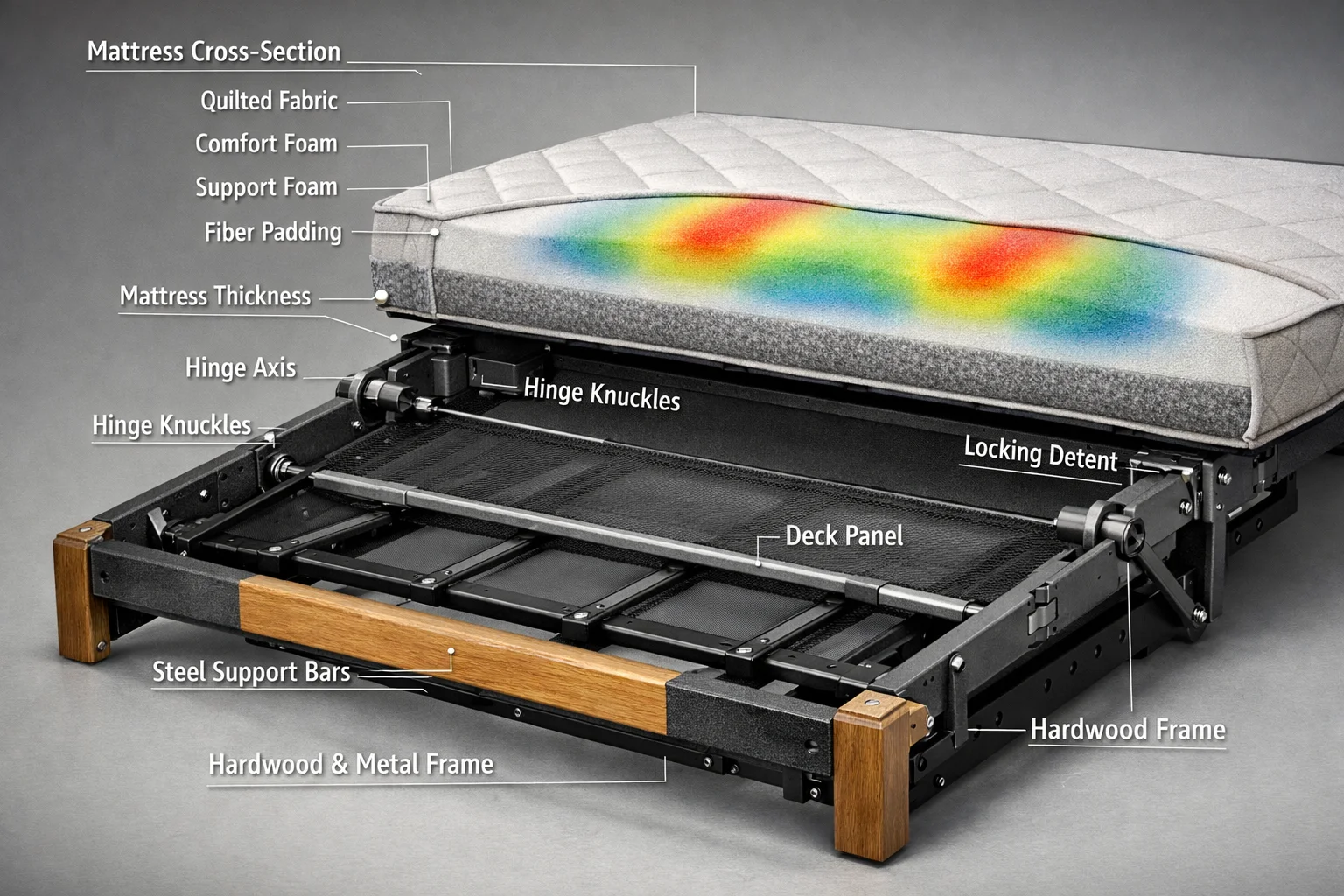
Sofa Beds: The Dual-Function Compromise
How sofa bed mechanisms balance sitting and sleeping functions. Understanding pull-out systems, click-clacks, and why engineering has improved but compromise remains inevitable.
Analyze Details →
The Rise of Frameless: Why Foam is Winning
From Japanese Tatami style to 'Nugget' couches. Why frameless furniture
Analyze Details →