Student Furniture: Buying for the Dumpster
Introduction
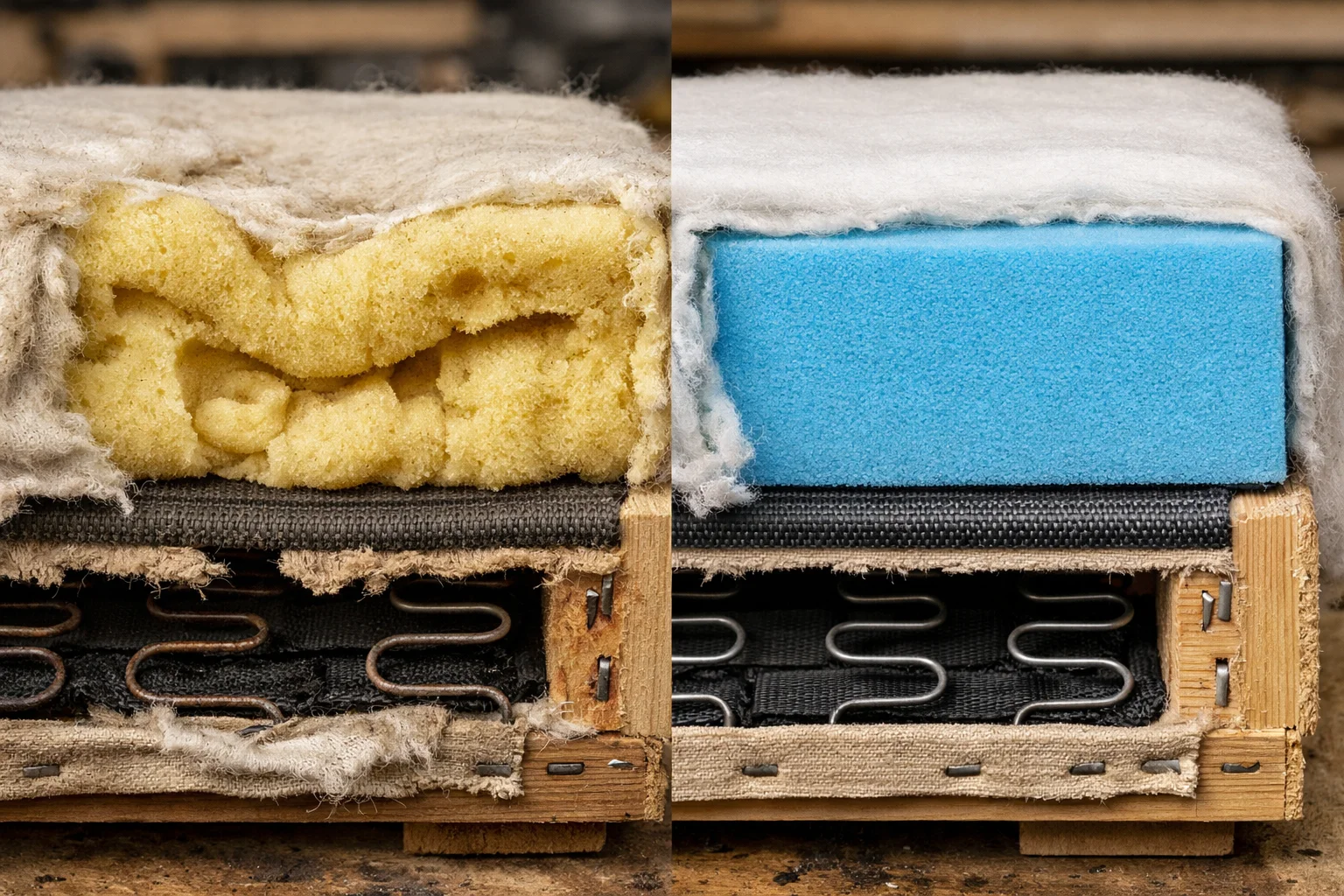
A furniture salesman tried to sell me a $600 “starter sofa” for my daughter’s dorm. I laughed. Student furniture has a lifespan of about four years, and it almost always ends up on a curb with a “free” sign taped to it.
That moment stuck with me because it exposed how upside down sofa pricing and expectations have become. I have owned enough couches to know that price alone tells you almost nothing about how long one will last or how it will feel after a year of daily use.
I am not a designer or an industry insider. I am just someone who got tired of sagging seats, flattened cushions, and frames that creak long before they should. I started paying attention in showrooms because I did not want to keep making the same expensive mistake.
This guide is written so you can do the same. I will walk you through what I personally check when I stand in front of a sofa, what questions I ask, and what warning signs make me walk away. You do not need special tools, technical training, or insider access to use this advice.
My goal is simple. I want you to leave a store knowing whether a sofa is built to survive your real life, or whether it is just a pretty object that will disappoint you once the return window closes.
The "Move-Out" Calculation
When I think about whether a sofa makes sense, I imagine the moment it has to leave the apartment. Students usually move every year, often on the same chaotic spring weekend, and that is when reality hits.I do a simple mental check. If the rental truck costs about two hundred dollars and the sofa could only be resold or donated for maybe fifty, the math is already telling you something. Moving the sofa costs more than the sofa is worth.
In that situation, the rational choice is to abandon it. I have seen this play out again and again, with couches left on curbs because no one can justify the effort or the expense of hauling them.
So my strategy is blunt. I never buy a sofa unless I am emotionally and financially fine with walking away from it. When you are in a showroom, ask yourself if you would feel angry or relieved if you had to leave this sofa behind in a year.
If the price tag makes you feel trapped or guilty at that thought, it is the wrong sofa for a short term living situation. What you want instead is something cheap enough that you can use it hard, enjoy it, and let it go without regret when life changes.
The “Futon” Defense
When I talk to parents or students who are set on buying a sofa for a short term living situation, I usually stop them and say this out loud. A classic metal futon is often the most honest choice you can make, especially if the furniture is expected to survive chaos rather than look impressive.
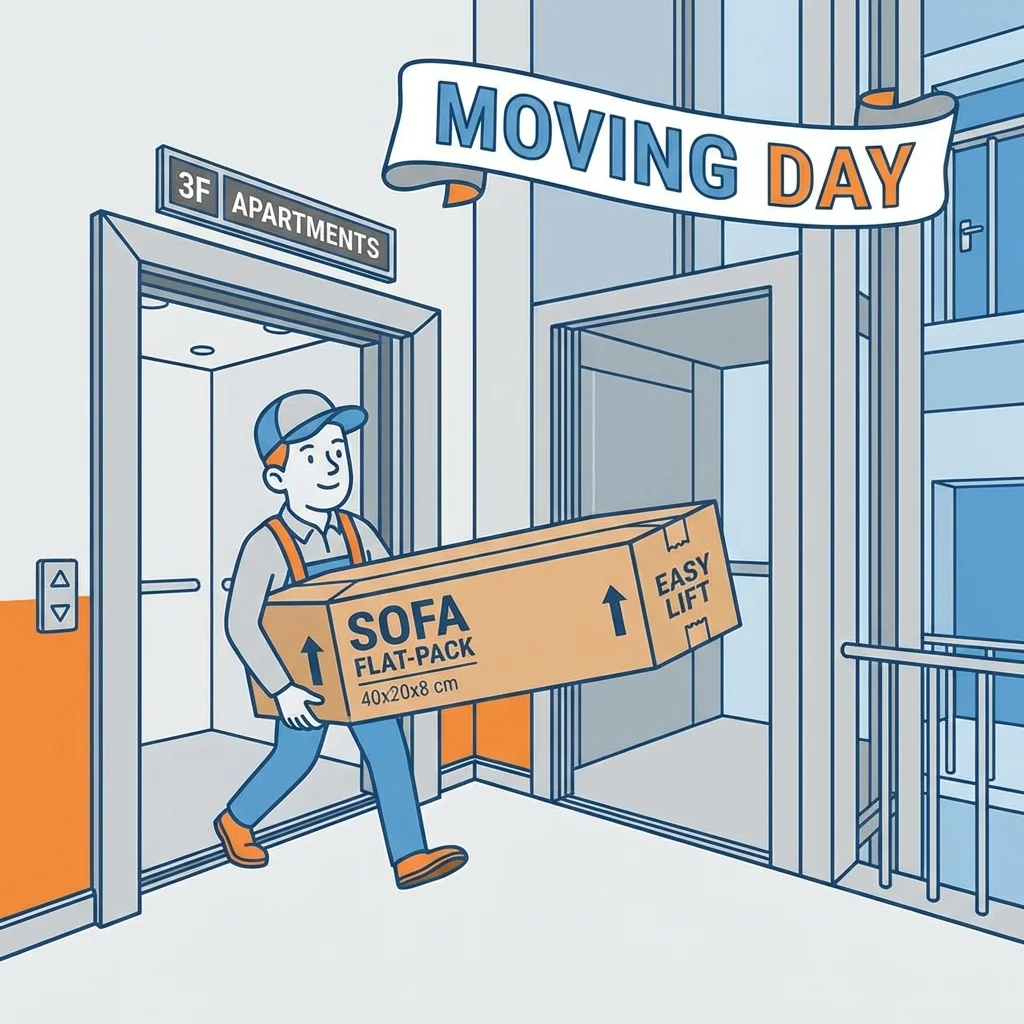
The first reason is portability, and this is not abstract. I have helped move enough furniture to know that a futon frame that breaks down into metal tubes will fit in the backseat of a small car. If you are standing in a showroom, ask yourself if you could realistically move this thing without renting a truck or bribing friends with pizza.
That question alone eliminates most sofas. A futon passes it easily, because it comes apart with basic tools and does not rely on bulky one piece frames that trap you the moment you sign the receipt.
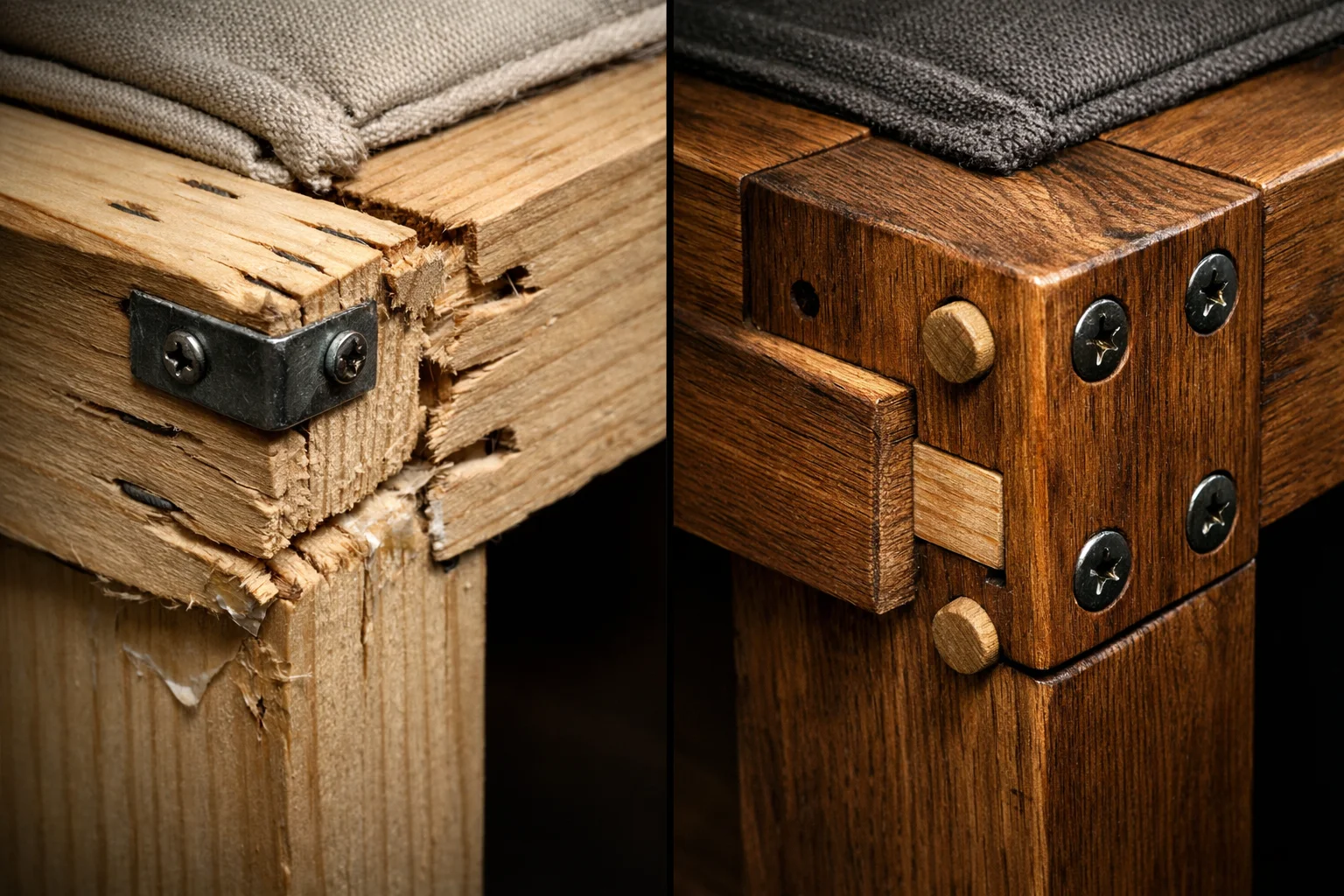
Durability is the second reason, and this is where metal quietly wins. I have watched wooden sofa frames crack when someone sits down hard or flops sideways after a long day. Metal flexes instead, and that flex is forgiveness.
If you picture four people piling onto a piece of seating at once, which happens more often than anyone admits, metal survives that abuse better than cheap wood stapled together. When you are in the store, grab the frame and give it a firm shake. If it feels like it wants to twist or complain, imagine it after a year of real use.
The last reason I defend futons is hygiene, which no one likes to talk about. A futon mattress usually has a removable cover that unzips. You can wash it, which matters more than aesthetics once spills and accidents become part of daily life.
You cannot wash a sofa. You can spray it, vacuum it, and pretend, but whatever soaks into the cushions stays there. If the idea of not being able to truly clean something makes you uneasy, that feeling is worth listening to.
I am not saying a futon is luxurious. I am saying it is honest about what it is and how it will be used. If you need seating that can be slept on, abused, cleaned, moved, and eventually discarded without a pit in your stomach, this is a rare case where the simplest option is also the smartest.
When you stand in a showroom and feel embarrassed considering a futon next to a polished sofa, remember what you are actually buying. You are buying time, flexibility, and the freedom to walk away when life shifts. For short term living, that trade is usually worth it.
The “Used” Arbitrage
If you truly want a sofa and a futon feels like too much compromise, this is where I land after years of regret. I do not buy new. I buy used, and I do it on purpose.
I look for a real leather sofa on Facebook Marketplace, usually priced between fifty and one hundred dollars. That price range matters because it changes how you behave as an owner. You stop babying the furniture and start using it like a tool.
Leather is not about luxury here. It is about control. When you are standing in front of a used sofa, ask yourself what happens when something spills. Leather wipes clean, fabric absorbs and remembers.
I have owned fabric sofas that looked fine until summer humidity brought old odors back to life. With leather, what you see is what you get. If it smells fine in the seller’s living room, it will smell fine in yours.
When I inspect a used leather sofa, I do not care about scratches or creases. Those are honest signs of use. What I check is the seat support. I sit down hard in the center and see if it collapses or rebounds.
If the seat feels like a hammock or I can feel the frame through the cushion, I walk away. Leather does not hide structural failure, and that is a good thing.
I also run my hand along the front edge of the seat. If the leather is cracked all the way through or peeling like paint, that tells me the sofa is at the end of its life. Surface wear is fine, but structural leather failure is not fixable.
The real advantage of buying this way shows up later. I plan to use the sofa for about four years, then sell it again for roughly what I paid. That sounds optimistic until you realize that a fifty dollar sofa can only fall to zero, and often it does not.
I have sold used leather sofas for fifty dollars simply because someone else needed seating fast. At that point, the sofa has already done its job, and anything you get back is a bonus.
The mindset shift is the most important part. You are not buying a forever piece. You are renting utility from the secondary market and passing it along when you are done.
When you are tempted by a shiny new sofa in a showroom, ask yourself a blunt question. Would this still make sense if it were already four years old and someone else was selling it to you for fifty dollars.
If the answer is no, then the new price is built on hope, not reality. The used arbitrage strips that illusion away and lets you spend your money where it actually matters.
Budget Priority: Where to actually spend money
When someone tells me they have a five hundred dollar budget for furnishing a student space, I immediately stop thinking about sofas. I start thinking about sleep and posture, because those are the two things that quietly wreck people over a semester.
The first place I would put real money is a mattress topper. Dorm mattresses are unforgiving slabs, and no amount of decorative pillows will fix that. If you are standing in a store debating between a thicker topper and a prettier sofa, buy the topper and do not hesitate. Better sleep improves everything else, including how much time you even spend sitting on that sofa.
The second place I spend is a desk chair that does not feel like a plastic apology. Students will sit at a desk for hundreds of hours, often hunched and stressed, and a bad chair compounds that damage every single day. When you test a chair, sit all the way back, lean slightly, and notice whether your lower back feels supported or abandoned. If a chair feels acceptable for five minutes but annoying after ten, that annoyance becomes pain over time.
Only after those two needs are covered do I even look at seating for social use. This is where expectations matter. In a student apartment, a sofa is mostly a horizontal surface for eating pizza, scrolling on a phone, or hosting friends for short stretches. It does not need to be impressive, deep, or built for decades.
That is why I keep the sofa budget intentionally low in this situation. When you spend very little, you stop expecting it to be something it cannot be. You also remove the stress of protecting it from spills, stains, or the reality of frequent moves.
If you are in a showroom and feel yourself wanting to rebalance the budget toward a nicer couch, pause and ask what problem that actually solves. A nicer sofa does not improve sleep, does not protect your back, and does not make moving any easier. It just looks better for a short window of time.
I have learned to spend money where my body will notice it every day, and to cheap out where the furniture is disposable by design. When you align your budget with that reality, you end up more comfortable, less stressed, and far less likely to feel cheated when the lease ends.
Technical Summary: The Inspection Checklist (Used)
When I look at a used sofa, especially one coming out of a frat house or any high turnover apartment, I slow down and trust my senses before anything else.The first thing I do is the smell test. If the sofa hits you with a cloud of Febreze or any heavy artificial scent, that is not cleanliness, it is camouflage. I have learned that people only try to mask odors when there is something they cannot remove, and once that sofa is in your space, the smell usually comes back. When that happens, I thank them for their time and walk away.
Next, I check for bed bugs, and I do not negotiate with myself about this. I lift every cushion and look closely along the seams, especially in the corners. I am looking for tiny black dots or anything that looks like pepper dust. If I see anything at all that makes me hesitate, I leave immediately. No deal, no price, and no amount of reassurance is worth the risk of bringing that problem home.
The last check I do is the frame test, and this one is quick but revealing. I grab the sofa by one front corner and lift it about six inches off the ground. If the opposite front leg lifts with it, the frame is acting as one piece, which is what you want. If the other leg stays planted, the frame is already compromised, even if it does not look broken yet. That sofa will only get worse with use, and I have learned not to talk myself into ignoring that sign.
Explore Technical Reference
Residential vs. Commercial: The Safety Gap
Understanding why furniture warranties void when residential products are used commercially. The structural, safety, and legal differences between categories.
Analyze Details →
Cafe Economics: Why That Velvet Sofa Hurts
Why cafe sofas are designed for turnover rather than comfort, and what
Analyze Details →