Waiting Rooms: The Psychology of "Anonymous" Furniture
Introduction
I once sat in an airport terminal where the seats closest to the gate were destroyed, foam crushed and vinyl cracked. Two rows back they looked brand new. That gap is the difference between high traffic and insane traffic, and it taught me something that matters when you buy a sofa.
Home furniture fails for a quieter reason. Nobody owns it the way an airport owns a chair. At home everyone sits a little differently, slouches, drops down, sleeps on it, and no one feels responsible for the long term. That anonymity is what quietly kills sofas.
When you walk into a showroom, everything looks perfect because nothing has been stressed yet. My goal here is to help you spot which sofa will still feel decent years later, not just on delivery day.
I am not a designer or a repair tech. I am just someone who got tired of cushions going flat, frames creaking, and fabric looking tired long before it should. Everything I share comes from sitting, pushing, lifting, and asking uncomfortable questions in stores.
As you read, imagine how the sofa will be used, not how it looks staged. Picture someone dropping into the same seat every night. If you can judge how it handles that, you can avoid most of the disappointment people accept as normal.
The "Anonymous User" Factor
At home, you treat your sofa with respect because you own it. You know what it cost, you know how annoying it is to replace, and you instinctively protect it even if you never think about that consciously.The problem is that everyone else who uses it does not feel that ownership. I think about a waiting room user because that mindset shows up in homes too. Someone sits while anxious or distracted, drops their full weight without easing down, eats and drinks without paying attention, or idly picks at a seam while scrolling their phone.
Now imagine that happening every day, often in the same spot. One person weighs very little, the next weighs a lot more, and none of them sit gently. Add spills, kids bouncing, pets scrambling, and guests who do not care if the cushion ever recovers. That is the real workload your sofa will see, even in a calm household.
This is why I look for what I call industrial over building when I shop. I want a sofa that feels like it was designed to survive misuse, not polite use. When you are in the showroom, stop thinking about how you personally plan to treat it and start judging whether it could survive people who absolutely will not.
I test this by sitting down harder than I normally would and standing up again, then doing it twice in the same seat. I press on the arms, lean my weight into the back, and run my fingers along seams where hands naturally fidget. If anything feels delicate or precious during those tests, I move on.
A sofa that can tolerate anonymous users will always outlast one that assumes good behavior. If it feels slightly overbuilt or even a bit stiff on day one, that is often a good sign. Comfort that depends on softness alone fades quickly once anonymity sets in.
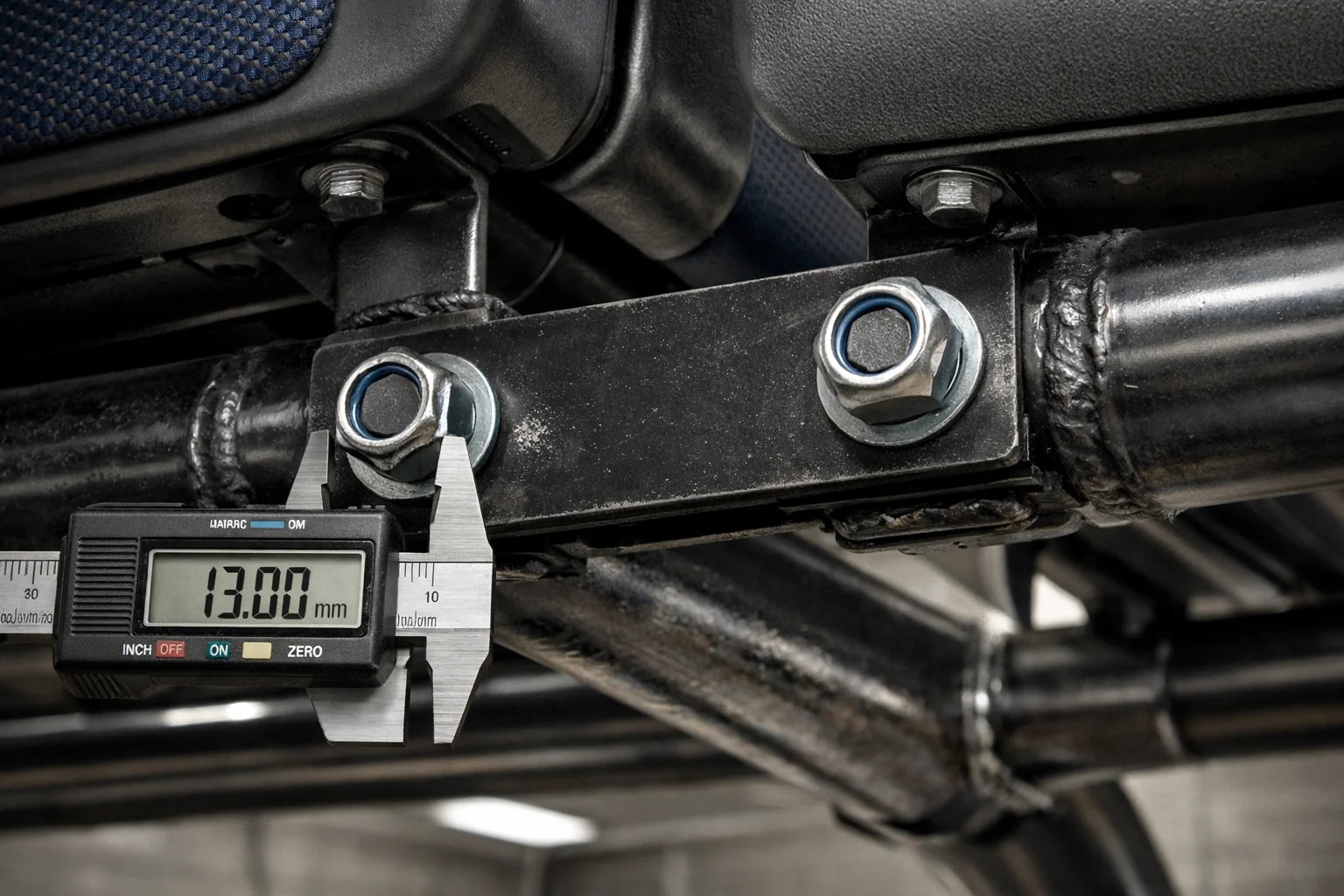
When I look at hardware like this in a waiting room, I am not admiring the steel. I am noticing the mindset behind it. Those chairs are designed with the assumption that people will not be gentle, will sit off center, will lean sideways, and will stress the same joints over and over.
You will never see this kind of exposed hardware on a home sofa, but you can still look for the same attitude. I want to know whether the frame connections feel decisive or merely adequate. When you grab the arm and twist slightly, the whole sofa should move as one piece instead of flexing at the joints.
In a showroom, crouch down and look under the sofa. I do this even if I feel awkward. I am looking for thick wood, visible brackets, or corner blocks that look intentional rather than decorative. If everything is hidden behind fabric and thin staples, I assume the structure is doing the bare minimum.
I also pay attention to whether parts are allowed to shift. Waiting room seats are locked together so nothing creeps over time. On a sofa, you cannot lock cushions and arms in place, but you can feel whether the seat platform feels anchored. Sit down near the edge, then slide inward. If you feel the base give or hear a faint click, that movement will only get worse with use.
The reason this matters is that most sofa failures are not dramatic. They are slow. A little looseness here, a little sag there, until one day the sofa feels tired and nobody can explain why. Industrial seating avoids that by refusing to allow small movements to begin with.
When you test a sofa, ask yourself whether it feels like it expects resistance. If it feels overly polite, like it assumes you will sit straight and stand up carefully, I walk away. I have learned that the sofas that last are the ones that seem mildly annoyed by you sitting on them.
Design Features You Hate (But Are Necessary)
The Ganged Row, Bolted Together
You have probably sat on public seating that felt rigid and uninviting because nothing moved independently. I used to hate that feeling until I understood why it exists. When chairs are physically tied together, the structure cannot slowly walk apart or rack itself loose.
You cannot buy a sofa with steel plates bolting it to the floor, but you can look for the same philosophy. In the showroom, I sit on one cushion and deliberately shift my weight sideways. If the adjacent seat reacts instantly and the whole piece responds as one unit, that is a good sign.
If each seat feels like its own little island, that separation is where looseness starts. Over time those independent movements turn into squeaks, sag, and that vague feeling that the sofa is falling apart even though nothing is visibly broken.
I also pay attention to scale. A sofa that feels a little heavy or awkward to reposition usually stays square longer. Lightweight pieces are easier to deliver and sell, but they rely on everything staying perfectly aligned, which real life never allows.
The Clean Out Gap
That annoying gap between the seat and the back looks like lazy design. I used to assume it was a cost cutting move until I spent time around spaces that have to be cleaned quickly and thoroughly.
When there is no gap, crumbs, liquids, and grit get trapped exactly where you cannot reach them. At home that turns into smells, stains, and foam that breaks down from the inside out.
In a showroom, I run my hand along the seat where it meets the back. If it is tightly sealed, I imagine what happens the first time someone spills a drink or eats on it. If there is a small, intentional gap, I know gravity can at least do some of the work.
You do not need a visible canyon back there. I just want enough space that debris can fall through instead of being mashed deeper every time someone sits down. It is not pretty, but it keeps the internals healthier for longer.
Antimicrobial Vinyl
Hospital grade vinyl feels awful, and I am not suggesting you put it in your living room. What I take from it is the idea that the surface should survive abuse without immediately showing it.
Public seating uses vinyl because it can handle harsh cleaners without peeling or cracking. At home, the equivalent is a fabric or leather that does not rely on a delicate finish to look good.
When you are shopping, rub the fabric firmly with your thumb and then with your fingernail. If it marks easily or feels tacky, it is probably relying on surface treatments that wear off. I look for materials that feel boring and stable rather than luxurious and fragile.
I also ask what the store recommends for cleaning. If the answer sounds nervous or overly specific, I take that as a warning. A sofa that lasts should tolerate imperfect cleaning, not demand museum level care.
These features all feel slightly hostile to comfort at first glance. I have learned that they are hostile to damage, not to you. The sofas that quietly survive years of anonymous use tend to borrow these ideas, even if they hide them better than a waiting room ever would.
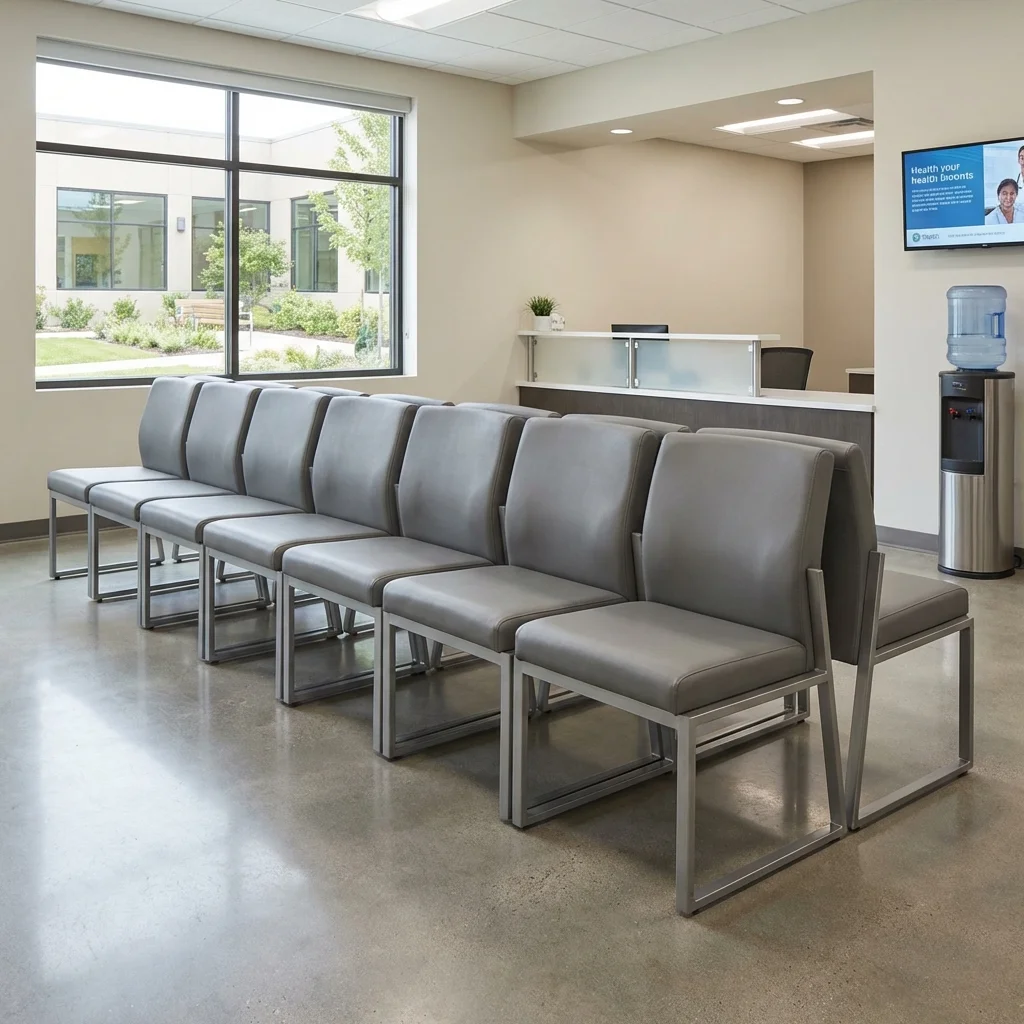
This detail looks trivial until you live with a sofa pushed against a wall for a few years. I have owned sofas where the back slowly chewed through paint, left black scuffs, and still managed to damage itself in the process. That wear happens quietly, one nudge at a time, every time someone drops into the seat.
The wall saver leg exists because public seating assumes people will shove chairs back without thinking. By letting the legs, not the upholstery, make first contact with the wall, the chair protects both itself and the room. That is a mindset I actively look for in home furniture, even if it is less obvious.
In a showroom, I gently push the sofa backward until it touches the wall. I watch what makes contact first. If fabric or the top rail of the back hits before the feet, I know friction will be working on that surface forever. If the legs or a solid base stop the movement instead, the sofa is taking the abuse where it can handle it.
This also tells me something about the frame. A sofa that expects wall contact is usually built to transfer force down into the legs instead of letting the back flex. When you sit down hard, that same logic keeps the back from slowly loosening and squeaking over time.
You cannot always see a dramatic wall saver leg on residential sofas, but you can feel the intention. I look for a base that feels planted and a back that does not feel like it is meant to float. If the sofa seems to assume it will never touch a wall, I assume it will lose that argument eventually.
Little design choices like this are not about comfort on day one. They are about avoiding slow, stupid damage that nobody notices until it is too late. Once I started paying attention to how a sofa interacts with the room around it, not just the person sitting on it, I made far fewer regrettable purchases.
The Weight Ratings
This is the part most furniture stores hope you never ask about. Almost all home sofas are designed around an assumed average user of about 180 pounds, even though real households rarely look like that in practice.
What matters is not whether you personally weigh more or less than that number. What matters is whether the sofa was built with any margin at all for people dropping into the same seat, sitting off center, or plopping down after a long day.
In commercial furniture, weight ratings are explicit because failure is not an option. A waiting room chair is often rated to handle well over 350 pounds per seat, not because every patient weighs that much, but because the chair must survive bad posture, sudden movement, and constant repetition without loosening.
At the extreme end, bariatric seating is built to handle 750 pounds or more. The reason is not comfort, it is liability. If a chair collapses under someone, the cost of failure is enormous, so the structure is massively overbuilt.
When I shop for a sofa, I am not looking for bariatric furniture. I am looking for signs that the manufacturer thought beyond the polite average user. Unfortunately, most residential sofas do not publish any weight rating at all, which tells you something by itself.
In the showroom, I ask a simple question and then listen carefully to the response. I ask what the per seat weight capacity is. If the salesperson cannot answer, deflects, or says nobody has ever asked, I assume the sofa was never tested beyond the bare minimum.
If they give a vague answer like it can handle normal use or it is very sturdy, I push a little further and ask what normal means. A confident answer usually comes with a number, even if it is approximate. A nervous answer usually means there is no real standard behind it.
You can also learn a lot without asking anything. I sit down firmly, not violently, and then shift my weight forward as if I were standing up, but stop halfway. If the seat pan flexes deeply or the front rail feels like it is bowing, that structure is already near its comfort limit.
I then sit back down in the same spot and do it again. A sofa built with margin feels the same on the second sit as the first. A sofa built to a minimum standard often feels slightly softer or looser immediately, which tells me the materials are already giving way.
Weight ratings are not about shaming bodies or predicting who will sit there. They are about whether the sofa expects stress or merely hopes to avoid it. A piece designed for higher loads will always age better, even under lighter users.
If you live with taller people, heavier people, kids who jump, or guests who drop down without thinking, this matters even more. The sofa does not know who is sitting on it. It only knows how much force it has to absorb, over and over, in the same places.
I have learned to treat the absence of a weight rating as a warning sign. Furniture companies love to advertise fabric, style, and comfort. When they stay silent about structural limits, it is usually because those limits are not impressive.
You do not need a sofa rated like hospital furniture. You do need one that was designed with the assumption that real humans are unpredictable. When a sofa feels calm and unbothered by your full weight in the showroom, that is often the quiet sign of something built to last.
Technical Summary: When to Buy Waiting Room Chairs
I want to be very clear about this because people get tempted by durability and make a mistake. I would never put true waiting room chairs in a living room. They are built to be endured, not lived with, and that difference shows up every single day.Where they shine is in spaces where abuse is guaranteed and comfort is secondary. In a mudroom, they make sense because you need a place to sit while pulling on boots, often while wet, muddy, or carrying gear. The vinyl or hard surfaces do not care about snow melt, grit, or salt, and the frames are built for people dropping down without thinking.
I also like them in a home gym. Between sets, you are sweaty, tired, and not gentle. A waiting room chair does not absorb sweat into foam, does not stretch out under repeated use, and does not punish you later with smells you cannot remove. You sit, you recover, you move on, and the chair stays the same.
The garage is the third place where they quietly make sense. When you are dealing with oil, grease, tools, or dirty clothes, a normal chair slowly dies from a thousand small insults. Waiting room seating is designed for environments where stains are expected and cleaning is aggressive, so a little mess does not turn into permanent damage.
The takeaway for sofa shopping is not that you should buy commercial chairs for your house. It is that you should borrow their logic. If a space in your home is treated like a waiting room, meaning nobody is careful and everything gets used hard, then residential furniture will struggle there. Either choose something explicitly built for abuse, or accept that comfort focused furniture will age fast in those conditions.
Once I separated those ideas in my head, I stopped being disappointed by furniture that was never meant for certain rooms. That alone saved me money and frustration. The right seat in the wrong place will always feel like a bad purchase, no matter how well it is built.
Explore Technical Reference
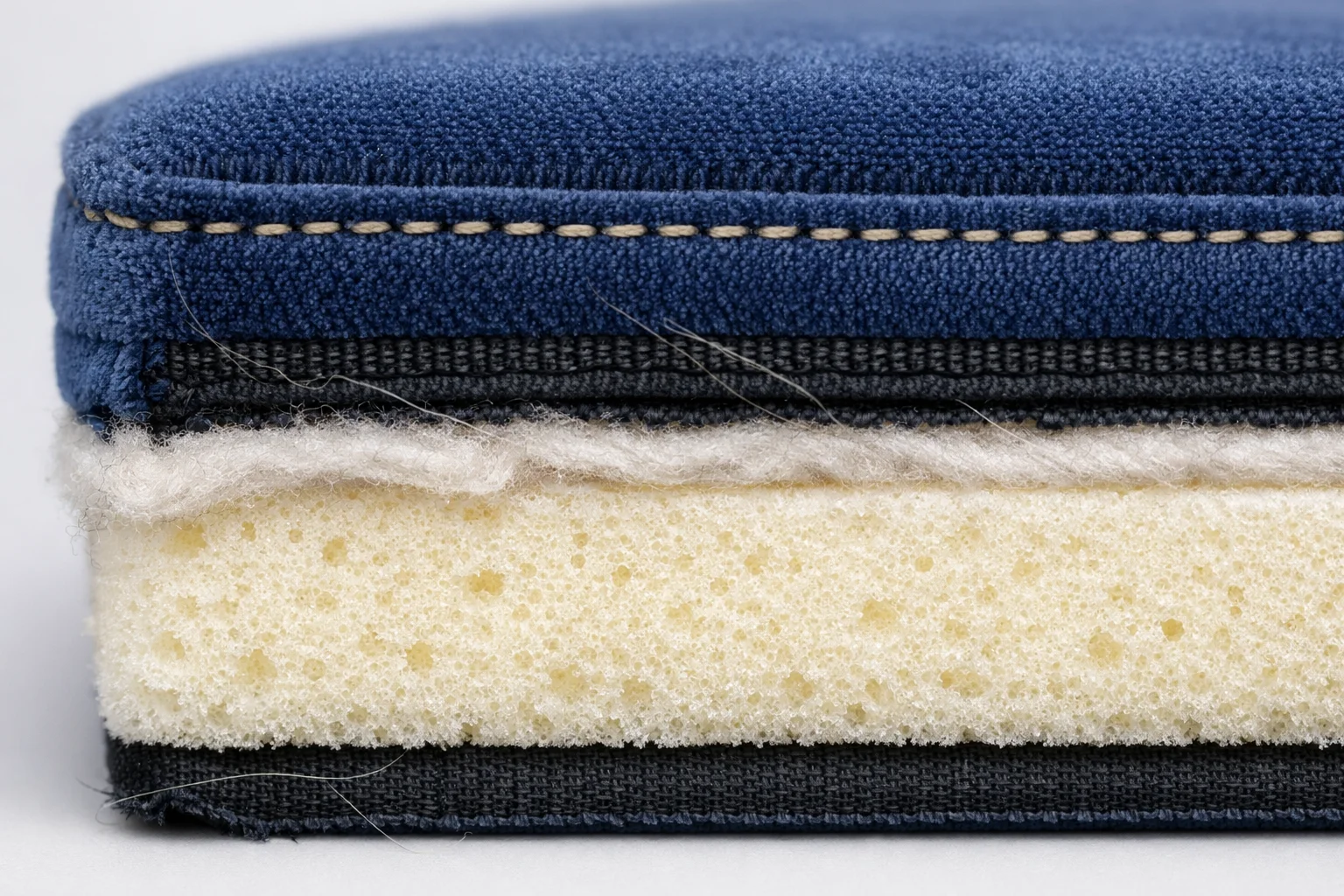
Pet Proofing: How to Outsmart Claws and Fur
Why fabric weave structure matters more than material marketing claims. Identifying furniture that works with pet behavior rather than against it.
Analyze Details →
The "Goldilocks" Paradox: Furniture For Couples
Understanding how to select furniture when two people have significantly different body weights or comfort preferences. Why compromise foam often fails everyone.
Analyze Details →