Cafe Economics: Why That Velvet Sofa Hurts
Introduction
That coffee shop sofa taught me something I wish I had learned before I bought my first “nice” couch. Comfort and longevity are often treated like optional upgrades, because you only discover the problem after you have lived with it, and by then the return window is long gone.
When I say profit strategy, I do not mean some secret conspiracy. I mean the boring reality that the easiest ways to cut cost are the parts you cannot see, like the seat support, the foam inside the cushions, and the framing around the arms.
The showroom version of this trick is that a sofa can feel fine for a two minute sit, especially if the cushions are overstuffed or the seat is extra deep. Then an hour later you are sinking into a soft spot, your hips roll back, and your lower back does all the work. That is exactly how a beautiful sofa becomes a daily pain point.
So my goal in this guide is simple. I want you to be able to walk into a store, sit down like a normal person, and quickly figure out whether a sofa is built to stay supportive or built to sell today and sag tomorrow.
I am going to focus on checks you can do with your hands, your eyes, and your body weight, because spec sheets are rare and sales talk is cheap. When a salesperson says “high density foam” or “premium springs,” I want you to know what to ask next, and what to physically test so you are not buying the story instead of the sofa.
One more thing before we get into it. Your comfort is not “picky,” and it is not something you should have to adapt to. If a sofa only feels good when you perch politely or sit perfectly still, it is not comfortable, it is just styled.
In the next sections, I will walk you through how to test the seat, the back, the arms, and the foundation in a way that reveals the shortcuts. You will also learn the handful of construction details that actually matter in real life, so you can pay for what lasts and skip what only photographs well.
The "Turnover" Formula
Cafes do not really sell coffee, they rent a seat. The basic math is what you pay divided by how long you occupy the space, and once you see it, you start noticing how much public seating is engineered around it.If you buy a five dollar drink and stay three hours, that table is effectively earning the cafe about a dollar and change per hour from you, before costs. That is why the business goal is not maximum comfort, it is steady turnover, and furniture becomes part of the system.
The tactic is simple. The seat and back are often tuned to feel pleasant for about twenty minutes, then slowly get irritating at forty. It is not that the chair suddenly becomes torture, it is that small things start adding up, like pressure on your tailbone, a back that does not actually support your ribs, or a seat that tips you into a slouch.
When I keep that “turnover” idea in my head, I shop for a sofa differently. I assume the first impression is the sales pitch, and I try to find out what the sofa feels like after my body has stopped “trying to like it.”
In a showroom, I sit the way I really live. I slide back, I put my feet where they naturally go, I lean into the corner, and I stop holding my posture on purpose.
Then I give it time, because time is the whole point. If you can, stay put long enough that you would feel rude doing it in a busy cafe, and notice what starts asking for relief first, your lower back, your neck, your knees, or the backs of your thighs.
A sofa that is only comfortable when you sit perched at the front is borrowing comfort from your muscles. A sofa that is only comfortable when you fully recline is borrowing comfort from your spine by letting you collapse.
I also watch for the “slow failure” feeling. If the seat feels supportive at first but you gradually sink and your pelvis rolls backward, that is a red flag that the foam is too soft, the cushion is underbuilt, the support under the cushion is weak, or all three.
Here is a quick self check I use. When you stand up after a longer sit, pay attention to whether you feel a little stiff or relieved, as if you are escaping the sofa. Relief is useful information, and I have learned not to talk myself out of it.
If a salesperson tries to hurry you along, I treat that as data too. A good sofa can handle a long, boring sit test, and a good store will let you do it. If they cannot, I assume the sofa is designed like cafe seating, optimized to win the first twenty minutes and not the next forty.
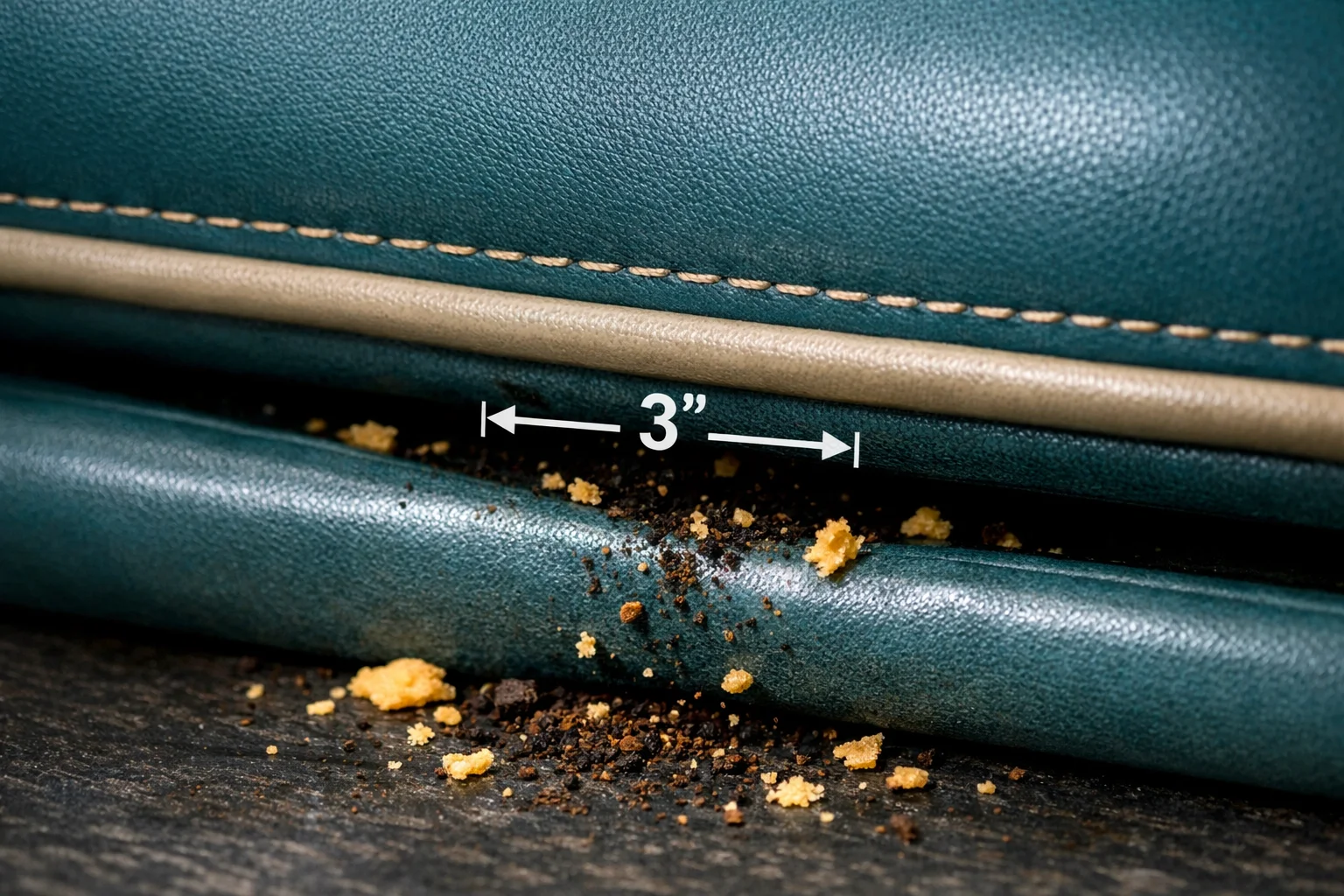
When I see a seat back with a deliberate gap like this, I stop thinking “nice detail” and start thinking “maintenance decision.” In restaurants it is there so staff can wipe fast and crumbs can fall through, but in a home it often turns into a comfort tax because your lower back cannot settle where it naturally wants to.
In a showroom, you can test this in ten seconds. Slide your hips back until you would normally relax, then pay attention to what touches first, the upholstery, the top edge of the gap, or the hard frame behind it.
If you feel a ridge hitting your sacrum or you notice yourself hovering your back to avoid the gap, that is your body telling you the sofa only works if you sit “correctly.” I have learned to treat that as the same kind of engineered discomfort as a too upright cafe chair, because it nudges you to perch instead of lounge.
The other thing I watch for is what the gap is hiding. If there is a visible opening at the base of the back, it often means the back cushion is not really supporting you down low, or the back is built like a panel with upholstery stretched over it.
You can check for that without being weird about it. Put your hand at the small of your back while you are sitting, then lean back and see whether the sofa fills your hand with soft support or whether your hand stays in an empty pocket.
The wipeable, slick upholstery finish in setups like this can be a clue too. It is practical, but it can make you slide forward over time, especially on a slightly tilted seat, and that is one of the fastest ways to end up slouching with your pelvis rolled back.
I do a simple friction check. I sit normally, plant my feet, and relax my torso for a minute, and if I keep scooting forward without meaning to, I assume I will spend years readjusting on that sofa.
If you actually want an easy clean sofa at home, you can still have it without the gap. What I look for instead is a back cushion that goes low enough to meet the seat in a way that supports my lower back, plus a cover or fabric choice that you can live with, not a layout that treats comfort as optional so crumbs have an escape route.
How They Force You to Leave
Once you notice turnover seating, you start seeing the same logic hiding inside a lot of “stylish” home sofas. Nobody says out loud that the sofa is meant to wear you out, but the construction nudges you into a position that stops being pleasant, and then you do what the furniture wants. You get up, shift to a different spot, or go do something else.
The first way they do it is by stealing support slowly instead of all at once. In the showroom the top layer feels plush, your body relaxes, and you think, this is the comfy one. Then the foam compresses, the cushion loses height, and your pelvis rolls back because your hips are now lower than your knees, or close to it.
You can catch this by doing a sit that feels slightly boring. I plant my feet where they naturally land, let my shoulders go heavy, and wait long enough that my body stops “performing comfort.” If you feel yourself searching for a new position every few minutes, that is usually not you being fussy, it is the sofa failing to hold you in a neutral posture.
Another trick is a seat that is just a little too deep for normal sitting. Deep seats look luxurious and photograph well, but if you are not tall or you do not always lounge, they force you to scoot back until the front edge presses the backs of your thighs, or you perch forward with no back support.
In the store, I test this with my back actually against the back cushion, not hovering. If my feet cannot stay flat without my thighs being lifted by the front edge, I know I will either slouch or constantly pull pillows behind my back, and both are a form of “forced leaving” over time because the sofa never quite settles into easy.
The next one is a back that is the wrong kind of upright. A genuinely supportive upright back can be great, but the cheap version feels like a flat panel that hits too high and too hard, so your ribs get pushed forward while your lower back gets nothing.
My check is simple. I lean back and see where I feel pressure first. If I feel it between my shoulder blades but not at my lower back, I already know what will happen at home, my head comes forward, my neck gets tired, and I start looking for a different chair.
Arms can also be used as discomfort tools in disguise. Narrow, tall, hard arms keep you from changing positions, and wide low “bench” arms can look inviting but offer no real elbow support, so your shoulders creep up.
I press down hard on the arm where my elbow would rest and pay attention to whether it gives like padding or whether it feels like upholstery stretched over a corner. If it is a corner, that is the spot that will make you shift every time you try to relax with a book or a laptop.
Then there is the subtle sliding problem. Some sofas are built so the seat has a slight forward pitch, and when you pair that with slick fabric or leather, your body gradually migrates forward until your back is floating and your lower spine is doing all the work.
You can test this without doing anything weird. Sit how you would watch a show, relax your stomach, and let your hands rest in your lap. If you notice you have to push yourself back into place every minute or two, that is not a “break in” situation, that is geometry plus friction, and it usually gets worse as cushions soften.
If you want one fast tell that cuts through the sales pitch, pay attention to how you stand up. I am not talking about whether it is low, some low sofas are great. I mean whether you stand up thinking “okay,” or whether you stand up with that quiet sense of being freed from a position you were tolerating.
I also watch what the store encourages you to do. If the display has a mountain of throw pillows placed where your back would normally go, I treat that like a warning label. It often means the sofa only works when you add your own support, and the showroom is already admitting it by staging the fix.
If you want to be extra honest with yourself, do a quick “real life” sequence while you are seated. I check what happens when I put my feet up on an ottoman, when I sit slightly sideways, and when I lean my head back like I am actually resting, not posing.
A sofa that is built for home life lets you do those things without punishing your lower back, pinching the backs of your thighs, or forcing your shoulders forward. A sofa that is built like a cafe seat will let you do them briefly, then it will start asking you to leave, one tiny ache at a time.
1. The Shallow Seat (17 Inches)
A 17 inch seat depth is a cafe move, not a living room move. In most homes, a “normal” sofa seat gives you something like 22 to 24 inches of usable depth, which is what lets your thighs be supported while your back can actually relax into the back cushion.
When the seat is only around 17 to 19 inches deep, it often feels fine for a quick sit because you are upright and alert. Then you try to lean back, and you realize there is nowhere for your hips to go, so you end up perched on the front edge like you are waiting for your name to be called.
The sensation I watch for is that constant micro slide, like you are always one inch away from slipping off the front. It is not dramatic, it is just annoying enough that you keep bracing with your legs, and that turns “relaxing” into a low grade workout.
In the showroom, I do not guess the depth by looking at it, because arm shape and cushion piping can fool your eyes. I sit all the way back so my lower back is against whatever support the sofa actually provides, then I check where the front edge lands under my legs.
If the front edge is behind mid thigh, I already know what the long term routine will be. You will either sit forward with no back support, or you will try to lean back and your legs will take over the job of keeping you from sliding.
There is a quick comfort tell that does not require any measuring. Keep your feet flat and let your hamstrings go lazy, then see if you feel pressure concentrating right under your sit bones instead of being spread out under your thighs. That concentrated pressure usually shows up when the seat is too short, and it is the same feeling you get on restaurant banquettes after twenty minutes.
I also pay attention to whether the sofa only “works” when I tuck my feet back under me. If you find yourself pulling your feet in to stop the slide, that is your body compensating for missing seat depth, and it is a clue that taller people might like it but many average height adults will not.
Salespeople sometimes spin shallow seating as “more upright” or “more supportive.” Real support feels like the sofa is holding you while you let go, not like you are holding yourself in place so the sofa can feel firm.
If you are worried you might be too picky about this, do one honest test. Sit there like you are going to watch a full episode of something, shoulders heavy, hands in your lap, no bracing. If you catch yourself pushing backward with your feet every minute or two to re seat yourself, I would walk away, because that behavior usually gets worse as the cushions soften with use.
Shallow seats can make sense in a tight room, or if you truly want a very upright conversation sofa, but I only buy them when they still let me lean back without sliding and without feeling like I am balancing on the edge. If the sofa cannot pass that basic “lean back and stay put” test in the showroom, it is going to feel like cafe seating in your own house, and that is a slow kind of disappointment.
2. The Upright Back (90 Degrees)
An upright back around 90 degrees is the “cafe angle,” and once you feel it, you cannot unfeel it. It is the church pew posture, you are upright and engaged, and it behaves more like dining seating than the kind of back angle most people actually relax into at home.
A typical residential sofa back leans you a bit more, closer to that 105 degree lounge feel, and that small difference changes everything. With a little recline, your ribcage can settle, your shoulders drop, and your lower back is not fighting to keep you from folding into a slouch.
The problem with a hard 90 degree back is not that upright is always bad, it is that most upright backs in stores are not built like supportive task chairs. They are often a flat plane that meets you high, and when your shoulder blades hit first but your lower back has a gap, your body “solves” it by rounding your spine and pushing your head forward.
In the showroom, I do a very specific sit so I do not get fooled by first impressions. I slide my hips back until they stop naturally, then I let my stomach relax and I let my shoulders go heavy, like I am about to watch something, not have a polite conversation.
If the back is truly too upright, you will feel it fast in a way that is hard to talk yourself out of. Your chest will feel pushed forward, your shoulders will creep up, or your neck will start doing that tiny forward crane because your head is trying to find a more comfortable balance point.
Here is the tell I trust most. When the sofa back is at that cafe angle, I catch myself perching instead of resting, which means my back is not really using the backrest, it is hovering just in front of it so I can control my posture with muscles.
You can also check whether the sofa is forcing you to “buy” a better angle with throw pillows. Sit with no pillows behind you, then put one behind your lower back and see if the sofa suddenly becomes livable. If it does, you just learned that the built in geometry is not working for you, and the store is relying on accessories to disguise it.
I also pay attention to what happens when I try to lounge like a normal person. If you lean back and your butt slides forward even slightly, an upright back can make that worse because it gives you nowhere to recline, so you end up in that awkward half slouch where your lower back is unsupported and your hips are drifting.
If you like an upright sofa for conversation, I still think you should demand real support, not punishment. The version I will consider is one where, when I lean back, I feel contact at my lower back as well as my mid back, and I can breathe easily without my shoulders being forced forward.
If the back reads “cafe” to your body, I would treat that as a design choice you cannot fix later. Cushions soften and fabrics break in, but the angle does not change, and living with an upright back day after day is one of those slow regrets that only shows up after the novelty wears off.
3. The “Crumb Gap”
A three inch gap between the seat cushion and the back cushion looks like a harmless styling choice, but I have learned to treat it like a motive. In cafes and restaurants, that gap is there so crumbs fall straight through and staff can sweep the floor fast, instead of digging food out of seams.
At home, the same gap usually does one thing to you. It blocks the most natural way most people relax, which is sliding your hips back and letting your lower back settle.
In a showroom, I test this the unglamorous way. I sit down, scoot back until I hit the point where I would normally stop thinking about my posture, then I notice what my lower back runs into. If I feel the top edge of that gap like a ridge, or if my pelvis can get back but my lumbar area is left floating, I know I am going to spend years either perching forward or stuffing pillows behind me.
You can also catch the “turnover” intention by watching what your body does next. If you find yourself holding your torso slightly off the back, or keeping tension in your stomach just to avoid falling into the gap, that is not support, that is you doing the sofa’s job.
I also think the crumb gap is a tell about the back cushion itself. When the cushion does not come down low enough to meet the seat, it often means the cushion is more for looks than for structure, or the back is built like a firm panel and the cushion is just a topper. I put my hand in the small of my back while seated, then lean into the back and see whether the sofa fills that space with steady pressure, or whether my hand stays in an empty pocket.
If you like to slouch, read, game, or watch movies for more than a short stretch, I would be strict about this. A sofa can be easy to clean without sacrificing that lower back contact, and I would rather choose a fabric you can live with than accept a layout that keeps your spine from settling.

When I look at a diagram like this, I treat it like a warning label for home use. That shallow depth and near vertical back are not “bad furniture,” they are purposeful furniture, and the purpose is to keep you reasonably comfortable while keeping you upright, alert, and ready to get up.
In a showroom, you can use this image as a quick mental template. If a sofa makes you sit like this without trying, with your hips feeling parked on a short platform and your back feeling like it is meeting a wall, I assume it will behave like a cafe seat once the novelty wears off.
I check the depth with my body, not a tape measure. I slide all the way back until my pelvis stops naturally, then I notice whether the front edge of the seat is supporting most of my thigh or cutting it short so the pressure concentrates under my sit bones.
Then I check the back angle by seeing what my head wants to do when I relax. If my chin starts creeping forward and I feel like I have to “hold myself” to stay comfortable, that is the upright back asking my muscles to do the job a good sofa back should do.
The sneaky part is that a shallow, upright sofa can still feel firm and “supportive” for a minute. What I am watching for is whether I can exhale, let my shoulders drop, and stay put without bracing with my legs or tensing my stomach, because that is the difference between real support and polite perching.
If you want one fast combined test, I do this: I sit back, put my hands in my lap, and give it a full minute without adjusting. If I feel that itch to scoot, or I catch myself pushing with my feet to keep my hips from drifting, I treat it as the same 20 minute design goal the diagram is showing, even if the sofa is marketed as “lounging.”
Material Choices: Durability Over Feel
I used to shop upholstery like most people do, I’d rub the fabric between my fingers, sit down, and decide in ten seconds whether it felt “nice.” Then I owned a few sofas long enough to learn the hard lesson, the nicest feeling materials in a showroom can be the ones that look wrecked first, stretch out, pill, or start sliding you into a slouch.
So when you are choosing materials, I think you should prioritize what stays stable under real use, not what feels luxurious under a quick hand test. The goal is to buy a sofa that still looks and feels like itself after years of sitting in the same spot, not one that only wins the first month.
Fabric durability sounds like a technical topic, but the practical version is simple. You are trying to avoid fabrics that snag easily, pill quickly, or relax and bag out, because once the cover gets loose the cushions shift more, you end up readjusting constantly, and the whole sofa starts feeling sloppy even if the frame is fine.
In the store, I do a couple of small tests that do not require a spec sheet. I drag my fingernail lightly across the surface in an inconspicuous spot and watch whether the weave pulls or fuzzes immediately. If it does, I assume keys, pet nails, and jeans rivets will make it look tired fast.
Then I pinch the fabric and twist slightly, again somewhere hidden, and I look for “graying” or a whitish cast that appears when the fibers are stressed. That often shows up on cheaper poly blends and some microfibers, and it is a clue that the sofa will get those shiny, stressed patches on the seats and arms where people actually live.
If you have pets, I would be blunt about it and shop like you do. I look for tight weaves that do not offer loops for claws to grab, and I avoid anything that already looks a little fuzzy on the showroom floor because fuzz plus friction turns into pilling. If you see little pills on a floor model, that is the future arriving early.
Leather is its own trap because it can feel like the “upgrade” even when it is not. The thing I care about is whether the leather is thick and resilient or whether it is thin and heavily finished, because thin, heavily coated leather can crack at stress points and get that plastic looking wear where your head and hands touch most.
You can do a simple reality check by looking at the cut edges and the seams, especially around the cushions and the arms. If the surface looks perfectly uniform like paint and the edges look paper thin, I get suspicious, because the durability is often coming from a coating rather than the hide itself.
I also press my thumb into the leather and see what happens when it releases. A nicer leather will show a little natural wrinkling and then relax back, while a cheaper, stiff finish can either barely move or it can crease in a way that looks permanent. Neither extreme is what I want on something I will sit on every day.
What you should not do is assume “top grain” automatically means long lasting. That label gets used loosely, and the real world clue is how the leather behaves on the actual sofa in front of you, especially on the seat where it will stretch. If the seat already looks loose and puddly on a brand new floor model, it is probably going to keep going.
If you are considering velvet, I actually like it in the right version, but I treat it as a performance question, not a romance question. Some velvets are tough and some crush, watermark, and wear shiny in the exact spots you sit, and you can often spot the risk by brushing your hand across it in two directions and seeing whether it leaves dramatic shading and streaks that do not blend back easily.
There is also a comfort and posture issue tied to materials that people do not talk about enough, sliding. Slick leather, faux leather, and some tightly finished synthetics can make you slowly migrate forward, especially if the seat has even a slight forward pitch or the cushion top is domed.
I test this the same way every time. I sit with my feet where they naturally want to be, I relax my torso, and I stop doing that subtle bracing people do in showrooms. If I find myself subtly scooting forward, I do not tell myself I will get used to it, I assume my back will hate it at home.
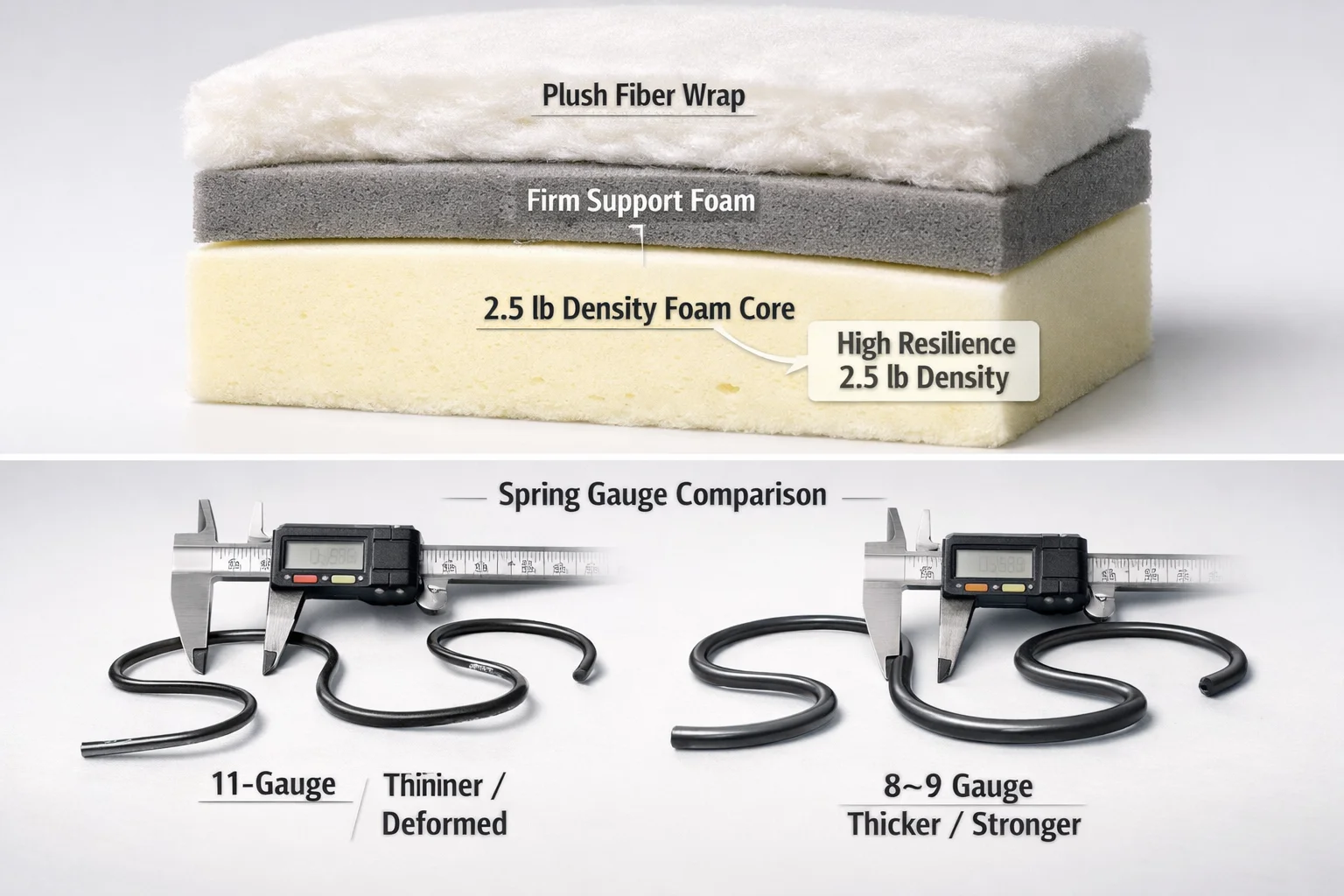
Now for cushions, because this is where “feel” tricks you the most. A sofa can feel dreamy in the store because the top layer is soft, but if the core foam is low quality or too soft, you get that slow drop where your hips sink and your spine starts negotiating.
I ask directly what the seat cushions are made of, and I listen for a real description instead of a vibe word. When I hear “down blend” or “cloud,” my follow up is whether there is a foam core inside and whether the cushions are meant to be flipped and rotated, because a down wrap without a supportive core can turn into a lumpy hammock fast, and a cushion you cannot rotate will wear a divot where you always sit.
Then I do the only test that has saved me from repeat mistakes. I sit in one spot for long enough that the cushion warms and compresses, then I stand up and look at the shape. If the cushion stays visibly depressed, or if it takes a long time to recover, that is the showroom telling you what your living room will look like.
I also press down hard with both hands near the front edge of the seat cushion. If I can easily “bottom out” and feel something firm underneath, that is a sign the comfort you felt is coming from softness up top, not support throughout, and it often turns into that bruisy sit bone feeling after a longer session.
Back cushions matter too, but more for daily annoyance than dramatic failure. Overstuffed back pillows can feel cozy for five minutes and then push your head forward or crowd your shoulders, and underfilled back pillows can look fine but leave you propping yourself up with throw pillows forever.
I do a simple check by leaning back and taking a full breath in. If the back cushion collapses behind my ribs and I feel myself losing support as I exhale, I know I am going to keep readjusting. I want a back that meets me consistently, not one that disappears the moment I relax.
If you are deciding between removable covers and fixed upholstery, I think removable can be worth it, but only if the sofa still looks tailored when the covers are on. Loose slipcovers that shift can add to that “always messy” feeling, and they can hide early sag because the fabric is already draping.
In the store, I tug gently on the cover near a seat seam and see whether it is anchored well or whether it slides around easily. If it slides now, it will slide more later, and you will feel like you are always straightening the sofa instead of enjoying it.
The last thing I will say is that you should match material to your actual habits, not your aspirational ones. If you eat on the sofa, have kids, have pets, or just like to sprawl in jeans, I would rather see you choose a tight, resilient fabric that forgives life than a delicate one you will resent and tiptoe around.
When a salesperson tries to keep the conversation on “soft” and “luxurious,” I bring it back to one practical question. I ask what this exact upholstery and cushion build looks like after two years of daily use, and then I watch whether they answer with specifics or with reassurance, because reassurance does not keep a seat from bagging out.
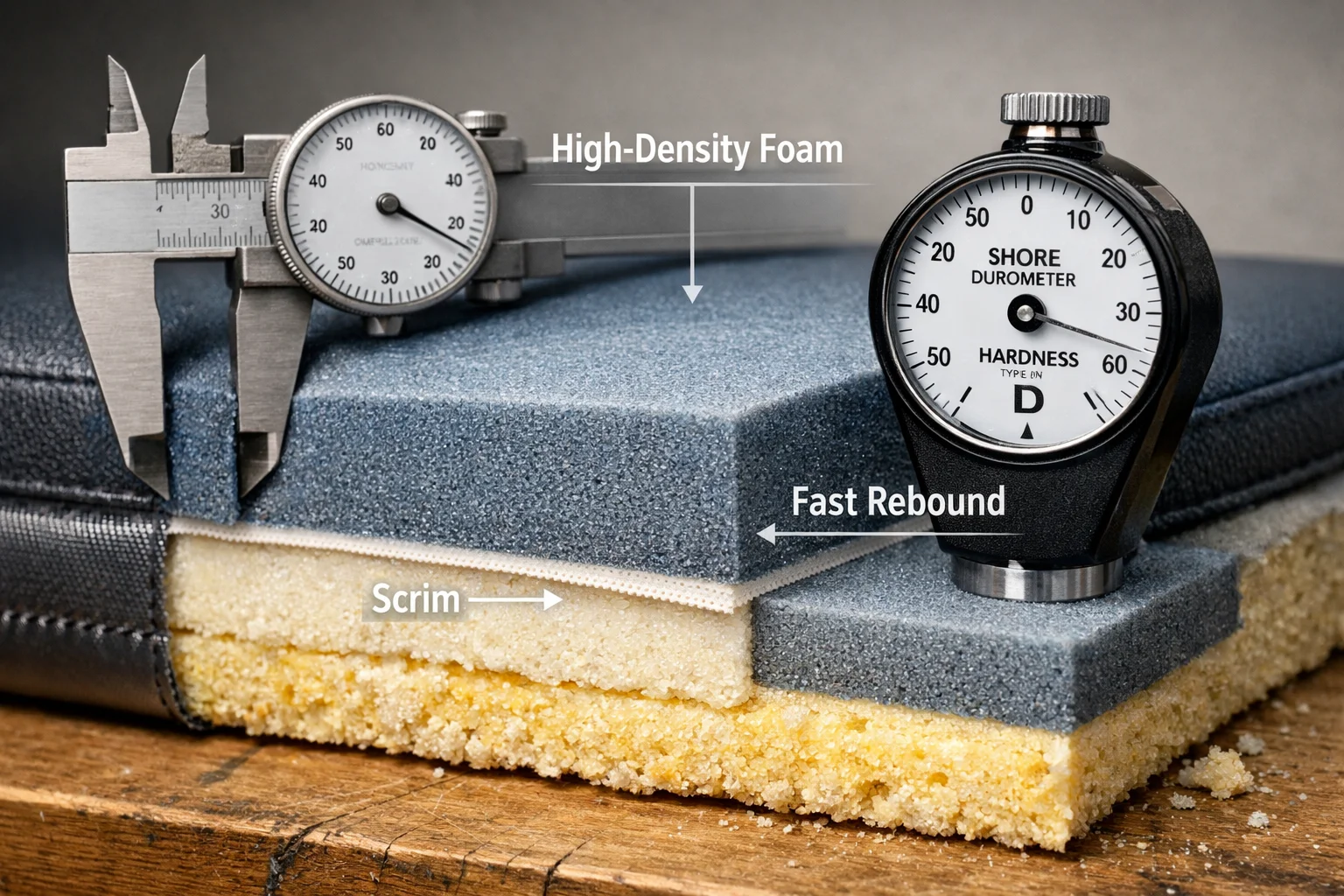
1. High-Density Foam (Very Hard)
I have learned the hard way that most “sagging” complaints start with foam that is simply too soft for daily use. Soft foam feels welcoming in a showroom, but after enough people sit in the same spot it starts keeping a memory of you, and that is how you get those permanent looking butt prints and the slow tilt into a dip.
Very hard, high density seat foam usually feels almost rude at first, like a park bench with a thin layer of padding. The upside is that it tends to bounce back instead of staying compressed, so the sofa keeps its shape and your hips stay at a consistent height instead of gradually sinking lower over the months.
What I do in the store is ignore the first ten seconds and try to “use up” the initial plushness on purpose. I sit in one spot for a few minutes without shifting, then I stand up and look straight down at the cushion, because good firm foam should rebound quickly and look basically unchanged.
Then I do a press test that tells me more than any label. I press down hard with my palm near where my sit bone would land and also near the front edge, and I pay attention to whether the cushion fights back evenly or whether it collapses easily and I can feel something firmer underneath.
If I can bottom out to a hard layer with a strong hand press, I assume my body will do it too after an hour. That is the “feels soft, ends hard” trap, and it is one of the fastest ways to end up sore while also watching the seat lose its shape.
When a salesperson says “high density foam,” I treat that as the start of the conversation, not the answer. I ask what the seat core actually is and whether there is a softer wrap on top, because a sofa can be marketed as high density while still having a thin supportive core and a lot of squish above it.
You should also pay attention to how the firmness is achieved, because not all firmness feels the same. A cushion that is firm because it is dense and resilient will feel springy and supportive, while a cushion that is firm because it is cheap and stiff can feel dead and pressure pointy, and that kind of “bench firm” does not usually get better at home.
If you like a softer sit, I get it, I do too sometimes. I just do not let “soft” be the core, because once the core gives up, you cannot fluff your way out of it, and the whole sofa becomes a posture problem you live around.
2. Vinyl or Treated Velvet
If your real life includes coffee, kids, pets, or just a lot of eating on the couch, I understand the appeal of vinyl or a treated, wipeable velvet. The reason people buy it is simple, you can usually get spills off fast without turning it into a stain project.
The trade off is also simple, the wipeability often comes from a plastic coating. In practice that usually means the fabric feels a bit stiff, it does not breathe well, and it can get sweaty in a way you never notice during a two minute showroom sit.
In the store, I do a comfort test that is slightly awkward but very honest. I sit back for a few minutes with my shoulders relaxed and my forearms on my thighs, and I pay attention to whether the material feels clammy on the backs of my legs or whether I start shifting just to get air.
I also do a “grab and slide” check with my palm on the seat where my thighs would be. If my hand slides too easily, I assume my body will too, and slick, coated surfaces can quietly amplify the same forward scoot problem you get with certain leathers, especially if the seat has even a small forward pitch.
Then I look for the telltale signs of a heavy coating by using light from my phone screen or the showroom lighting. If the surface has that uniform, slightly shiny “film” look and it does not show much texture up close, I assume it will feel less breathable and will be more likely to squeak, stick, or grab skin when you shift in shorts.
If it is vinyl specifically, I ask the salesperson what kind it is, then I ignore the marketing name and focus on one practical issue, how it fails. Vinyl tends to crack or split at high stress points like the front edge of the seat, the inside corner where you sit most, and the top of the arms where people perch.
You can spot early risk without tools by pinching the material gently near a seam and bending it. If you see fine whitening lines, hear faint crackly sounds, or notice the surface looks like it is folding rather than softly wrinkling, I treat that as a red flag for long term durability.
Treated velvet is a different animal, and I am not automatically against it. My concern is whether you are getting a velvet that is truly performance oriented or a velvet that is basically a regular pile fabric with a topical treatment that wears off right where you sit.
I do a quick rub test in an inconspicuous spot, like the outside back or the lower side panel, using the pad of my finger with moderate pressure. If the nap immediately goes shiny and stays that way, or if it leaves a hard to blend streak, I assume the seat and arm will develop permanent “traffic lanes” and you will be staring at them every day.
Then I ask a very plain question that cuts through the hype. I ask whether the treatment is built into the fiber or just applied to the surface, and whether the care instructions allow water based cleaning or only solvent, because the more finicky the cleaning rules are, the less “wipeable” it tends to be in real life.
The last check I do is a heat and noise reality check, because coated fabrics can be weirdly loud. I shift my weight side to side and listen for squeaking, and I notice whether my clothing grabs and releases in little jerks instead of sliding smoothly, because those tiny annoyances are the kind you never notice in a store and then cannot unnotice at home.
If you want wipeable without hating the feel, I would rather see you choose the least plasticky version you can find and make sure the sofa passes your posture tests on that exact upholstery. A fabric that cleans easily is not a win if it makes you slide forward, sweat, or constantly readjust, because then you pay for the cleaning benefit with daily comfort.
Technical Summary: The Home Lesson
If you are buying furniture for your kitchen banquette, I think you should steal the right ideas from cafes and ignore the ones that only make sense for a staff cleanup routine. If you like the idea of easy maintenance, you can absolutely copy the crumb gap concept and pair it with a wipeable vinyl style fabric, because that combo is legitimately good at dealing with spilled cereal, greasy fingerprints, and the daily crumb reality of a kitchen.What I would not copy is the “get in, get out” geometry. In a showroom, I would sit on the banquette the way you actually eat dinner, with your hips all the way back and your feet where they naturally land, then notice whether you feel perched or settled. If it feels like a cafe bench, I would look for a version with about two extra inches of usable seat depth, roughly landing you around a 20 inch seat, because that small change is often the difference between “fine for a quick bite” and “comfortable enough that your family lingers.”
I would also insist on a slight recline in the back, even if it is subtle. When the back is tilted just a bit, about five degrees is the idea, you stop feeling like you are bracing yourself upright, and you start feeling like the banquette is holding you. My quick test is whether you can relax your stomach and let your shoulders drop for a minute without feeling pushed forward, because if you cannot do that in the store, you will not magically enjoy it after a few months at home.
Explore Technical Reference
Heavy Duty Seating: Furniture for Big & Tall
Understanding why standard sofas fail under above-average body weight. The specific construction requirements for durable seating that supports all users.
Analyze Details →
Heavy Use: When "Standard" Furniture Isn''t Enough
Why family sofas face unique durability challenges and what construction
Analyze Details →