The Repair Menu: 5 Fixes for Broken Furniture

Introduction
When a sofa starts to feel bad, I notice most of us go hunting for a magic trick. We want a better cushion, a firmer foam, a secret fabric, or some miracle warranty that makes the problem go away. The disappointing truth is that comfort problems are usually structure problems, and structure problems only have a few real fixes.
I’ve learned to think of seating like a simple mechanical system. When a seat sags, something that was supposed to stay in tension has stretched, torn, or unhooked, and now you are sitting lower because the “hammock” underneath you got longer. When a sofa wobbles, something that was supposed to stay in compression has loosened, split, or racked out of square, and now the frame is shifting instead of acting like one solid box.
That way of thinking changes how you shop, because it moves your attention away from the sales story and onto the parts that actually carry your weight. If you can identify what is taking tension and what is taking compression, you can predict whether the sofa will stay supportive or slowly turn into a saggy, wiggly regret.
When I say “interventions,” I mean the only kinds of mechanical solutions I’ve seen actually work over time. Some are things the maker should have done in the first place, and some are things you can spot and avoid in a showroom, before you pay for the privilege of discovering them at home.
In the next sections, I’m going to walk you through the handful of real fixes that matter. You will be able to sit on a sofa for two minutes, do a couple of simple checks with your hands, and get a much clearer picture of whether it is built to stay tight and supportive, or whether it is already on a slow path to sagging.
Diagnosis First
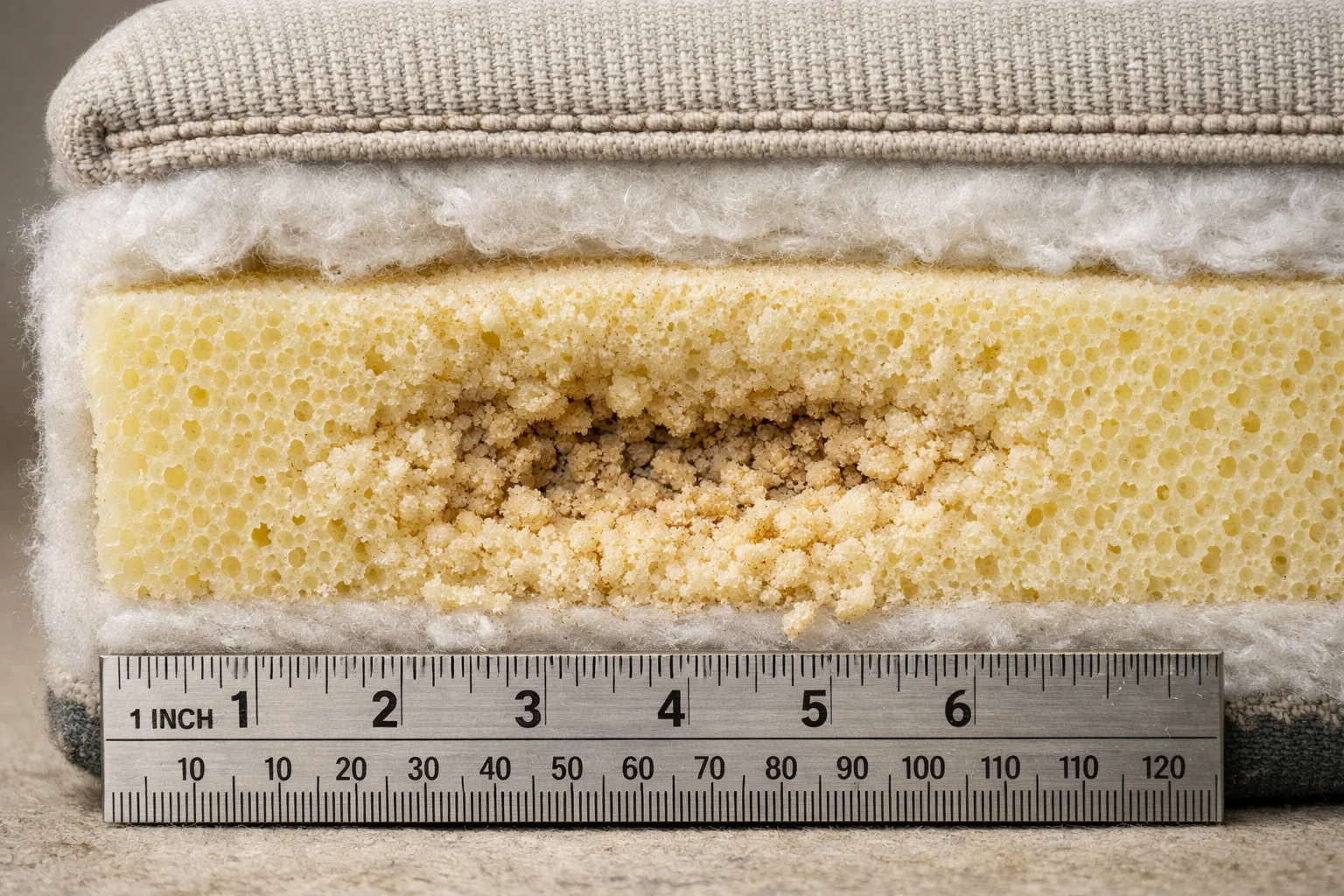
Before you buy parts, or pay for an upgrade, I always push on the sofa and watch what actually moves. In a showroom you cannot see the guts, but you can feel which part is failing by doing a quick, deliberate press in three places.I start with the cushion itself. I push straight down with my palm near where my sit bones would land, then I let go and see how quickly the cushion regains height. If it stays squished, comes back slowly, or feels like it has a dead spot even on a new floor model, I treat that as a foam problem and I mentally file it under “replace foam” rather than “this sofa needs a new frame.”
Then I push on the deck, meaning the seat area under the cushions. I move the cushions aside if the staff will let me, or I press hard through the cushions right between the front edge and the back where your weight usually concentrates. If the whole platform dips like a tired trampoline and rebounds weakly, that is usually the support layer underneath stretching out, and the fix is adding support, not buying a thicker cushion. In my notes I think of that as “helper springs,” meaning something has to take tension again, because the original system is already losing the fight.
Last, I grab and push on the arm like I am gently trying to steer the sofa. I do not need to yank it, I just rock it side to side and forward a touch while watching the joint lines where the arm meets the base and back. If the arm wiggles, creaks, or you can feel a tiny delay before the rest of the sofa follows, that is a frame joint problem, and the fix is about re-locking the joint, not swapping cushions. That is the category where people end up injecting glue and clamping, because what failed was stiffness in the box, not softness in the padding.
Method 1: Helper Springs (The Deck Lift)
When I sit on a sofa and get that “bucket seat” feeling, where my hips sink lower and the edges feel higher, I usually blame the support under the cushions, not the cushions themselves. On a lot of sofas that support is made from sinuous springs, the zig zag wires that span the frame like a row of stretched clips. They feel fine at first, then they slowly relax, and the whole deck starts acting like a worn out trampoline.
What I look for in a showroom is that soft dip that happens even when the cushion still feels lively. If you press down and the cushion bounces back, but the platform underneath it feels like it keeps giving, that is the situation where helper springs actually make sense. If the cushion feels dead and slow to recover, helper springs will not magically make the cushion feel new, they just lift the platform that the cushion sits on.
Helper springs are basically stiff metal bands that clip onto the existing sinuous springs to pull them back into tension. I think of them as a deck lift, not a comfort upgrade, because what they mainly do is raise the sagging middle and take some load off the stretched spring run. The reason I like this fix is that it is reversible and targeted, and it does not require you to rebuild the whole sofa to get rid of that hammock feeling.
If you are shopping and trying to avoid needing this later, I pay attention to how the deck behaves near the front edge. I press down a few inches back from the front rail, because that is where stretched springs tend to show themselves first. If the seat drops easily there and you can feel the spring line giving in a long smooth arc, I assume it will only get worse with time, especially if the sofa is one you will sit in every day.
If you already own the sofa and the deck is the problem, helper springs are one of the cheapest experiments you can do before you start chasing cushions and foam. The cost is usually around thirty dollars, and the reason people call it easy is that you typically clip them on by hand. You still want to be honest about access, because some sofas make you fight through a tight dust cover to reach the springs, but the idea itself is straightforward.
I also keep my expectations realistic. Helper springs can take a mild to moderate sag and make it feel surprisingly normal again, but they cannot fix broken springs, a cracked front rail, or a frame that is already racking and loosening at the joints. If the seat is sagging and the arm also wiggles when you do that gentle steering test, I treat helper springs as a temporary patch, because the bigger problem is the box losing stiffness.
If you want to judge whether this fix would even apply to a sofa you are considering, you can ask the salesperson one simple question and you do not need to sound technical. I ask whether the seat support is sinuous springs, webbing, or a solid platform, and I ask if there is a warranty that specifically covers the seat deck or springs rather than just the cushions. If they cannot tell you what is under the seat, or they wave it off like it does not matter, I take that as a sign they are selling comfort as a story instead of as a structure.
Method 2: The Foam Boost (The Cushion Lift)
Sometimes the cushion is not truly dead, it is just tired. You sit down and it still has some spring, but you feel like you are sitting a little too low, or you can feel the harder shapes underneath sooner than you used to.
This is the situation where I think a full cushion replacement is often overkill, especially if the sofa is otherwise behaving. What I want is a small, controlled lift that puts some height back under you without changing the whole feel of the seat.
The fix that has worked for me in that “tired but not ruined” zone is adding about an inch of high density foam to the bottom of the existing cushion core. I am specific about the bottom because I want the cushion to keep its broken in top feel, while getting a new supportive layer underneath to do the heavy lifting.
In buying terms, the useful lesson is that thickness is not the same as support. In a showroom, if a cushion feels pleasant on top but you sink far enough that your hips feel low and your knees ride high, I assume the core is on the softer side and will be first to lose height with daily use. I pay attention to whether I feel like I am “settling” after the first ten seconds, because that slow drop is usually foam giving up, not springs stretching.
When you test a cushion for this, I do two quick presses. I press straight down in the middle with my palm, then I let go and watch how fast it comes back, and whether it comes all the way back. Then I squeeze the cushion at the front edge between my hands and feel for a firm, resilient resistance versus a dull, spongey collapse, because that dullness is what turns into a permanent low spot later.
If you are shopping and the cushion already feels a little low but everything else feels solid, you can use that moment to ask a pointed question instead of accepting the sales pitch. I ask what the cushion core is made of, and whether the store can tell me the foam density or at least confirm it is high density foam rather than a basic low density polyurethane. If they cannot answer and they also will not let you unzip the cushion cover to look inside, I treat that as a warning that the sofa is being sold on initial comfort, not on staying power.
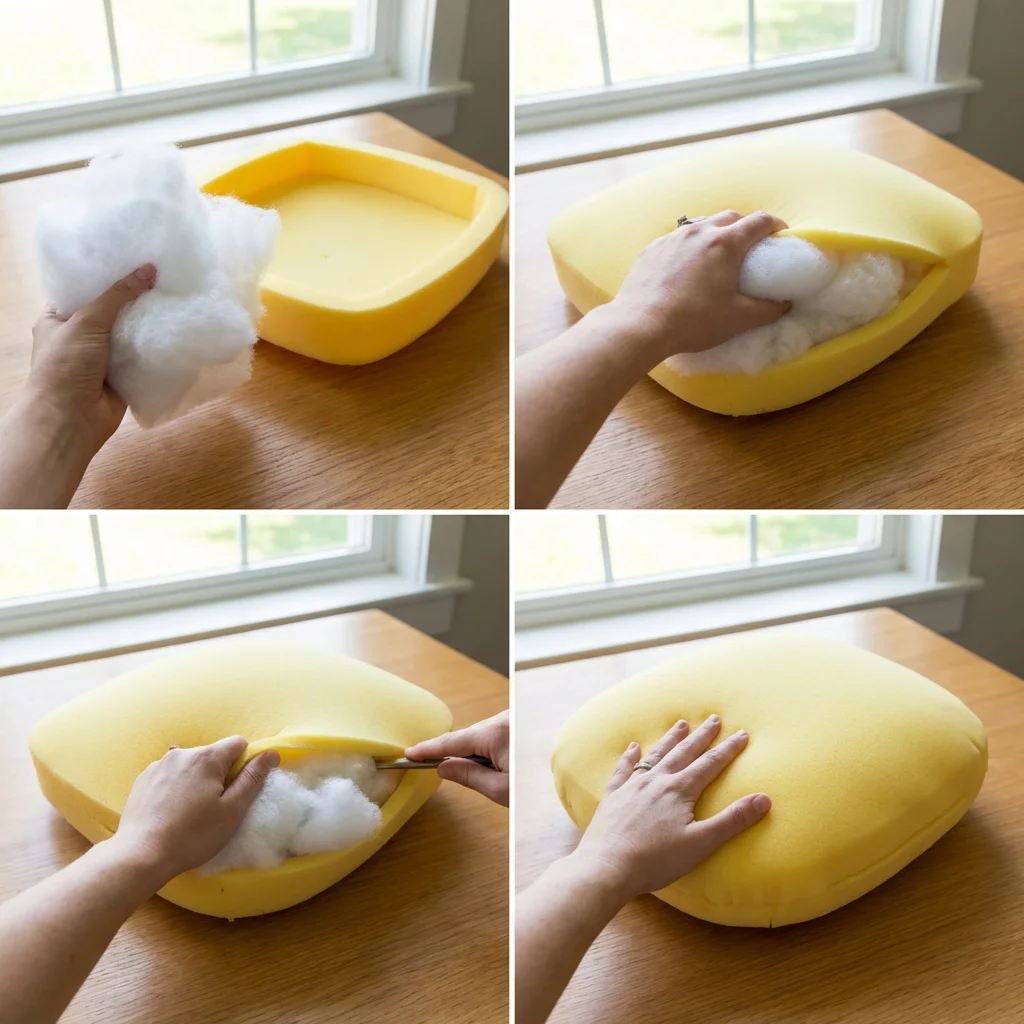
If you already own the sofa and you are doing this as a fix, I treat it as a medium difficulty job because the annoying part is not the foam, it is the handling. You have to pull the cover, remove the core, cut a clean one inch layer that matches the footprint, then glue it evenly to the bottom without leaving lumps or loose corners that will fold and create a ridge you can feel.
I also keep my expectations honest about what this can and cannot do. This lift can restore height and make a seat feel supportive again when the foam is just fatigued, but it will not solve a deck that is sagging like a hammock. If you sit on the sofa without the cushions and the deck still dips a lot, adding foam only hides the real problem for a little while, then you are right back where you started.
Cost wise, this is one of the few cushion related interventions that can be genuinely cheap per seat, roughly the cost of a small sheet of foam and adhesive, often around twenty dollars per cushion if you are doing it yourself. That low cost is exactly why I like it as a diagnostic move, because if the lift makes the sofa feel right again, you just proved the main problem was cushion height, not the frame.
When I am buying a new sofa and trying to avoid needing this later, I watch for cushions that feel great in the first minute but let me sink until I am effectively sitting in the frame shape. If I feel the front rail through the cushion, or I feel like I have to brace with my legs to stand up, I assume I am going to be shopping for foam sooner than I want, even if the cushion feels “soft and cozy” on the showroom floor.
Method 3: Inject & Clamp (The Wobble Fix)
When a sofa starts creaking, the sound is annoying, but what I really worry about is what the noise means. A creak that shows up when you shift your weight is often a wooden joint moving against itself, and that little movement is what turns a solid box into a wobbly one over time.
I separate “soft” problems from “loose” problems with my hands. If I do that gentle steering test on the arm and I feel a tiny lag before the rest of the sofa follows, or I hear a creak right at the arm to base seam, I assume the joint is loosening. That is not a cushion issue, it is the frame acting like it is no longer one piece.
The real fix, when the joint is just loose and not broken, is to get glue back into the gap and then force the joint tight while the glue cures. That is why this method is inject and clamp, not just inject. The syringe is just a delivery tool, the clamp is what actually makes the repair work.
If you ever try this at home, the crucial thing I learned the hard way is that glue without pressure is basically a cosmetic gesture. Wood glue needs the two surfaces pressed together firmly while it sets, otherwise you are just filling a crack that can still move. When the joint moves again, you are back to creaking, and now you also have dried glue crumbs in the gap.
The way I think about the buying lesson is simple. If a sofa design depends on joints staying tight, I want to see signs that the maker took joint strength seriously from day one, because most people do not own clamps, and most people are not going to flip a sofa over and do surgery on it.
In the showroom, I try to “fail” the joint gently before I fall in love with the fabric. I put one hand on the arm and one hand on the seat or back, then I apply a small rocking force and watch the seam where the arm meets the base. If I see the seam line open and close even a hair, or I hear a tick or creak, I take that as early warning, even if the sofa is brand new.
I also pay attention to how the wobble feels. A solid frame feels like the whole sofa moves as one unit when you push on it, while a loose joint feels like the arm moves first and the rest of the sofa catches up. That “two stage” movement is exactly what clamping is meant to eliminate, because it means the joint is not locked.
Cost wise, this is the first fix in this guide where the tool can cost more than the material. The glue and a syringe are cheap, but a decent bar clamp is usually why the total lands around forty dollars, especially if you need more than one clamp to pull the joint closed evenly.
Difficulty is hard, not because the steps are complicated, but because you need patience and access. You have to get to the joint, work glue into the actual gap, then clamp it so it closes squarely and stays that way for a full day. If you clamp crooked, or you cannot physically place the clamp where it needs to go, you can do more harm than good.
Here is the part that matters for you as a buyer. If you are looking at a sofa and you can already make it creak or wiggle with that gentle steering test, I would not buy it on the assumption that you will “just glue it later.” This fix only makes sense when a basically decent frame has developed a small amount of looseness, not when the sofa is built in a way that invites joints to work loose in normal use.
If you want to use this method as a shopping filter, I would do one more quick check before you commit. I kneel and lift the front corner of the sofa a couple of inches, then I set it back down and listen. A rigid frame tends to land quietly and evenly, while a frame with loose joints often makes a little chatter sound as parts shift and re-seat.
If the store will not let you do any of these gentle tests, I treat that like a red flag on its own. A sofa that is built to stay tight should tolerate careful pushing and a careful corner lift without sounding like a wooden ship, and you should not have to buy it first to find out.
Method 4: Steam Treatment (The Wrinkle Remover)
Sometimes the seat feels supportive but looks sloppy. You stand up and the fabric stays puddled and loose, like it has extra skin that never tightens back up.
This is a different problem than sagging springs or tired foam, and it is one of the few sofa issues where a light “reset” can actually work. When the upholstery is made from natural fibers like cotton, linen, or wool, a handheld garment steamer can help the fabric shrink back closer to its original tension.
I treat this as a wrinkle remover, not a structural fix. If you sit down and your hips sink too low, steam will not lift you. If the seat deck dips like a hammock, steam will not pull the support system back into shape. What it can do is clean up that loose, baggy look that makes an otherwise decent sofa seem worn out.
At home, I only do this when I can confirm the fabric is a natural fiber or at least a blend where natural fiber is doing some of the work. I steam lightly, keep the steamer moving, and I stop as soon as the fabric looks like it is tightening, because overheating one spot is how people end up with water marks or a shiny patch.
In a showroom, you can use this idea as a buying filter. If a floor model already shows pooling and looseness on the seat, I ask what the upholstery content is and I specifically listen for cotton, linen, or wool versus pure synthetic. Then I rub the seat fabric lightly with my hand and watch what it does, because a fabric that immediately stays rumpled and looks “tired” from simple contact is the one that will bug you every day.
Here is the blunt limitation that matters. Steam does not work on polyester in the way most people hope it will. Polyester is basically plastic fiber, it does not shrink back the same way, so you can waste a lot of time chasing a tighter look that never really arrives.
If you are looking at a polyester sofa that already looks a little loose on the seat, I assume it will only get looser and more visually wrinkled with normal use. In that case, I either choose a different fabric option that has more natural fiber in it, or I choose a design that hides looseness better, like a tighter upholstered seat or a texture that does not advertise wrinkles.
The buying takeaway is that a wrinkled seat is not always a deal breaker, but you need to know whether you are looking at a material you can periodically “reset” with steam, or a material that is going to stay slack and make you feel like the sofa is aging faster than it should.
Method 5: Webbing Replacement (The Nuclear Option)
When the elastic webbing under the cushions snaps, the seat usually goes from “a little saggy” to “suddenly awful.” You will feel a sharp drop in one area, sometimes with a lumpy ridge where the broken strap folded over, and no amount of cushion fluffing will hide it because the platform underneath you is literally missing.
The fix is as blunt as it sounds. All the old webbing needs to come out, and new webbing needs to go in, stapled to the frame with proper tension so it acts like a tight trampoline again. If only one strap broke, it is still common for the rest to be tired, and I have found that replacing just the obvious failure often turns into whack a mole later.
The catch is tension, and this is where people waste time and end up with a seat that still feels wrong. Webbing has to be stretched consistently while you staple it, otherwise you install a “new” support layer that is already loose on day one. That is why pros use a webbing stretcher tool, it lets you pull the strap tight in a controlled way while keeping your hands free to staple cleanly.
If you are standing in a showroom trying to avoid ever needing this, I would ask directly whether the seat deck uses elastic webbing, sinuous springs, or something else. Then I would do a simple feel test by pressing down firmly through the cushion near the front third of the seat and listening as much as feeling. A webbing seat that is already on the edge often gives a dull thump, a slightly crunchy sensation, or an uneven dip that feels different from side to side.
I also pay attention to how the seat behaves when I shift my weight left to right. When webbing is failing, I can sometimes feel a “step” where one strap has more give than the next, like walking across uneven floorboards. A healthy support layer feels uniform across the width, even if the sofa is soft by design.
If you already own the sofa and the webbing is broken, this is the point where I stop pretending it is a casual DIY. You are working underneath the sofa, you are pulling hard against the frame, and you are relying on staples to hold tension for years. If you do not already own the stretcher and a stapler that can sink staples properly into hardwood, it is very easy to spend money, bleed a little, and still end up with a loose seat.
My verdict is to hire a pro for this one, especially if the sofa is worth keeping. The labor is not glamorous, but good tension and clean attachment are the whole game here, and I would rather pay once than live with a seat that still feels like a hammock because I tried to pull the webbing tight by hand and guessed wrong.
Technical Summary: The Repair Hierarchy
When I step back and look at all these interventions, I mentally rank sofa problems by how realistic they are to fix after you have already bought the thing. I do this because the cheapest sofa is rarely the cheapest to live with, and the “best deal” can turn into the one that forces you into the hardest repairs.
Springs are high on my “easy fix” list because when sinuous springs lose tension, you can often add helpers and get a meaningful deck lift without tearing the whole sofa apart. If you are buying, this is why I would rather see sinuous springs than elastic webbing on a sofa that is meant for everyday sitting, because springs usually give you a second chance later.
Foam is also an easy fix in the sense that you can usually restore height and support by boosting or replacing the cushion core. As a shopper, this matters because a sofa with a solid deck and a solid frame can still be a good long term buy even if the cushions are only average, since cushions are one of the few parts you can refresh without carpentry.
Fabric sits in the “easy maintenance” category for a different reason. When the sofa still feels supportive but looks wrinkled or baggy, I have actually seen steam help on natural fiber upholstery, and that is a rare case where cosmetics can be improved without replacing anything structural. When you are shopping, I use this to separate “this will always look sloppy” from “this can be periodically reset.”
The frame is where the difficulty jumps. If a frame starts wobbling, the true fix is usually glue plus clamping pressure, and it only works when the joint is accessible and not already damaged. In a showroom, I treat any early creak or wiggle as a serious warning because most owners are not going to clamp a sofa like a woodworking project.
Webbing is the one I put at the bottom because it tends to demand special tools and correct tension to work, and a sloppy webbing job just recreates the sag with brand new materials. If you are trying not to get ripped off, this is why I push you to find out what the seat deck is made of before you buy, because a webbed seat can be fine at first and then become the hardest, least satisfying repair later.
If you remember nothing else, I would remember this: I want you buying the kind of sofa where the likely future problems are in the “springs and foam” zone, not the “frame and webbing” zone. In a showroom you cannot predict everything, but you can do those quick pushes and wiggle checks, ask what is under the seat, and choose the construction that leaves you with fixes you would actually be willing to do.
Explore Technical Reference
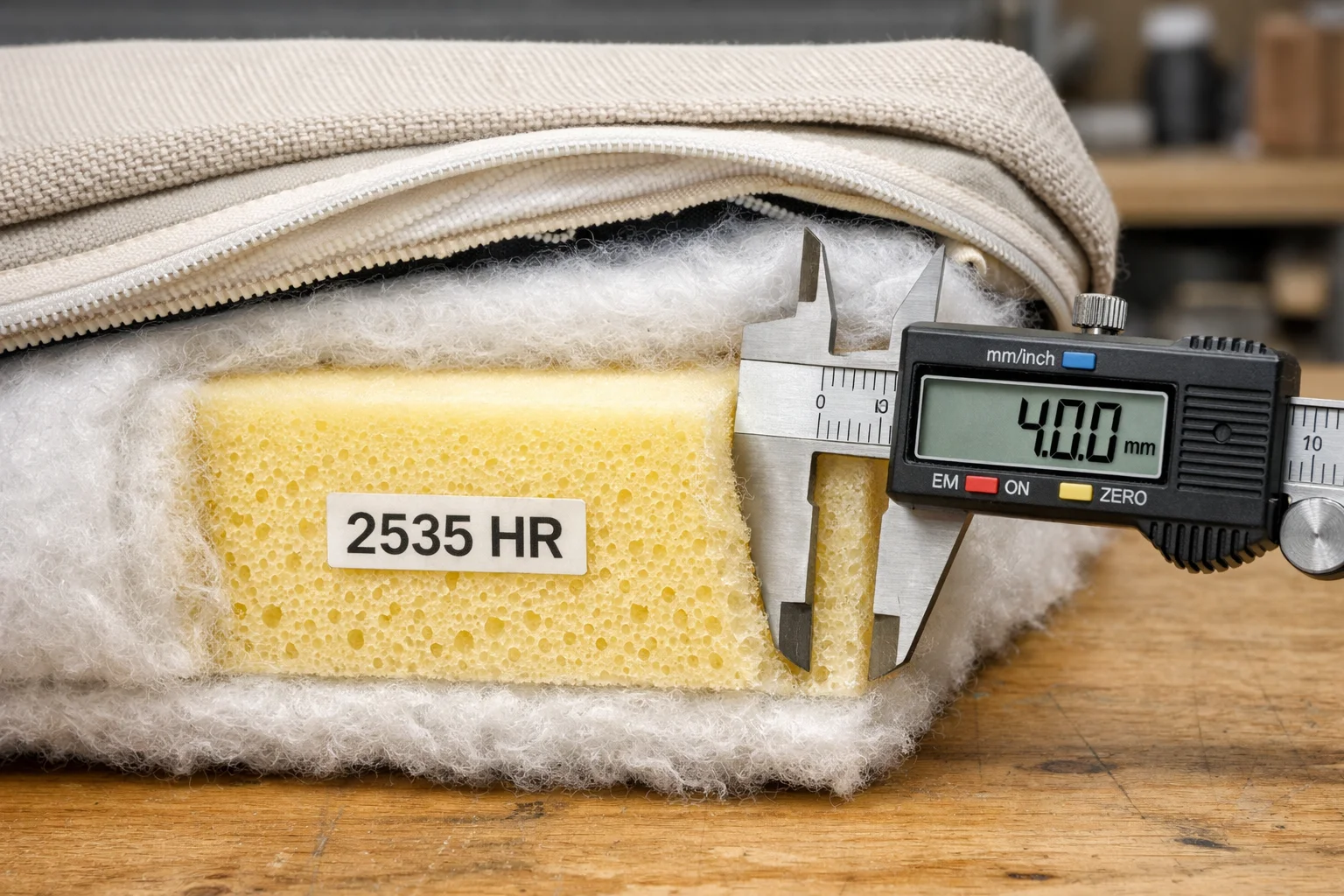
The Stuffing Guide: Replacing Your Foam Core
A step-by-step guide to the vacuum method. Why Dacron wrap is key to a professional look.
Analyze Details →
The Pro Line: When DIY Become Dangerous
Why some furniture repairs require professional skills and specialized tools. Understanding the boundary between accessibleDIY work and dangerous or complex professional territory.
Analyze Details →