The Stuffing Guide: Replacing Your Foam Core
Introduction
I tried stuffing cheap “Poly-Fil” into my sagging cushions. It resulted in a lumpy mess that looked like I was hiding laundry in my sofa. I learned the hard way: You cannot fix mechanics with fluff. You have to replace the engine.
That experience is why I stopped judging sofas by how they feel in the first thirty seconds. In a showroom, almost anything can feel okay because the foam is fresh, the covers are steamed, and the floor is level. What matters is whether the sofa still holds you up after hundreds of normal sit downs, naps, and getting up with one hand on the arm.
When I say “mechanics,” I mean the stuff you cannot see in a quick glance but you can absolutely check if you slow down and act a little nosy. I mean the frame that keeps the shape, the suspension that actually carries your weight, and the way the cushions are built so they do not turn into pancakes or marbles. If those parts are weak, no fabric upgrade and no extra throw pillows will save it.
I’m writing this for you if you want to buy one sofa and stop thinking about it for years. I am not trying to help you find the trendiest shape, I’m trying to help you avoid the specific kinds of disappointment I’ve already paid for.
As you read the rest of this guide, picture yourself doing a few simple checks in the store, asking a couple of direct questions, and not being embarrassed about it. I’ve found that a decent sofa can handle being inspected, and a flimsy one depends on you not touching it too much.
My goal is to help you spot whether you’re looking at a sofa that is built like a tool, or built like a prop. If you learn to tell the difference, you can spend less time guessing, and a lot less money “fixing” problems that were baked in from day one.
The "Numbers" Game
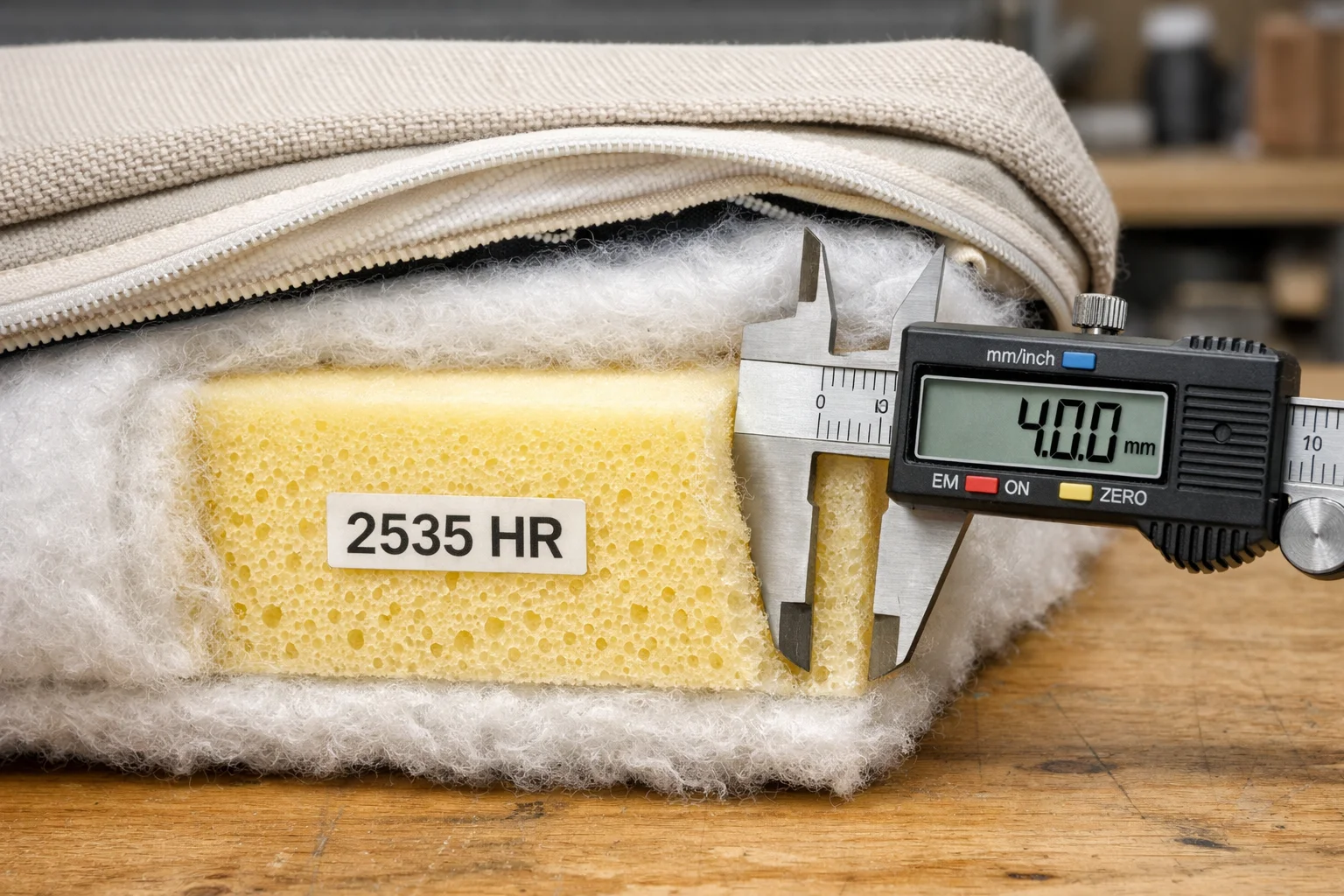
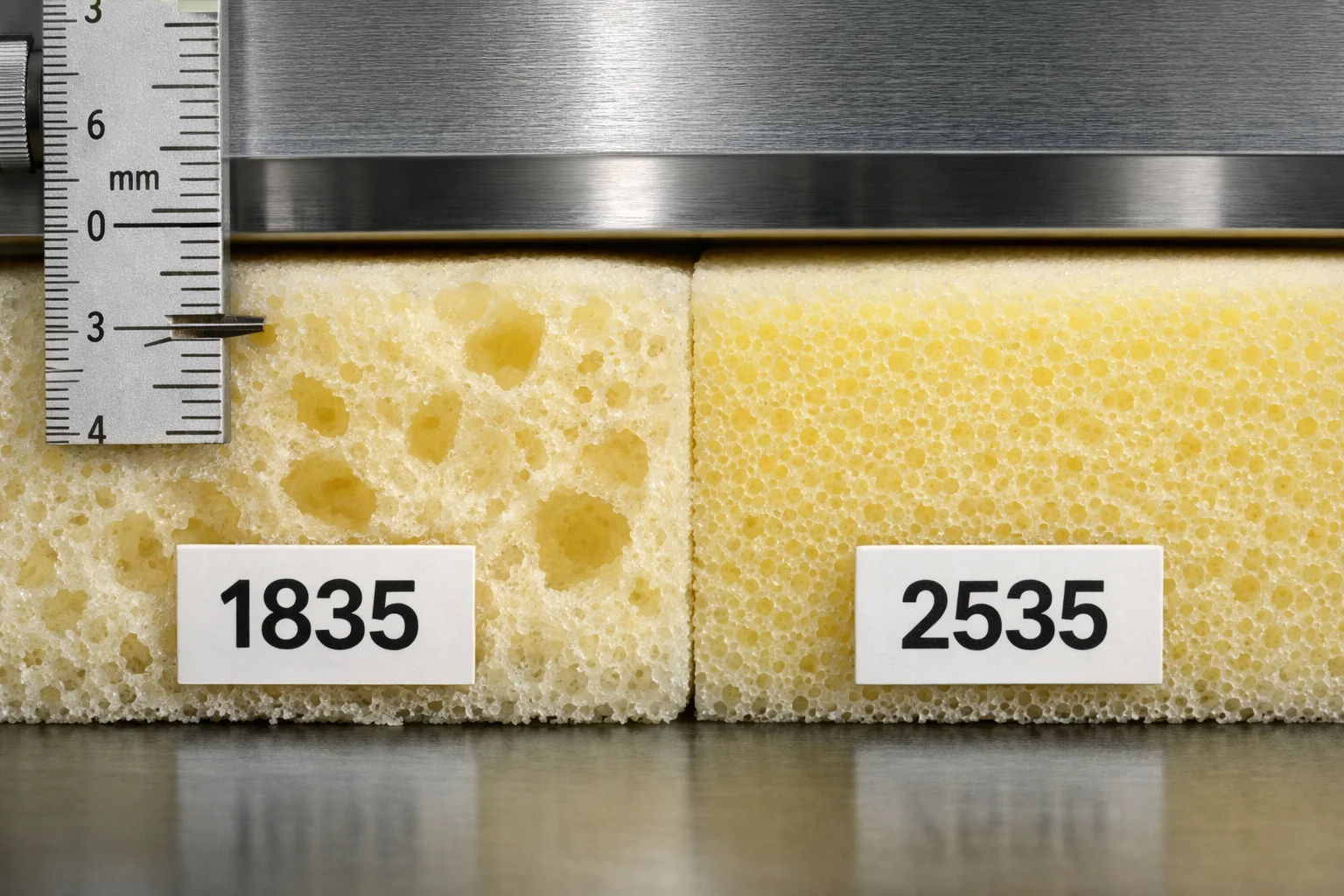
Foam is one of those things that gets marketed with vague words like “plush” and “supportive,” and I have learned not to trust any of that without a code. In most upholstery foam, there is usually a simple four digit code that tells you what you are really buying, like 1835, 2535, or something similar, and you should not guess what is inside a cushion based on how it feels brand new.The first two digits are density, meaning how much foam is packed into a given volume. In plain terms, higher density usually means it keeps its shape longer instead of turning into a saggy crater. When I am trying to avoid disappointment, I push for 2.5 density or higher, because that is the threshold where you are typically into high resilience foam rather than the cheaper stuff that “wows” in the store and then gives up at home.
The last two digits are firmness, sometimes described as ILD or compression, and this is the part that decides whether the cushion feels soft, medium, or firm when you sit. For a normal living room sofa that is not meant to feel like a bed pillow, I usually aim around 35 as a practical medium firm baseline. If you go much lower, it can feel inviting for a minute and then you start bottoming out once the foam breaks in.
Here is the phrase I use in a showroom because it forces a real answer: I ask if the seat cushions are “2535,” or “HR 2.5 pound density with 35 pound compression.” If they cannot tell you, I ask them to check the spec sheet or the cushion tag, because a serious manufacturer will have a real spec, and a lot of disappointing sofas rely on you never asking this question.
Measurement Protocol (The Banana Rule)
Measuring is where most people fail, and I include my past self in that. The common mistake is measuring the old foam block and ordering the same size, which is how you end up with a loose, wrinkly cover that looks tired even on day one.
If you are replacing foam in an existing cushion cover, I start by emptying the cover completely. Do not measure anything until the old insert is out, because old foam lies to you, it shrinks, it caves in, and it can even be cut undersized from the start.
Next I pull the cover taut and I mean seam to seam, not just smoothing it with my hands. I treat the cover like the true template and I measure the inside dimensions from the stitching line on one side to the stitching line on the other, because that is the shape the cushion has to fill.
Here is the “banana rule” part. I add about an inch to the length and about an inch to the width of what I just measured, because that little bit of extra foam is what creates the crown, the gentle puff that makes a cushion look alive instead of looking like a bag. If you order the exact seam to seam size, the cover usually cannot stay smooth once someone sits, and you get those permanent ripples that make the whole sofa look older than it is.
Thickness is the part people get backwards, because they try to add puff by ordering thicker foam. I match thickness to the cover’s boxing, so if the side panel around the cushion is four inches tall, I order four inch foam. If you want that fuller look, you get it from the wrap, not by forcing a too thick slab into a too short cover.
When you see a cushion in a showroom that looks nicely rounded at the top but still has crisp seams, that is usually foam that fits the boxing and a wrap that adds the finish. If you are ordering replacement foam and you are planning to add Dacron or a similar wrap, remember that the wrap is what adds the soft puff and helps the fabric slide, so you do not need to “oversize” the thickness to chase that look.
If you only take one practical habit from this section, make it this. I measure the cover, not the old cushion, I pull it tight before I measure, and I build in a little extra in length and width so the cushion wants to fill the corners instead of hiding from them. That is how you avoid the sad, underfilled look that makes even good foam feel like a bad purchase.
The Secret Ingredient: Dacron
I never put raw foam straight into a cushion cover anymore, because it is one of those small shortcuts that makes everything harder and uglier. Raw foam grabs fabric, it bunches as you stuff it in, and it tends to telegraph every sharp edge so the cushion can end up looking like a brick in a pillowcase.
What you want between the foam and the cover is Dacron, which is basically polyester batting, the white fluffy wrap you have probably seen on craft stuff. In sofa cushions it is not there to make the seat magically softer, it is there to make the whole system behave better.
In practical terms, Dacron acts like a slip layer so the foam can slide into the cover without fighting you and without twisting inside. It also rounds out the edges and fills the corners, which is what gives a cushion that clean, slightly crowned shape instead of a boxy slab showing through the fabric.
If you are shopping in a showroom, I look for clues that Dacron is present even if nobody mentions it. When the cushion has a smooth face with no hard looking edges, and the seams are crisp without the top looking sunken, that usually means there is some kind of wrap doing its job.
The easiest direct question to ask is simply whether the seat foam is wrapped in Dacron or polyester batting, and whether it is a full wrap or just a thin sheet on top. If the salesperson looks blank, I ask them to unzip a cushion so I can see the insert, because a good store should not treat that like a weird request.
When you do get a look inside, you are looking for a clean layer of white batting around the foam, not loose baggy stuffing, and not bare yellow foam rubbing directly on the cover. If you see raw foam, I take it as a red flag for how the sofa will look after normal use, because the cover will be doing all the work and it will show every imperfection faster.
If you are ordering replacement foam or having cushions rebuilt, this is where I stop trying to save a few dollars. Most upholstery shops will charge around ten bucks per cushion to wrap the foam, and I pay it, because it is the difference between a cushion that goes in smoothly and looks finished, and one that looks slightly wrong even if the foam itself is high quality.
The Vacuum Method (Step-by-Step)
I used to fight the zipper, wrestle the foam, and then blame the cover when it looked wrong. The trick that actually works is to stop trying to win with strength and use suction so the foam behaves like it is temporarily smaller than the cover.
I start with a clean, dry foam block that is already wrapped in Dacron, because the wrap makes everything slide instead of snag. Then I put the whole insert into a big garbage bag, the thicker kind that will not rip the moment the foam corners push against it.
Next I feed the vacuum hose into the mouth of the bag and pinch the plastic tight around the hose with my hand. When I turn the vacuum on, I keep squeezing the bag around the hose so it does not just suck room air, and you can literally watch the foam collapse down into a tight little “raisin.”
Once it is shrunken, I keep the vacuum running and guide that compressed bundle straight into the cushion cover. This is where you stop fighting the zipper, because you are not trying to force full size foam past the opening, you are sliding a temporarily smaller shape into the space.
When the foam is fully inside the cover, I turn the vacuum off and pull the garbage bag out fast. If you hesitate, the foam starts expanding while the bag is still wrapped around it, and then you are back to wrestling, except now you are wrestling slippery plastic too.
After the bag is out, I give the cushion a minute to re inflate and I work the corners with my hands so the insert seats into the boxing. If the corners look a little empty, I do not assume the foam is wrong yet, I “karate chop” and punch the corners and edges until the wrap and foam spread out evenly, because it often takes a bit of massaging for everything to find its place.
A quick reality check I use is this: if you get the insert in easily with the vacuum method and the cover still looks loose and wrinkly once the foam fully expands, the foam is probably undersized for that cover. If you can barely get it in even after vacuuming it down, the foam is probably oversized, or the cover has shrunk, and you are risking busted seams the first time someone flops down.
If you are doing this at home, I also pay attention to the zipper and stitching before I start. If the zipper tape looks weak or the seam allowances look skimpy, I do not force it, because vacuuming makes insertion easier but it does not make a fragile cover stronger. In that situation I would rather slightly resize the insert or get the cover restitched than “win” the stuffing battle and lose the cushion a week later.
Technical Summary: The result
When I do this repair with decent foam and a proper wrap, I budget about fifty dollars per seat cushion, give or take depending on size. The actual hands on time is usually about an hour total for a standard sofa once I have the inserts ready, because the vacuum method turns the “fight” part into a quick slide.The immediate, honest effect is that you will sit higher, and in my experience it is about three inches if your old cushions were truly collapsed. That can feel strange for a day because your body got used to the slump, but it is also the first sign you are no longer sitting on the frame and suspension.
The durability comes down to the foam spec more than anything else. If you use HR 2.5 density foam, this kind of cushion rebuild is the rare sofa fix that can last a decade or more, which is longer than a lot of original cushions that came in mid priced sofas.
Diagram
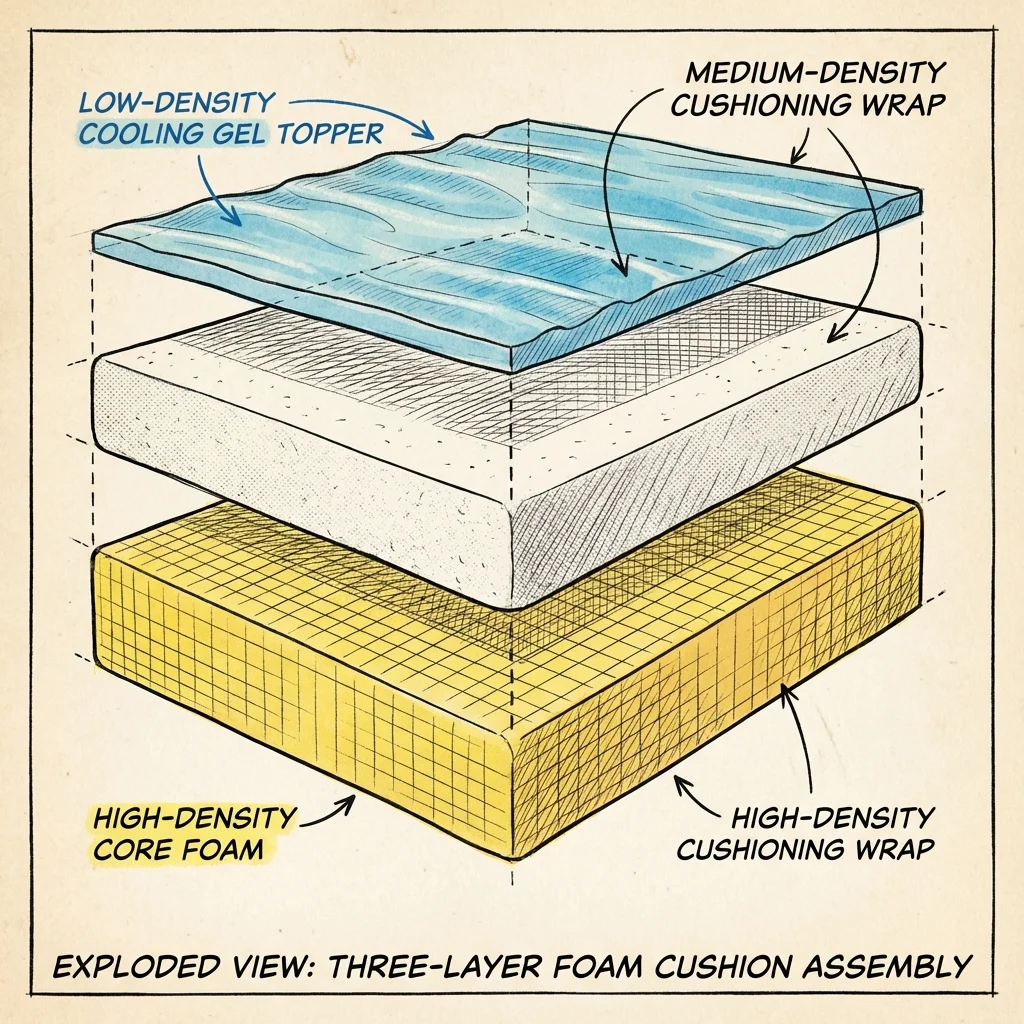
When you look at that picture, I want you to notice the buying lesson hiding inside a repair trick. Foam can be temporarily crushed down to almost nothing and then spring back, but only if it is decent foam to begin with, and only if the cushion build is meant to work as a system.
If you are in a showroom, I use this as a mental test: if the cushion looks great only when it is perfectly fluffed and untouched, it is probably relying on loft and presentation, not structure. A seat cushion that is doing its job tends to look and feel composed even after you stand up, meaning it rebounds without you having to reshape it like a pillow.
This is also why I ask to unzip a seat cushion when I can. If the store lets you see the insert and you find a real foam core with a wrap, I relax a bit, because that is the kind of build that can be maintained and rebuilt later. If you find a loose bag of fiber, chopped foam, or a weird stack of thin layers, I treat it like a warning that the sofa is designed to feel good briefly, then become your problem.
I also watch how the salesperson reacts to that request. A confident “sure” usually pairs with a manufacturer that is not hiding the materials, and a nervous refusal often pairs with a cushion that is cheaper inside than the price tag implies.
If you take one practical thing from this diagram section, make it this. I judge a sofa less by the first sit and more by whether the cushion looks like something that can survive being compressed thousands of times and still recover, because that is the whole job of a seat cushion, not just feeling nice for a minute under showroom lights.
What You Need to Do This Repair
- High resiliency foam (HR 2.5 lb) — the correct grade for a cushion repair that lasts a decade, not a year.
- Dacron polyester batting — wrap the foam before inserting to round corners and prevent fabric abrasion.
Explore Technical Reference
Lifespan By Tier: What You Get For Your Money
How construction methods determine furniture lifespan. Understanding why material and joinery choices create predictable expiration dates regardless of care.
Analyze Details →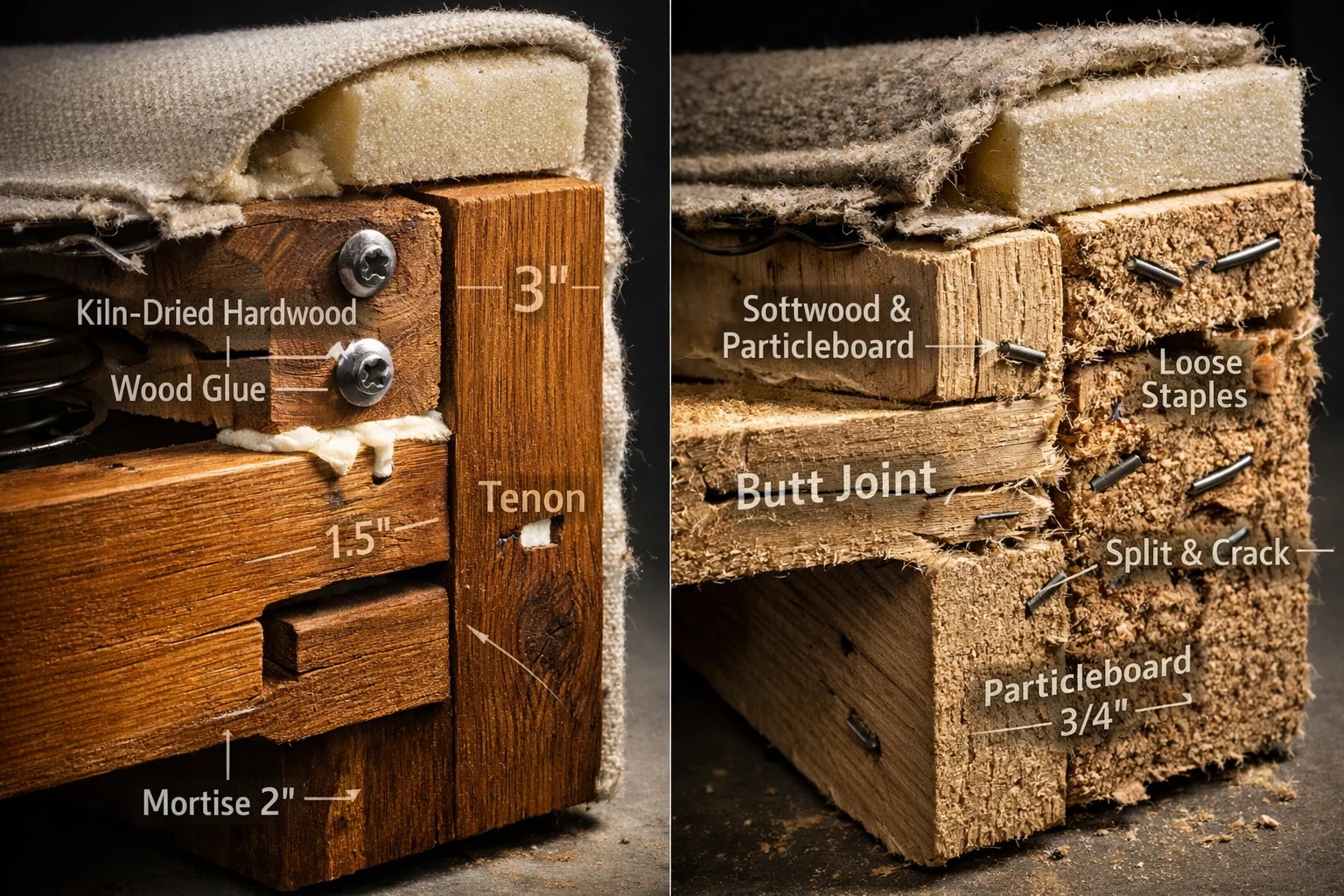
The Repair Formula: When to Fix vs. When to Fold
The 50% Rule. Assessing the 'bones' of your furniture before spending money on new fabric.
Analyze Details →