The Uneven Seat: Understanding "Wear Patterns"

Introduction
My corner seat was noticeably lower than the armless section next to it. I thought it was a defect. Then I realized: The corner seat is where we watch TV every night. The armless seat is where we put the laundry.
That was the moment it clicked for me that “sagging” is often just “real life.” The seat that gets used, in the same spot, by the same bodies, in the same posture, is the seat that reveals what the sofa is actually made of.
If you only sit on a showroom model for thirty seconds, everything can feel supportive. What you are really trying to buy is how it will feel after a year of your habits, your favorite cushion, your way of flopping down, and your tendency to claim one spot as yours.
I have learned the hard way that two sofas can look identical on the outside and age completely differently. One will stay level and quietly comfortable, the other will develop a dip you start bracing for when you sit down.
This guide is the stuff I now do in a showroom to avoid that mistake. I am not trying to turn you into an engineer, I am trying to help you catch the common weak links before you pay for them.
The goal is simple: you should leave the store knowing which part of the sofa is most likely to wear first, and whether it is built in a way that makes that wear slow and predictable, or fast and annoying.
The "Pareto" Principle of Seating
The rule is that about 20% of your sofa gets about 80% of the use. In real homes, that usually means one seat becomes the “favorite spot,” and it takes the hit day after day.The result is that the favorite spot will always fail before the rest of the sofa, even on an expensive piece. I do not treat that as a manufacturing defect, I treat it as a law of physics plus human habit.
What this changes, for me, is how I test a sofa in a showroom. I am not trying to decide whether it feels nice right now, I am trying to predict what the most-used seat will feel like after months of the same person sitting in the same place.
When you sit down, pick one seat and treat it like your future favorite spot. Sit how you actually sit at home, not how you sit when a salesperson is watching. Put your weight where you normally put it, lean into the arm if you do that, and stay there long enough that the cushion and suspension stop “holding their breath.”
Then I stand up and immediately sit down in the seat next to it, because what I care about is the difference between spots. A sofa that already feels noticeably different from seat to seat on day one is waving a flag at you about what it will feel like later, because the favorite spot will exaggerate that difference.
I also pay attention to whether the sofa is designed to let you rotate wear. If the seat cushions are loose and truly interchangeable, you can swap positions and spread the damage around. If the cushions are attached, shaped so they only fit one way, or the chaise is the only comfortable place to sit, you are basically signing up for one area to age faster with no way to even it out.
I ask myself a slightly annoying question before I get emotionally attached to a sofa: “Where will the dip happen first in my house?” If you know it will be the left seat because that is your TV seat, then you should judge the sofa by how confidently that one seat is built, not by how pretty the fabric looks across the whole thing.
Finally, I look for the kind of wear that will bother me. A little softening is normal, but a hammock feeling, a tilt toward the center, or a seat that makes you push yourself up out of it is the stuff that turns into daily irritation. In the next sections, I will walk you through the specific checks I do to tell whether the favorite spot will soften slowly and evenly, or collapse into that annoying dip.
Why One Seat Drops
When one seat drops, I try not to treat it like a mystery. In almost every sofa I have lived with, the dip shows up where three things overlap: the cushion softens, the support underneath relaxes, and the frame flexes just a little more than it should in that spot.
In a showroom, I separate those causes on purpose, because they feel similar when you sit, but they predict very different kinds of aging.
The first thing I check is whether the “drop” is mostly cushion, mostly suspension, or a mix. I sit, then I slide my hand down along the outside of the seat cushion and feel how far it compresses compared to the cushion next to it. If the cushion feels like it is flattening easily under my hand, that is a foam and fill story, and it will show up fast in the favorite spot.
Then I do a simple test that tells me a lot: I sit down, stand up, and immediately look at the cushion shape. If it stays obviously dented for a while, that is often lower quality foam or a cushion that is too soft for how you actually sit. If it springs back quickly and evenly, I worry less about one seat becoming a permanent crater.
If the cushion looks fine but the seat still feels like a shallow bowl, I start thinking suspension. I put one knee into the seat near the front edge and bounce lightly, then I do the same in the next seat. I am not trying to be dramatic, I am trying to feel whether one spot has a looser, more trampoline-like give, which is how a hammock seat starts.
I also pay attention to where the softness is. When the front edge collapses first, you end up feeling like you are sliding forward and your thighs are not supported. When the center collapses first, you feel pulled toward the middle of the sofa, and that is what makes one seat feel lower even if the cushion itself looks fine.
The most useful check I know for frame flex is the “twist” feeling. I sit near the inside edge of a seat, close to the seam between two cushions, and I shift my weight side to side. If the sofa feels like it is subtly twisting instead of staying solid under me, that is a warning that the frame or the way the support is attached is letting one bay work harder than the others.
If the sofa has an arm on one side and no arm on the other, like an end seat next to an open section, I pay extra attention. End seats often take more leverage because people lean on the arm, push off it to stand up, and land hard in the same spot. If the end seat already feels different from the middle seat in the showroom, that difference usually grows at home.
I also look for designs that force the load into one place. A chaise that is clearly the best seat, a corner wedge everyone fights over, or a deep lounge seat where you always sit in the same divot will wear faster simply because it cannot be rotated the way a plain three-cushion sofa can.
When a salesperson tells me, “That is normal, it will break in,” I translate that into a question I can use. I ask whether the cushion core is replaceable later, and whether the suspension has a long, clear warranty that covers sagging in the seat support, not just the frame. If they cannot answer, I assume I am on my own if that favorite spot becomes annoying.
One more thing I do is check how honest the sofa is about its comfort. If it feels amazing only in one exact posture, like you have to sit perfectly centered to feel supported, I treat that as a sofa that will punish you once one seat loosens up. The sofas that age best for me are the ones that feel boringly consistent across the whole seating area, because consistency on day one usually means fewer weak links to exaggerate on day three hundred.
If you remember one practical idea from this section, I would make it this: you are not just buying softness, you are buying how evenly the sofa handles repeated load in one bay. In the next parts, I will walk through the specific build choices that make that “favorite spot” soften slowly, instead of dropping into a dip you notice every time you sit down.
1. Spring Fatigue (The 50:1 Ratio)
The simplest way I know to explain why one seat drops is this: your favorite seat lives a completely different life than the others. In a normal home, the spot you use every night can easily see thousands of hours of sitting in a year, while the “guest” seat might only get used a handful of times.
That gap matters because the support under you is doing work every time you sit down, shift, and get back up. If one seat flexes dozens of times more than the one next to it, it is not going to age evenly, even if the sofa was perfectly level when it arrived.
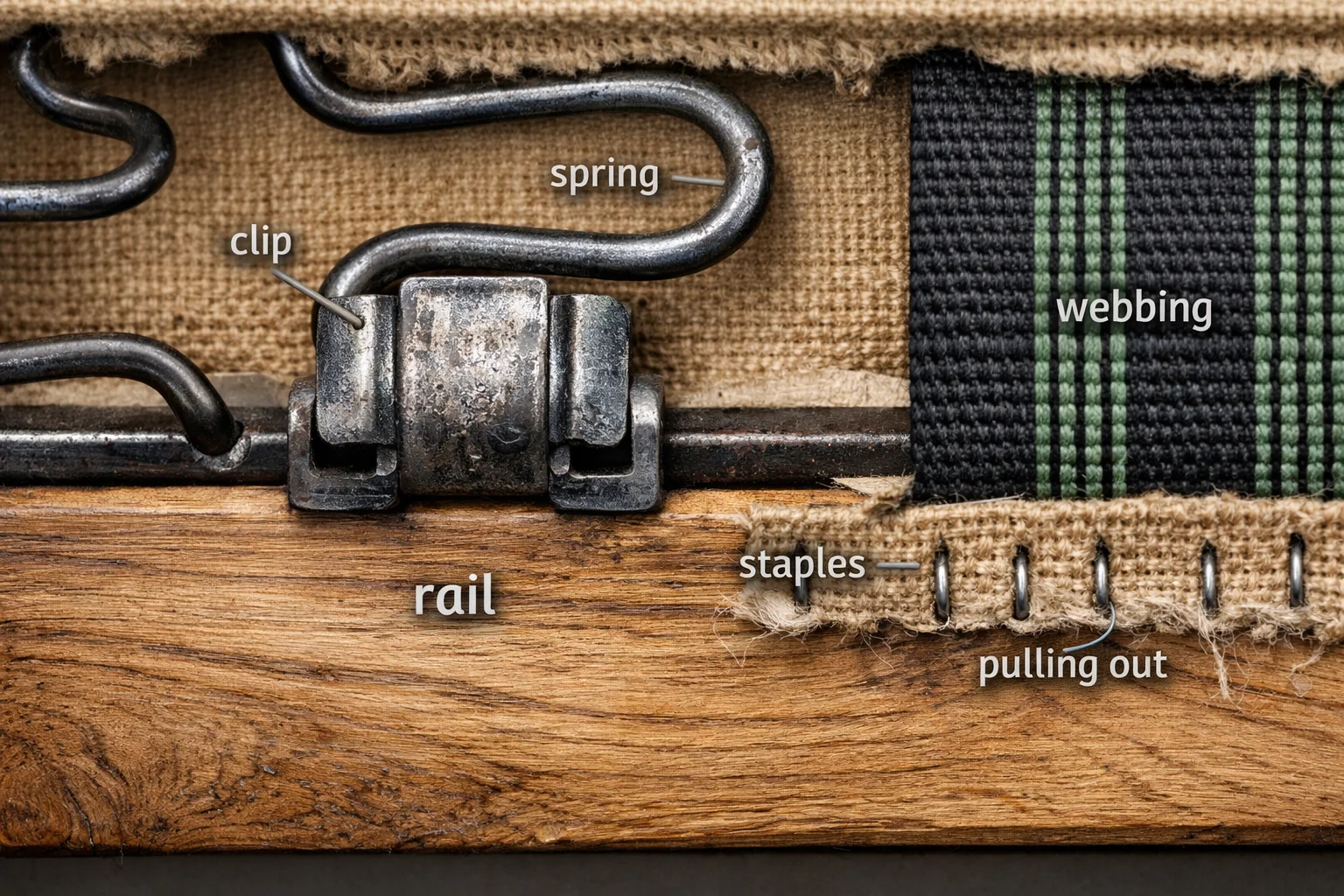
What that looks like in real life is not usually a catastrophic failure, it is a slow loss of tension in the springs or webbing under that one bay. After enough cycles, the favorite spot can end up about an inch lower, and that inch is exactly the kind you feel in your lower back and thighs even if you cannot “see” it across the room.
In a showroom, I try to catch whether the sofa is built to tolerate that lopsided reality. I do not ask myself “Do I like this seat,” I ask “Will this seat still match the one next to it after a year of me doing the same thing every night.”
I start by choosing the seat that would be my future favorite spot, then I do a repeatable sit. I sit down firmly in the same place each time, usually a little forward of center because that is where people actually land, and I pay attention to whether the support pushes back in a controlled way or whether it has that loose, trampoline drop.
Then I immediately sit in the neighboring seat and compare. I am looking for matched resistance. If one bay feels bouncier, deeper, or easier to bottom out on day one, that is the bay that will exaggerate first when it gets the 50-times-more use at home.
If the sofa has removable seat cushions, I do one extra check that has saved me from a couple bad choices. I lift the cushion and look underneath, not because I want to become a suspension expert, but because I want to know what is actually taking the beating. If the salesperson will not let you unzip or lift anything, I treat that as a reason to be more cautious, because you are being asked to buy a mystery.
When I can see the support, I look for consistency and tightness across the whole seating area. If I see straps that look unevenly tensioned, a wavy surface under one bay, or anything that already looks a little tired on the floor model where people have been test sitting for months, I assume the favorite spot in my house will get there faster than I want.
I also use my hand as a quick “tension meter.” With the cushion off, I press down in the middle of the bay and near the front edge, then I do the same in the next bay. I am not trying to muscle it, I just want to feel whether one area gives more easily or feels like it has less snap back.
The front edge is where I get picky, because that is where fatigue becomes daily annoyance. When the springs or webbing relax near the front rail, your thighs lose support and you start perching or sliding forward. If the front edge already feels soft compared to the seat next to it, I assume that softness will become your “one inch lower” problem later.
I ask one very specific question that usually cuts through the vague “it will break in” talk. I ask what, exactly, is doing the supporting under the seat cushion, and whether sagging in that support is covered in writing. If they say the frame is covered but the springs or webbing are not, I take that as a quiet admission that the most common real-life failure is on you.
If you want one practical takeaway from this section, it is this: you cannot stop one seat from getting more cycles, but you can avoid buying a sofa where one bay already feels looser than the others. In my experience, “even on day one” is the closest thing you get to insurance against the favorite spot turning into the dip you notice every time you sit down.
2. Foam Compression Set
The next reason one seat looks lower is not the springs at all, it is the foam in the cushion taking a permanent set. Your body weight crushes the little air pockets inside the foam over and over in the same spot, and eventually the foam does not fully rebound to its original thickness.
When this is the main problem, the sofa can still feel “supported” underneath, but the cushion itself becomes thinner where you sit most. From across the room, that favorite cushion starts to look like it is on a different level than the others, and the whole row can end up looking like stair steps.
In a showroom, I try to catch this by looking for early, uneven fatigue on the floor model. I stand back and look straight across the tops of the seat cushions, then I look across the front edges too, because that is where thinning shows up first. If one spot already looks lower or more wrinkled and rounded off, I assume the foam is the kind that gives up thickness rather than just “breaking in.”
Then I do a simple “stand up and stare” check. I sit in one place long enough that the cushion stops feeling brand new, then I stand up and watch how the cushion recovers over the next few seconds. I am not expecting magic, but I do want to see it rise back close to level. If it stays visibly dented, or if the cover looks like it has extra slack that did not exist before I sat down, I treat that as a sign the foam is taking a set quickly.
I also compare two seats on purpose, because compression set is easiest to spot as a difference, not as an absolute feel. I sit in the likely favorite seat, stand up, then sit in the neighboring seat in the same way. If the first seat starts feeling easier to “sink through” even during this little test, that is the exact behavior that turns into a permanent low spot at home.
There is one mistake I used to make, I would interpret super soft foam as “luxury.” The problem is that softness and durability are not the same thing. If a cushion feels pillowy but you can also easily feel the harder layers underneath with your sit bones, that usually means you are closer to bottoming out, and once the foam loses a little thickness, you will feel that hardness more often.
I ask direct questions here because the tags on the sofa rarely tell you what matters. I ask what the seat core is made of, and whether it is a single slab of foam or a layered build, because a thin soft layer on top of a firmer core can feel nice without relying on the whole cushion being overly soft. I also ask whether the seat cushion covers unzip, and whether the foam core can be replaced later, because if the foam takes a set, swapping the core is often the cleanest fix.
If you are allowed to unzip the cushion, I take advantage of it. I do not need lab numbers, I just want to see that the foam looks like a substantial core rather than a thin piece of foam wrapped in a lot of fluffy fill that will migrate and hide wear until it suddenly looks lumpy. If the salesperson will not allow any access, I assume I will not be able to fix the most common wear item without buying whole new cushions.
The last thing I watch for is whether the cushion design lets you manage the damage. If the cushions are reversible and interchangeable, you can rotate them and flip them so the same part of the foam is not getting crushed every day. If the cushions are attached, or shaped so they only fit one position, I assume compression set will show up faster and it will be locked into the one spot you use most.
What I take from all this is simple: foam wear is not just “getting softer,” it is literally losing thickness where you sit, and that is what creates the stair step look. In the store, I am trying to choose cushions that recover quickly, feel consistent from seat to seat, and give me at least some ability to rotate or replace the part that will inevitably take the daily beating.
Diagram
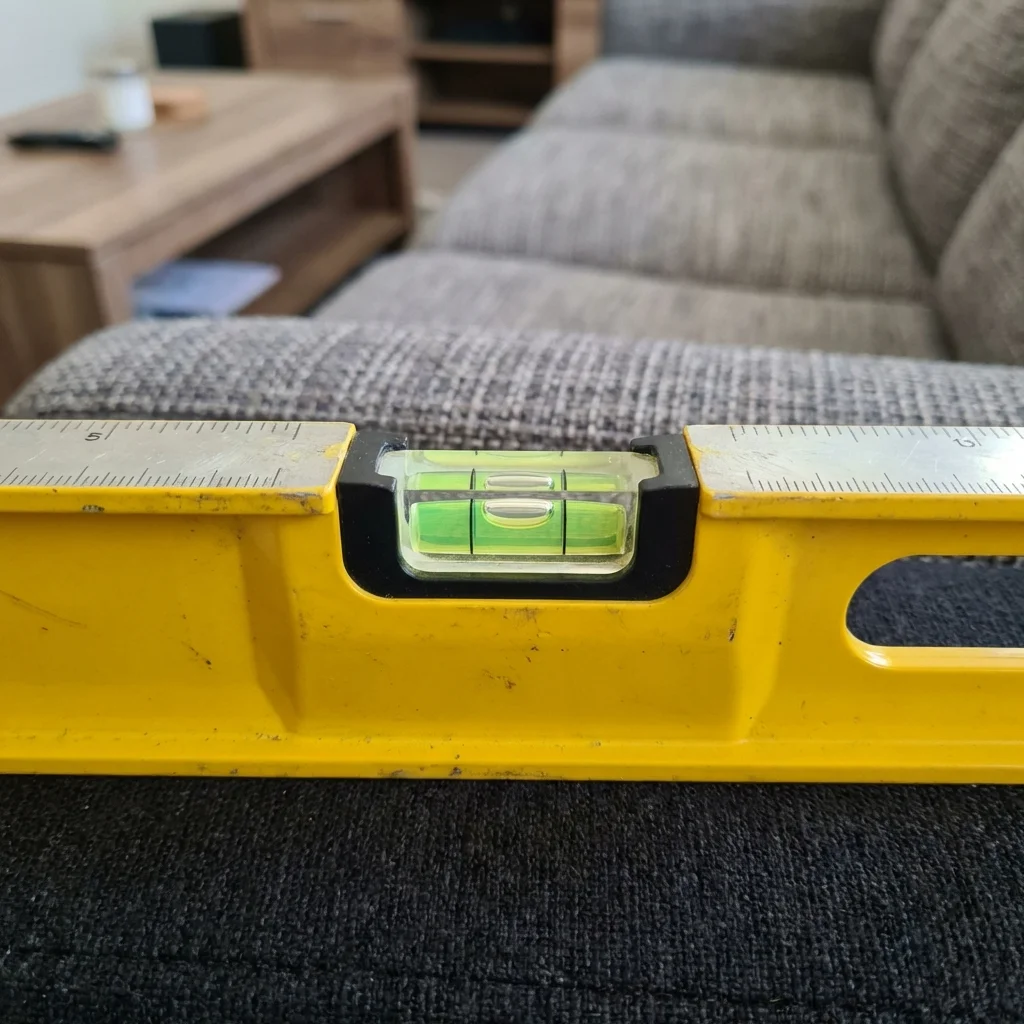
This is the simplest “reality check” I know, because it turns a vague feeling into something you can actually see. You do not need a full workshop setup, you just need a straight reference across two seats so your eyes stop lying to you.
In a showroom, I mimic this without being weird about it. I stand a few steps back and sight across the cushion tops like I am checking if a picture frame is crooked, then I move to the side and sight the front edges too, because dips often show there first.
If the store has a straight brochure, a stiff shopping bag, or even the edge of your phone held flat, I use it as a mini straightedge. I lay it across the seam between two cushions and look for daylight under the middle, or for one cushion crown sitting visibly lower than the one next to it.
What I care about is not whether the floor model has a tiny bit of variation, because people have been pounding on it for months. What I care about is whether the variation matches the story of use, like the “middle is lower because it is everyone’s path,” and whether the sofa design gives you any way to fight that in your own house.
If you see a dip starting on a floor model, I ask the key follow up: is that seat cushion interchangeable with the others, and is the support underneath the same in every bay. If they tell you the middle uses different construction, or the cushions are “positioned,” that is when I assume your favorite spot will become the permanent low spot with no easy way to rotate the problem away.
I also use this as a honesty test for the salesperson’s “break in” line. If a dip is already obvious enough that a straight line shows it, I ask what part you would replace to fix it later, the foam core, the cushion insert, or the seat support under it, and whether that part is actually available to order. If the answer gets vague, I treat that dip as a preview of a future annoyance you will be stuck living with.
Can You Fix It?
This is the point where I stop thinking like a shopper and start thinking like Future Me, the person who has to live with the dip. I have learned that “can it be fixed” is not a nice extra, it is the difference between a sofa that ages normally and a sofa that turns into an expensive annoyance you cannot undo.
The first thing I do is decide what kind of problem I am trying to fix, because cushions, suspension, and frames fail in very different ways. If the seat looks low but the cushion still feels plump in your hands, I start suspecting the support underneath. If the seat looks low and the cushion itself feels thinner and easier to crush, I assume it is mostly cushion materials.
In a showroom, I ask one blunt question that tells me almost everything: if my favorite seat gets annoying in two years, what part do I replace to make it feel normal again. I want to hear a specific, boring answer, like “you replace the foam core” or “you replace the seat insert,” not a vague promise that it will “loft back up.”
If the seat cushions unzip and the core is a separate piece, that is a good sign for fixability. It means you can usually replace just the foam or the whole insert without buying a whole new sofa, and even if you never do, the option keeps you from being trapped.
When I am allowed, I unzip a cushion and look for a real insert that can be pulled out like a unit. If the inside is a loose cloud of fill with no inner liner, or a messy mix of scraps that you would never be able to re-stuff evenly, I treat that as a sofa that will get lumpy and stay lumpy unless you become the person who fluffs it like a job.
I also check whether the cushions are truly interchangeable. If they are identical rectangles and fit in any position, you can rotate wear and you can “sacrifice” a less-used cushion to replace your favorite spot later. If they are shaped, labeled, clipped in, or sewn to the deck, you are basically stuck with whatever happens to the one seat you use most.
Then I switch to the part most people forget to ask about, which is the suspension under the cushion. If the support under one bay sags, replacing foam does not fix the hammock feeling, it just gives you a nicer cushion sitting on a tired base.
So I ask whether the seat support is serviceable at all, meaning whether a technician can access it without tearing the whole sofa apart. If the bottom is closed up tight with no practical access, I assume any suspension repair will be invasive enough that most people will not bother, which means you will end up living with it.
The next fixability check is about the frame, because a flexy frame can mimic a sagging seat and it is the hardest thing to truly “fix” in a normal home. If I feel twist when I shift my weight near the seam between seats, I do not comfort myself with the idea of replacing cushions later. A frame that is moving is telling you the structure is part of the story, and structural problems rarely get cheaper or easier after the sale.
Warranty language matters here, but I have learned to read it like a pessimist. When I hear “lifetime frame warranty,” I immediately ask what it does not cover, and specifically whether sagging, loss of firmness, and loss of height in the seat are excluded. If the warranty is basically “we will replace it if it cracks,” that is not the problem you are likely to have, and it does not help you with the slow dip that makes you hate your favorite spot.
I also ask whether replacement cushion cores or complete inserts are actually available to order later, and for how long the manufacturer keeps them. If they say parts are not available, or they can only sell you a whole new cushion at a price that makes you wince, I treat that as the sofa telling you upfront that wear is your problem.
If you want one practical way to protect yourself while you are still in the store, look for the combination of unzippable seat covers, standard shaped cushions you can swap around, and a design where the seat support looks consistent bay to bay. Even if you never replace anything, that combination usually signals a sofa that was built with the expectation that real people will wear out real parts.
The last thing I do is imagine the most likely “repair” you will actually do, because most of us do not rebuild a sofa. The real repair most people do is rotating cushions, flipping cushions, or replacing one cushion insert, and I buy based on whether those simple moves are possible. If the design blocks those basic fixes, I assume you will be stuck living with whatever your favorite spot becomes.
1. The “Shim” Method (The Quick Fix)
When one seat is lower, the first thing I ask is whether it is the cushion failing, or the “deck” under the cushion dropping a little. If the cushion still feels decently full in your hands, but the whole seat feels like it sits lower as a unit, that is when a shim can tell you a lot, and sometimes solve the daily annoyance.
What I mean by a shim is simply adding a thin, firm layer under the seat cushion on the low spot so the top surface comes back to level with the seats next to it. I have done this at home with a one inch piece of high density foam, because it is cheap, reversible, and it does not require any tools or upholstery skills.
You take the seat cushion off the low bay, lay the foam on the deck under it, then put the cushion back on top. If the dip you hate is mostly “height” and not a structural collapse, you will often feel an immediate difference, and you will see the cushion line up better across the sofa.
I want to be honest about what this does and does not do. It raises the sitting surface and hides the visual sag, but it does not restore spring tension or tighten webbing, so it is not a true fix if the support underneath is actively failing.
The reason I still like this method is that it tells you what kind of problem you have. If a one inch shim makes the seat feel normal again, you are probably dealing with a deck that has relaxed a bit or a cushion that has lost a bit of thickness, not a frame issue.
If the shim barely changes the feel, or the seat still has that hammock pull toward the center even after you raise it, I treat that as a sign the suspension is tired in that bay. In that case, adding more foam is just stacking comfort on top of a problem that will keep getting worse.
In a showroom, you obviously cannot start stuffing foam into their display model, but you can use the logic of the shim method to shop smarter. I ask myself, “If this seat ends up one inch low in my house, is there enough cushion thickness and cover slack that a simple shim would even be possible,” because some modern low profile seats do not leave you any room to cheat height without making the cushion look overstuffed.
I also look at the seam lines and cushion fit. If the cushion already looks tight and perfectly tailored with no tolerance, a shim can make the cover look strained or make the cushion sit proud and awkward, so I do not count on this as a safety net on super tailored sofas.
If you end up doing this at home, I have found it worth cutting the foam to the size of the support area under the cushion, not oversized, so it lays flat and does not curl at the edges. I also prefer firmer foam rather than squishy foam, because the whole point is to regain height, not add another layer that compresses into nothing.
When this works, it is a relief because it makes the sofa feel “even” again without a fight. When it does not work, I take it as useful information, because it points me back to the real culprit under the cushion, and it tells me I should stop chasing quick comfort fixes and start thinking about suspension, service access, or whether the sofa is worth keeping at all.
2. The Rotation Defense
If a sofa gives you independent seat cushions, I treat that like a built in defense system against the favorite spot dip. The idea is simple, you cannot stop yourself from having habits, but you can stop the same exact piece of foam and the same exact patch of suspension from taking every hit.
At home, I swap cushions on a schedule that is frequent enough to matter. Weekly is what actually changed things for me, because monthly turns into never, and “when I remember” usually happens after the damage is already obvious. It feels wrong the first few times because you are messing with the perfect, staged look, but the payoff is that all your cushions age at the same pace instead of one turning into the permanent crater.
I also rotate in a way that matches real wear, not just “move it one spot over.” If you always sit on the left seat, swapping left and middle is good, but it is not the whole story because the front edge and the inside edge take different pressure depending on how you sit. If your cushions are reversible, I flip them too, because that changes which face and which edge is getting crushed, and that is what slows down a compression set that shows up in the same spot every day.
In a showroom, I check for whether this is realistically doable, not just theoretically possible. I lift the cushions and look for identical sizing and shape, because some “loose” cushions are subtly different left to right, or have a tag or contour that only fits one bay. If the cushions are shaped to nest into specific arms, have a cut corner, or rely on a chaise bumper to align, then rotation becomes a pain, and anything that is a pain is something you will stop doing.
I also watch how the back cushions interact with the seats, because rotation is only helpful if the sofa still looks and feels right afterward. If the back pillows are attached in a way that forces you into one spot, or the lumbar support only lines up in one bay, you can swap seat cushions all day and you will still sit in the same divot. When I feel like a sofa is telling me “this is the one correct seat,” I assume that seat is going to age faster no matter what I do.
Sectionals are the hard truth here. Most of the time you cannot truly rotate the L shape in any way that spreads wear evenly, and the corner wedge is usually the first place to show it. If you buy a sectional, I think you should do it with open eyes and choose it based on whether the corner still feels solid and supported, not based on how fun it is to sprawl there on day one.
In the store, I put extra scrutiny on the corner and the chaise, because those are the spots you cannot “trade” with another cushion later. I sit in the corner the way people actually do, slightly twisted, leaning into the back, feet tucked up, and I pay attention to whether it already feels like a soft bowl compared to the neighboring seat. If it does, I assume it will become the dead spot first, and I ask myself if I am okay with that being the seat everyone fights over.
If you know you are a sectional household, I look for at least some partial rotation options, like a movable ottoman instead of a fixed chaise, or a layout where the chaise can be ordered on either side so you can reconfigure later. Even if you never swap it, the fact that it can swap usually means the design is less locked into one high wear zone.
The big mental shift for me is this: rotation is not about perfection, it is about buying time. If a sofa lets you rotate cushions easily, you can turn one brutal favorite spot into shared, boring wear across the whole seating area, and boring wear is exactly what I want. If a sofa does not let you rotate, especially on a sectional, then I judge it like a car with non replaceable tires, it had better be built to take the miles where you will actually drive it.
Technical Summary: The Reality Check
Uneven wear is not proof you bought a “bad sofa,” it is proof you actually live on it. The favorite spot takes a ridiculous amount of extra cycles, so it will soften first even if the rest of the seating still looks and feels great.This is why I do not automatically blame the manufacturer if my TV seat is a little lower after five years, especially if the sofa has been otherwise solid and consistent. What I do blame the manufacturer for is a sofa that cannot handle normal human habits, meaning it feels mismatched bay to bay on day one, it bottoms out easily, or it gives you no realistic way to rotate or replace the wear parts.
If you want one technical upgrade that actually translates into time bought in the real world, I focus on the foam in the seat core, not the fabric or the throw pillows. When you are choosing options, I ask directly for a higher density seat foam, and if they offer something like a 2.5 pound density upgrade for the seat cores, I treat that as the kind of spend that can meaningfully slow down the favorite spot thinning. I still assume it will soften eventually, I am just trying to make that inevitable change slow and boring instead of fast and irritating.
The way I keep this actionable in a store is by asking the salesperson to point to the exact line item that describes the seat foam option, then I ask whether that foam is in every seat or only in certain sections, like the chaise or corner. If the answer is vague, I assume the upgrade is not real, or it is not applied where you will actually sit, and I shop accordingly.
Explore Technical Reference
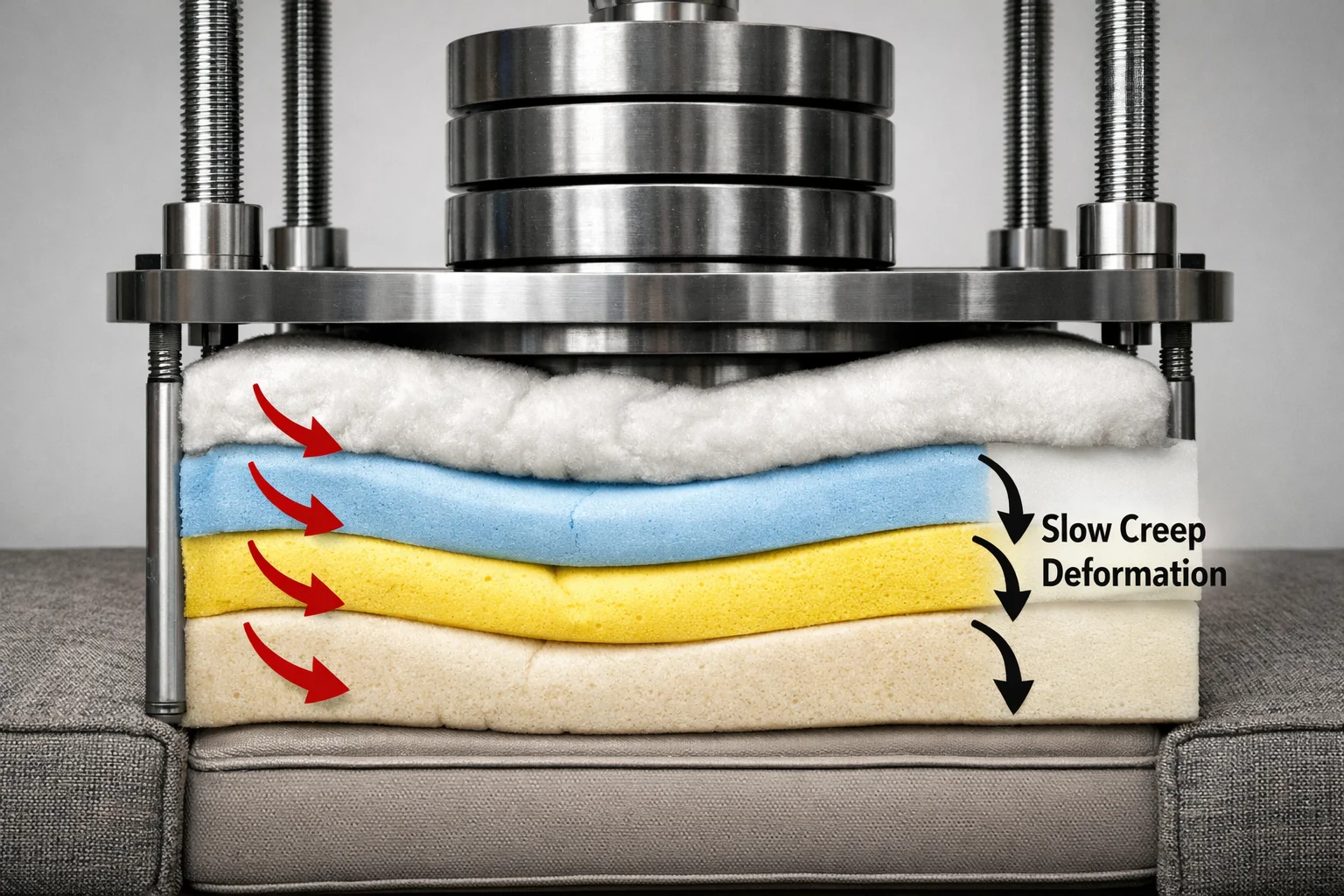
The Paradox: Why Hard Cushions SINK
Understanding the paradox of surfaces that resist touch but fail to support weight over time. The physics of visco-elastic creep and chemically stiffened foam.
Analyze Details →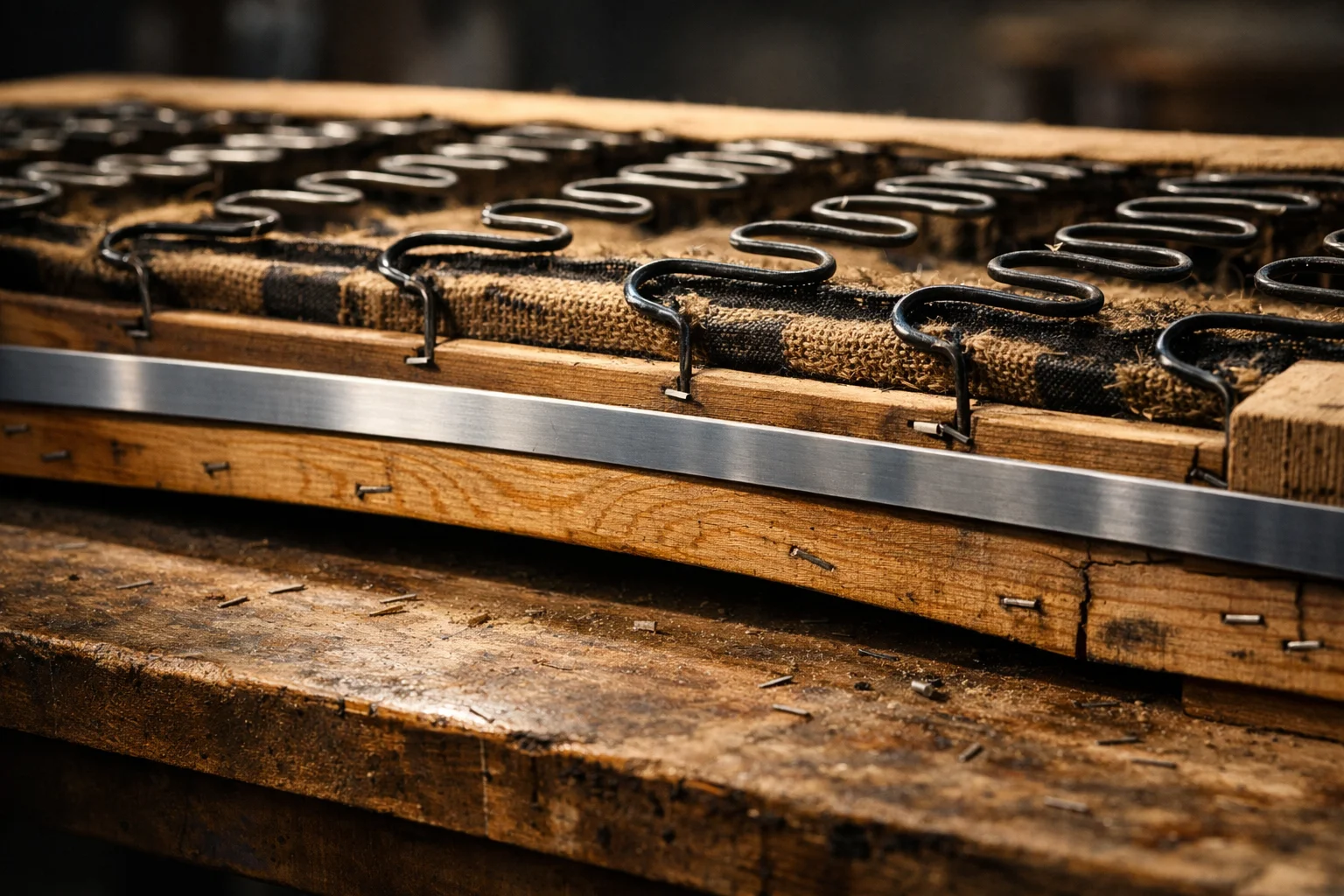
The Smile Effect: Why You Roll to the Middle
Why long sofas bow in the center. The physics of span limits and the importance of the fifth leg.
Analyze Details →