Sagging: Structural Failure or Just "Relaxed"?
Introduction
I did not notice the problem at first. I noticed that I was sitting a little lower, then that I avoided the middle cushion, then that I stood up by pushing off the coffee table instead of the sofa arm.
That slow change is why sagging is so expensive. You do not complain, you adapt. By the time you admit something is wrong, the return window is long gone and the warranty language suddenly feels very narrow.
I am not writing this as a designer or a repair expert. I am writing as someone who paid good money, treated the sofa gently, and still watched it lose its shape. I started paying attention because I did not want to repeat the mistake.
Most sofa buying advice focuses on fabric swatches and room styling. None of that matters if the seat collapses under you. What actually determines whether a sofa keeps its shape is mostly hidden, but you can still check for it if you know what to look for.
This guide is about spotting slow failure before you bring it home. I will walk you through what I now do in a showroom, how I sit, what I touch, and what questions I ask. You do not need tools or technical knowledge, just a willingness to feel a little awkward testing furniture that is supposed to look perfect.
Is it “Character” or “Failure”?
Is it "Character" or "Failure"?
When you stand up and see a few light horizontal creases where you were sitting, that is usually normal. I see it most with natural fabrics like linen or leather and with softer fillings like down, and those wrinkles relax as the cushion breathes back.What worries me is the puddle. That is a deep depression that stays even after you have been off the sofa for a while. The fabric starts to look loose and slack, like skin that has nothing left to hold onto.
Salespeople often call both of these things character. I learned the hard way that only one of them deserves that word. You need to decide which one you are looking at before you fall in love with the color.
When I test this in a showroom, I sit down normally and then stand up and step back. I give the cushion a full minute while I browse nearby. If the seat mostly recovers and the wrinkles soften, I relax. If it still looks sunken and tired, I move on no matter how nice the rest looks.
I also press down with my hand and let go. You are not trying to crush it, just mimic the weight of a person standing up. If the cushion hesitates or stays dented, that is not charm developing, it is structure giving up early.
Leather makes this easier to see because it does not hide much. Fabric can be deceptive, especially thick weaves that mask what is happening underneath. I smooth the fabric flat with my hand and see if it immediately bunches back up. If it does, that looseness will only get worse at home.
The key thing I remind myself is that comfort wrinkles show up where you just were. A failure shows up everywhere and lingers. One feels alive, the other feels exhausted.
If you are unsure, trust the slower test. Sit, stand, walk away, then come back. A good sofa forgives you quickly. A bad one keeps a grudge.
The 3 Types of Sag
Once I started paying attention, I realized that not all sag feels the same. Some of it is mostly cosmetic, some of it changes how the sofa feels, and some of it means the structure underneath is giving up. Knowing which one you are dealing with changes whether I keep shopping or walk away.
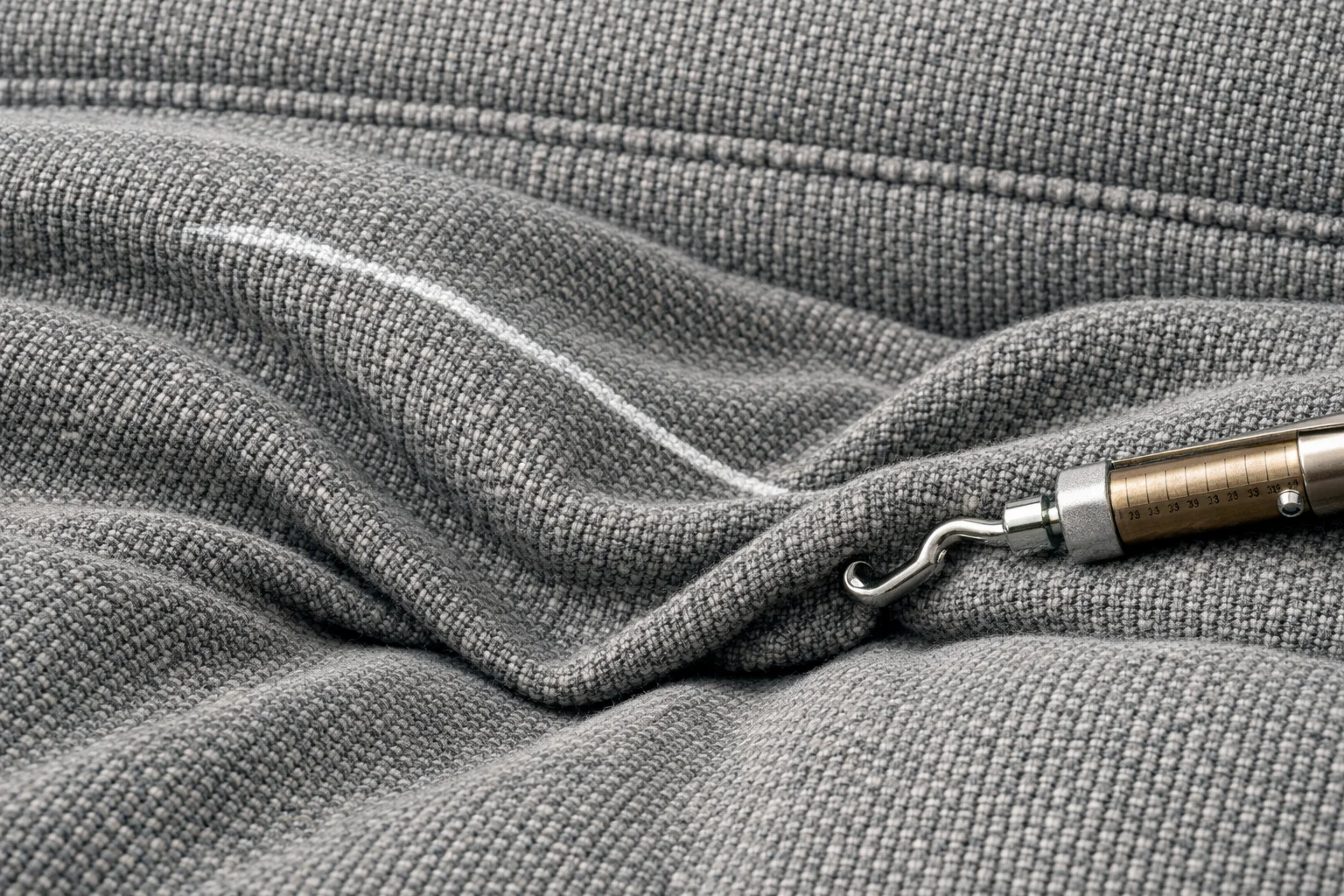
1. Fabric Stretching (Cosmetic)
This is the least serious kind and also the easiest to misread. The fabric relaxes and looks loose, but the cushion underneath still pushes back when you sit.
I see this most with linen, cotton, and anything with a visible weave. In a showroom, I smooth the fabric tight with my hand and then sit and stand once. If the fabric loosens again but the seat still feels supportive, I consider this cosmetic rather than a deal breaker.
What matters is whether the looseness matches the firmness underneath. If the fabric looks sloppy but my weight still meets resistance right away, I know the problem is skin deep. At home, this kind of sag can often be improved with steam, which is why I do not panic about it when the cushion itself feels alive.
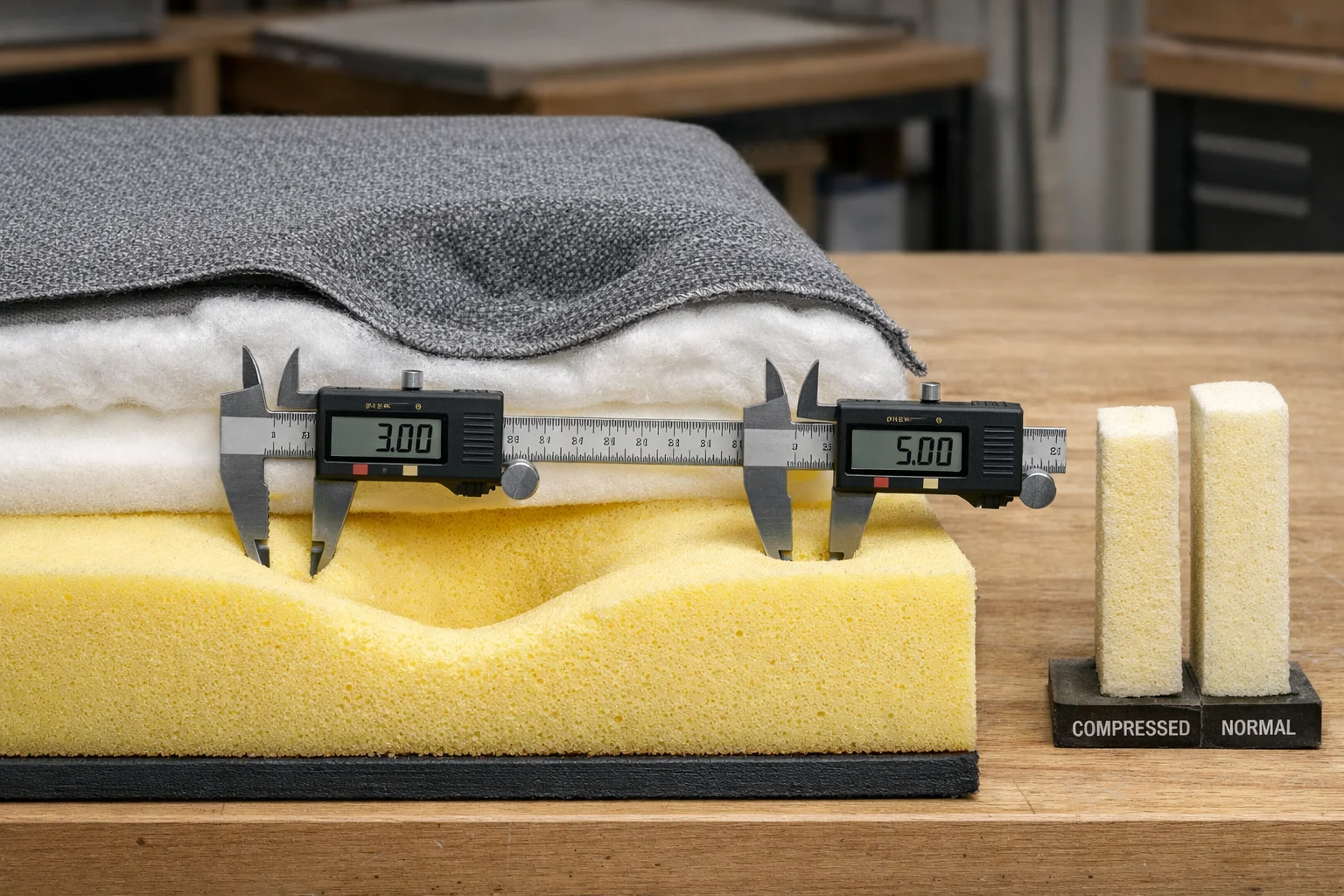
2. Foam Compression (Comfort)
This is the sag most people complain about without knowing its name. The cushion looks fine at first, but when you sit, you sink deeper than you expect and you do not quite climb back out.
In a showroom, I check this by sitting down and paying attention to when the cushion stops me. If I keep sinking slowly instead of meeting a clear stopping point, that tells me the foam is already giving up. I also compare cushions, because the one everyone sits on usually shows it first.
When I stand up, I watch how fast the cushion recovers. If it rises part of the way and then stalls, that is compression setting in. This kind of sag gets worse with time, not better, and the only real fix later is replacing the foam, which is not cheap or guaranteed to match the original feel.
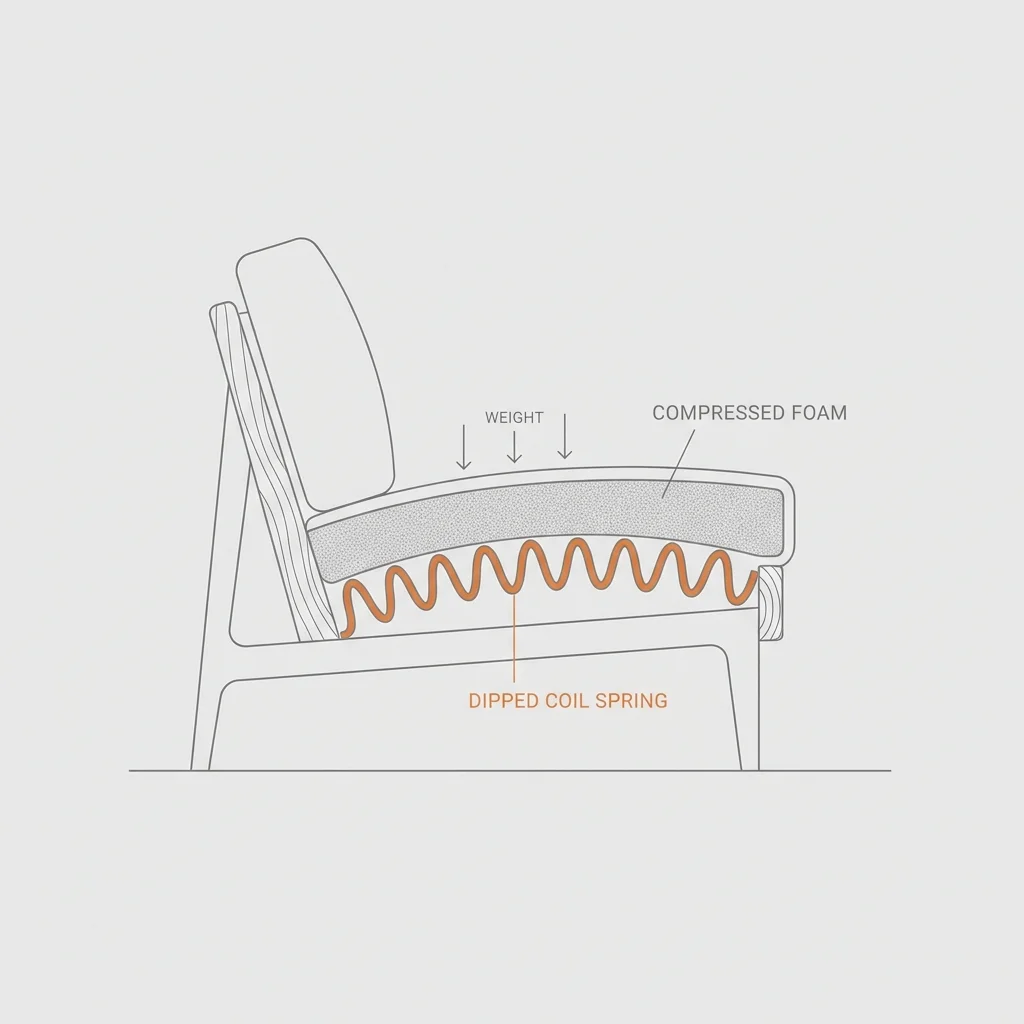
3. Suspension Drop (Structural)
This is the one I now avoid at all costs. It feels like the floor of the sofa has lowered, so your hips drop below your knees and your body has to work to stay upright.
I test for this by sitting all the way back and noticing my posture. If my knees end up higher than my hips or I feel like I am sitting in a shallow bowl, I stand up and walk away. Pressing down with my hands can also reveal it, because the seat feels hollow rather than springy.
This kind of sag usually comes from problems you cannot see, like stretched springs or failing webbing. Fixing it later means tearing the sofa down to the frame, which is why I do not try to justify it no matter how good the price looks.
Once you learn to separate these three sensations, sag stops being a vague fear and becomes something you can actually test for. I do not expect a showroom model to feel perfect, but I do expect it to tell the truth about how it will age.
Diagram showing the progression of sagging from new to failure
When I first saw a diagram like this, it clicked why so many sofas disappoint quietly. Sagging is not a sudden collapse, it is a slope you slide down without noticing until your body starts compensating.
Day 1 is what every sofa feels like in a showroom. The seat is level, your weight meets resistance quickly, and your posture feels natural. This is the baseline I try to memorize before I even think about color or price.
Day 300 is where the warning signs live. The cushion feels softer, not in a cozy way but in a vague way, and the seat takes a moment longer to push back. In a showroom, I look for this by comparing cushions, especially the one closest to the aisle, because it has aged faster than the others.
If a floor model already feels like Day 300, I assume my living room will push it there even faster. That does not mean it is unusable, but it does mean I am paying full price for something already partway through its life.
Day 1000 is the stage everyone recognizes but no one plans for. The seat is visibly lower, the middle is avoided, and standing up requires effort. By the time a sofa looks like this at home, most people have adjusted their habits instead of blaming the furniture.
What matters most to me is the speed of this timeline. A well built sofa moves slowly from one stage to the next. A poorly built one rushes through them, and that is what Fig 8.1 is really warning you about.
In a showroom, I try to estimate speed rather than perfection. I sit, stand, walk away, and come back. I ask myself whether the sofa seems to forgive my weight quickly or whether it keeps a memory of me.
If I can feel Day 1000 lurking in a sofa that is supposed to be new, I do not argue with myself. I have learned that no amount of styling or warranty language can slow down a bad timeline once it starts.
The “Comfort Wrinkle” Excuse
This is the little card or tag that finally made me suspicious. It usually says something like wrinkles are a natural characteristic of this sofa and are a sign of comfort.
Once you have seen a few failed sofas up close, that sentence reads differently. What it usually means is that the fabric was not pulled tight enough to begin with, or that the foam underneath is already shrinking and leaving slack behind.
I am not talking about light creasing where you sat. I am talking about fabric that looks loose even when no one is on the sofa, especially on a brand new floor model.
A well made, tightly tailored sofa with decent foam does not look like an unmade bed after a few months. It can soften, it can relax, but it should not lose its shape that fast.
When I see a comfort wrinkle tag in a showroom, I treat it as a prompt to slow down and test more carefully. I sit, stand, and then smooth the fabric flat with my hand. If the fabric immediately collapses back into deep folds, I assume it will only get worse at home.
I also pay attention to where the wrinkles are. If they are right where my body was and fade as the cushion recovers, I am not worried. If they spread outward or collect in the middle even when the seat is empty, that tells me the structure underneath is not holding the fabric up.
Salespeople will often say that all sofas do this, especially softer ones. That has not matched my experience. Softer does not have to mean sloppy, and comfort does not require permanent wrinkles.
One trick I use is to look at seams and piping. If the seams already look wavy instead of straight, that is not comfort developing, that is tension missing. Fabric does not suddenly tighten over time, it only relaxes more.
I also check whether the wrinkles match the firmness. If the seat feels firm but looks loose, that is a red flag about tailoring. If the seat feels soft and the fabric looks loose, that is a red flag about the foam. Either way, the excuse is doing a lot of work to cover a real issue.
The reason this matters is that fabric looseness is often the first visible sign of a faster sagging timeline. Foam can hide for a while, but fabric tells on it early.
I have learned to treat the comfort wrinkle language the same way I treat vague warranty wording. It is not automatically a deal breaker, but it shifts the burden of proof back onto the sofa.
If the sofa can recover its shape quickly, keep its seams straight, and stop my weight with confidence, I do not mind a few honest creases. If it cannot do those things, no card can convince me that failure is actually a feature.
The Steam Tool
The Steam Tool
Steam is the enemy of sagging. It tightens fabric by shrinking the weave back toward its original tension. It helps foam by warming it so the internal cells can expand again instead of staying crushed. It fluffs dacron and other batting so the cushion regains loft instead of looking tired. I steam my sofa about once a year because it can meaningfully reset how everything looks and feels.This is the part most people never hear about in a showroom. Light sag and looseness are not always permanent, and steam is often the reason.
I learned this by accident when I was cleaning a chair and noticed that the steamed section looked newer than the rest. The fabric looked tighter, the cushion stood a little taller, and the wrinkles softened instead of staying etched in.
What steam can fix is early stage sag, not structural failure. If the suspension has dropped or the foam is fully dead, steam will not save it. But if what you are seeing is fabric relaxation, mild foam compression, or flattened batting, steam can buy you real time.
This matters when you are shopping because it changes how you judge certain warning signs. If a cushion feels supportive but looks a bit loose, I ask myself whether steam could realistically bring it back. If the answer is yes, I do not panic.
In a showroom, I cannot steam the sofa, but I can simulate the logic. I smooth the fabric tight with my hands and press down firmly, then let go. If the cushion springs back and the fabric mostly follows it, that is a good candidate for steam recovery later.
If the fabric stays baggy even when the cushion underneath feels firm, that tells me the tailoring is already maxed out. Steam cannot tighten fabric that was cut too generously to begin with.
If the cushion feels slow and tired under my weight, steam might improve the look but not the comfort. That is still a no for me, because I care more about how it feels than how it photographs.
At home, steaming is simple but you have to be gentle. I use a handheld garment steamer, never an iron, and I keep it moving instead of holding it in one spot. I let the cushion dry fully before sitting on it so the foam can cool and set in its expanded state.
I do not expect miracles, and I do not steam constantly. Once a year has been enough to keep decent sofas from sliding down the timeline too fast.
The reason I am telling you this as a buyer is that it helps separate recoverable aging from real failure. A sofa that responds well to pressure and rebounds quickly is one that steam can help maintain. A sofa that does not rebound is already past the point where steam matters.
When I know this, I am less likely to be fooled by surface wrinkles and more focused on what the structure is doing underneath. Steam is not a fix for bad construction, but it is a useful tool for extending the life of good bones.
If a salesperson mentions steaming as part of care advice, I listen closely. Not because it guarantees quality, but because it suggests the sofa was designed with materials that can actually respond to maintenance instead of just giving up.
In the end, the steam tool taught me something bigger. Some sag is aging, some sag is neglect, and some sag is fate. Knowing which one you are looking at makes buying a sofa feel a lot less like a gamble.
Technical Summary: The Service Life
When I think about how long a sofa should last, I stop thinking in promises and start thinking in milestones. If a seat shows real sag within the first year, meaning the cushion no longer recovers and my posture is already compromised, I treat that as a defect. That is the point where I would actually push a warranty claim instead of blaming myself or my habits.
Around the five year mark, my expectations change. Some loss of firmness is normal by then, especially in the cushions people sit on most. If the frame still feels solid and the suspension has not dropped, this is when replacing the seat cushions can make sense. I see it less as fixing a failure and more as routine maintenance, similar to replacing a mattress topper instead of buying a whole new bed.
At ten years, I am honest with myself. If the seat height is lower, the middle is avoided, and standing up takes effort, I call it an honorable retirement. Even a well built sofa has done its job by then, and throwing more money at it usually feels like chasing the past. Buying new at this stage is not wasteful, it is accepting the natural end of the service life.
I keep this timeline in my head when I am standing in a showroom. I ask myself which version of this sofa I am actually sitting on. If it already feels like year five on day one, the math is not in my favor.
This summary also helps me resist magical thinking. No care routine or warranty language can turn a one year sag into a ten year sofa. What you are really buying is how fast it slides down this timeline.
When I find a sofa that feels honest about where it is, firm but forgiving, quick to recover, and supportive without strain, I do not overthink it. I know what that usually turns into at home, because I have lived with the alternatives.
If you remember nothing else from this guide, remember this. A good sofa ages slowly, a bad one rushes, and you can feel the difference long before the fabric or price tag tells you the truth.
Explore Technical Reference
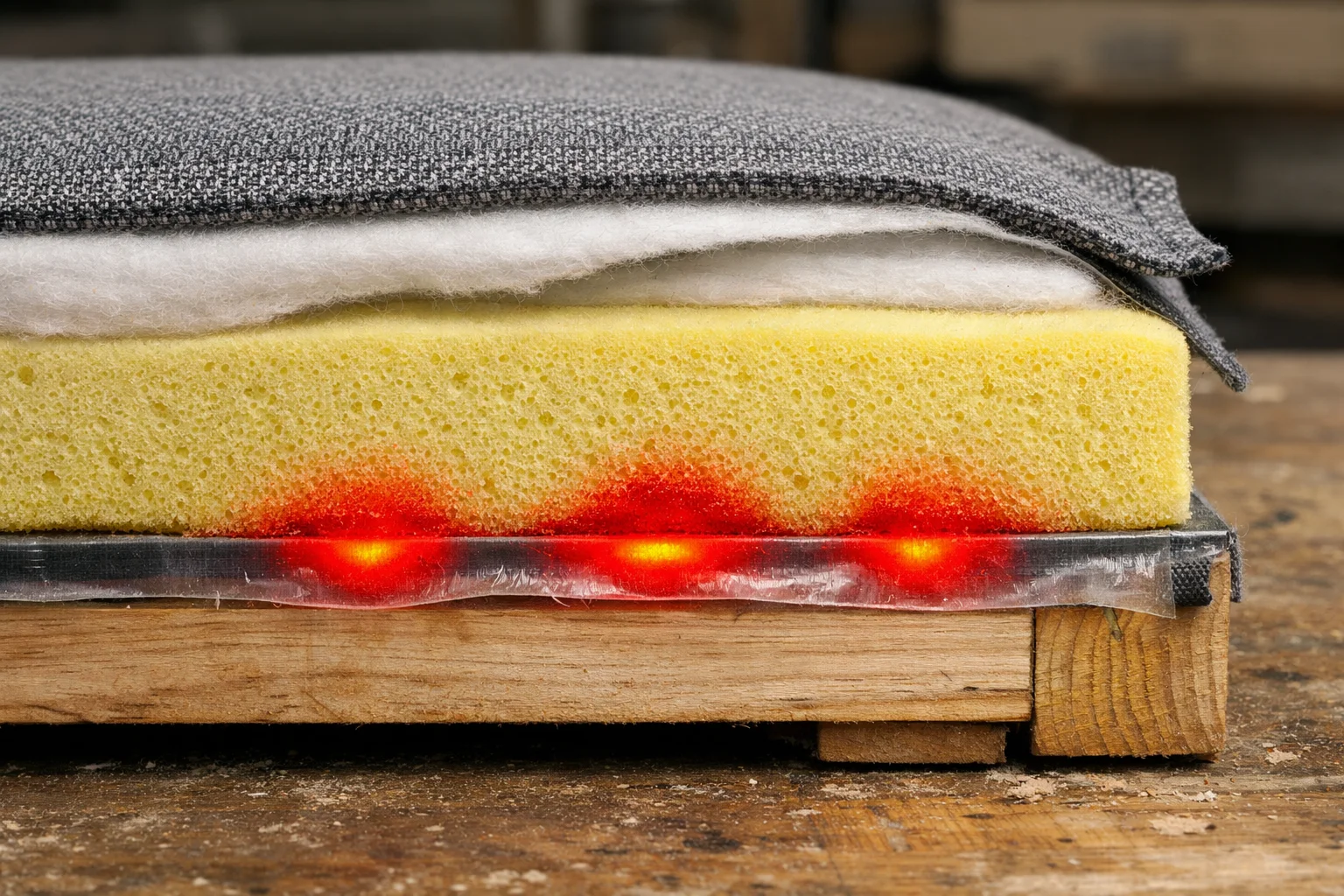
Bottoming Out: Why You Feel the Frame
The physics of 'hollow' sitting. Why deep cushions fail faster and why 'softness' is often the enemy.
Analyze Details →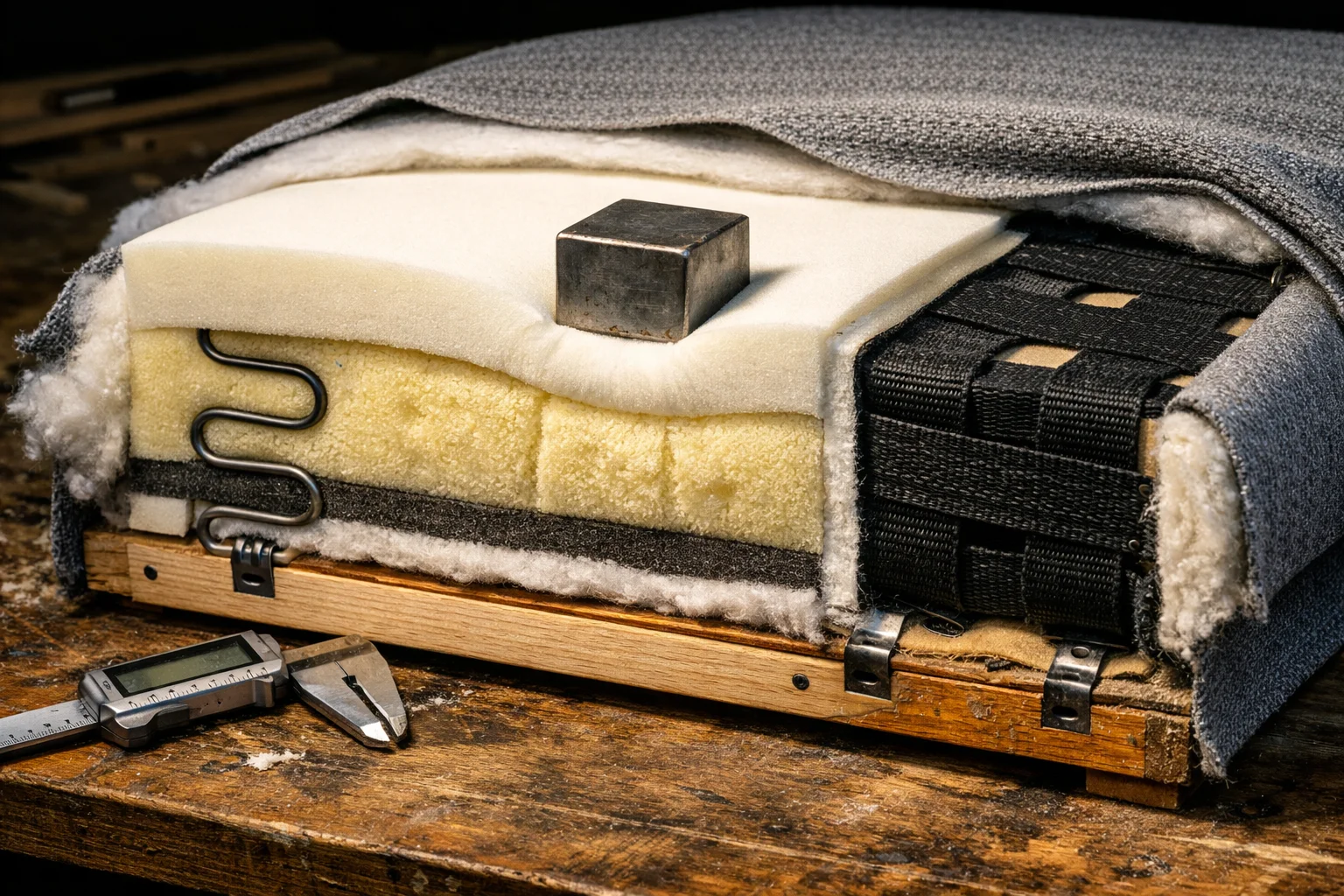
The Architecture of Failure: Why Sofas Die
Why your sofa is dying. A guide to distinguishing normal wear from structural catastrophe, and the physics behind why comfort fades.
Analyze Details →