The Smile Effect: Why You Roll to the Middle
Introduction
I thought it was romantic that my girlfriend and I kept sliding into each other on the sofa. Then I realized it was structural failure. My sofa had “The Smile.”
If you have never heard that phrase, you have probably seen it. It is when the middle of the couch dips, the seats tilt inward, and suddenly you are always fighting gravity just to sit normally.
What bothered me most was how sneaky it was. The sofa did not collapse in a dramatic way, it just slowly trained us to sit crooked, then it started feeling “broken in” in a way that did not feel good.
That is why I started paying attention in showrooms to the stuff that does not look exciting. I am not trying to turn you into a furniture engineer, I am trying to help you avoid paying full price for a sofa that is already halfway to sagging.
This guide is the checklist I wish I had in my pocket when I bought that couch. I am going to focus on things you can actually do in a store, like how to test whether the frame and support system are doing real work, how to spot cushions that will pancake, and which sales lines usually translate to “it will look sad in a year.”
If you take nothing else from this, take this mindset. Your job in the showroom is to figure out what is holding you up, not what the fabric looks like under nice lighting. The fabric sells the sofa, the structure decides whether you still like it later.
The "Banana" Beam
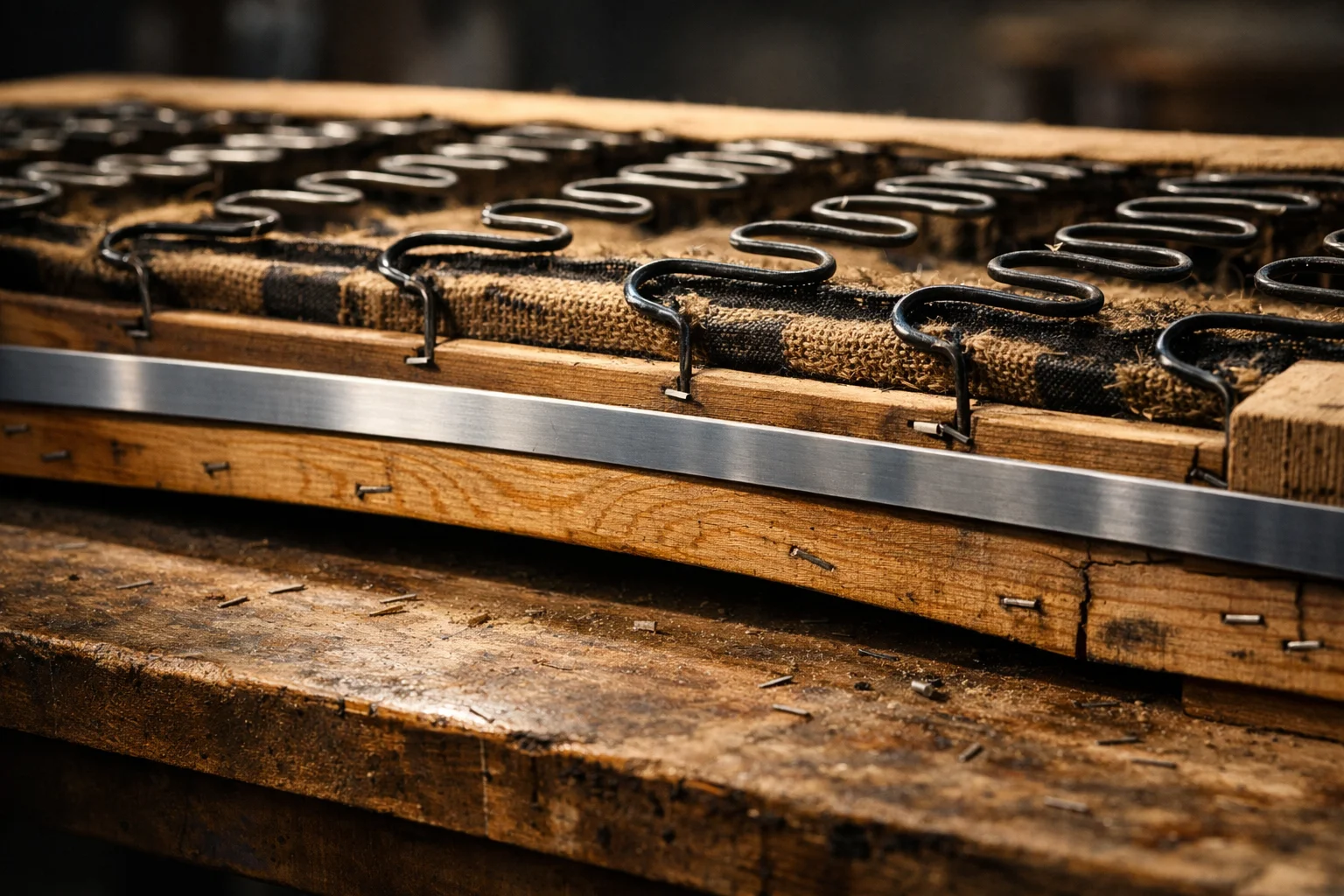
The symptom feels subtle at first, then it becomes impossible to ignore. You sit down and your body wants to drift toward the middle, like the sofa has a shallow valley baked into it.When that happens, I stop thinking about cushions and I start thinking about the long wooden beam that runs across the front of the seating area. If that beam warps, the whole seat can start behaving like a bent shelf, and everything above it, springs, webbing, foam, just follows the bend.
The reason this shows up so often is that wood does not love long, unsupported spans. A typical sofa is long enough that if the middle is not properly supported, the beam can slowly bow under normal sitting, and once it bows you end up sitting in the dip forever.
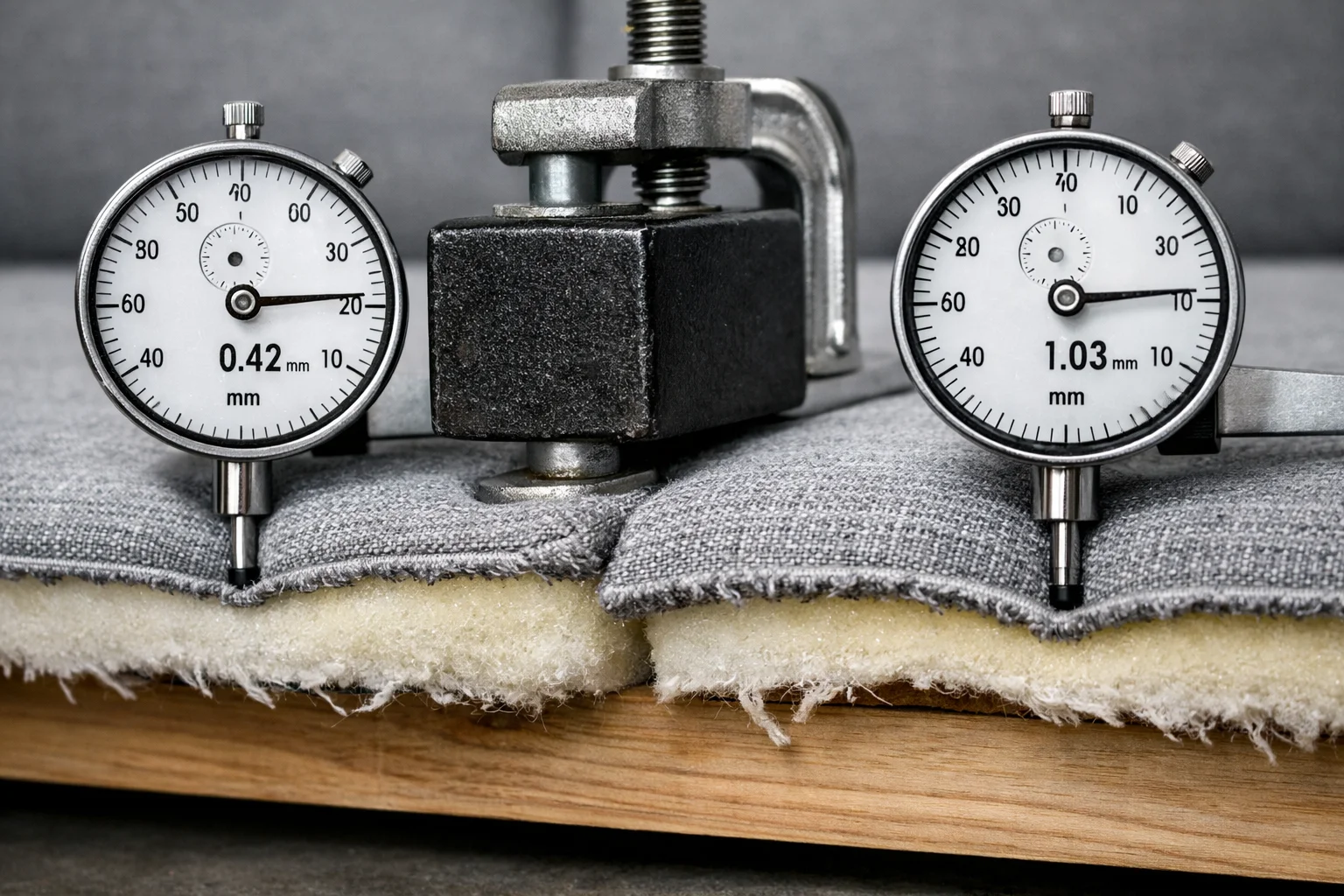
In a showroom, I try to catch this before it catches me later. I sit in the center seat first, then I sit on each end, and I pay attention to whether the middle feels noticeably lower or if my hips are being guided inward.
Then I do a simple test that looks a little weird but tells you a lot. I stand up, face the sofa, and press down hard with both hands right in the front center of the seat, then I press near the front corners. If the center plunges much more than the corners, or if I hear a creak that sounds like wood flexing rather than springs compressing, I treat that as a warning sign.
I also kneel or crouch and look under the front edge, even if I have to be a little awkward about it. What I want to see is some kind of real mid support, like a center leg that actually touches the floor, or a vertical brace that breaks up the long span so the beam is not trying to do a seven foot balancing act on its own.
If the sofa has a center leg, I check whether it is doing anything. I gently rock the sofa side to side with my hands on the arm, and I watch that center leg. If it is hovering, adjustable but not adjusted, or sitting on a thick rug pad that keeps it from contacting the floor, it is basically decorative and you are back to relying on a long beam to stay straight for years.
This is also where I get skeptical about sofas that feel surprisingly light for their size. Light is not automatically bad, but when a long frame feels flimsy, it often means there is less material resisting that slow bowing, and you are trusting thin wood and staples to behave like a proper support system.
If you want one question to ask that cuts through a lot of sales talk, I ask what supports the seat frame in the middle. I do not mean the cushions, I mean the actual frame. If the answer is vague, or they redirect you to fabric and foam, I assume the middle support is not a point of pride.
If you are already set on a sofa that seems borderline, the best you can do is set it up so it has a fighting chance. I make sure any center leg is firmly planted on the hard floor, and if it sits on carpet I use a flat, solid furniture coaster so it cannot slowly sink and turn into a non support.
The “Floating” Design Flaw
I see this one all the time now, the sofa that looks like it is hovering because the designer stripped out the center legs. It photographs great, but the physics do not care about the vibe.
What you are really buying with that look is a long wooden rail being asked to carry a lot of shifting human weight across a wide gap. In real life that can mean a few adults sitting, scooting, dropping down at the end of the day, all of it focused into the same span that has no help in the middle.
Wood flexes, and the part that matters is that it does not always spring back perfectly over the years. Add normal humidity swings and the slow daily loading of a sofa, and that long rail can take on a permanent bend, which is when the “floating” sofa starts teaching you to sit in the center whether you want to or not.
If you want to catch this in a showroom, I stop admiring the negative space under the sofa and I try to confirm whether there is any true mid support. I look underneath from the front and from the back, because some brands hide a skinny center leg or a drop down brace where you do not notice it at first glance.
Then I do a simple reality check by putting my hand under the middle area and pressing down hard on the seat from above. If there is a center leg, I want to feel that it is actually taking load, not just hanging in the air like a prop.
If the sales pitch is that the frame is “engineered” to span without center support, I treat that as a claim, not a feature. I ask them to show me what replaces the center leg, and I specifically want to hear about a real center support system, not just “hardwood” or “it has corner blocks,” because none of that changes the fact that the middle is unsupported.
If you love the look and you are not willing to give it up, I at least try to choose a design that breaks up the span in some other way, like a substantial stretcher, a central plinth that contacts the floor, or anything that makes the middle behave like two shorter spans instead of one long one. When I cannot find that, I walk away, because I have already paid for the floating look once, and I paid again later in back pain and regret.
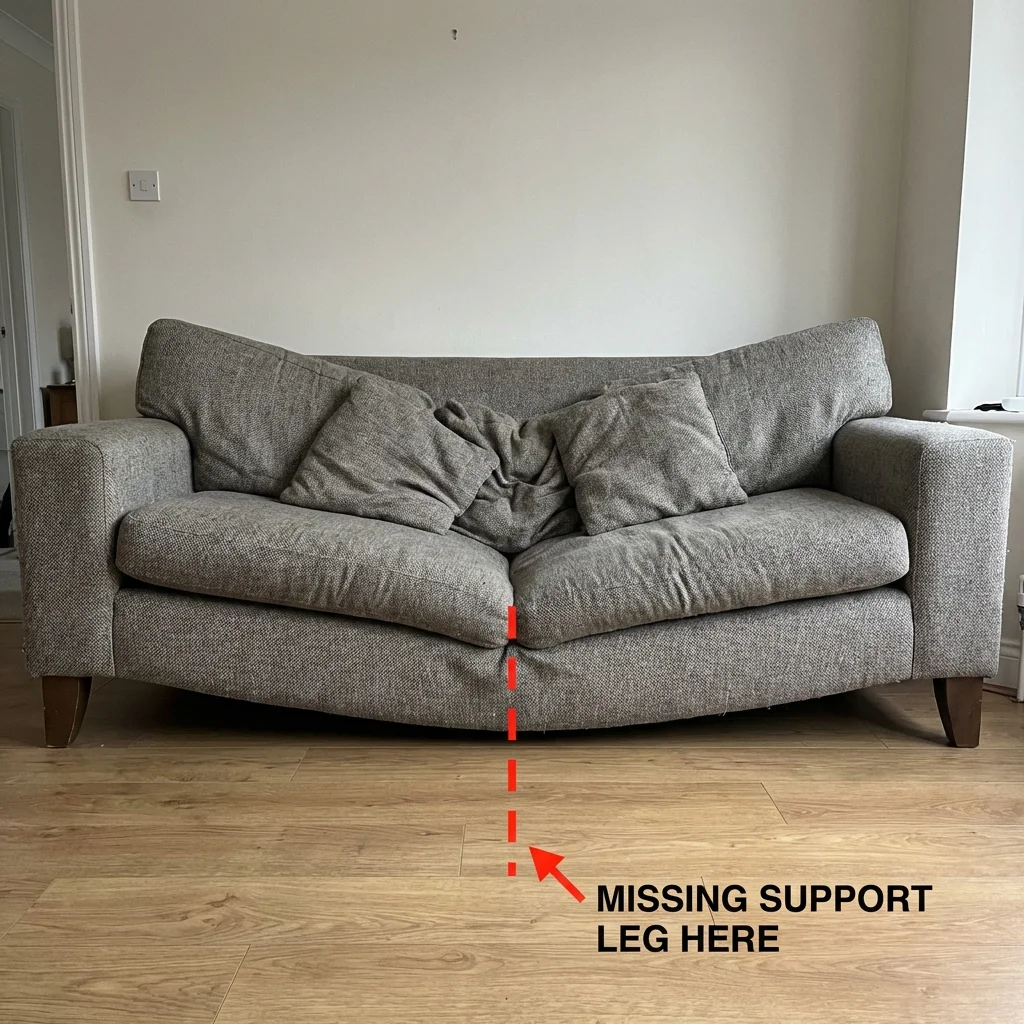
The other trap with “floating” sofas is what happens after delivery. Even a sofa that does have a center leg can effectively lose it if your floor is uneven, if the installer never adjusts it, or if it lands on a plush rug and slowly sinks until it stops doing anything.
When the sofa is in your home, I get down and check that the center support is firmly planted, and I recheck it a week later after the rug compresses. If the center leg is adjustable, I make sure it is adjusted so it is not just close to the floor, it is actually sharing the load.
If you remember one thing from this section, let it be this. A sleek undercarriage is not a support strategy, and the middle of a long sofa needs a real, floor contacting support if you want it to stay level over time.
The String Test
When I am trying to figure out if a sofa frame is already bowed, I do not rely on “it feels fine.” I do a quick string check, because a bent frame can hide under cushions for a long time.
In your home, the simplest version is to flip up the front edge as much as you can and tape one end of a piece of string to the bottom of the left front leg, right where the leg meets the floor. Then I pull the string tight across to the bottom of the right front leg and tape it there so it stays under tension.
Now I look at the gap between that string and the center of the sofa’s bottom frame. If the string touches or almost touches the frame in the middle, that is what I want, it suggests the frame line is basically straight. If there is a noticeable gap in the middle, that tells me the frame is bowed upward relative to the legs, which usually means the seat structure has sagged downward in the middle over time.
I treat any visible gap as a “stop and investigate” moment, not a tiny defect. The reason is that a bowed frame rarely improves, and it tends to make everything else look worse, cushions start migrating, seams pull, and you feel like you are always sitting slightly downhill.
In a showroom I obviously cannot tape string to their floor models, but I can still steal the idea. I crouch and sight along the bottom front rail from one leg to the other like I am checking a warped board at the lumber aisle, and I compare the center to the ends. If the middle looks like it is drifting away from a straight line, I assume the structure is either already bending or it is built light enough that it will.
The "Block" Hack
If you already own a sofa with no center leg and it is sagging, I have had decent luck slowing the damage with a simple support block. I measure from the floor up to the lowest point of the frame at the center, then I cut a solid 4x4 wood block to that height and slide it under the middle of the sofa so it contacts the frame firmly. You might have to lift the sofa slightly to wedge it in, but once it is snug it acts like an instant fifth leg and helps keep the sag from getting worse.I will be honest about what this hack is and is not. It is not going to reverse a bent beam, but it can take stress off the span and keep the “smile” from deepening while you decide whether to live with the sofa or replace it.
If you try it, I make sure the block lands under actual structure, not under a thin dust cover fabric. I also put a small furniture pad under the block if I am on a floor I care about, because a concentrated point load can scuff hardwood over time.
Technical Summary: The Buyer's Check
When I am trying to keep this simple in my head, I use one hard rule. If a sofa is longer than about 70 inches, I do not buy it unless it has a real center support leg, the “fifth leg,” that reaches the floor and can actually take weight.In the store, I physically verify it instead of trusting the tag or the salesperson. I crouch and look under the middle from the front and then from the back, because some brands hide the center support behind a skirt, a black bracket, or a shadow line that makes it easy to miss at first glance.
If I cannot find it, or if I find something that looks like a leg but is hovering, loose, or clearly not meant to touch the floor, I treat that as a deal breaker on a long sofa. In my experience, an unsupported long span is not an “if it will sag” situation, it is a “when,” and you are basically buying something with an expiration date.
Explore Technical Reference
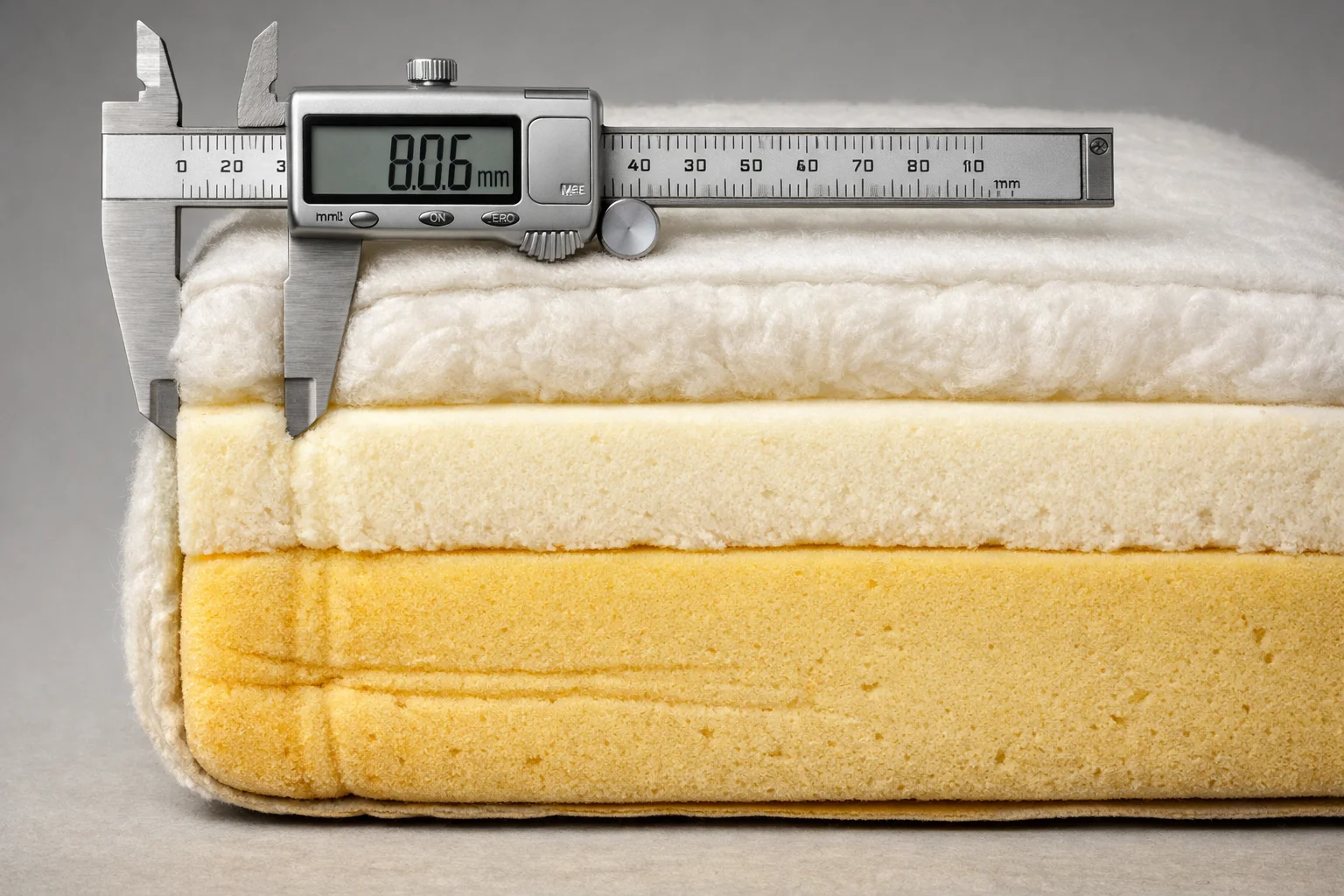
The Flattened Cushion: Why All Sofas Eventually Shrink
Why some cushions lose 30% of their height in a year. The physics of air loss and fiber compression.
Analyze Details →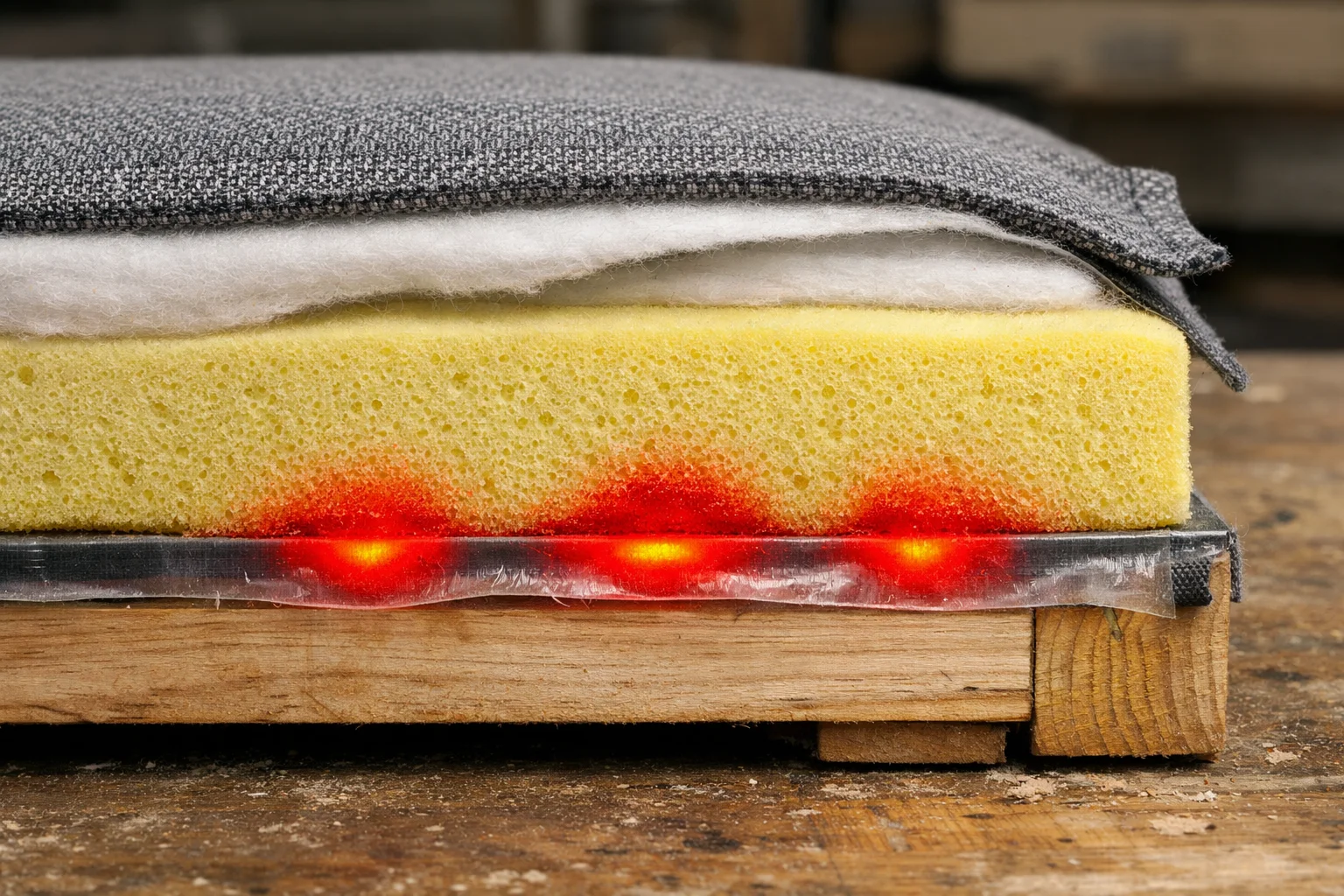
Bottoming Out: Why You Feel the Frame
The physics of 'hollow' sitting. Why deep cushions fail faster and why 'softness' is often the enemy.
Analyze Details →