Springs vs. Webbing: Active Support vs. Dead Support
Introduction
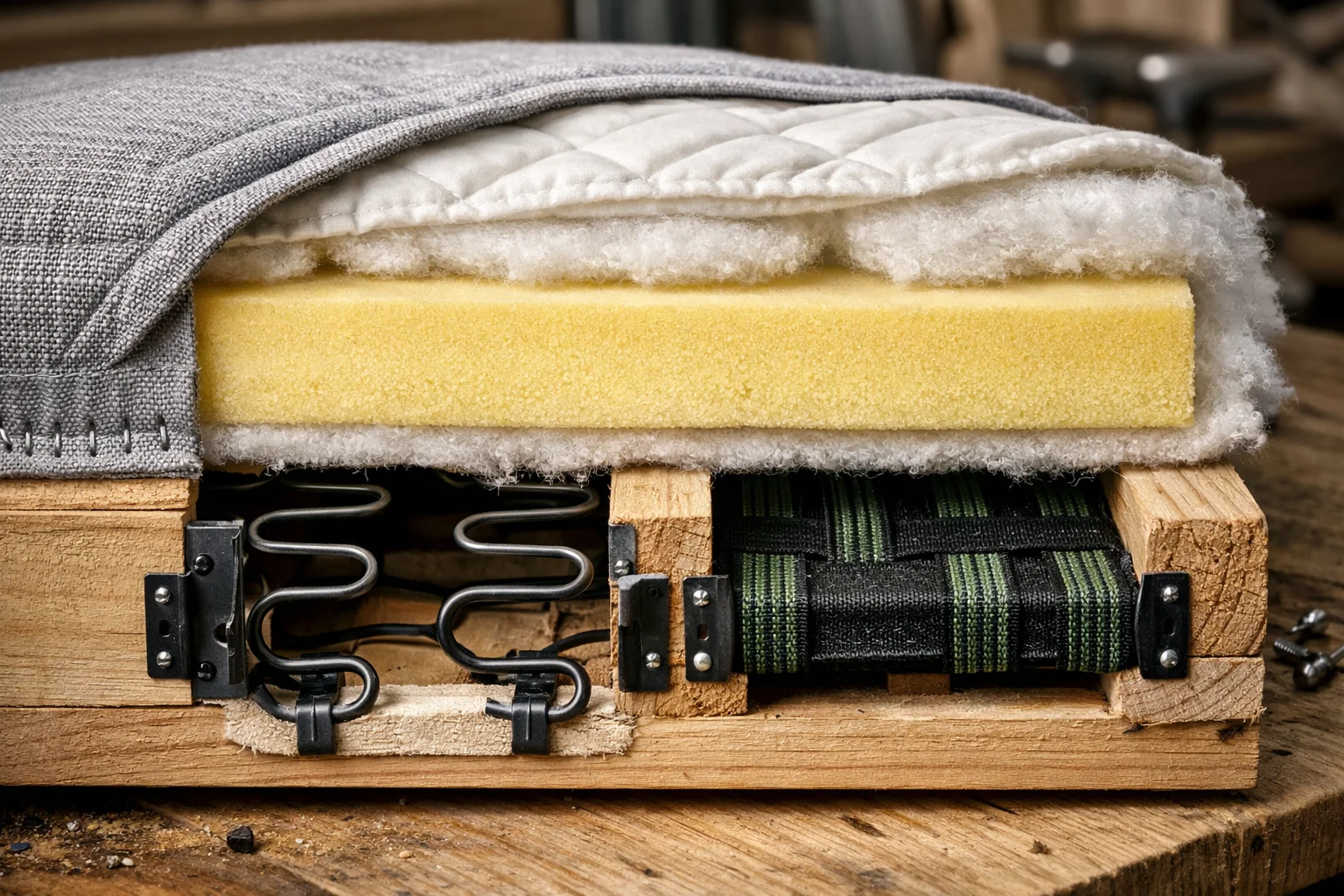
When I say a sofa feels alive, I mean it does some of the work for you. I sit down and it compresses, then it gently pushes back instead of just sagging and staying there. When I stand up, I do not feel like I am climbing out of a hole.
A dead sofa is not always uncomfortable on day one. That is what fooled me. It feels soft and catches you, but all the support comes from foam and fabric stretching, not from anything actively resisting your weight.
This difference matters because your body changes position constantly, even when you think you are sitting still. You shift, lean, stand up, sit back down. A sofa with active support responds to those movements. A sofa with passive support just absorbs them until it cannot anymore.
In a showroom, you can feel this in under ten seconds if you know what to look for. When you sit, pay attention to whether the seat only sinks or whether it pushes back against you. When you stand up, notice if the seat helps you rise or if you have to rock yourself forward.
I learned the hard way that comfort in a quick sit is not the same as comfort after a year. Webbing often feels fine at first, especially when it is new and tight. Over time it stretches, and once it stretches it does not recover in any meaningful way.
Springs behave differently. They compress under load and then rebound. That rebound is what gives the seat energy and shape over time, instead of turning into a hammock.
This guide is about helping you spot that difference before you buy. I am not here to sell you a specific sofa or tell you that one method is always perfect. I just want you to walk into a store knowing how to test a seat with your own body, so you do not end up disappointed the way I was.
The assist Factor
When a seat uses springs, they store some of your energy as you sit. When you stand back up, that stored energy is released and you feel a subtle but real boost under you. It is the difference between rising smoothly and having to brace yourself.
Webbing behaves in the opposite way. It absorbs your energy like a shock absorber and then keeps it. When you stand up, nothing pushes back, so all the work comes from your legs and lower back.
This is why I pay attention to assist more than softness. If you have bad knees, stiff hips, or just want a sofa that does not fight you as your body ages, springs are the safer choice.
In a showroom, I test assist very deliberately. I sit down normally, pause for a second, then stand straight up without rocking forward. If the seat gives me a gentle lift, I know there is something active under the cushion.
If I have to lean forward, push off the arm, or feel the cushion lag behind me, that tells me the support is passive. That kind of seat might feel cozy at first, but it will ask more from your body every year you own it.
Salespeople sometimes describe webbing as flexible or forgiving. I have learned to translate that as it gives up easily and does not give back. Flexibility is not the same thing as assistance.
I also pay attention to how tired my legs feel after repeating the sit and stand a few times. A sofa with real assist makes that movement boring and uneventful. A sofa without it makes me aware of my joints almost immediately.
If you are buying for someone older, or planning to keep the sofa for a long time, this matters more than fabric or color. You cannot fix lack of assist later with new cushions or a throw pillow.
When I ignore this factor, I regret it. When I listen to it, the sofa stays usable long after the showroom comfort has faded.
The Physics of Suspension
When I talk about suspension, I am not talking about comfort in the abstract. I am talking about what is physically doing the work under the cushion when your weight hits the seat. If you understand that, a lot of confusing showroom claims suddenly get very clear.
Steel springs are active support. When you sit, the metal bends. When you shift or stand, it wants to return to its original shape, and that push back is what you feel as life in the seat. That response is immediate and repeatable, even after years of use.
Elastic webbing is passive support. It stretches like a thick rubber band and then just stays stretched until you remove your weight. Over time, that stretch becomes permanent, and the seat loses height and tension without giving you anything in return.
In practical terms, springs feel bouncy in a controlled way. The seat moves with you instead of just sinking and stopping. Webbing feels firm at first, then strangely flat, like the seat has no opinion about what your body is doing.
I test this with my hands before I even sit down. I press straight down in the middle of the seat and then release. If it springs back quickly and decisively, something active is underneath. If it comes back slowly or not all the way, that tells me the support is mostly stretch based.
I also sit on the very front edge. Springs tend to hold their shape there because the force is spread through the frame. Webbing often collapses at the edge, which is why some sofas feel like they are sliding you off when you perch.
Sales tags rarely spell this out clearly. You might see words like sinuous springs, coil springs, or eight way hand tied, and those usually indicate steel doing the work. If you see elastic straps, rubber webbing, or just webbing with no mention of metal, that is usually passive support.
I am not saying webbing always feels bad. I am saying it depends almost entirely on being new and tight. Once it stretches, which it will, the physics are working against you.
Steel does not get tired in the same way. It can compress and rebound millions of times without losing its shape. That is why older sofas with springs often still feel supportive, even when the cushions look worn.
If you want a seat that ages gracefully, you want something that actively resists your weight instead of surrendering to it. That is the core physics, and you can feel it for yourself in seconds if you know what you are pressing on and listening for.
Energy Comparison
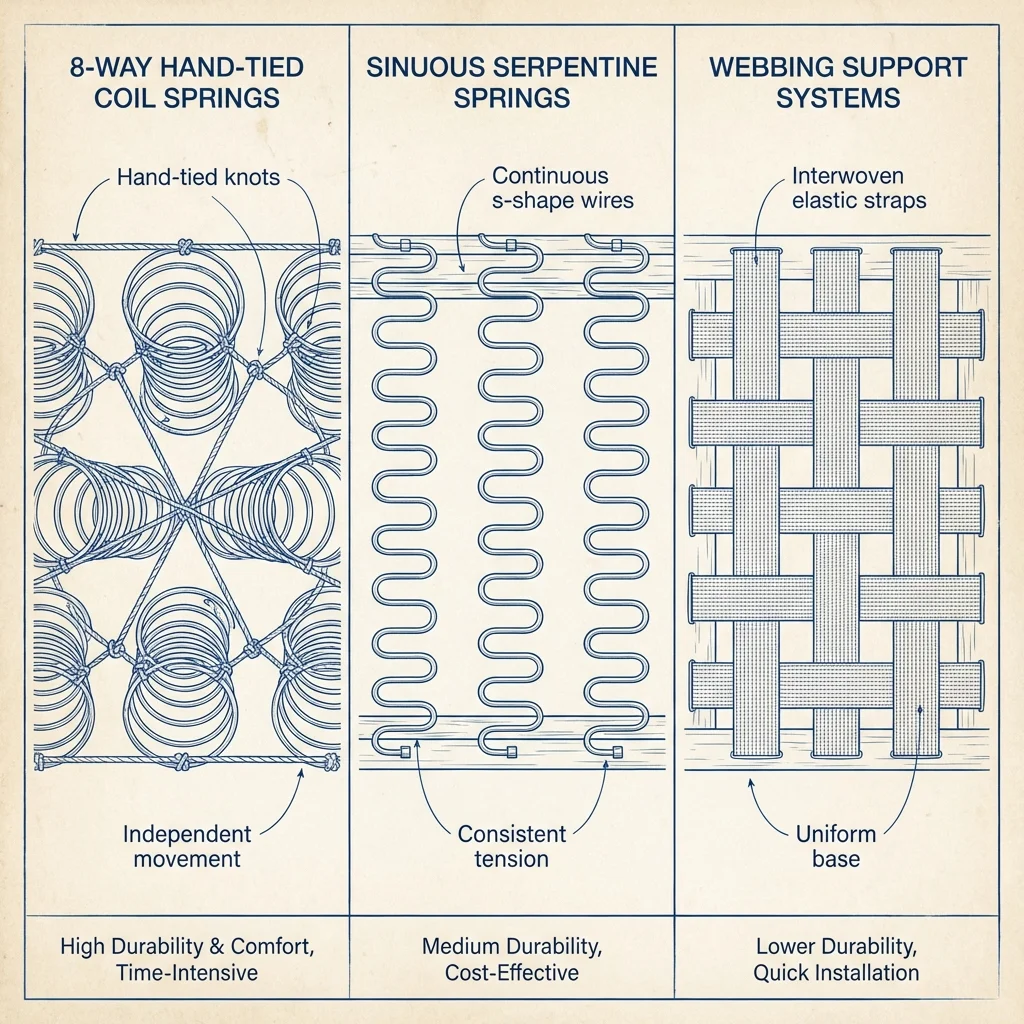
When I think about energy in a sofa, I am not thinking about bounce for fun. I am thinking about where my effort goes when I sit down and where help comes from when I stand back up.
With springs, some of your movement is stored and then returned. You put energy in when you sit, and you get a bit of it back when you shift or rise. That exchange is what keeps the seat feeling responsive instead of drained.
With webbing, your energy is mostly absorbed and lost. The straps stretch, heat up slightly, and relax, and that effort does not come back to you. Over time, more and more of your movement just disappears into the seat.
You can test this without knowing anything about construction. I sit down firmly, then bounce lightly once or twice using only my legs. A spring supported seat answers that bounce with a clear response. A webbed seat just dulls it and goes quiet.
I also do a slow test. I lower myself down as gradually as I can and pay attention to resistance. Springs push back more as they compress, so the resistance builds. Webbing tends to give easily at first and then bottom out without warning.
This matters because your body relies on that resistance to stay aligned. When the seat gives up too quickly, your hips sink below your knees and your lower back has to compensate. That is when a sofa starts feeling tiring even if it feels soft.
When I stand up, I notice timing. On a spring seat, the cushion rises with me. On a webbed seat, there is often a slight delay, like the sofa is letting go after I already did the work.
If you are shopping with someone, watch them from the side. A seat that returns energy lets the person stand in one smooth motion. A seat that absorbs energy makes them lean forward, rock, or push off their thighs.
Sales floors are designed to hide this difference with thick foam and plush fabric. Foam can mask energy loss when it is new. What it cannot do is create energy where none exists underneath.
That is why I always focus on what is below the cushion, not just how the top feels. Energy return is not a luxury detail. It is the difference between a sofa that helps you every day and one that quietly takes more from you than it gives back.
The Design Trade-Off (Why Webbing Exists)
Once I understood how springs and webbing behave, I still had one question. If springs are so much better at giving assist and lasting over time, why do I keep seeing webbing everywhere.
The honest answer is not comfort. It is shape.
Springs need room to work. They have to compress and rebound vertically, and that movement takes several inches of depth inside the seat. If a designer wants a low, slim sofa with a thin deck and tall legs, there is simply not enough vertical space to fit real springs.
Webbing solves that problem neatly. It only needs about half an inch of depth, so the entire seat can be drawn thinner and lighter looking. That is how you get those sleek Mid Century Modern profiles that seem to float off the floor.
Once I realized this, a lot of sofas suddenly made sense to me. The flatter and more minimal the silhouette, the more likely it is that webbing is doing the work underneath. It is not a secret upgrade or downgrade, it is a structural compromise to achieve a specific look.
This is where you have to be honest with yourself about priorities. If what you love most is a thin seat, exposed legs, and a very architectural profile, webbing is often the price of admission. There just is not room for springs without changing the look entirely.
What I do in the showroom is connect the look to the feel. When I see a very low profile seat, I automatically expect less assist. I sit down already aware that I am choosing style over long term energy return.
That awareness changes the decision. I am no longer fooled into thinking the softness I feel on day one will last. I know that most of what I am sitting on is foam and stretched fabric, not something that will actively help me later.
There is nothing wrong with making that trade if you do it deliberately. The problem is when it is hidden. Many salespeople talk about webbing as a premium feature without explaining that it exists mainly because springs would not fit.
If you want to test this visually, crouch down and look at the sofa from the side. If the seat looks thick and substantial, there is often room for springs. If it looks razor thin from cushion to frame, there usually is not.
I have also learned to ask a very simple question. I ask whether the seat could be made thinner if they wanted. If the answer is no because of internal components, that often means springs are taking up space. If the answer is yes, the support is usually flexible and strap based.
Understanding this trade off helped me stop blaming myself when a stylish sofa disappointed me later. It was not that I chose wrong unknowingly. I just did not realize I was choosing profile over performance.
Now when I shop, I decide which matters more for that room and for the people using it. Once you see webbing as a design solution rather than a comfort feature, you can make that choice with your eyes open instead of learning about it a year too late.
The Creep Warning
The "Creep" Warning
Rubber is organic, which means it slowly reacts with air and light. As that happens, it loses elasticity and never fully recovers it.The symptom shows up as what I call the hammock effect. You sit a little lower each year as the webbing stretches and stays stretched, until the seat starts cradling you instead of supporting you.
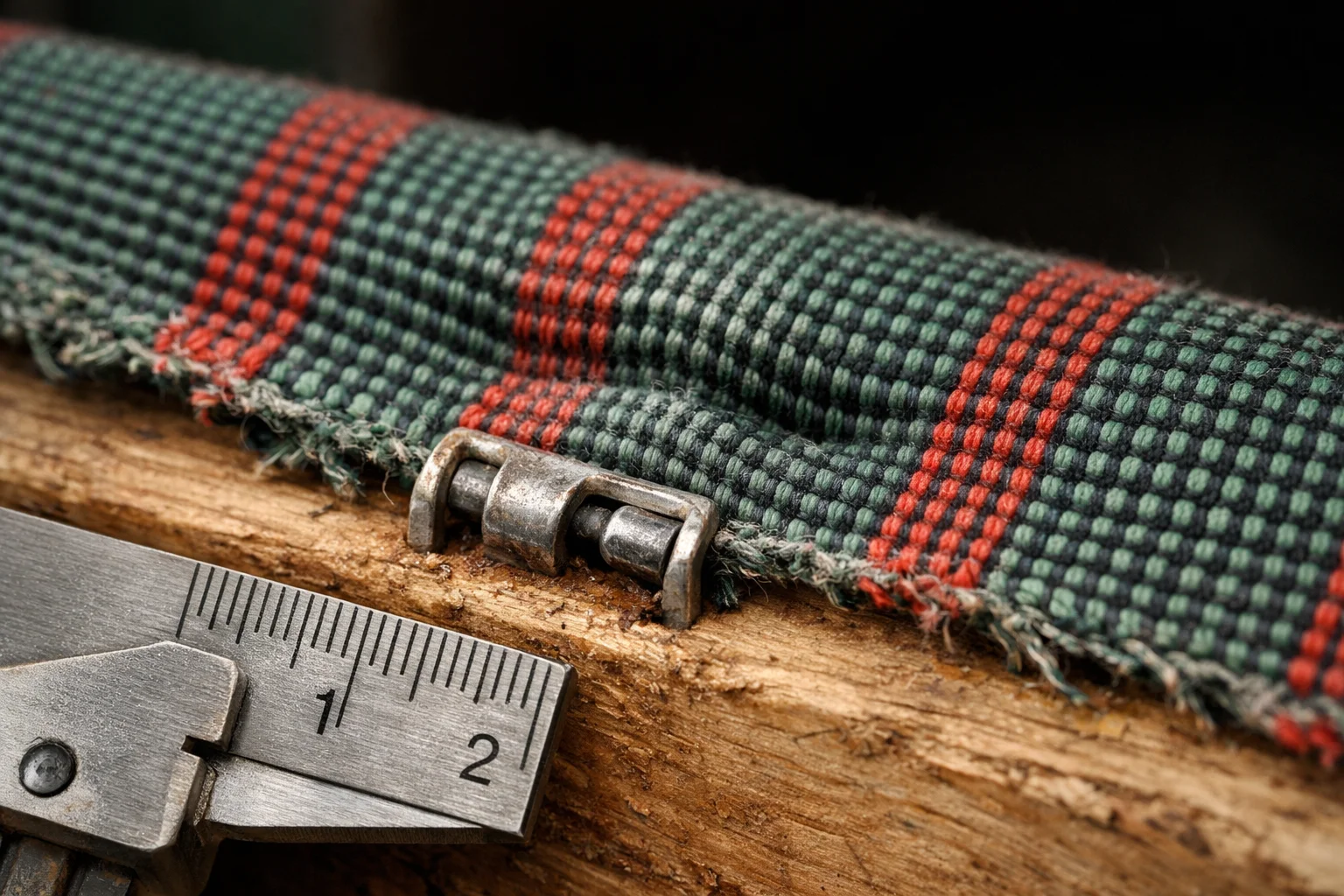
The fix is effectively none. Once the webbing has crept, the only real solution is to replace it, which means opening the sofa from the inside and rebuilding the suspension.
This is the part most people never hear in a showroom. Webbing does not usually fail suddenly. It fails quietly, a little bit at a time, until one day you realize the seat height is gone and your posture has changed with it.
I have owned a sofa where this took less than three years. Nothing snapped, nothing tore, and nothing looked broken. It just kept sinking, and my body kept adapting until my lower back started complaining.
When rubber stretches under constant load, it does not behave like a spring that wants to return home. It relaxes into the new shape. That process is called creep, and once it happens, it is permanent.
You can feel early signs of this even in a store if you know how to look. I sit in the center, then I shift my weight side to side and notice whether the seat height stays consistent or if it feels like I am settling into a low spot.
I also stand up, wait a few seconds, and sit back down in the same place. A webbed seat often feels slightly lower the second time, even when it is brand new. Springs almost always come back to the same height.
Ask the salesperson how the seat height will change over time. If they talk about foam compression but avoid talking about the suspension underneath, that is usually a clue. Foam can be replaced. Stretched webbing usually cannot without major work.
I pay special attention if the sofa is deep and encourages lounging. The more time you spend sitting back with your full weight settled, the more constant load the webbing sees. That is exactly the condition where creep shows up fastest.
This is why I am cautious with language like flexible or forgiving. What feels forgiving today may just be material quietly giving up. Comfort that relies on stretch instead of resistance has an expiration date.
If you are the kind of person who keeps furniture for a long time, this matters more than most showroom tests. A creeping seat does not just feel lower. It changes how you get up, how you sit, and how much effort your body has to supply every single day.
I now assume that any webbed seat will lose height over time, even if it is well made. That does not mean you should never buy one. It means you should decide whether you are comfortable with that future before you bring it home.
Once I started thinking this way, I stopped being surprised by sagging sofas. The warning signs were always there. I just did not know how to read them yet.
Technical Summary: The Selection Rule
When I strip everything down to one rule I can actually use in a store, it comes down to matching the suspension to how the room will really be used. I stop thinking about what sounds premium and start thinking about how often someone will sit down and stand back up.
For a main living room where you sit every day, I choose sinuous steel springs, usually described as heavy gauge. I do this because daily use is exactly where assist matters most. This is the seat that has to help you up when you are tired, sore, distracted, or aging, and springs are far more reliable at doing that year after year.
In a formal living room that is used occasionally, I am much more relaxed about webbing. If people sit for short periods and the sofa is more about appearance than long sessions, webbing can be perfectly acceptable. I just go in knowing that I am choosing a cleaner look and a thinner profile, not long term energy return.
I also separate seat support from back support in my mind, which most shoppers do not do. Webbing works very well in sofa backs because the load is light and spread out. When I lean back, I am not asking the backrest to lift me or return energy, I just want it to hold shape comfortably.
This distinction helps in the showroom because many sales tags blur the two together. A sofa can have spring support under the seat and webbing in the back, and that is often a very sensible combination. What I care about most is that the part I sit on every day is doing active work for me.
When I talk to a salesperson, I frame my questions around use, not materials. I ask which rooms this model is typically sold for and how it is expected to hold up under daily sitting. Their answer often reveals whether the construction matches my needs more honestly than any spec sheet.
If you remember nothing else, remember this. Seats that work hard every day need something that pushes back. Seats that are mostly decorative can get away with something that stretches. Once I started shopping with that rule in my head, the right choice usually became obvious within a few minutes of sitting down.
Explore Technical Reference
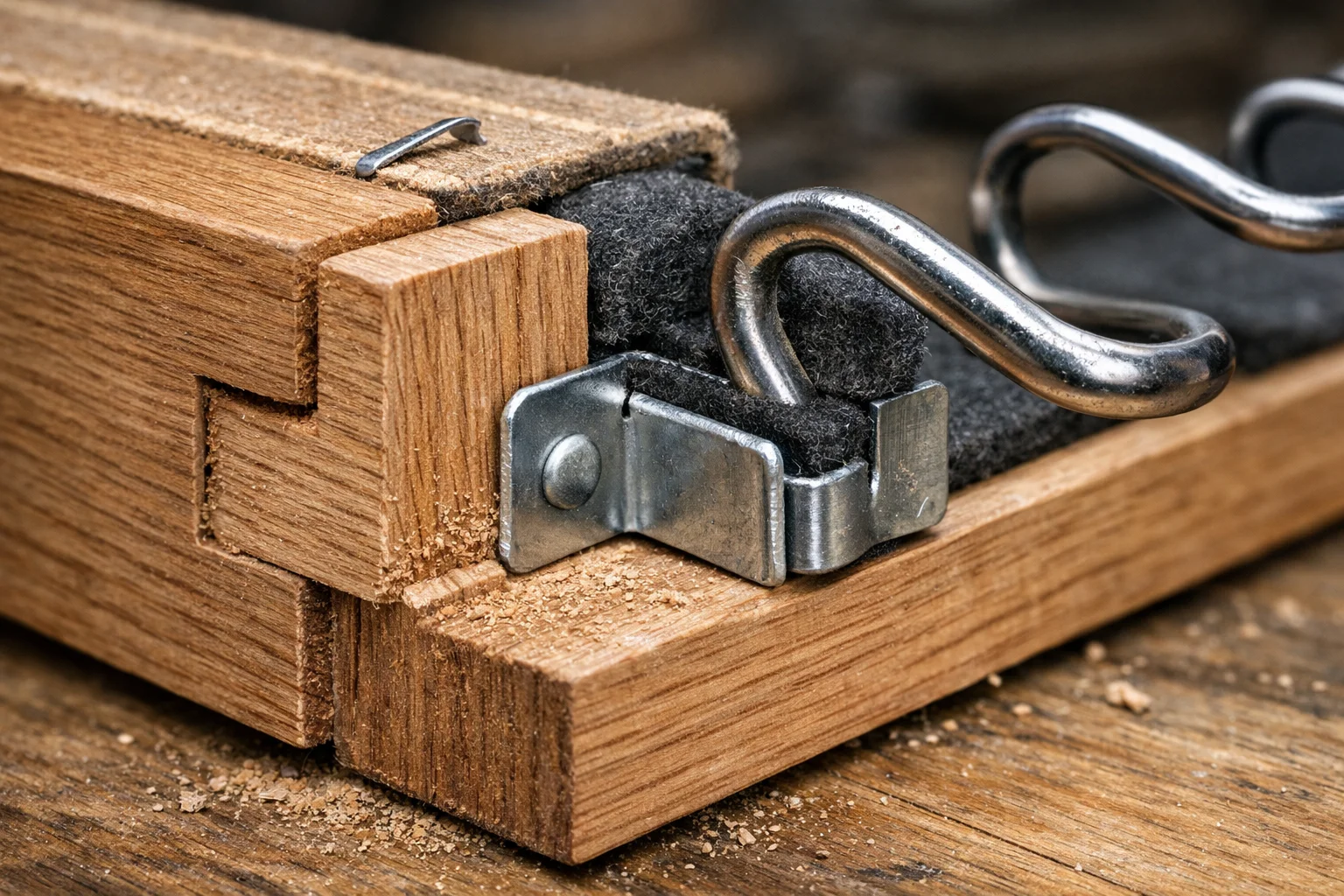
Sofa Springs: Why They Squeak & How to Fix Them
Why silence is the mark of quality suspension. Understanding the mechanics of sinuous, coil, and pocket spring systems and how to identify problems.
Analyze Details →
Frame Quality: The Showroom Audit Checklist
How to judge a frame you cannot see. The lift test, the squeak test, and the warranty warning signs.
Analyze Details →