Low Density Foam: Buying "Expensive Air"
Introduction
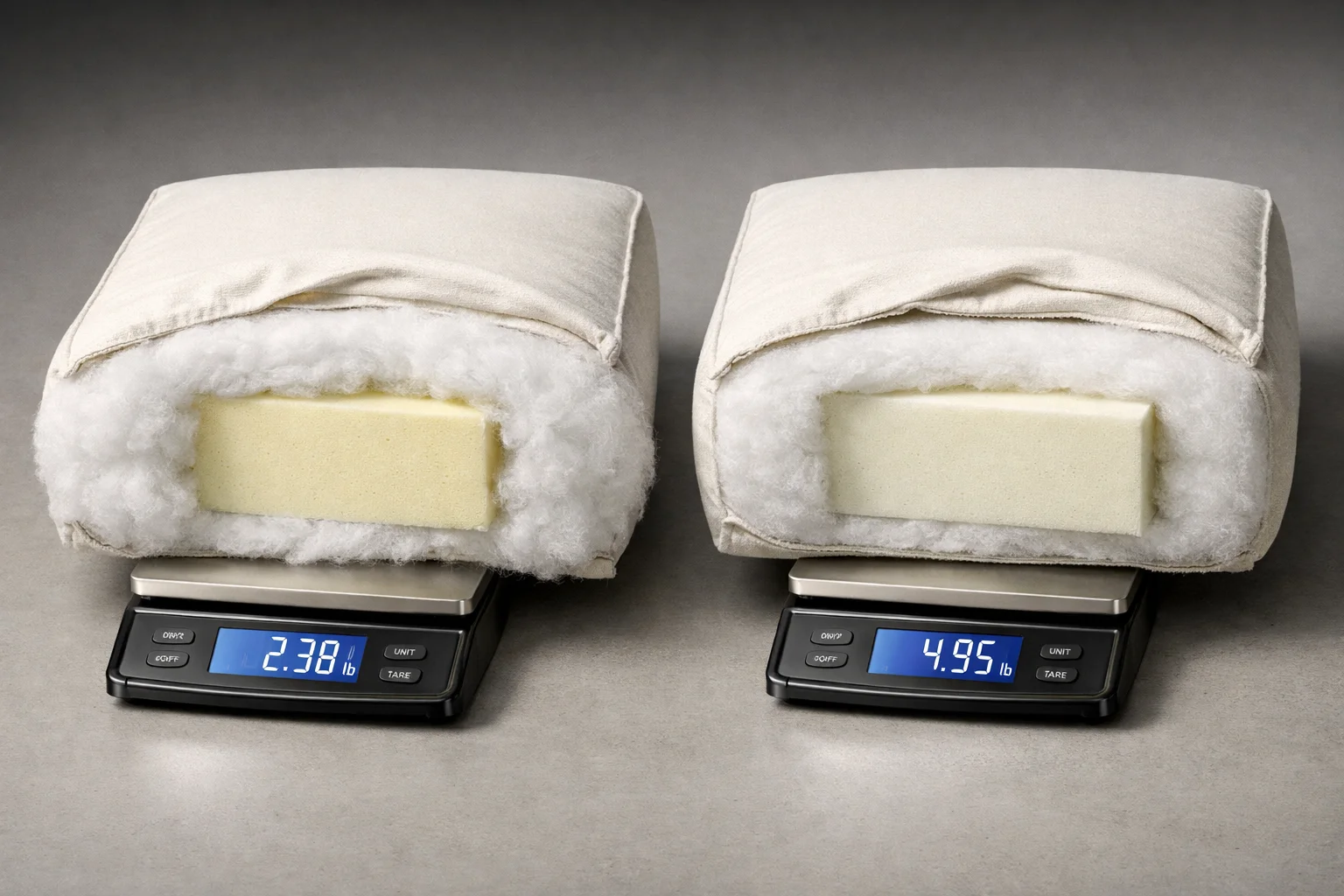
I once picked up a “thick” cushion from a chair, and it almost floated away. It had volume, but no mass. That’s when I realized: Low Density Foam (1.2lb) is the most profitable product in the world because you aren’t selling plastic; you are selling trapped air.
If you take nothing else from this guide, take this: a sofa can look plush and still be built to go flat fast. In the showroom, everything feels fine for five minutes, and the fabric is steamed, and the cushions are fluffed. The real story is what’s inside, and whether it has enough material, not just enough height, to keep doing its job a year from now.
When I’m shopping, I stop thinking in terms of “soft” versus “firm” first, and I start thinking in terms of “light” versus “substantial.” That sounds crude, but it works. The fastest way to get ripped off is paying for thickness, loft, and big dimensions that are mostly air, whether that air is in cheap foam, loose fiberfill, or a feather blend that looks luxurious until it migrates.
You can use your hands to catch a lot of this without any tools. If you lift a seat cushion and it feels suspiciously light for its size, I assume the foam is low density or the fill is doing most of the work. If you squeeze the cushion hard and it springs back instantly like a sponge toy, I get cautious, because that quick rebound often comes with quick breakdown once the foam cells fatigue.
I also pay attention to how a cushion behaves at the seams. If it balloons at the edges and feels hollow in the middle, that can be a sign of soft wrap and cheap core. If it feels consistent through the center and corners, it usually means there is a real core doing the support, not just a puffy jacket.
You do not need to become a materials expert to shop well, but you do need to get comfortable asking direct questions and not accepting vague answers. When a salesperson says “high density” or “premium foam,” I ask what the density actually is and whether the seat foam is different from the back foam. If they cannot or will not tell you, I treat that like a warning, because the brands that invest in better internals usually know exactly what they put in there.
This guide is going to stay practical. I’m going to show you what I look at, what I press, what I lift, and what I ask, so you can spot the sofas that are priced for the showroom and avoid the ones that feel great now and disappoint you later.
The "Bag of Chips" Scam
Low density foam reminds me of a bag of potato chips, it looks full, but a lot of what you are paying for is air. The cheat is simple: if a maker uses something like 1.2 pound foam instead of 2.5 pound foam in a seat cushion, they use dramatically less actual material, even though the cushion can be cut to the same size and look just as thick on the floor.The profit part is what irritates me as a buyer, because the sticker price often does not reflect that shortcut. You get charged like you are buying a substantial cushion, but inside you are buying a lightweight core that depends on trapped air to feel “plush” for the first few weeks.
The result is predictable once you know what to watch for. The air works its way out, the tiny foam cell walls fatigue and snap, and the cushion stops holding you up. In real life that shows up as the center going flat, the front edge getting mushy, and you feeling the frame or the deck through the seat long before the sofa looks “old.”
When I’m in a showroom, I try to catch this scam with two quick tests you can do without feeling awkward. First, I lift the seat cushion with one hand at the zipper side or underside, if I can, and I pay attention to whether it feels strangely light for its footprint, especially compared to another sofa of similar size.
Then I do a slow press test, not a quick poke. I press my palm into the center, hold for a couple seconds, and let go, and I watch whether it rises back in a lazy, substantial way or whether it pops back instantly like a bath sponge. That “toy bounce” is not proof by itself, but when it comes with a lightweight cushion, I assume the core is built to impress you for five minutes, not support you for years.
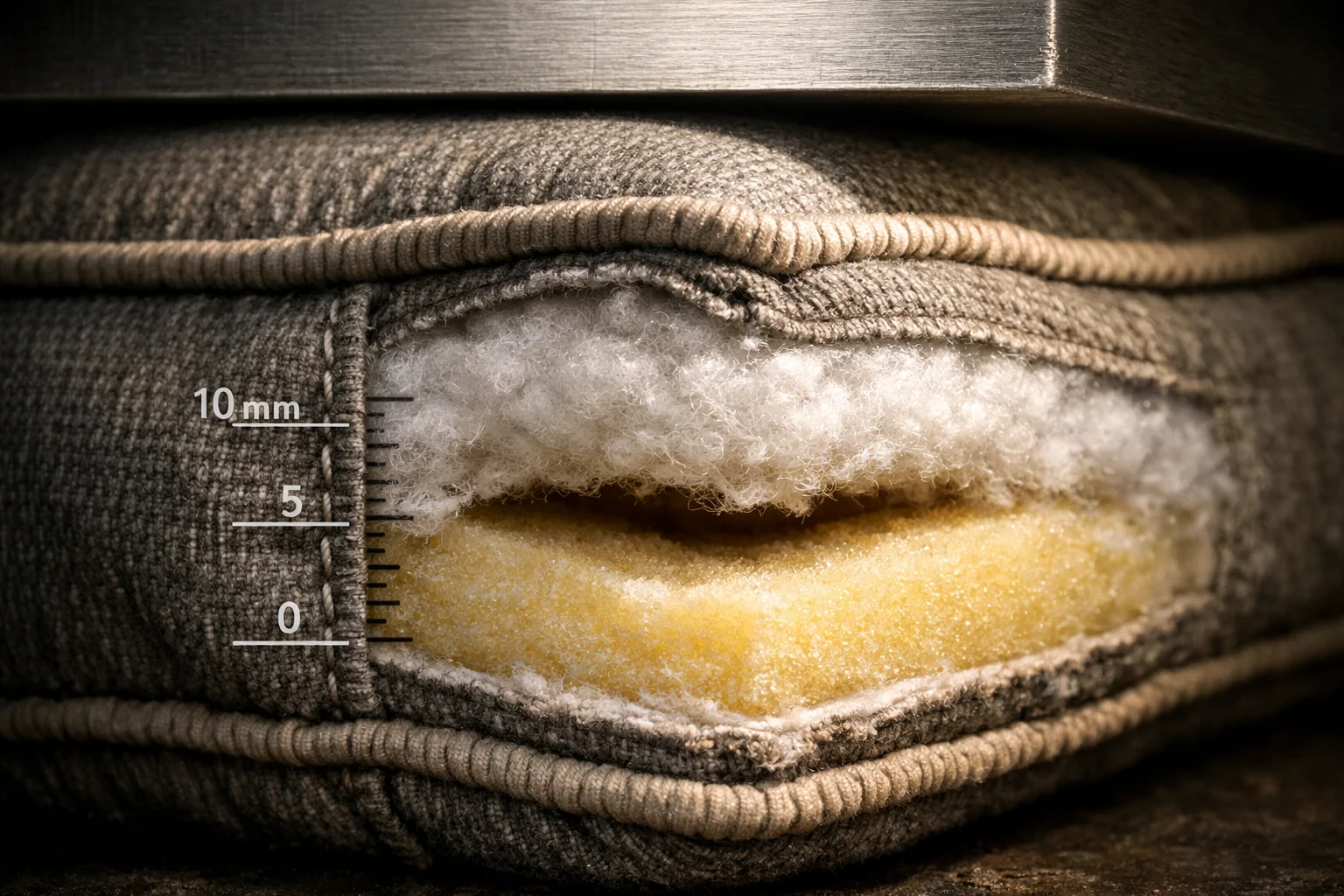
The most revealing test for me is the sit and slide. I sit in my normal spot, then I scoot forward like I am getting up, and I notice whether the front edge holds its shape or collapses under my thighs. Cheap low density foam gets that early “hammock” feeling at the front edge, and once that happens, the cushion never really comes back.
When you talk to a salesperson, you do not need to debate chemistry, you just need one specific answer. I ask, “What is the seat foam density in pounds?” and I pause until they either give a number or admit they do not know, because vague words like “high density” are often just cover for the cheapest foam they can get away with.
If they do give you a number, I treat it like a gate, not a guarantee. I personally get cautious when the seat foam is around 1.2 to 1.5 pound, especially for a sofa that is meant for daily use, and I feel better when it is closer to 2.0 and up, assuming everything else is not flimsy. If they try to change the subject to fabric, style, or “comfort,” I bring it back to the cushion core, because that is where the long term disappointment usually starts.
One more thing I always ask is whether the seat core and back cushions use the same foam. It is common for backs to be softer and lower density, and that is fine, but if the seats are built the same way, you are buying a sofa that is designed to relax into a slump quickly.
If you cannot get a straight answer on what is inside the seat, my rule is to shop like the answer is “cheap.” You can still buy it if you love it, but you should negotiate, choose a firmer feel than you think you want, or pick a model with replaceable seat inserts so you are not stuck paying full price twice.
The Failure Mechanics
When a cheap cushion “dies,” it usually is not because you used it wrong, it is because the foam was built like a tiny plastic scaffold that cannot handle real life. Foam is basically a web of thin plastic walls holding air, and the cheaper and lighter it is, the thinner those walls tend to be.
In the first month, that weakness can feel like a feature. The cell walls bend easily, the cushion feels soft and cloud like, and it gives you that showroom “ahhh” when you first sit down.
A few months later, the same bending starts to do damage. Every sit is a little flex cycle, and over time those thin struts develop tiny cracks you cannot see, but you can feel as a cushion that starts to lose that supportive push back in the center and at the front edge.
By around a year on daily use, the internal structure can be so fractured that the foam stops acting like a springy web at all. It is not that it “needs fluffing,” it is that the foam has effectively shattered internally, and now you are sitting on something that behaves like a pancake, it takes a set and offers almost no resistance.
What I want you to take from that is simple: if a sofa feels amazing because it collapses easily under you, that comfort can be a debt that comes due fast. In the showroom I try to separate “easy to compress” from “supportive,” because the seat that melts under my weight in a pleasing way is often the one that turns into a permanent dip.
You can check for early warning signs even on a brand new floor model. I press down hard with my palm and then, without letting it fully recover, I press again in the same spot. If the second press feels noticeably easier or deeper than the first, I treat that as a hint that the foam is relying on air and delicate cell walls, not real material, to create the feel.
Then I do a ten second sit test that is a little different from just lounging. I sit in one spot, stay still, and pay attention to whether I keep sinking slowly after the first second or two. A slow ongoing sink on a brand new cushion is not always bad, but when it comes with a light cushion and a very “poofy” top, I assume the foam is already close to its comfort limit.
If the cushions are removable, I also pinch the foam through the ticking near the zipper or seam. I am not trying to be gentle, I am trying to feel whether there is a firm core under a soft wrap, or whether it is soft all the way through. When it is soft all the way through, that is the kind of construction that feels friendly on day one and gives up structure early.
The other clue I watch for is how the cushion behaves right after you stand up. If it snaps back instantly and perfectly smooth, that can be fiber doing the cosmetic work or very springy low density foam doing a quick rebound trick. I would rather see a slower, steadier recovery that looks a little less dramatic, because in my experience that often comes with a more substantial core.
If you only remember one practical buying move from this section, make it this: try to tell the difference between softness you can live with and softness that comes from fragility. When I suspect fragility, I either walk away, or I choose the firmer seat option if one exists, because you can always soften a seat with a topper cushion, but you cannot un collapse foam that has fatigued.
The Knee Test (How to Spot It)
When I want a fast read on whether a seat cushion is mostly air, I do not start by sitting. I kneel, because a knee is a small, unforgiving contact point that tells you quickly how much real material is in there.
Here is how I do it in a showroom without turning it into a performance. I slide one knee onto the center of the cushion, keep my other foot on the floor for balance, and then I let most of my body weight settle onto that one knee for a second or two. I am not trying to hurt myself, I am trying to see whether the cushion actually resists concentrated load the way a durable seat should.
A cushion “passes” for me when I feel resistance early and I can tell I am being held up by the foam, not by the upholstery skin. It feels like I am floating above the hard structure underneath, even though I am putting a lot of pressure into a small spot.
A cushion “fails” when my kneecap drops straight down and I can feel the hard deck or the frame through the cushion. If you feel that plywood slap under your knee on a brand new floor model, I assume the seat core is low density stuff, the kind that can feel okay when your weight is spread out but collapses fast once it gets worked in.
If you are worried about being awkward, I get it. I usually do this test quickly, and if a salesperson is hovering, I just say I am checking how supportive the seat core is, because I have had cushions go flat. Most of the time they have seen it before, and if they act alarmed by you putting normal body weight on a seat cushion, that is information too.
One important note from my own experience, do not do this right at the very front edge. The edge can be reinforced differently, and some cushions have a softer crown wrap that will always feel less supportive on a knee. The center of the seat is where the foam core either shows up as substance or reveals itself as a hollow trick.
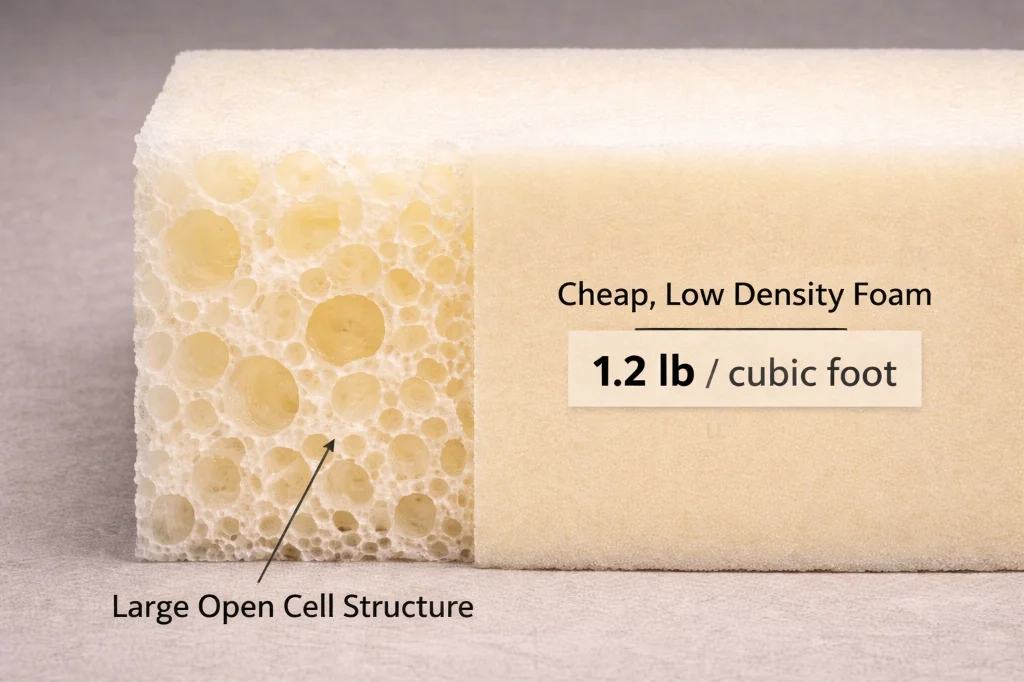
If the cushions unzip and you can peek at the foam, I also watch for what it looks like. When foam has big, obvious pores and a dry, spongey look that reminds me of packing material, I get cautious, because that visual “open, airy” structure often matches the kind of cushion that knees right through.
What I like about the knee test is that it bypasses a lot of showroom theater. Sitting spreads your weight across a wide area, and a soft wrap can make almost anything feel inviting for a minute, but kneeling shows you whether there is a supportive core doing real work.
If the knee test fails but you still love the sofa, I treat it like a negotiation flag. I ask whether there is an upgraded seat core option, whether the seat inserts can be replaced later, and whether the seat foam density is documented on the spec sheet, because I do not want to pay full price for a cushion that already feels like it is one year old.
Posture Warning
Sitting on collapsed foam is not just a comfort issue, it quietly changes how you hold yourself. When the seat stops supporting you, your body starts improvising, and the sofa wins that negotiation because it is the bigger object.
The first thing that happens is the slump. When the cushion gives up in the middle, your pelvis tends to roll backward, and that pulls you out of the neutral posture you think you are sitting in. It feels like “relaxing,” but it is really the seat taking away the stable base your spine needs.
After that comes the strain. With your pelvis tucked under, your lower back loses its natural curve and rounds, and you end up sitting in a C shape without meaning to. If you have ever stood up from a too soft sofa and felt your low back complain for a few seconds while you straighten out, that is the pattern.
Then there is the pain problem that sneaks up on people. A sofa that is marketed as soft and cozy can be the hidden contributor to chronic lumbar ache, because you are spending hours slightly slumped, day after day, and your back muscles are doing the job the cushion should be doing.
Here is how I check this in a showroom in a way that actually predicts real life. I sit all the way back like I would at home, then I put one hand behind my lower back and see if the cushion is holding me up or if my spine is rounding and my hand is getting crushed. If I cannot keep a small pocket of space there without actively bracing my core, I assume that sofa is going to invite a slump once the foam breaks in.
I also watch what my knees are doing relative to my hips. When a seat is too low or too collapsed, my knees ride higher than my hips, and my pelvis wants to tip back. You do not need to measure anything, you just need to notice whether you feel perched upright or whether you feel like you are sliding into a bucket.
One more simple tell is the “getting up” moment. I stand up without using my hands, and I pay attention to whether I can rise smoothly or whether I have to rock forward first to escape the dip. If I need that extra rocking motion on a brand new floor model, I assume the cushion is already letting me sink into a posture I will fight every day.
If you love a sofa that is borderline on this, I do not try to solve it with a throw pillow as the main plan. A pillow can help your upper back feel nice, but it usually does not fix the collapsed seat that is rolling your pelvis back in the first place. I would rather choose the firmer seat option, choose a model with a visibly more supportive seat core, or keep shopping, because the posture cost of a “soft” seat is one of those things you pay for in small daily withdrawals.
Technical Summary: Minimum Viable Specs
If you want a simple floor to stand on when you are shopping, I treat foam density like a minimum viable spec, not a luxury upgrade. For a guest room sofa that gets sat on occasionally, I can live with around 1.8 pound density in the seat, as long as the cushion still feels substantial in the hand and does not knee through in the center.
For a living room sofa that you will use most days, I personally treat about 2.5 pound density in the seat as the line where the cushion is at least trying to be durable. If a salesperson hesitates or tries to steer you away from getting a number, I assume the seat foam is lower than that and I shop accordingly.
When I see something like 1.2 pound density, I do not treat it as “budget,” I treat it as “avoid,” because that is the kind of foam that tends to go flat fast and stay flat. It is the trash can tier of seating foam, even if the sofa is dressed up to look premium.
Final rule, if you can pinch the foam corner together with zero effort, it has no guts. Walk away.
Explore Technical Reference

Dacron Wrapped Cushions: The Illusion of Softness
Why plush-looking cushions often go flat quickly. The difference between visual loft from fiber wrapping and actual structural density from foam cores.
Analyze Details →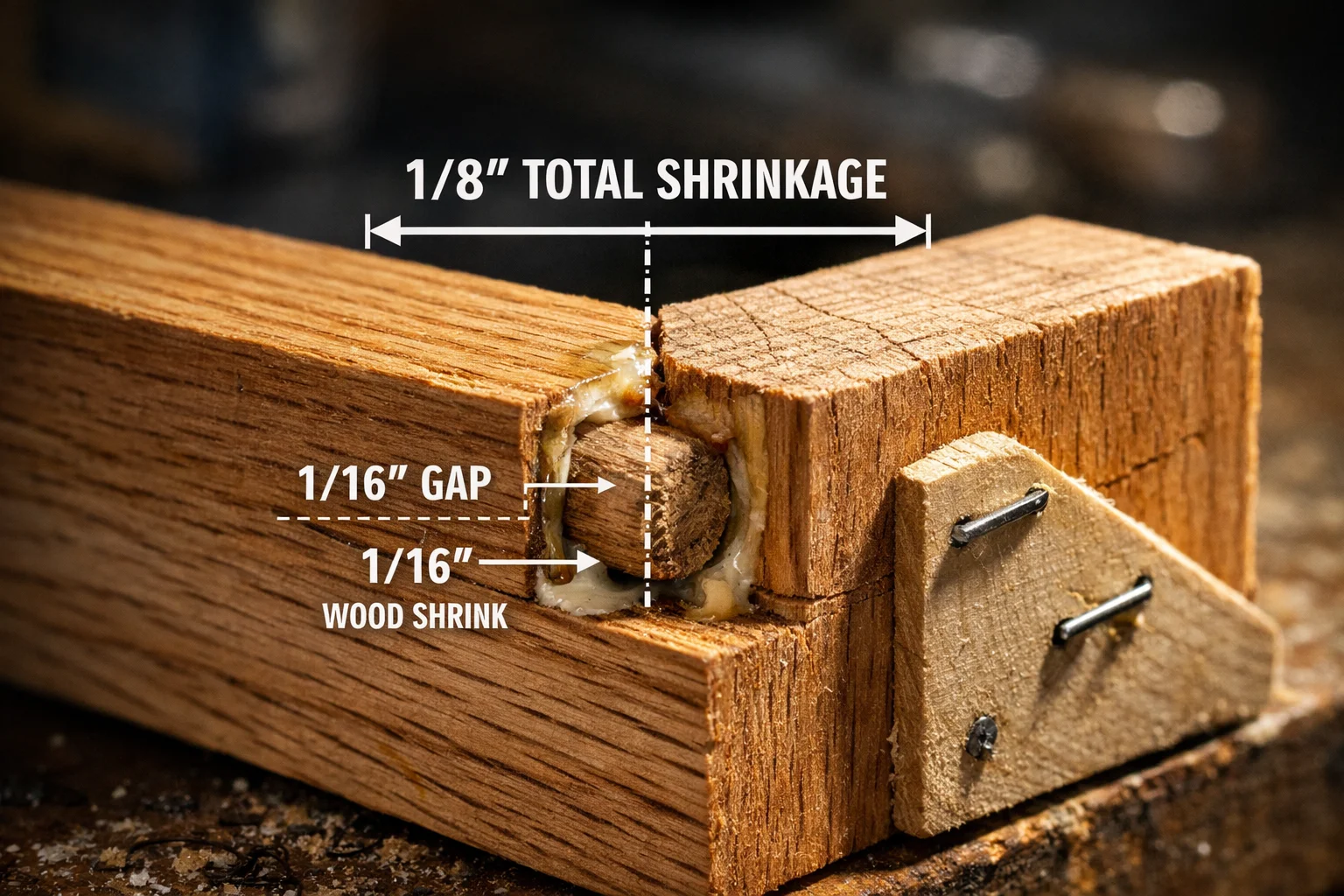
Kiln-Dried Wood: Why It Is Mandatory
The difference between green wood and properly dried wood. Understanding why moisture content determines whether frames last decades or fail within months.
Analyze Details →