Latex vs. Polyurethane: Rubber Trees vs. Oil Wells
Introduction
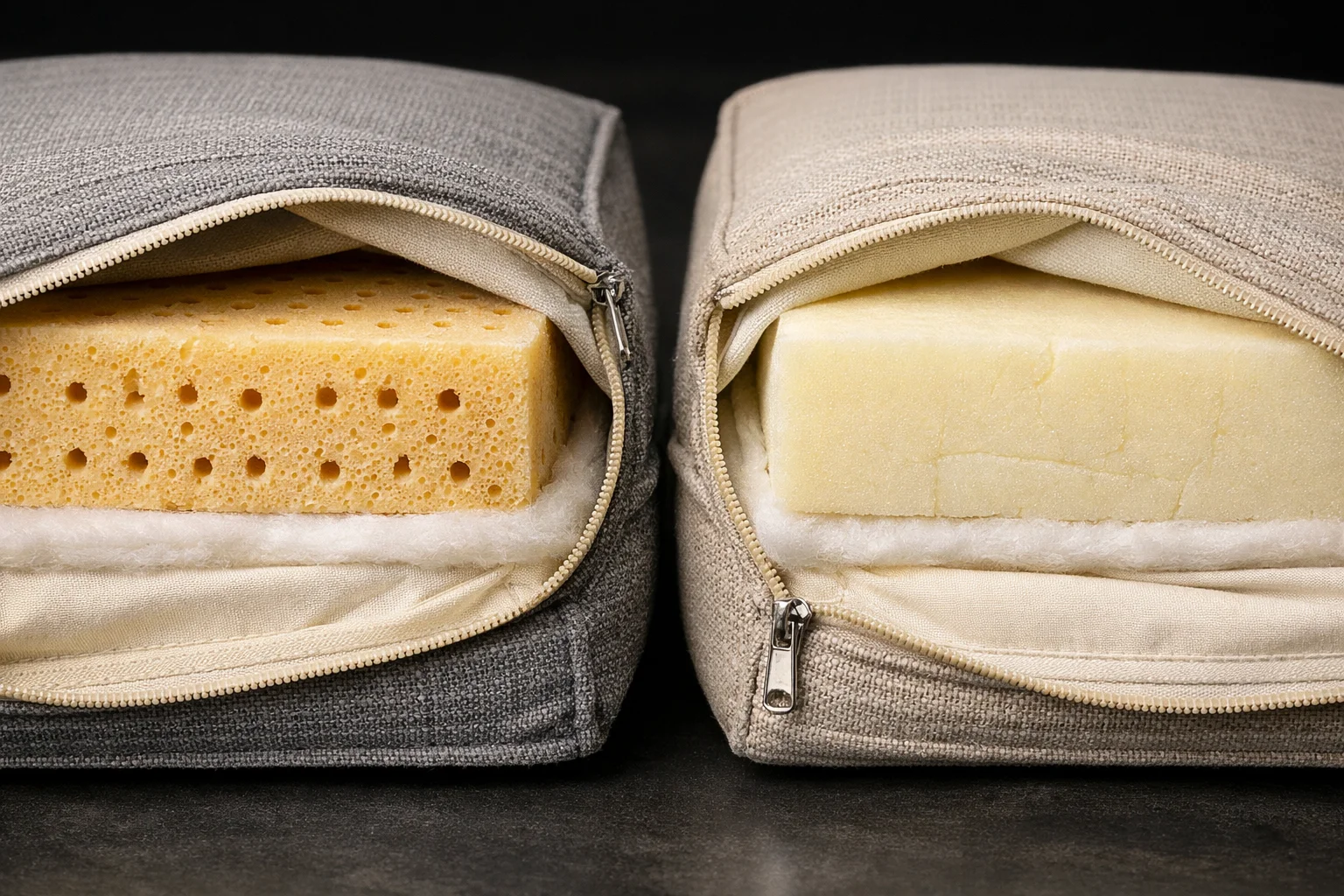
I once sat on a 1960s Danish sofa with its original cushions, and it stopped me cold. There was no sag, no dent where people always sit, just even, buoyant support that felt quietly confident. Out of curiosity I unzipped a cushion and found a heavy slab of rubber, natural latex.
My own three year old sofa at home was already done for. The cushions looked fine from across the room, but the moment you sat down they collapsed and never really bounced back. Those cushions were polyurethane foam, which is just oil whipped into a sponge.
That contrast is what pushed me down this rabbit hole. I am not a designer or a manufacturer, just someone who got tired of replacing seating that looked good and aged badly. I started opening cushions in showrooms, asking annoying questions, and paying attention to what actually fails first.
This guide is for you if you want a sofa that still feels good years from now. I am going to focus on the parts you can actually check while standing in a store, without tools and without trusting a sales pitch. If something matters but you cannot realistically verify it as a buyer, I will say so.
Most sofas do not fail because of style or fabric. They fail because of hidden materials that wear out quietly, then all at once. Once you know where to look and what to press, squeeze, unzip, and question, it gets much harder to get ripped off.
The "Bounce" Test
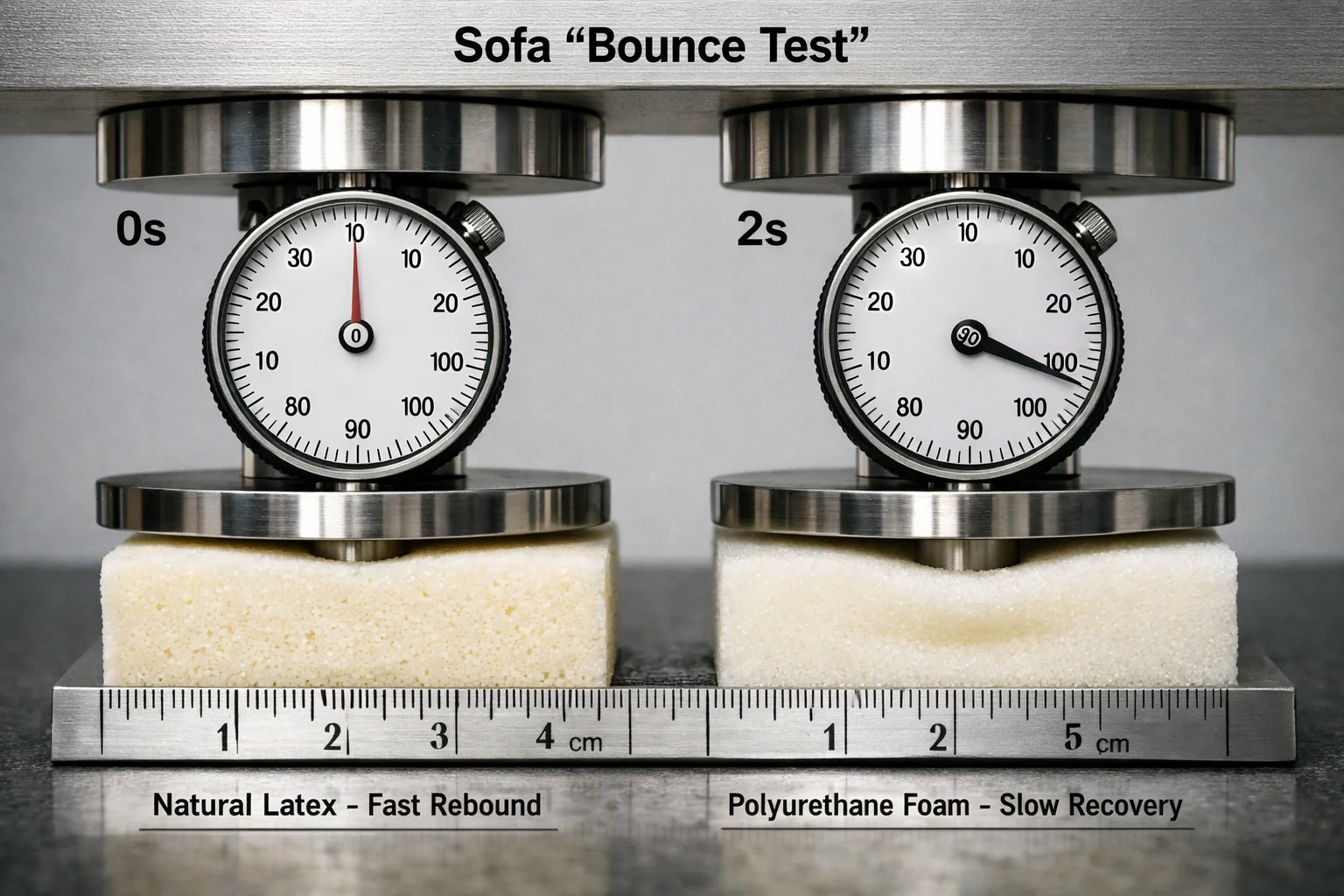
This is the single fastest way I know to tell what kind of foam you are dealing with, and you can do it in ten seconds without asking permission. I press my palm straight down into the seat cushion, hold for a moment, then lift my hand and watch what happens.If the cushion snaps back immediately and looks unchanged the instant my hand leaves, that tells me it is latex or rubber. It feels fast and springy, almost like it refuses to stay compressed. This is what I felt in that old Danish sofa, and it is why those cushions still work decades later.
If the cushion rises slowly, taking a second or two to regain its shape, you are almost certainly sitting on polyurethane foam. It looks fine at first, but that lazy recovery is exactly what turns into permanent dents over time. When I see this behavior, I assume the cushion will soften and sag long before the fabric wears out.
If the cushion stays depressed after I remove my hand and only creeps back after several seconds, that is memory foam. It feels dead and unresponsive, and it relies on heat and time to move. I avoid this entirely in seat cushions, because sofas are for shifting, perching, and getting up easily, not sinking into a slow moving pit.
I always do this test in several spots, especially where people naturally sit. If one area recovers slower than the rest, that tells me the foam is already breaking down from showroom use. When a sales associate tells you the cushions will firm up over time, this test gives you a reality check right there on the floor.
The Chemistry Differences
When I talk about chemistry, I am not trying to turn you into a materials scientist. I am trying to explain why one cushion quietly survives decades and another quietly gives up after a few years, even when they look identical on the outside.
Natural latex is made from tree sap that gets whipped and baked into a dense rubber. What matters to you is that rubber wants to return to its original shape with real force. When you sit down, it pushes back instead of giving up ground, and that push is what keeps the cushion from forming permanent dents.
When I press on a latex cushion in a store, it feels almost stubborn. It resists me, and the moment I let go it looks untouched. That behavior does not fade quickly with age, which is why old sofas with latex can feel shockingly normal decades later.
Polyurethane foam comes from oil based chemicals that react and trap gas, creating a sponge. At first it can feel soft and welcoming, and many people mistake that softness for quality. What you are actually feeling is a structure that relies on air pockets, and those pockets slowly collapse with use.
When I squeeze polyurethane foam between my hands, it feels compliant and a little lifeless. It takes a moment to return to shape, and that moment gets longer every year. Once the foam stops fully rebounding, the cushion does not just feel softer, it loses height and support all at once.
This difference in behavior is why price gaps exist. Latex costs more because it lasts dramatically longer and does not rely on fragile air cells. Polyurethane costs less because it is easy to make and easy to shape, even though it is effectively disposable in the lifespan of a sofa.
What I want you to take into a showroom is not a chemistry lesson, but a bias. If a sofa is positioned as something you will keep for a long time, yet the seat cushions are polyurethane, I treat that as a contradiction. If the cushions are latex, or at least a thick latex core, I pay closer attention because the foundation is doing the heavy lifting.
If a salesperson talks about comfort without mentioning what the cushion is made of, I slow the conversation down. Chemistry decides aging, not fabric, not stitching, and not how good it feels for the first five minutes. Once you understand that, it becomes much easier to see past the showroom glow.
Image Comparison
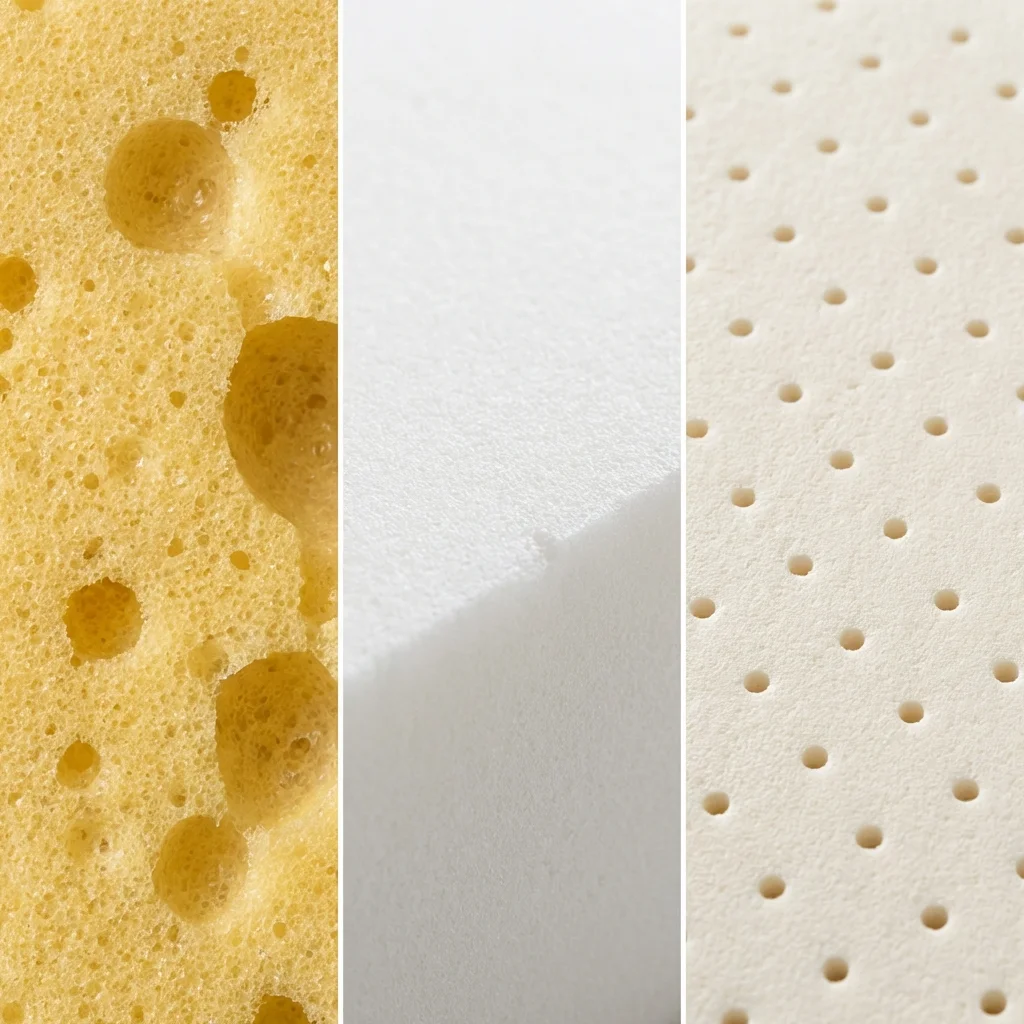
When I first saw images like this, it finally explained what my hands had been feeling for years. The latex side looks chaotic and uneven, while the poly foam side looks neat and repetitive. That visual difference turns into a very real difference once you sit down thousands of times.
I do not expect you to see foam at this level in a showroom, but I want you to keep this mental picture in your head when you press on a cushion. Random structure behaves like a tangled net that keeps supporting you even when some parts give way. Uniform structure behaves like a row of identical straws, and once a few buckle, the rest follow.
When you compress a seat cushion and feel it pushing back unevenly but confidently, that usually lines up with the messy structure on the left. It can feel firmer at first, even slightly awkward, but it stays consistent across the whole cushion. That consistency is what keeps a sofa from developing that one dead sitting spot everyone avoids.
When a cushion feels soft everywhere but vague and hollow underneath, I think of the image on the right. Uniform foam feels friendly at first touch, but it does not distribute stress well. Over time, the same walls collapse in the same places, and that is how you end up with a visible crater even though the rest of the sofa looks new.
This image also explains why rotating cushions only helps so much. With poly foam, you are just moving fragile cells to a new location. With latex, the structure itself is resilient, so rotation actually extends life instead of delaying the inevitable.
If a salesperson tells you their foam is high density or premium grade, I picture the right side of the image and ask one follow up question. I ask whether the seat core is latex or polyurethane. If the answer is polyurethane, density becomes less convincing to me because the underlying structure is still uniform and fatigue prone.
I am not trying to scare you away from every sofa that is not latex. I am trying to give you a filter. When the price, the story, and the expected lifespan all suggest longevity, but the foam structure underneath looks more like the right side of this comparison, I adjust my expectations or I keep walking.
This image is not about memorizing materials. It is about understanding why your hands, your body, and your frustration years later all trace back to something invisible. Once you see the difference, it is hard to unsee it, and it makes you a much harder person to sell short lived comfort to.
The Weight Factor
The first time I picked up a loose latex cushion, I was genuinely surprised. It felt absurdly heavy for its size, like it was filled with something solid instead of air. That moment rewired how I judge seat cushions in a showroom.
Weight is not about inconvenience, it is about honesty. Mass usually means there is a lot of actual material doing the supporting, not just trapped air pretending to be structure. Latex is heavy because it is dense rubber all the way through, and that density is exactly what resists sagging year after year.
A typical polyurethane seat cushion is light enough to flip with one hand without thinking. I can casually toss it aside while chatting with a salesperson. That lightness tells me the cushion is mostly empty space, and empty space is what collapses first under daily use.
When a cushion weighs closer to what a carry on bag does, I pay attention. I brace it against my leg or use both hands, and I immediately know this thing is not relying on air pockets to do its job. That extra effort is annoying in the moment, but it is the same effort the cushion will keep making every time you sit down.
In a showroom, I always ask if I can lift a seat cushion. If the cover is attached, I try lifting the whole seat assembly from the front edge. You are not being difficult, you are checking whether there is real material inside or just clever tailoring.
If a salesperson jokes that the cushion is heavy because it is high quality, I agree and keep lifting. If they look uncomfortable or try to redirect me to fabric options, that tells me weight was not part of the original sales plan. Heavy cushions sell themselves once you feel them.
There is also a practical side to this that people overlook. Heavy cushions do not migrate. They stay put instead of creeping forward or tilting as you sit and stand, which keeps the sofa feeling solid instead of sloppy over time.
I have owned light cushions that needed constant fluffing and realignment, and I have owned heavy ones that just sat there and did their job. The heavier ones aged quietly, while the lighter ones demanded attention right up until I replaced them.
If you are torn between two sofas that feel similar when you sit down, I let weight break the tie. I trust the one that makes me work a little harder when I lift it, because that work is a sign the cushion will keep working long after the showroom glow wears off.
This is one of those checks you cannot fake with marketing language. No label or buzzword replaces the simple fact that more material weighs more. When I am unsure, I stop listening and start lifting, because my arms tell me more truth than any brochure ever will.
Hybrid Systems (The Compromise)
Once you start asking about latex, many brands steer you toward something they call a hybrid. I see this as a compromise, sometimes a reasonable one, sometimes a way to charge more without fixing the real problem.
The most common version I run into is a slab of latex glued on top of a polyurethane core. In the showroom this can feel convincing because your body first meets the latex, not the cheaper foam underneath.
When I sit on this kind of cushion, I pay attention to what happens after the first second. If I feel an initial spring followed by a subtle drop, that tells me my weight is passing through the latex and settling into the poly core. That deeper layer is still doing most of the long term work, and it will still be the first thing to fail.
I ask how thick the latex layer actually is, then I do the bounce test with more pressure. If I have to press hard to feel resistance, or if the cushion recovers quickly at the surface but feels vague underneath, I assume the latex is more cosmetic than structural. A thin latex layer can delay failure, but it cannot prevent it.
The other hybrid flips the order, with a soft polyurethane comfort layer over a latex core. This one often feels plush and inviting, especially if you sit down quickly and do not linger.
I have learned to be skeptical of that softness. I press my hand into the cushion and watch the top layer, not the whole cushion. If the surface stays compressed for a moment even though the cushion underneath rebounds, I know the comfort layer is already on a clock.
In daily use, that top poly layer is what your body crushes over and over. Once it goes flat, you are left sitting on the firmer latex core anyway, but now without the height or shape the cushion started with. The sofa feels tired even though the expensive part is still intact.
When I encounter either type of hybrid, I ask myself a simple question. Which layer is doing most of the work when I sit here for an hour? If the answer is polyurethane, I lower my lifespan expectations no matter how much latex is involved.
There are situations where I accept a hybrid. If the price reflects that I am buying partial longevity instead of full longevity, and if the cushion covers zip off so replacement is realistic later, I see it as an informed compromise rather than a trick.
What I do not accept is a hybrid being sold as a forever solution. If the sales story leans heavily on the word latex, but avoids explaining where it sits and how thick it is, I slow everything down. Vague placement usually means the latex is not in charge.
In a showroom, you can check this without tools. I sit, stand, then sit again in the same spot and notice whether the second sit feels lower or less supportive. I also squeeze the cushion from the side if it is loose, feeling for a firm core versus a soft shell. Your hands can often tell where the real structure lives.
Hybrids are not automatically bad, but they are never neutral. They always inherit the weaknesses of the weaker layer. Once you see them that way, you stop being impressed by the word and start judging the behavior, which is exactly where your money should be aimed.
The "Dunlop vs. Talalay" Latex Debate
When you do find a sofa that actually uses latex, the next fork in the road is how that latex was made. This is where I see a lot of buyers get confused, because both options get called premium and both technically are latex.Dunlop latex is made by pouring the rubber into a mold and baking it as is. The result is dense, a little heavier, and more resistant to long term compression. When I sit on Dunlop, it feels grounded and supportive, like the cushion is braced and ready for years of work. This is the type I want doing the main job in a seat cushion, especially in the spots where people sit every single day.
Talalay latex goes through extra steps that introduce air and create a more uniform structure. It feels softer, lighter, and more pillowy when you first sit down. I actually like this feel for back cushions or for something like a mattress topper, where comfort matters more than resisting constant downward force.
In a seat cushion, that softness is a tradeoff. Talalay still outperforms polyurethane by a wide margin, but it does not have the same stubborn resistance as Dunlop when you load it with body weight day after day. Over many years, it can relax more than Dunlop, especially in high use spots.
If you are standing in a showroom and the salesperson tells you the sofa has latex but does not specify which type, I always ask. If the answer is Talalay in the seat, I mentally adjust my expectations toward comfort first and longevity second. If the answer is Dunlop, or if they say the seat core is molded dense latex, I take that as a positive sign that the cushion was designed to age well.
My personal rule is simple. For seat cushions, I want Dunlop doing the main structural work. For back cushions, or for a softer top layer that is not bearing full weight, Talalay can make sense. If a sofa follows that logic, it usually feels honest rather than flashy.
Recommendation: For a sofa seat that you expect to keep for many years, I consistently trust Dunlop latex over Talalay. It feels less impressive in the first five minutes, but it is far more impressive in year ten.
When I first learned this distinction, it explained why some latex sofas I tried felt incredible but slightly vague underneath. They were not bad, they were just tuned for immediate comfort rather than endurance.
In the store, you can often feel the difference without cutting anything open. I sit down slowly and then shift my weight side to side. Dunlop resists that movement with a steady push, while Talalay tends to feel more buoyant and forgiving. Neither is wrong, but only one is really built for constant sitting.
If the salesperson cannot answer which process was used, or dismisses the question as too technical, I treat that as useful information. Brands that invest in durable seat cores usually know exactly what they are using and why.
This is not about chasing perfection. It is about matching the material to the job. Seat cushions live a hard life, and the latex debate matters because one option tolerates that life better than the other.
Once you know this, the word latex stops being a magic spell and starts being a real question. What kind, where is it used, and is it actually doing the work. Those answers are what protect you from buying something that feels great today and quietly lets you down later.
Technical Summary: Final Verdict
If you are shopping under two thousand dollars, I focus on making the least bad compromise rather than chasing perfection. In that range, I look for high density polyurethane in the seat cushions, and I confirm it with the bounce test and by lifting the cushion. I accept that it will not last forever, but dense poly at least buys you time before the collapse shows up, and it usually beats cheaper blends that feel soft and die fast.
Once the budget climbs past four thousand dollars, my advice changes completely. At that point, I stop treating the sofa as a temporary object and start treating it as something I expect to live with for a very long time. That is where natural latex in the seat cushions makes sense to me, because it aligns the price with a realistic lifespan. When I pay that much and feel real rubber pushing back under me, I finally feel like the numbers and the materials are telling the same story.
There is one material label I actively avoid no matter the price, and that is synthetic latex, often called styrene butadiene rubber. I have sat on enough of it to recognize the trick. It mimics the springy feel of real rubber for a short while, but it ages like plastic foam, not like latex. When I hear that term, I assume I am getting the lifespan of polyurethane with a nicer first impression, and I move on.
If you take nothing else from this guide, take this filter into the showroom with you. Match the cushion material to the price and to how long you expect the sofa to last. When those three things line up, you usually end up happy. When they contradict each other, the disappointment just arrives later, after the return window is long gone.
I learned this the hard way, one sagging cushion at a time. Now I slow down, press, lift, and ask direct questions until the materials make sense. You can do the same, and once you do, it gets much harder for a sofa to quietly fail on you.
Explore Technical Reference
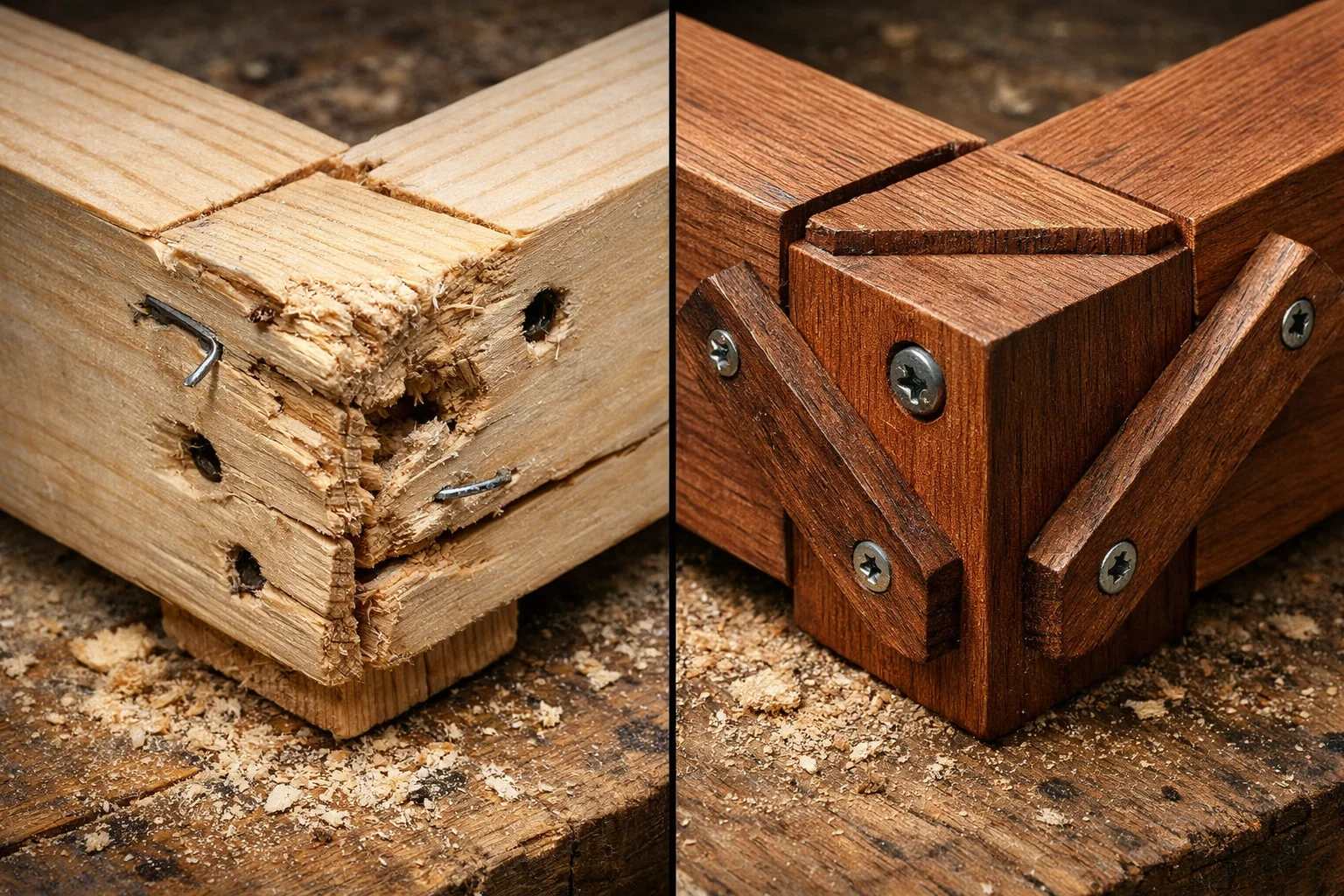
Solid Wood Frames: When "Natural" Means Weak
Why solid wood can warp, twist, and crack. Understanding dimensional instability and why joinery matters more than raw material selection.
Analyze Details →
Fabric Behavior: Why Your Sofa Wrinkles (The Physics of Puddling)
Why your tight linen sofa looks sloppy after a month. Understanding the elongation properties of natural versus synthetic fibers.
Analyze Details →