Kiln-Dried Wood: Why It Is Mandatory
Introduction
I learned the hard way that wood always moves as it dries, and it does not care whether it is a deck outside or a sofa in your living room. That deck taught me that when wood shrinks after something is built, the fasteners loosen and the whole structure starts fighting itself. A sofa frame is under constant stress, so the consequences show up faster and more painfully.
When you sit on a sofa, you are loading the frame over and over in the same spots. If the wood was still holding moisture when it was assembled, it keeps shrinking long after it arrives in your house. The joints slowly open up, staples loosen, and one day you hear a creak that never goes away.
This guide exists because most sofas look fine on a showroom floor. I have owned enough of them to know that appearance tells you almost nothing about how they will feel in three years. I am not trying to turn you into a furniture expert, just someone who knows what to press on, what to ask, and when to walk away.
As you read, imagine yourself standing in a store with a salesperson hovering nearby. Everything I talk about is something you can check with your hands, your eyes, or a simple question. If a sofa cannot pass these basic tests, no fabric upgrade or extended warranty will save it.
The first thing to understand is that the frame matters more than anything else. Cushions can be replaced and fabric can be reupholstered, but a bad frame means the sofa is on a timer. Once the structure starts failing, you are done.
I start with wood because that is where most shortcuts hide. In the next section, I will walk you through how to tell whether a sofa frame was built from stable, properly dried wood or from material that is still changing shape. This is one of the easiest things to overlook, and one of the most expensive mistakes you can make.
The Shrinkage Factor
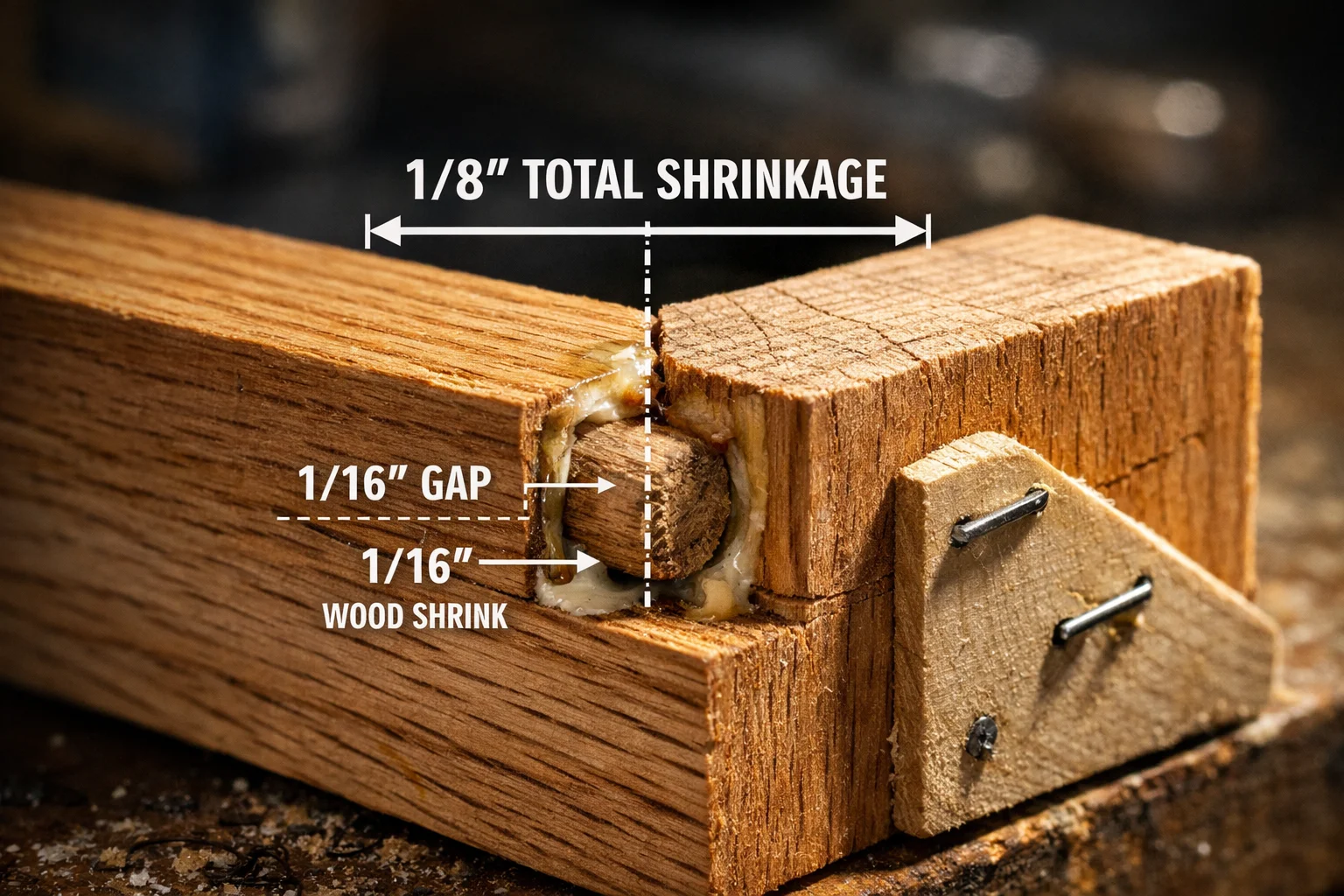
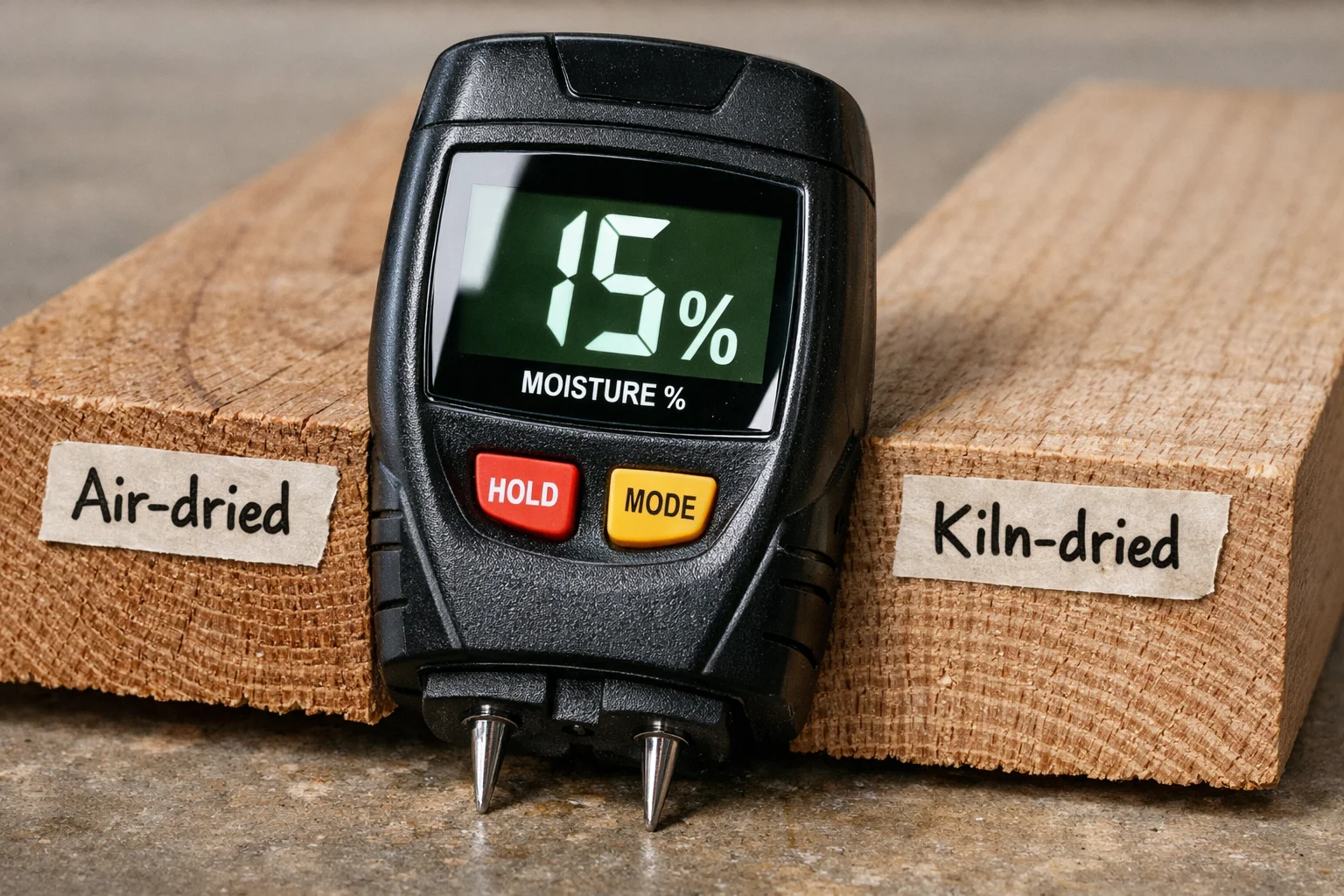
When a sofa frame is built from green or only air dried wood, that wood can still be holding around fifteen percent moisture. Your home, with air conditioning or heat running most of the year, lives closer to eight percent. The moment that sofa comes inside, the wood starts drying the rest of the way.As it dries, the wood shrinks. Across a joint, that shrinkage can easily add up to about an eighth of an inch. That does not sound like much, but glue does not stretch and dowels do not magically grow.
The glue bond breaks, the dowel starts rattling inside the hole, and that is when the squeaking begins. Once it starts, it almost never stops.
Here is what I want you to take away from this while you are standing in a showroom. Wood shrinkage is not a defect that shows up right away, so you cannot rely on how quiet the floor model feels today. You have to look for signs that the manufacturer planned for wood movement, or at least minimized it.
I always start by asking a simple question that makes salespeople uncomfortable. I ask whether the frame wood is kiln dried before assembly. If they cannot answer clearly, or they say something vague like seasoned wood without explanation, I assume it is not properly dried.
Then I put my hands on the sofa. I lift one front corner a few inches off the floor and watch the rest of the frame. If the opposite corner barely moves and the sofa twists instead of lifting as a unit, that tells me the joints are already flexing more than they should.
I also sit down hard in one spot and listen. A brand new sofa should be almost silent. A faint creak in the store often turns into a constant noise at home once the wood finishes shrinking.
If the salesperson tells you squeaks are normal and can be fixed later, I walk away. In my experience, once wood has shrunk and a joint has loosened, there is no permanent fix that does not involve rebuilding the frame.
What you are really buying here is time. Properly dried wood moves less after assembly, which means the joints stay tight and the sofa stays quiet. If the frame was built from wet wood, the clock starts the day it enters your house, not the day you bought it.
In the next section, I will explain how some frames try to compensate for this movement with fasteners and joinery, and which of those solutions actually work in the real world.
The Kiln Process (The “Steam Sauna”)
When a salesperson says the frame is kiln dried, I do not picture a simple oven. I picture a controlled process that is meant to force the wood to finish moving before anyone builds a sofa out of it.
The first part uses steam, and this matters more than it sounds. Hot steam opens the pores of the wood so moisture can escape from deep inside the board, not just from the surface. Without this step, wood can feel dry on the outside while staying wet at the core.
After that, the temperature is raised slowly and held there long enough for the moisture to leave evenly. This is not about cooking the wood fast, it is about avoiding a dry shell wrapped around a wet center. When drying is rushed, the outside locks in place and the inside keeps shrinking later in your house.
The final stage is about patience. The boards are held until the moisture level is even all the way through and close to what your living room actually feels like year round. That is usually somewhere around six to eight percent, which is why properly kiln dried wood tends to behave itself once it is assembled.
Here is the part that helps you as a buyer. When wood reaches that point before assembly, most of its shrinking is already done. The joints are not fighting a slow internal change after the sofa is built, so they stay tighter for longer.
When I am in a showroom, I do not ask for a chemistry lesson. I simply ask whether the frame wood is kiln dried to furniture grade moisture levels before assembly. If they say yes, I follow up by asking if that drying includes a steam phase or controlled equalization.
If the salesperson looks confused or pivots to talking about hardwood versus softwood, that tells me they are dodging the real issue. Species matters far less than whether the wood was fully dried before the first staple went in.
I also listen for language like partially kiln dried or kiln dried after cutting. Those phrases often mean the process was shortened to save time and money. Shortcuts here are invisible at first and expensive later.
The reason I care so much about this step is simple. A sofa frame does not get a second chance to dry evenly once it is wrapped in fabric and loaded with staples and glue. If the wood was not stable at that moment, the problems show up slowly and then all at once.
When a manufacturer does this right, you never notice it. The sofa stays quiet, the frame feels solid when you lift it, and nothing changes year after year. That boring reliability is exactly what you should be paying for.
In the next section, I will talk about what builders try to do when the wood is not as stable as it should be, and which joinery and fasteners actually hold up when the frame is under real daily use.
Secondary Risks of Wet Wood
Even if a frame never squeaks, wet wood brings two other problems that most people never connect to the sofa itself. I have dealt with both, and neither one is something you can clean or spray your way out of.
The first is mold, and it does not always show up as visible spots. Wet wood sealed inside foam and fabric creates a dark, humid pocket that never fully dries. That is the perfect environment for mold to grow slowly and quietly.
The giveaway is smell. If a sofa develops a constant musty, old sock odor that does not go away with cleaning, that smell is coming from inside the structure. At that point, no fabric cleaner helps because the source is buried in the frame and padding.
When I am in a showroom, I do something simple and slightly awkward. I lean in and smell the inside corners near the arms and under the seat cushions. A new sofa should smell like fabric or wood, not dampness or storage.
If you notice a musty smell on a brand new floor model, imagine what that sofa will smell like after a humid summer in your house. I treat that as a hard stop and move on.
The second risk is bugs, specifically powderpost beetles. These insects lay eggs in wood that still has moisture, and air dried lumber gives them exactly what they need. You never see the problem at first because the larvae live inside the wood.
Months or even years later, you start noticing tiny piles of fine sawdust under the sofa. That dust is not from the floor, it is the insects eating their way out from inside the frame.
Once that starts, there is no practical fix. You cannot heat treat a finished sofa without destroying it, and surface sprays do nothing to bugs already inside the wood.
This is one reason kiln drying matters beyond shrinkage. Proper kiln temperatures are high enough to kill insect eggs deep inside the lumber. Air drying does not reliably do that, no matter how long the wood sits in a yard.
As a buyer, you cannot see inside the frame, so you have to rely on process. I always ask directly whether the kiln drying is done hot enough to kill insects, not just to remove surface moisture. If the salesperson has no idea what I am talking about, that tells me the manufacturer probably did not prioritize it either.
These secondary risks are easy to ignore because they do not show up right away. By the time they do, the return window is long gone and you are stuck with a problem that feels mysterious and embarrassing.
This is why I care so much about how the wood was treated before the sofa was ever assembled. Proper drying is not just about preventing squeaks, it is about keeping your living room from turning into a damp box of smells and surprises.
In the next section, I will shift away from the wood itself and talk about how frames are actually held together. Some joints and fasteners can tolerate small changes over time, and others fail the moment the wood starts to move.
When I am trying to confirm that a manufacturer actually did the drying work they claim, I look for physical evidence, not marketing language. This image shows the kind of mark that gives me more confidence than any brochure ever has.
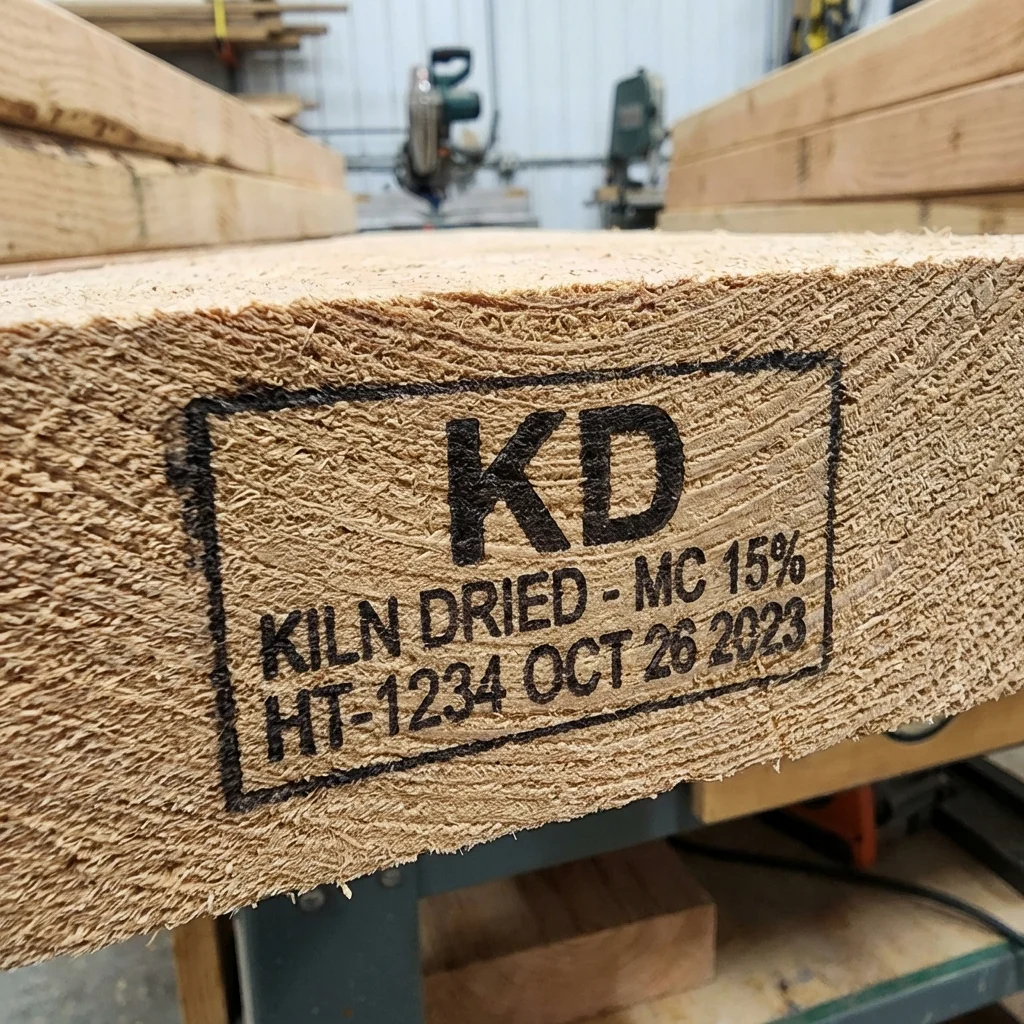
You are not likely to see this stamp on a finished sofa, but it tells you what to ask for. I ask whether the frame lumber arrives at the factory already stamped or certified as kiln dried before assembly. If the answer is yes, I ask where that wood comes from and whether the supplier provides documentation.
If a salesperson tells you the frame is kiln dried but cannot explain how they know, I treat that as a guess, not a fact. Real kiln dried lumber is tracked, labeled, and paid for at a higher cost. Manufacturers who use it usually know exactly why they do.
I have also learned not to be distracted by claims about hardwoods or imported woods. A beautiful species that was not properly dried will still shrink, squeak, and smell. An ordinary species that was fully dried and stabilized will usually outlast it.
The reason this stamp matters is simple. It means the drying happened before the sofa was built, when it still mattered. Once the wood is hidden under fabric and foam, there is no way to undo shortcuts taken at this stage.
When I cannot get a clear answer about drying, or when the salesperson tries to change the subject, I move on. There are enough sofas out there that you never need to gamble on one built from wood that is still changing shape.
Now that you know how to judge whether the wood itself is stable, the next thing to look at is how that wood is held together. Even good lumber can fail if the joints and fasteners are wrong for the kind of stress a sofa sees every day.
Climate Beware (The Desert Effect)
If you live in a dry place like Arizona or Nevada, or you run strong air conditioning or heat most of the year, you need to be more cautious than the average buyer. I learned this after moving a perfectly fine sofa into a desert climate and hearing a sound that still sticks with me. It was not a creak, it was a sharp pop that came from inside the frame.
Dry air pulls moisture out of wood aggressively. In a humid region, wet wood might shrink slowly and complain with noise. In a desert climate, that same wood can dry so fast that it splits outright, sometimes loudly enough to sound like something breaking in half.
When green or partially dried wood loses moisture too quickly, it does not have time to relax. The internal stress releases all at once, and that is when boards crack and joints blow apart. Once that happens, no amount of tightening or padding will bring the frame back to what it was.
This is why I treat kiln drying as non negotiable in dry climates. Not partially dried and not air dried with extra time. The wood has to be fully kiln dried before assembly, or it simply is not stable enough to survive the transition into your house.
When I am shopping in a showroom and I know the sofa is going into a dry environment, I ask a very direct question. I ask whether the frame wood is kiln dried specifically to handle low humidity homes. If the answer is anything other than a confident yes with a short explanation, I assume the frame is at risk.
I also pay close attention to where the sofa is made and where it is going. A sofa built in a humid coastal factory and shipped straight to a desert living room is under maximum stress the moment it arrives. That does not mean it cannot work, but only if the drying was done correctly beforehand.
You can also do a physical check that matters more in dry climates. I press down hard on one arm and then the other, listening closely. Sharp cracking sounds or sudden ticks are a bad sign, even on a brand new piece.
Salespeople will sometimes say that wood needs time to acclimate. That is true for solid wood furniture, but a sofa frame does not get that luxury. It is locked together with glue and staples, so rapid acclimation just means rapid damage.
If you live in a desert or run your HVAC hard year round, you are not being picky by insisting on kiln dried wood. You are matching the sofa to the environment it has to survive in. Anything less is a gamble that usually shows up as noise, cracks, or a sudden loss of solidity.
I think of it this way when I am deciding whether to buy. If the frame cannot handle dry air without tearing itself apart, it does not belong in my house. No fabric or cushion upgrade can compensate for wood that was never meant to live there.
Technical Summary: The Specification
This is the point where I stop letting vague answers slide. When someone says solid wood, I treat that as a non answer and push for specifics, because solid wood can still be wet, unstable, and full of future problems.I ask directly whether the frame lumber was kiln dried before assembly. I am listening for a clear yes, not a shrug or a marketing phrase. If they hesitate or redirect the conversation, I assume the answer is no and I move on.
If any part of the frame is visible, I look for a kiln dried stamp or a label in the specifications that explicitly says KD. I do not need a long document, just evidence that drying happened before the sofa was built, not after or sort of.
I also trust my senses. I refuse any frame that smells musty, damp, or sour when I lean in near the arms or under the cushions. I also refuse any situation where there is fine sawdust on the floor under a new sofa, because that dust has only one realistic explanation.
This summary is not about being difficult, it is about protecting yourself. Kiln dried wood is boring, quiet, and forgettable, which is exactly what you want from a sofa frame. If you cannot confirm that drying step with a straight answer or physical signs, you are betting against time, and time usually wins.
Explore Technical Reference
Plywood Frames: The "Engineered" Advantage
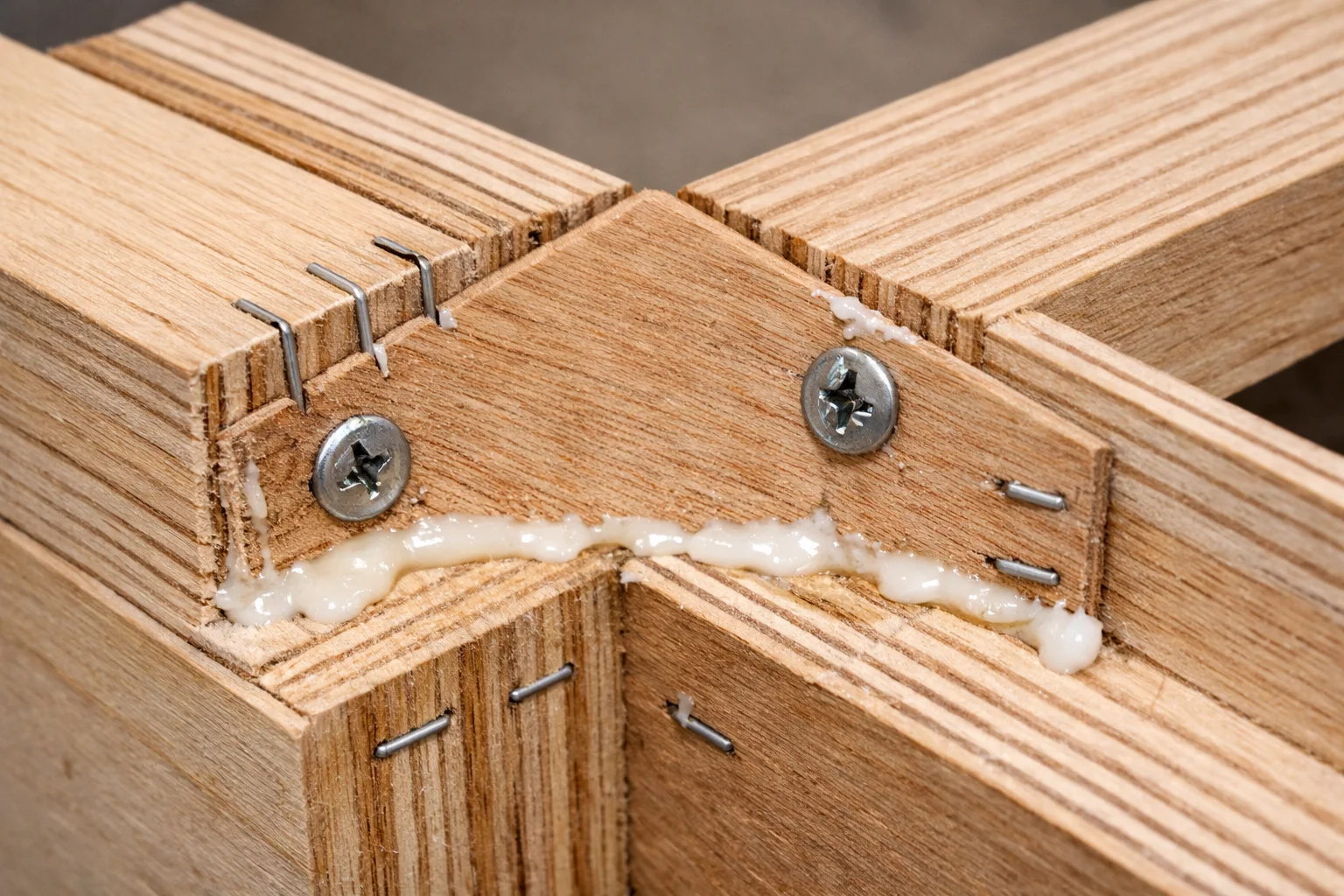
Why plywood frame quality varies dramatically from garbage to greatness. Understanding ply count, void content, and why some manufactured wood outperforms solid wood.
Analyze Details →
Foam Lifespan: Predicting When Your Sofa Will Die
How long should a cushion last? Understanding the density-to-duration ratio and the phases of foam death.
Analyze Details →