Frame Noises: Decoding Squeaks, Groans, and Pops
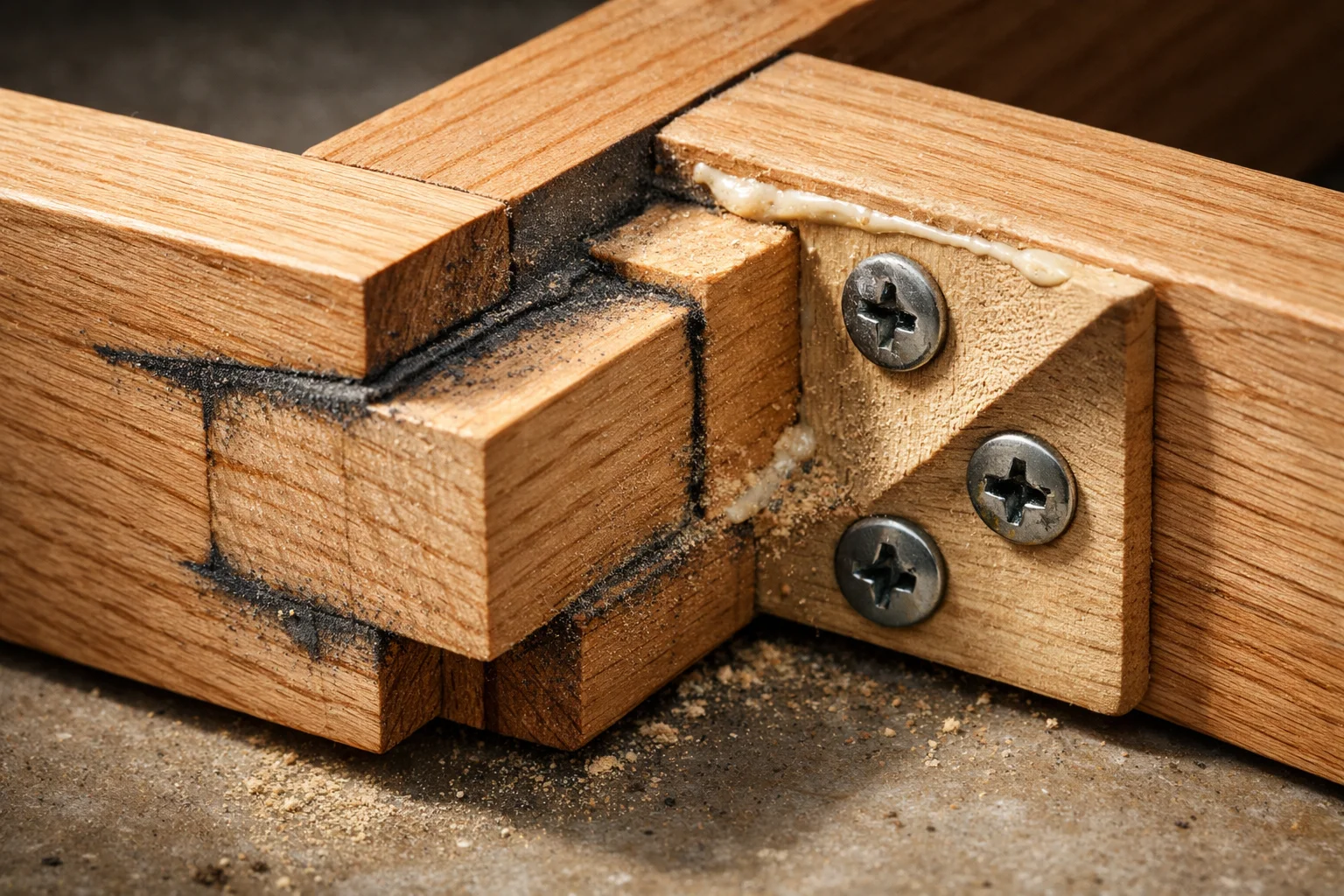
Introduction
I used to think a creaky sofa was just “broken in,” like it had earned the right to complain. After living with enough disappointing couches, I stopped treating noise as a personality trait and started treating it like a warning sign you can actually use while you shop.
When you hear squeaks, clicks, or a rubbing sound, something is moving that is supposed to be locked in place. That movement usually comes from joints working loose, staples shifting, wood flexing where it should not, or metal parts rubbing because they are not aligned or not supported well. In plain terms, the sofa is spending your body weight on tiny internal motions instead of spreading it through a solid structure.
The helpful part is that noise is testable in a showroom. If a floor model creaks under gentle use, it is not going to magically get quieter at home, it is going to get louder as things loosen up. I now treat silence as a durability feature, not a luxury.
When you try a sofa, do not just do the polite sit. I put my hands on the arms and gently shift my weight side to side, then I sit down firmly and stand up without using my hands, then I lean back and twist a little as if I were reaching for a drink on the table. If I can make it talk with normal movements, I assume the frame and joints are already moving against each other, and I move on.
You should also listen for where the sound seems to come from. A little leather or fabric rustle is normal, but a sound that feels like it is coming from inside the arms, the front rail under your knees, or the back corners is the kind that tends to mean structure, not upholstery. If the salesperson tries to brush it off as “just the floor model,” I ask to try a second copy of the same model on the sales floor, because a design that depends on luck is not one I want in my living room.
My goal with this guide is simple: help you spot the few build choices that actually predict whether a sofa will stay quiet and supportive, or turn into a squeaky, saggy regret. If you take nothing else from the introduction, take this: a silent frame is usually a strong frame, and noise is rarely harmless.
The "Friction Feedback Loop"
A creak is not harmless, it is usually the sound of two parts rubbing that should be clamped together. In a typical sofa frame, that means wood rubbing on wood, or a fastener shifting in its hole, and that rubbing is friction.The problem is that friction does not just make noise, it wears material away. It acts like sandpaper inside the joint, shaving off tiny bits each time you sit, shift, or stand up, which is why a sofa that creaks a little today often creaks more a few months later.
As that rubbing continues, the hole and the joint surfaces get looser, which increases wobble, which increases rubbing, which makes the creak louder. I think of it like a grinding transmission sound in a car, ignoring it does not freeze it in place, it accelerates the wear until something eventually cracks, splits, or pulls out.
The way I use this while shopping is simple. If I can trigger a creak repeatedly with the same motion, especially from the arms, the front edge under my thighs, or the back corners, I treat it as active wear happening in real time and I do not bargain with myself about it. I move on, or I ask to try another identical unit and do the same motions again, because I am trying to learn whether the design is stable, not whether I got lucky on one sample.
The Sound Diagnostic Chart
Not all noise means the sofa is doomed, but I do think you should treat sounds like a quick diagnostic while you are still in the store, when walking away is easy. What I listen for is the character of the sound, where it seems to come from, and whether I can trigger it on demand with the same simple movements.
If I hear a sharp little metallic click or ping right as I sit down, and it sounds like it is coming from the seat area rather than the arms or corners, I usually file that under “probably fixable.” That kind of ping is often a spring shifting inside a mounting clip, basically metal tapping metal when the load first hits.
In a showroom, I do not have the luxury of flipping the sofa over, so my practical move is to repeat the sit a few times in the same spot, then sit in the neighboring spot. If it pings in one specific place but the rest of the sofa feels solid and quiet when I twist and shift, I do not panic, but I do ask the salesperson what the return policy is if a minor noise turns into a bigger one at home, because you are still gambling a little.
If you already own the sofa and you are hearing that ping, the common home fix is simple enough: flip it and use silicone lubricant on the spring clips so the metal is not scraping. I avoid WD 40 for this because the smell can linger, and I do not want my living room to smell like a garage.
A groan is the sound that makes me stop shopping and start looking for another model. It is not a high squeak, it is a dull, woody rubbing sound when you shift your weight, and it often feels like it is coming from an arm, a back corner, or the front rail under your knees.
When I hear that groan, I assume something structural is moving that should not be moving, usually a joint that has started to fail. In plain terms, the glue bond has let go, the dowels or joint faces are no longer locked, and now they are grinding against each other every time the frame flexes.
The reason I take this so seriously is that it is not the kind of problem you can realistically fix without stripping upholstery and properly clamping and re gluing the joint. If a floor model is already groaning, I assume the design is either underbuilt for the loads it sees, or the joinery is not consistently strong, and either way you are buying future looseness.
Then there is the crunch, and this one is a hard no for me. If it sounds like stepping on dry leaves or snapping thin sticks when you sit, shift, or stand, I treat that as a fracture somewhere, like a split rail or plywood that is delaminating.
In the store, I do not try to “test through” a crunch to confirm it, because if something is actually cracking, you can make it worse with one extra aggressive sit. I simply get up, thank the salesperson, and move on, because even if it is “just this one floor sample,” the fact that it happened at all tells me the structure is not robust, and I do not want a sofa that is living that close to its limits.
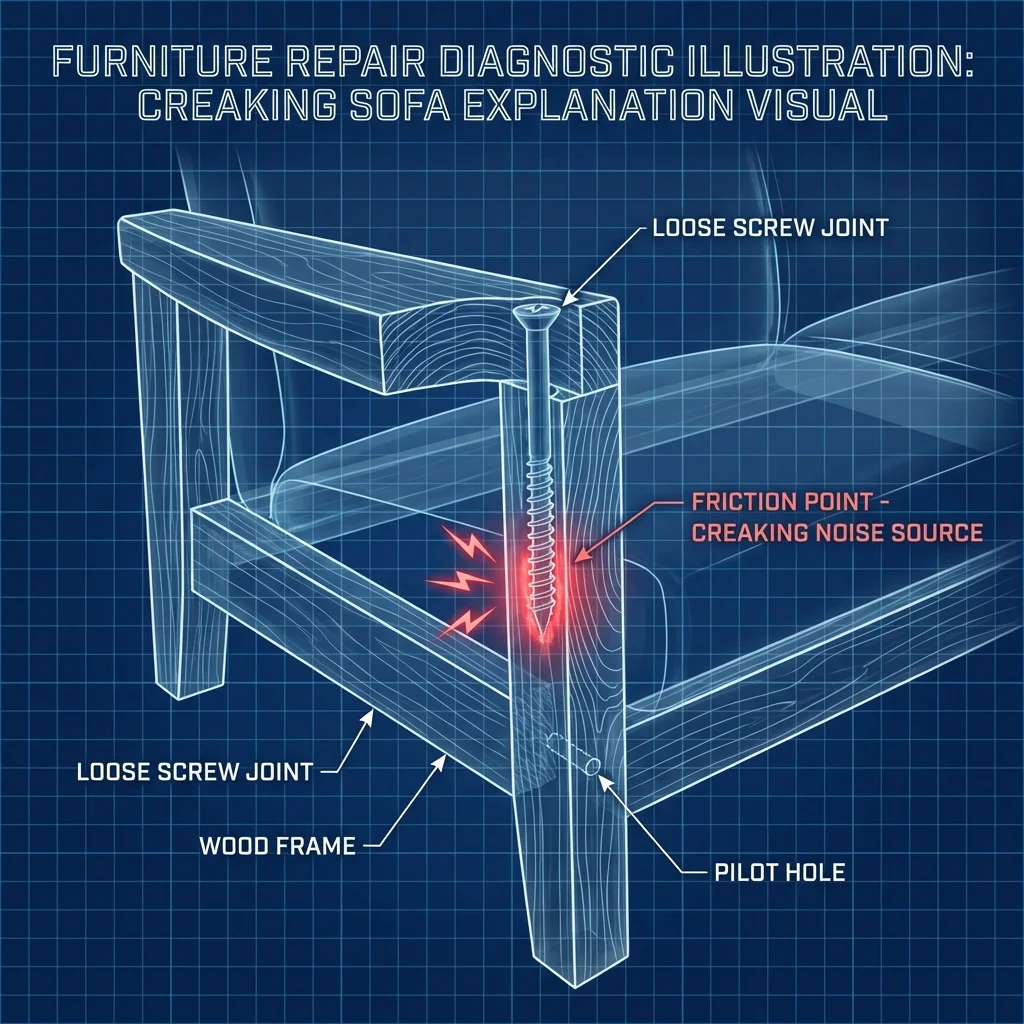
When I talk about a groan or a woody rub, this is the mental picture I use. A dowel joint is supposed to be boring, glued, and immobile, because the strength comes from the glue and the tight fit, not from the dowel wiggling around like a pin.
Once that glue bond lets go, the dowel is no longer a locked connection, it is a moving part. Every time you sit, the frame flexes a little, the dowel shifts inside its hole, and the rubbing does two things at once: it makes noise you can hear, and it shaves the wood you cannot see.
What makes this so useful as a shopper is that you can catch the early stage in a showroom without x ray vision. If you can plant your hands on one arm, push down gently, then do the same on the other arm, and you hear a repeatable rub that feels like it is coming from inside the arm or the back corner, I assume there is already movement at a joint, even if the sofa still feels “pretty solid” in a quick sit.
I also pay attention to whether the sound changes when I change the direction of load. A joint that only complains when you twist, like when you lean back and reach sideways, is still a joint that is moving, it just needs a sideways force to reveal it, and that is exactly the kind of force real life puts on a sofa every day.
If a salesperson tells you all sofas do this at first, I would not argue, I would just treat it as a sorting tool. I stay on the models that stay quiet when I press down on the arms, shift my hips side to side, and do a firm sit and stand, because silence under those basic moves usually means the joints are staying clamped instead of fretting themselves loose.
The “Green Wood” Villain
When a sofa loosens up and starts talking, the villain is often not “bad luck,” it is moisture content in the wood. I learned to take this seriously because it explains a very specific pattern, a sofa that felt tight in the store, then started creaking a few months into living in a normal, heated, air conditioned home.
If a manufacturer uses wood that still has too much moisture in it, often called green wood, it keeps drying after the sofa is built. As it dries, it shrinks, and it does not shrink politely in a way that helps your joints stay tight.
The practical problem is that shrinkage pulls the wood away from the glue line and away from whatever mechanical grip the joint had when it was assembled. Even if the joint was clamped well on day one, a tiny gap can open as the wood changes size, and once there is a gap, the joint can start to wiggle under load.
That wiggle is what turns into the creak. Gravity and daily use take over, the parts move against each other, and you get that woody rub that shows up when you shift your hips or lean back and reach sideways.
In a showroom, you cannot test moisture content directly, so I treat it as a question you ask and a set of clues you look for. I ask, “Is the frame wood kiln dried, and is it hardwood or softwood,” then I pause and see if the answer is specific or squishy. If you get a vague “it’s quality wood” with no mention of kiln dried framing, I assume you are not being protected from the shrinkage problem, you are being asked to trust marketing.
I also watch how the salesperson answers follow ups. If you ask, “Is the frame solid kiln dried hardwood, or is it a mix with engineered wood,” and they cannot tell you, I take that as a sign the store may not have good build transparency, which matters because hidden choices are where the long term problems live.
There is also a smell and feel test I use, and it is not scientific, but it has saved me from overconfidence. If you can get close to an exposed area under the sofa skirt or at the back, and the inside smells noticeably like fresh, wet lumber or a new construction site, I slow down and ask more questions, because that “green” smell can be a hint that things are still off gassing and drying out.
What you can do with your hands is check for early movement that green wood can hide at first. I put one hand on the arm and one hand on the back, then I gently rack the corner, not violently, just enough to feel whether the frame resists as one unit or whether there is a tiny delayed shift. A tight, well dried frame tends to feel like one piece, a frame that is going to open gaps later often feels quiet but slightly springy in the corner, like something is giving inside.

If you are ordering, not buying the floor model, I would use kiln dried framing as a filter, not a preference. You are trying to avoid a sofa that gets looser as it acclimates to your house, because once those gaps open inside upholstered joints, you do not get to tighten them back up with an Allen key.
The other reason I care is that shrinkage does not just create noise, it can sabotage otherwise decent joinery. A dowel and glue joint that would have stayed tight for years in stable, dry wood can start fretting if the surrounding wood shrinks and the glue line loses full contact, and then you are right back in that friction feedback loop you can hear.
If you want one simple shopping rule that is actually tied to this, it is to treat “kiln dried hardwood frame” as the baseline claim you want to hear clearly, and treat unexplained silence as a risk. A sofa can be quiet today and still be built with wet wood, so I do not let the quiet floor model override a vague materials story.
The Floor Model Test
If I am shopping and the floor model squeaks, I stop trying to talk myself into it and I walk away.That floor model has had an easy life compared to what you are about to do to it. It has mostly seen careful, upright sitting, and it has spent its time on a flat showroom floor in a controlled environment. If it is already squeaking under that kind of gentle use, something in the structure is already moving, and in my experience that usually means the joint was never properly locked in place in the first place.
When a squeak shows up this early, I assume one of two things is happening. Either the glue was applied poorly or not at all where it mattered, or the joint fit was sloppy enough that it is relying on staples or screws to do a job they cannot do forever. In both cases, the sofa is basically announcing that it is going to loosen faster once it is in your home and dealing with heavier daily loads, different humidity, and people flopping into the same “favorite spot” over and over.
In the store, the practical move is to make the squeak repeatable and localize it. I sit, stand, then press down on each arm, then I put my weight near the front edge of the seat and shift side to side. If the squeak shows up with normal motions and especially if it seems to come from the arms, front rail, or back corners, I treat that as a structural red flag, not an upholstery quirk.
If a salesperson tells you it is “just this floor one,” I do not debate, I verify. I ask if there is another identical unit I can test, even if it is in the back, because what I want to know is whether the model is consistently quiet or whether I am being asked to gamble on build variation. If they cannot produce another unit, or they discourage you from doing the same basic movements, I take that as useful information about how this purchase is going to feel after delivery if anything goes wrong.
I also do not let discounts hypnotize me here. A squeaky floor model is often a preview of the same weak point in the boxed version, and even if you are not buying the floor sample, you are still buying the design and the factory habits behind it. If it is failing silently in the showroom, it will fail loudly in your living room, and the time window can be shorter than you think, sometimes just a few months once the frame starts loosening and wearing at the joint.
Technical Summary: Noise Protocol
When I want to prevent noise before it starts, I filter hard for a kiln dried hardwood frame, and I want that said plainly, not hinted at with “select woods” or other foggy language. In the store, I ask it directly, then I ask them to show me where it is written on the spec tag or product sheet, because if it is truly part of the build, it is usually something they are willing to state clearly. If you cannot get a clear kiln dried hardwood answer, I treat the long term creak risk as higher, even if the floor model is quiet today.
For maintenance, I treat sharp little spring pings as the one noise category that can be genuinely minor, especially when it is localized to one seating spot and the rest of the frame stays dead quiet under twisting and arm pressing. If you already own the sofa and the ping is coming from the seat area, I would flip it and use a silicone lubricant on the spring clips once a year so the metal is not scraping under load. In the showroom you cannot do that, but you can use the ping as a prompt to get serious about the return window, because a harmless ping and an early looseness problem can sound similar at first.
For diagnosis, I draw a bright line between fixable irritation and structural warning. If the frame is making a groan, or especially a crunch, I stop using it and I stop shopping that model, because those sounds usually mean the structure is already moving at a joint or breaking at a rail, and using it just accelerates the damage. I know it feels dramatic to treat a sound like an emergency, but in my experience the sofa is not being fussy, it is telling you the strength is already being spent.
Explore Technical Reference
Single Slab Foam: Why Cheap Cushions Bottom Out
Understanding why uniform foam blocks fail where layered construction succeeds. The physics of linear compression and how single slab construction creates bottoming-out problems.
Analyze Details →
Latex vs. Polyurethane: Rubber Trees vs. Oil Wells
Understanding the fundamental differences between natural rubber foam and petroleum-based foam. Why latex outlasts polyurethane by decades and when the premium price is justified.
Analyze Details →