Understanding Furniture Return Policies: The Hidden Fees

Introduction
We have been conditioned by Zappos and Amazon to believe that returning a product is effortless. If the shoes don’t fit, put them back in the box and print a free label. This mental model is dangerous when applied to furniture. Sofas are not shoes, the logistics of moving 250lb objects makes free returns physically impossible.
When I walk into a showroom now, I assume I am effectively marrying the thing. Not forever, but long enough that a sloppy choice will cost me real money and real hassle, even if the salesperson says I have “options.”
You need to treat the return policy as part of the product, not a safety net. Before you sit on anything, ask what happens if you hate it on day three, and get the answer in writing on the receipt or the order confirmation. I look for plain language about who pays for pickup, whether delivery fees are refundable, whether there is a restocking fee, and whether “returns” actually means store credit only.
If the sofa is custom order, assume you cannot return it. Even “semi custom” options like choosing fabric, changing leg finish, or swapping cushion fill often turn a returnable sofa into a final sale sofa. I have watched people get surprised by this because they thought a fabric choice was just a detail, and the store treated it as a custom build.
You also want to separate comfort from commitment. In the store, you are testing whether the design works for your body, but you are also testing whether the company will still be helpful after they have your money. The fastest signal is how clearly they explain the unsexy stuff like delivery, damage claims, and warranty steps.
If you do one thing today that saves you later, do this: ask how a damaged or defective sofa is handled, and how fast you have to report it. Many stores have a short inspection window, so you need to plan to open the packaging, check the frame, check the seams, and sit on it right away, not “when you get around to it.”
This guide is written with that reality in mind. I am going to focus on what you can actually check in a showroom, what you should ask before you pay, and how to avoid the common traps that only show up after the first few months of living with a sofa.
The 30% Exit Tax
I almost returned a $2,000 sofa on a casual recommendation. Then I did the math. Return shipping ($200) + Restocking Fee ($400) meant I would lose $600 just to get the sofa out of my house. The "Easy Return" is often a 30% penalty on your refund.That experience is why I now treat the return policy like a price tag you only see if you panic. When a store says “easy returns,” I translate it into, “easy for them, expensive for you,” until they prove otherwise in writing.
In a showroom, I ask them to walk me through a hypothetical return using the exact sofa I am looking at. I do not accept generalities like “it depends,” because it usually depends in the direction that costs you money.
The first thing I look for is whether delivery and pickup are separate charges that you never get back. A lot of policies will refund the sofa itself but keep the original delivery fee, then charge you again to take it away, which turns “I returned it” into “I paid for two truck trips and got nothing.”
Then I ask what “restocking” actually means. Sometimes it is a flat percentage, sometimes it is waived only if the sofa is unopened, which is a useless condition for a sofa because you cannot evaluate comfort through cardboard.
I also watch for the word “convenience,” because it is often code for third party delivery. If a third party brings it, the retailer can claim the delivery fee is non refundable, and they can also push damage claims onto a narrow reporting window that starts the moment the truck leaves.
You can protect yourself by getting a real, itemized example before you buy. I ask, “If I return this exact sofa after delivery, what would I get back, in dollars, if it arrived in perfect condition,” and I wait while they calculate it. If they will not calculate it, I assume the worst.
If you are buying online, you can do the same thing by forcing the numbers onto paper. I look for a returns page that states the pickup fee, the restocking fee, and whether the original shipping is refunded, and I screenshot it because those pages change.
Once you know the exit tax, you can make a calmer decision in the showroom. If returning will cost you hundreds, you should behave like someone doing a careful fitting, not a casual browsing session.
That means you sit longer than feels polite, and you test like you live there. I plant myself in the corner seat if it is a sectional, I slouch the way I actually slouch, and I stand up and sit down a few times to see if the cushions bounce back or if they already feel tired.
If the store offers a “comfort guarantee,” I ask whether it is a refund, an exchange, or store credit, and whether fees still apply. A guarantee that still charges pickup and restocking is not really a guarantee, it is just permission to pay for another round.
When the exit tax is high, I also stop treating upgrades as harmless. Selecting a different fabric, changing the cushion fill, or choosing a special order configuration can quietly flip the policy from returnable to final sale, even when the base model on the floor has a return window.
The practical move is to ask for the return policy printed on your specific invoice, not a brochure. I want the exact fees and the exact classification of that sofa, as sold, so there is no argument later about what I thought I was buying.
If you do all this and the return terms still feel punishing, I do not automatically walk away, but I slow down. A sofa can still be worth buying with strict returns, but only if you are confident in your comfort test, your measurements, and the company’s track record for fixing issues instead of deflecting them.
The Three Fee Layers
Retailers rarely itemize these fees in the large print. They are buried in the Terms & Conditions.
I think of it as three separate layers of cost that can stack on top of each other, even when the salesperson keeps using one friendly phrase like “returns accepted.” If you only hear that phrase, you can still end up paying for a lot of “not the sofa” costs that never come back to you.
The first layer is the delivery you paid to get it to your house in the first place. Many stores treat that as a service you already consumed, so even if they refund the sofa, they keep the delivery charge. When I am in the showroom, I ask them to point to the exact sentence that says whether delivery is refundable, because if they answer from memory, it often turns into a surprise later.
The second layer is the pickup or return transport fee. This is the one that stings because it shows up when you are already unhappy and want the thing gone. I ask, “If I return it, who physically arranges pickup, and what is the dollar amount,” because “you can ship it back” is meaningless for a sofa unless they are actually scheduling a truck.
The third layer is the restocking fee, and this is where language gets slippery. Sometimes it is framed as a percentage, sometimes it is presented as a “processing” charge, and sometimes it only applies if the item is opened, which is basically always if you actually tried the sofa. I ask whether restocking is calculated on the pre tax price, the post discount price, or the original MSRP, because I have seen policies that quietly choose the option that costs you the most.
When you add those layers up, you get your real worst case price for being wrong. The practical way to handle this in a showroom is to make them do one complete pretend return on paper while you are standing there, using your exact out the door total. I want to see the refund amount after delivery, after pickup, after restocking, and I want to see whether tax is refunded, because some stores refund product tax but not service tax, and some only refund tax if the product line item is refunded.
I also watch for the fourth “ghost fee” that is not always advertised as a fee, which is time pressure. If the policy says you must report a return request within a short window after delivery, the three layers become more dangerous because you lose the chance to live with the sofa long enough to notice problems like seat sag, shifting cushions, or a chaise that is slightly the wrong depth for your body.
If you want one sentence to use that gets you real answers, this is what I say: “Assuming it arrives perfect, and I just do not like it, what is the exact total I would lose in fees if you pick it up from my home.” If they cannot answer that cleanly, I assume the fee layers are there and I treat the sofa like a final sale item, even if the policy technically says it is returnable.
Once you understand the fee layers, you can use them as leverage while you are still shopping. If the store wants you to accept expensive exit terms, I push back by asking for something in return, like a longer inspection window for damage claims, a written comfort exchange option, or at least a clear promise that a manufacturing defect will be handled as a repair or replacement without me paying delivery again.
The main thing I want you to take away is that “returnable” is not a yes or no question with sofas. It is a math problem, and you can force the math to show itself before you buy.
1. Return Shipping (The Hidden Freight)
“Free shipping” is usually a one way offer. The cost to get a sofa from a warehouse to your living room is real, and when a retailer says it is free, I assume it is simply baked into the price you are already paying.
What catches people is the return trip. When you send shoes back, you hand a box to a carrier. With a sofa, you are not dropping it at UPS, you are dealing with freight.
In practical terms, a return often means scheduling a freight pickup window, having the sofa accessible for a crew, and sometimes having it wrapped or protected to the carrier’s standards. If you threw away the packaging or you live up stairs, that can change the cost and the hassle fast.
In the showroom, I ask a very literal question: “If I return it, do you book the freight pickup, or do I have to find a carrier.” If the answer is “you can ship it back,” I stop them and ask, “With what company, and who pays them.”
I also ask where the sofa is going back to, because returning to a local store is a different situation than returning to a distant warehouse. If it is going to a warehouse, I assume it is freight, and I assume the pickup fee will be meaningful even if they keep calling it “return shipping.”
If you want an answer you can actually use, you need the dollar amount and the conditions. I ask, “What is the pickup fee from my ZIP code, and does it change if it’s on the second floor, or if I do not have the original box.”
Pay attention to whether they require you to re pack it. Some companies will only pick up if it is back in the original packaging, which is not realistic for most people once a sofa is unboxed and assembled. If that is the policy, I treat the return option as mostly theoretical.
There is also a quiet difference between threshold pickup and in home pickup. Threshold means they may only take it from your curb or garage, which turns “returnable” into “you need extra help” if you cannot move a heavy sofa yourself.
If you are shopping online, I look for the policy language that mentions “freight,” “LTL,” “scheduled pickup,” or “appointment delivery,” because those words usually signal that the return will not be a simple label. When the policy is vague, I email support and ask them to confirm, in writing, who pays for the freight carrier and what the typical range is for my area, then I keep that email.
The reason I push so hard on this is simple. The hidden freight is what turns a mild disappointment into a stressful, expensive project, and you want to know that before you fall in love with the look of a sofa on a showroom floor.
2. Restocking Fees (The Depreciation)
Unlike a pair of shoes, a returned sofa cannot be sold as new. It has been unpacked, sat on, and exposed to a real home, even if you treated it gently.
That reality is why restocking fees exist, and why I stop trusting the word “returnable” the moment I see one. In furniture, “restocking” is basically depreciation, it is the store charging you for the fact that your sofa instantly became used the second it crossed your threshold.
In practice, I see 15 to 25 percent as the common range. That sounds abstract until you do the math on a normal purchase, because a 20 percent restocking fee on a $3,000 sectional is $600, and that is before pickup fees or non refundable delivery.
In a showroom, I ask one question that forces clarity: “What is the restocking fee on this exact sofa, as a percentage and in dollars, if I return it after delivery in like new condition.” If they only answer in percentages, I make them convert it to dollars using the total I am actually about to pay.
Then I get picky about what the percentage is applied to, because this is where policies quietly sting. I ask whether the restocking fee is based on the price after discounts, or the original price before promotions, and whether it is calculated before or after tax.
I also ask what conditions trigger the fee, because some stores use language like “unopened” or “original packaging.” A sofa you have not opened is a sofa you have not actually tested, so I treat any “unopened only” waiver as marketing, not a real safety net.
If you are trying to compare two stores, I would rather have a slightly higher sticker price with a clearly written, lower restocking fee than a “sale” price with slippery return language. The cheapest sofa is not cheaper if the first time you sit on it at home you realize the seat depth is wrong and it costs you hundreds to undo the mistake.
The final move I make before paying is to get the fee printed on my order confirmation, tied to the specific SKU and configuration I am buying. If the salesperson says, “It’s usually 20 percent,” I translate that to, “It could be 25 percent when I need it most,” unless it is written down where you can point to it later.
3. The Packaging Trap (The “Original Box” Clause)
“Must be returned in original packaging” sounds reasonable until you picture what unpacking a sofa actually looks like in a real home. To get it out, you usually cut the plastic, tear or crush the foam blocks, and destroy the cardboard corners that kept the arms from getting dented in transit.
The part that makes me roll my eyes is when the cushions were vacuum packed. Once that seal is broken, you are not recreating the factory tight bundle again, no matter how many trash bags and tape rolls you use. If the policy is strict about “original packaging,” the return option can become a technicality you cannot realistically meet.
What happens next is the penalty, and it shows up in two flavors. Sometimes they reject the return outright because it is “not in original packaging.” Other times they accept it but hit you with a repackaging fee, and I have seen that be $100 or more, on top of pickup and restocking.
In the showroom, I ask one blunt question before I buy: “If I unpack it like a normal person, cut the plastic, break down the cardboard, and the cushions expand, will you still take it back.” I want the answer to be yes, and I want it tied to the specific item on my invoice, not a vague “generally.”
If they insist on original packaging, I push for the details that matter. I ask what they mean by packaging, because sometimes they only mean the main carton and sometimes they mean every insert, strap, and corner block. I also ask whether photos of the packaging at delivery help, because some companies only care that you can protect it for transit, not that you can recreate the exact factory wrap.
If you decide to buy anyway, you need a plan before the truck leaves. I clear a spot in my garage or a spare room and I keep every piece of cardboard, foam, and plastic until I am sure the sofa is a keeper, because once it goes out with the recycling you lose leverage.
I also take quick photos while unboxing, including the condition of the carton and the way the sofa was packed. If a return turns into an argument later, those pictures help you show you did not abuse it, you just opened it.
The simplest rule I follow is this: if a store leans hard on an “original box” clause, I treat the return policy as fragile. That does not always mean you should walk away, but it means you should be extra confident about your comfort test and your measurements, because the exit door might be narrower than it looks.
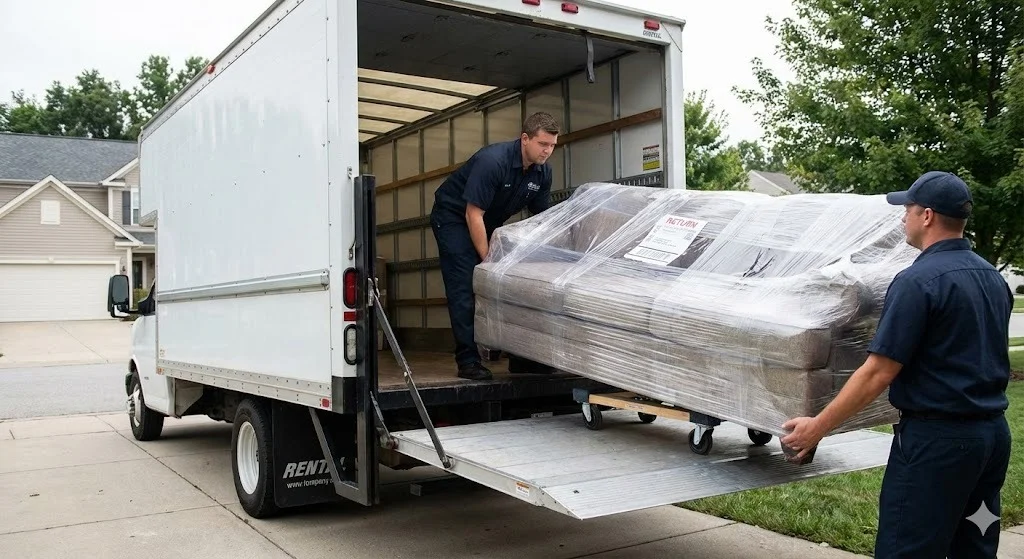
That photo is the exact moment I try to prevent in my own house, the box is already chewed up, the labels are shouting terms you did not read, and now you are trying to reverse time.
When a policy says “original packaging,” I assume they mean “in resellable condition,” not “a pile of flattened cardboard in your recycling bin.” The fastest way to protect yourself is to treat the packaging like part of the sofa until the return window ends, because that is how the retailer is going to treat it.
If you are in a showroom, this is where I get very literal. I ask them to describe what the packaging looks like for the exact model, and what counts as “destroyed” in their return system, because some places consider a torn box normal and others use any damage as an excuse to deny the return.
At home, I unbox like I might have to repack. I cut tape carefully, I do not shred the carton seams, and I keep the corner blocks, straps, and foam sleeves together in one place so I am not searching for them later when I am stressed.
I also avoid sliding the sofa across the floor “just to test it,” because even a small scuff can become the reason they call it used and non returnable. If I have to move it, I lift it with a second person, and I keep the feet off hard surfaces until I am sure I am keeping it.
If you are buying from a brand that ships in multiple cartons, like arms in one box and bases in another, I label the boxes with a marker as I open them. When a return pickup happens, the crew is not going to help you puzzle it out, they will just mark it “missing packaging” and leave you with the problem.
The other practical move is documentation. I take a few quick photos of every side of the cartons before opening, then a few of the packing method once the sofa is visible, because if they claim “improper repackaging” later, you can show what you started with and that you did not abuse the product.
If you live in an apartment or have no storage, you still have options, but you have to decide before delivery day. I have asked friends for temporary garage space, and I have also kept flattened cartons behind a sofa and foam inserts under a bed, because the cost of inconvenience is usually lower than the cost of a rejected return.
The uncomfortable truth is that “do not destroy the box” is not a cute tip, it is leverage. If you keep the packaging intact, you remove one of the easiest reasons a company has to say no when you need them to say yes.
Exceptions to the Rule
Even with all my paranoia about return policies, I have learned there are a few situations where the usual “assume you are stuck with it” rule can soften. The trick is that these exceptions are only real if you can confirm them in writing for your exact order, not just hear them as a sales pitch.
The first exception is when the store is clearly set up to resell returned floor inventory and they treat returns as part of their normal business. You can usually feel this in the showroom because they will have a visible clearance area, obvious “open box” tags, and a manager who can explain the process without disappearing into the back room.
When I suspect I am in one of these places, I ask a different question than “is it returnable.” I ask, “If I return this after delivery, do you resell it locally as open box, and is that why you can keep the fees low.” If they say yes and they show you a simple, written policy that matches what they just said out loud, that is one of the rare times I start believing the return door is actually usable.
Another exception is a true comfort exchange program that is designed specifically for “I hate how it sits,” not damage and not defects. The reason I treat this separately is that comfort complaints are the most common regret, and also the easiest for a retailer to dismiss as “personal preference” once the sofa is in your house.
If a store claims they have this, I ask you to do what I do and pin them down on the exact form of the remedy. I want to know whether they swap the entire sofa, swap only the cushions, or let you change the cushion fill, because those are three very different outcomes in cost and hassle.
I also ask whether the exchange resets the clock or ends it. A lot of programs give you one bite at the apple, and if the replacement still does not work, you are done, so I want to know that before I treat it like a safety net.
A third exception is when the “return” is really a repair path and the company is unusually good at it. I have had better outcomes with companies that keep replacement parts in stock, like legs, cushion inserts, slipcovers, and even sectional connectors, because the fastest way to solve many problems is not a pickup and refund, it is getting the correct part to your door.
In a showroom, you can test whether this is real by asking, “If a seat cushion goes soft early, do you replace just the insert, and do you stock that insert for this model.” If they act confused or they say everything goes through a long “claim review” with no clarity, I assume the repair path is going to be slow and frustrating when you need it.
The most important exception, and the one people misunderstand the most, is defects versus dissatisfaction. A lot of strict return policies still allow a strong remedy for manufacturing defects, but only if you report fast and document well.
This is where I stop talking about “returns” entirely and talk about the inspection window. If you want to protect yourself, plan delivery day like it is a checklist day, even if the store does not encourage that mindset.
I schedule delivery for a day when you can be home, in decent light, with ten quiet minutes to look at the sofa before the crew leaves. I look for obvious frame racking by gently lifting one front corner an inch and seeing if the whole piece moves as one unit, or if it twists and complains.
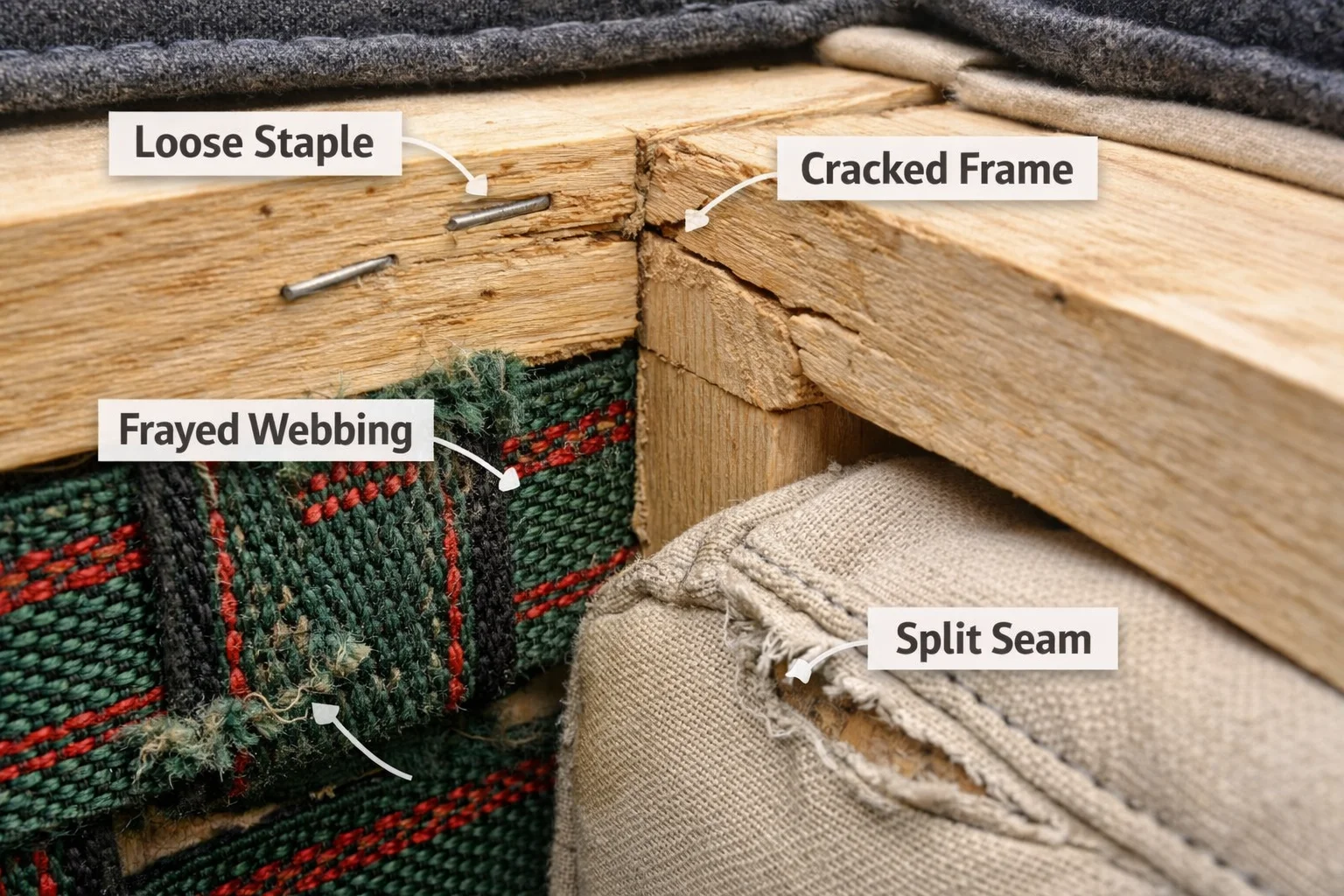
I run my hand along the seams and piping where I know stress shows up first, like the front edge of the seat and the inside corners. If something is already puckering, separating, or obviously crooked, I take photos immediately, because later it becomes “wear” instead of “arrival condition.”
If the sofa is modular or a sectional, I check the connectors right away. A surprising number of problems are actually “it will not lock together properly,” and if you wait a week to notice, you can get stuck in a blame loop about setup versus defect.
There is also an exception that sounds small but matters a lot, and that is a store that will waive fees if you convert a return into an exchange on the spot. Some retailers would rather keep the sale than fight about a refund, so they will quietly offer an accommodation if you are calm, decisive, and ready to pick something else.
If you want to use this, you cannot go in angry and vague. I go in with photos, my invoice, and one sentence: “I do not want a fight, I want a workable solution, what can you do if I exchange this for something else today.” If they can waive pickup or restocking in that scenario, you just found the rare case where “options” might actually mean something.
The final exception is boring but real, and it is credit card leverage. I do not rely on chargebacks as a shopping strategy, but if a retailer refuses to honor the written terms or delivers something materially different than what you bought, paying with a credit card can give you a dispute process that at least forces a response.
If you want to understand that process before you need it, you can read the Consumer Financial Protection Bureau’s plain language guide here: How to dispute a credit card charge. I treat it like insurance, not like permission to buy impulsively.
All of these exceptions have the same catch. They only help you if you slow down enough to get the terms attached to your exact sofa, your exact configuration, and your exact delivery method.
When I hear myself thinking, “Well, they said I could probably return it,” I stop. “Probably” is how you end up paying the exit tax anyway, just with extra phone calls.
The “Defect” Loophole
This is the loophole that sounds like a safety net, and it can be, but only if you treat it like an evidence problem. If a sofa arrives damaged or structurally wrong, many stores will waive the usual return fees, but the moment you cannot clearly prove the issue was there on arrival, they start treating it like normal wear, misuse, or a comfort complaint.
I assume the burden of proof is on you, even when the policy does not say that in plain language. The practical move is to document like you are going to have to convince a skeptical stranger, not like you are sending a casual text to a friend.
On delivery day, I take photos of the outside of every box before it is opened, including any crushed corners, holes, water staining, or retaped seams. Then I photograph the serial number tags and the law label on the sofa itself, because when customer service asks, “Which unit was this,” you do not want to be guessing.
Once the packaging is off, I take close photos of anything that looks off, even if I am not sure it “counts.” I am looking for torn fabric on the underside, cracked or split wood, loose legs, bent brackets, missing hardware, uneven seat platforms, crooked seams that are clearly not just the cover settling, and any section that rocks or twists when it should feel solid.
I also take one or two wide shots that show the whole sofa in the room, because close ups without context are easier for a retailer to wave away. If a chaise is visibly shorter on one side, a wide shot makes that obvious in a way a tight photo of a seam never will.
If you want to protect yourself, you also need proof of the box condition, not just the sofa condition. I have seen damage claims stall because the retailer says, “The carton looked fine, so this must have happened after delivery,” and the only way out of that argument is having your own photos that show the carton was not fine.
When you find a real defect, speed matters. I do not wait to see if it “settles,” because the longer you sit on it, the easier it is for them to say you caused it. I report it immediately, and I put it in writing, even if I also call, because phone conversations have a way of turning into “we never said that.”
The other trap inside this loophole is that many retailers will push hard for a technician visit and a repair, not a replacement. That is not always evil, sometimes a simple fix really is the fastest outcome, but you need to decide what you will accept before you are tired of arguing.
If the damage is cosmetic and you can live with a professional repair, I still make sure the work is described clearly and scheduled promptly, and I ask what happens if the repair is not successful. I want that answer before anyone touches the sofa, because a failed repair can turn into, “We attempted service, claim closed.”
If the issue feels structural to me, like the frame is twisted, the seat platform is uneven, the sectional connectors will not align, or a leg mount is stripped, I do not agree to a patch job as the first and only solution. I tell them I am not comfortable with a structural repair on a brand new piece, and I ask for a replacement of the affected section or the whole unit, depending on how the sofa is built.
In the showroom, you can actually pre negotiate this by asking one direct question that most people skip: “If it arrives with a manufacturing defect, do you repair it, replace it, or do I get to choose.” If they say the technician decides, I assume you will be steered toward the cheapest option for them.
What I want you to take from this section is simple. A defect policy only protects you if you can prove the defect, prove the identity of the unit, and report it fast enough that they cannot call it wear. If you treat delivery day like a quick inspection and documentation session, you give yourself leverage when you need it most.
The Custom Trap
The moment you customize anything, even something that feels minor like picking a specific fabric or a leg finish, a lot of retailers quietly flip the order into Final Sale. I have seen people assume those choices are just “options,” then find out later the store treats them like a one off product they cannot put back on the floor.
The logic is simple and it is not in your favor. If you choose the exact fabric and finish, the retailer cannot easily resell that exact combination, so they solve their risk by pushing it onto you.
What this means in practice is zero recourse if you simply do not like the comfort. If the seat feels firmer at home, the back hits your shoulders wrong, or the chaise depth is annoying after a week, none of that counts as a defect, and a Final Sale tag means you own the mistake.
In a showroom, I do not let “custom” stay vague. I ask, “If I pick this fabric, is my order still returnable, or does it become final sale,” and I make them answer it for the exact SKU and the exact fabric grade on my quote.
Then I ask them to show me where it says that, on the invoice or the order screen, not in a general policy PDF. If the salesperson says it is “standard,” I treat that as a warning sign that the rule will be enforced when it hurts you most.
If you still want the custom fabric, I try to separate the risky decision from the irreversible one. I spend my time testing the comfort on the exact frame and cushion build, and I ask whether the floor model uses the same cushion fill and the same seat construction as the one I am ordering, because sometimes the thing you sat on is not actually the thing you are buying.
I also ask about cancelation and changes, because custom orders often lock fast. The question I use is, “How long do I have to change my mind on the fabric or cancel the order without penalty,” and I want the answer in writing since “we can probably edit it” tends to turn into “it already went into production.”
If you hear “final sale” and you are not one hundred percent confident, my move is to push for a safer version of the same purchase. Sometimes you can choose a stocked fabric, a standard leg, or a pre configured version that keeps a return window, even if the palette is smaller.
If they cannot offer that, I treat the purchase like a no return purchase and I act accordingly. I sit longer, I measure more carefully, and I assume that any comfort regret will be mine to live with, not theirs to solve.
The “Store Credit” Handcuff
The "Store Credit" Handcuff
Some "Friendly" return policies offer free exchanges but no refunds. They give you Store Credit. If you hated the quality of the first sofa, you are now trapped in that retailer's ecosystem, forced to spend your $2,000 on more products from the same brand you just rejected.Store credit is the trap that feels generous until you realize it removes your ability to leave. If the first sofa showed you sloppy stitching, lumpy cushions, or a frame that already feels loose, store credit is not a remedy, it is a requirement to keep shopping in the same place that disappointed you.
When I hear “no problem, you can exchange it,” I immediately translate that into a different question, which is, “Can I get my money back to my original payment method, yes or no.” If the answer is no, I treat the entire purchase like it has a one way door, even if they keep calling it a “return.”
In a showroom, I ask them to define the word “return” on the spot, because salespeople will sometimes use “return” to mean “store credit exchange,” and you will not notice the substitution until you are angry at home. I also ask whether the store credit includes taxes and delivery, because a lot of “credits” quietly exclude the parts of the bill that were most painful, like white glove delivery, assembly, and pickup.
Then I get specific about how the credit works over time, because this is where people get stuck. I ask whether the credit expires, whether it can be split across multiple purchases, and whether it can be used online and in store, since some retailers limit credit to one channel or one location.
I also ask whether the credit is issued for the amount you paid or the amount after fees. Many policies refund the sofa line item as credit but still keep the delivery charge, still charge you for pickup, and still take restocking, so you end up with a smaller credit than you expected and a bigger mess than you planned.
If you want one sentence that cuts through the friendliness, this is what I use: “If I return this, will I see a refund on my card, or will I only have a store credit.” I say it calmly and I wait for a clean answer, because any waffling usually means it is credit.
The next move is to look at the price ladder inside that store. Store credit hurts the most when the retailer’s good stuff lives above your budget, so your “exchange” becomes an upsell. If you bought a $2,000 sofa and the next tier that is actually built better is $3,500, the policy is basically forcing you to pay extra to escape the original mistake.
So while you are still standing there, I would have you do a quick reality check. You look around and identify two or three other sofas you would genuinely be willing to own if the first one fails, not just tolerate. If you cannot find them, store credit is especially dangerous, because it means the exchange path ends with you settling.
There is also a psychological trap I have fallen into, which is using store credit to chase the sunk cost. You start thinking, “I have to get something out of this,” and you end up buying accessories, cheaper chairs, or a rug you did not plan to buy, just to burn the credit. That is how a bad sofa purchase turns into a whole collection of mediocre purchases.
If a store credit policy is the only option, I try to negotiate before I buy, not after. I ask whether they can put a true refund exception in writing if the sofa arrives with repeated issues, like multiple failed repairs or a replacement that is also defective. If they will not even discuss that, I treat the policy as a signal about how they behave when things go wrong.
I also protect myself by controlling the payment method. If I am not getting a real refund policy, I am even less willing to use financing tied to the store, because it can complicate timing and leverage if you end up in a dispute. I prefer a normal credit card because it keeps the transaction simple and keeps pressure on the retailer to resolve problems cleanly.
The key is that store credit is not automatically evil, it is just not a return. If you love the retailer, trust their quality, and you are confident you would happily swap into another model they carry, it can be fine.
If you are buying from a place you are not already loyal to, or you are already seeing little red flags in build quality on the floor, store credit is a handcuff. In that case, I would rather buy from somewhere that will give me my money back, even if the sticker price is a bit higher, because freedom to walk away is part of what you are paying for.
The Try-at-Home Myth
The idea that you can use your living room like a fitting room sounds modern and convenient, but with sofas it is usually a money leak. The moment the piece crosses your threshold, the return stops being a simple preference decision and becomes a logistics project with fees attached.
I have learned to treat “try it at home” marketing like a dare to ignore the boring work up front. The store is basically betting you will underestimate how annoying it is to schedule a pickup, keep the packaging, protect the sofa from scuffs, and then watch a big chunk of your refund disappear into delivery, pickup, and restocking.
When I hear someone say, “We can always return it if we do not like it,” I translate that into, “We are about to pay tuition.” If you lose around $600 on a failed return, that is not a rounding error, that is a budget that could have made you much more confident before you bought.
Instead of gambling on a return, I would rather spend that same money on getting to the right answer before delivery day. Ten rides to local showrooms is not a cute comparison, it is a real strategy, because comfort is easier to judge when you have sat on ten different seat depths and back angles in one afternoon.
That same $600 can also buy you something most people skip, which is outside eyes. If you have a friend who is picky about furniture, or even just someone tall or heavy who will stress test cushions differently than you, bringing them to a showroom is often more valuable than any return policy.
And yes, you can spend a little of it on tools, but only if the tools help you make a decision in the store. I am not talking about fancy gadgets, I am talking about the kind of measuring and checking that keeps you from buying the wrong scale of sofa, then paying to undo it.
Here is the hard truth I had to accept: if your plan depends on returning a sofa, you are already planning to be disappointed. The more rational plan is to shop like returns are painful, because they usually are, then be pleasantly surprised if the policy turns out to be genuinely fair.
So when a brand pushes “try at home,” I do not argue with them. I just ask for the numbers in writing, then I do a calmer version of the work in advance, more showroom time, more sitting, more measuring, and more questions that force specifics.
If you do that, you stop needing your house to be a testing lab. Your house goes back to being where you enjoy the sofa, not where you discover that the seat depth is wrong and the exit costs hundreds.
Decision Framework: The Return Policy Audit
Before I let myself get excited about a sofa, I do a quick return policy audit the same way I would check a parking sign before leaving my car. I go to the retailer’s “Returns” page and I look for four variables that tell me whether “returnable” is real or just a word.The first variable is shipping, and I read it as, “Who pays to move this big object if I change my mind.” If return shipping is free and they actually schedule pickup, that is rare and meaningful. If it is deducted from your refund, or it says you are responsible for freight, I treat the return as expensive even if the window looks generous.
The second variable is restocking, because this is the built in penalty for being wrong. If there is a percentage fee, I translate it into dollars using the total you are about to pay, and I decide whether you would still feel okay losing that amount just to undo the purchase. If the policy is vague about how it is calculated, I assume it will be calculated in the way that costs you more.
The third variable is packaging, and I look for any language that makes eligibility depend on the “original box” or “original packaging.” If they require it, you need to decide right now whether you can realistically store that packaging for the full return window, and whether you are willing to unbox like you might have to repack. If you cannot store it, the policy might technically exist while being practically unusable.
The fourth variable is the refund method, because a “return” that becomes store credit is not an exit, it is a transfer. If the policy says store credit only, I mentally move that store into the category of places I buy from only when I am already confident in the brand, the model, and the comfort.
My rule of thumb is simple and it has saved me from a lot of rationalizing. I assume no returns, and I buy only when I can picture living with that exact sofa for ten years without needing a policy to rescue me. When the terms turn out to be better than that, I treat it as a bonus, not the plan.
Explore Technical Reference
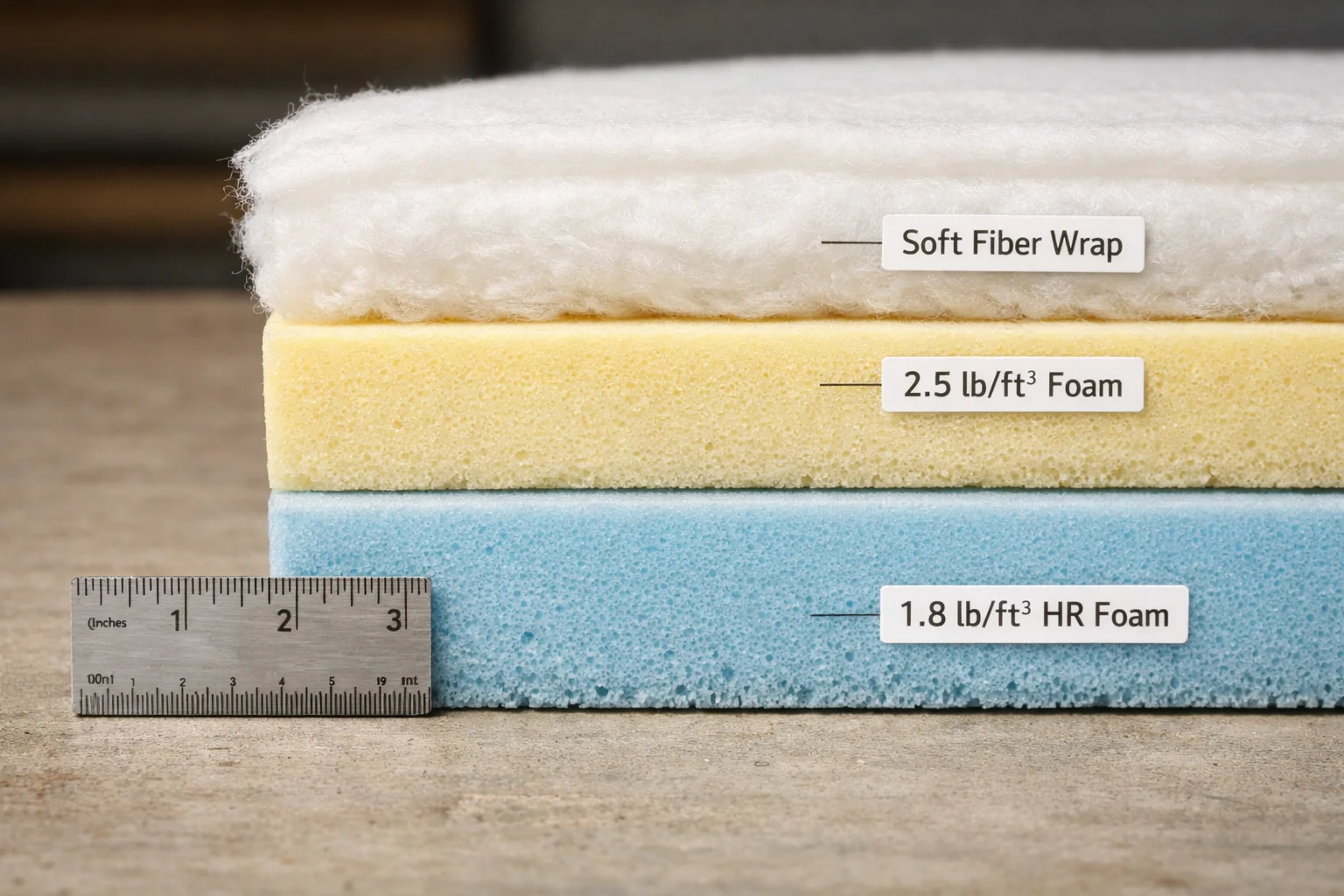
Custom vs Stock Sofas: Understanding the Patience Tax
Why estimated lead times rarely prove accurate. Understanding the risks of non-returnable custom orders versus the flexibility of stock items.
Analyze Details →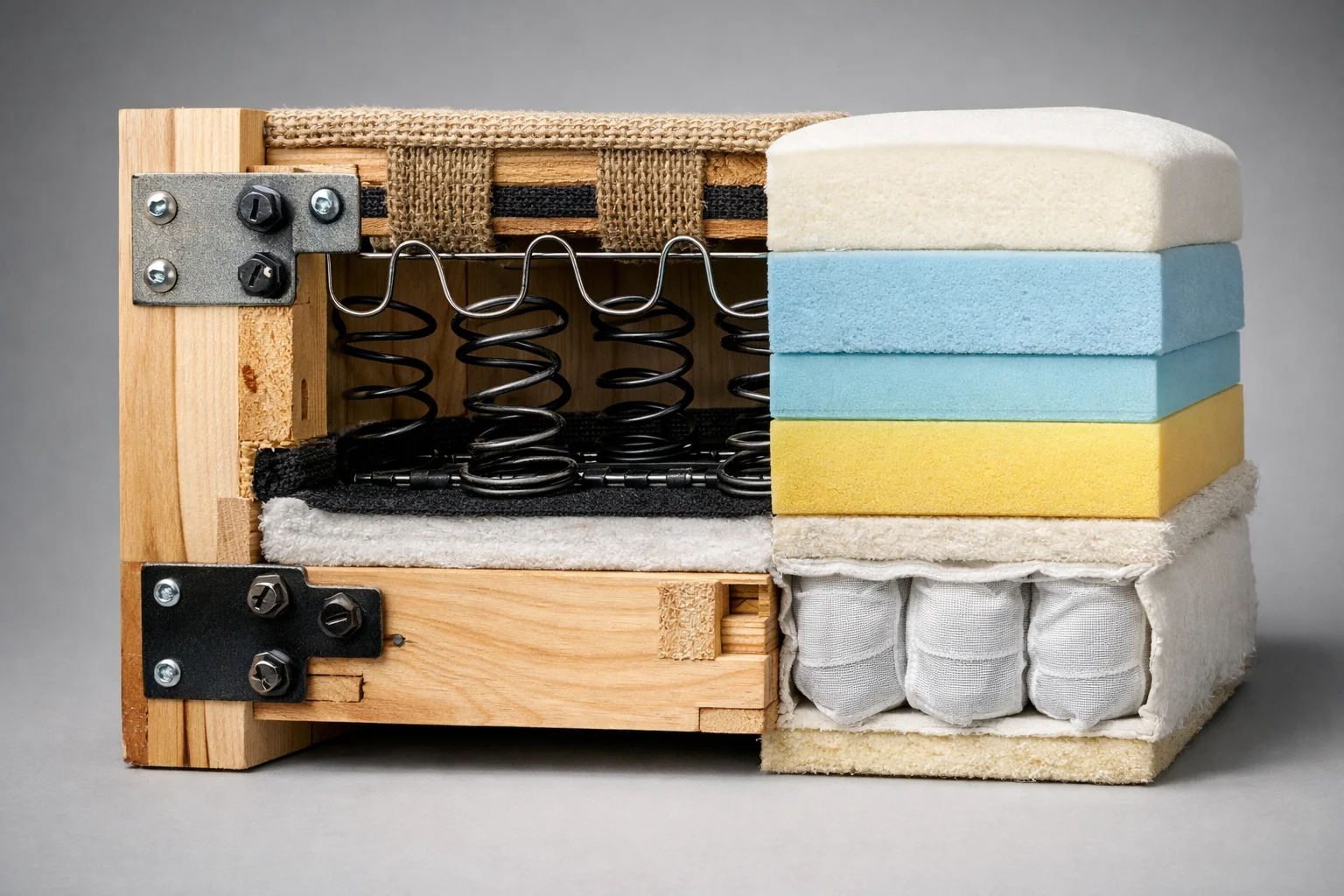
How to Budget for a Sofa
Why two sofas that look identical can behave completely differently. A deep examination of the internal components you cannot see that determine longevity.
Analyze Details →