Price vs Quality: Understanding the Law of Diminishing Returns
Introduction
Most people assume that spending double the money produces double the quality. If a $1,000 sofa lasts five years, a $2,000 sofa should last ten years, and a $10,000 sofa should last fifty. This logic roughly holds for cars. It absolutely does not apply to sofas.
What I’ve learned the hard way is that sofa price is a messy mix of things that do not automatically make it last longer, like fabric upgrades, design trends, brand markup, shipping, and the showroom experience itself. You can pay a lot for a look, a name, or a “custom” order and still get the same weak frame, cheap suspension, and short life cushions that show up in far cheaper couches.
The reason the price to durability relationship breaks is that most of the parts that actually control lifespan are hidden. The stuff you can see and touch in a showroom, like the fabric and the silhouette, can distract you from the bones of the sofa. I now treat upholstery like buying a used car with the hood closed, you have to know what questions force the salesperson to open it up, or at least prove what’s underneath.
This guide is written for the way people really shop. You probably have a budget, a space constraint, and you want something that feels comfortable right now. I’m going to help you avoid the common traps that make a sofa feel great on day one and disappointing by year three, and I’ll focus on checks you can do in a showroom without special tools or technical training.
The big mindset shift I want you to have is this: you are not shopping for a price point, you are shopping for a build. Two sofas with the same price tag can age completely differently. If you learn how to spot a few construction tells, you can often find a sofa that lasts longer without automatically spending more, and you can also avoid overpaying for a pretty couch that is quietly built to fail.
The $6,000 Mistake
My sister bought an $8,500 Italian designer sofa. I bought a $2,200 mid-range sofa. We purchased them the same year. Six years later, both sofas looked equally tired. Her sofa aged at exactly the same rate as mine, proving that she paid a $6,000 premium for status, not structure.When I say they looked equally tired, I mean the same sagging seat feel, the same slightly slouchy shape, and the same “we’ve had this a while” look that no amount of fluffing fixes. What surprised me was not that an expensive sofa can wear out, it was how often the expensive one is built around the same weak links as the mid-range one, just dressed up better.
If you take one thing from this section, let it be this: price is not proof. In a showroom, you have to force the conversation away from brand, fabric stories, and “European craftsmanship” vibes, and toward what holds you up every day.
The first trap is assuming the price difference is going into the frame. Sometimes it is, but a lot of the time you are paying for design licensing, import costs, premium fabric, and a higher margin. None of those things keep a seat from collapsing if the cushions are underfilled or the support under them is flimsy.
So when you’re looking at a pricier sofa, I want you to act like a skeptic and ask a question that makes the salesperson get specific. “What is the frame made of, and is it kiln dried hardwood or something else?” is a good start, because it usually separates a real build detail from a vague sales script. If they cannot answer beyond “hardwood and plywood,” I treat that as a yellow flag, because the best made sofas usually have clear, repeatable specs and they are not shy about them.
Then I go straight to the part that betrayed both my sofa and my sister’s. “What is inside the seat cushions, and is it replaceable?” sounds boring, but it is the entire ballgame for how a sofa feels in year five. If the answer is basically “foam,” you need the follow-up, which is whether it is a higher density foam, whether it is wrapped in down or fiber for softness, and whether the cushions are built as a zippered insert you can replace later, or a sealed pillow that becomes a whole new sofa when it wears out.
In the showroom, I do a simple sit test that tells me more than fifteen minutes of chatting. I sit in my normal spot, then I stand up and look at the cushion. If it stays crushed like a footprint in wet sand, that is usually a sign that the foam is going to take a set faster than you want, especially if you are buying a deep, loungey seat that encourages the same spot to get hammered every day.
I also press down with my hand near the front rail of the seat, right where your thighs would be. If I can easily feel something hard, or I feel the support dipping sharply near the edge, I know the suspension under that area is doing too little work. Expensive sofas can still fail this, because a pretty platform and thick cushion can hide a cheap webbing job underneath.
Another thing I watch for is whether the sofa keeps its shape when you move around. I put one hand on the arm and one on the back and give a firm wiggle. If the whole piece racks or twists, even slightly, I assume the joints are not doing enough, or the frame is relying on staples and thin panels. A high price tag does not magically turn a loose frame into a tight one.
The last part of the $6,000 mistake is psychological, and I’ve fallen for it too. When a sofa is expensive, you want to believe you are done shopping, so you stop asking the annoying questions. I now remind myself that the only fair comparison is construction to construction, not price to price, and that a designer name is not a warranty.
If you love a higher end look, I’m not telling you to avoid it. I’m telling you to make the brand earn it by proving the build, and to walk away if all you get is a story. The easiest way to not get ripped off is to decide in advance that you will not pay a premium unless you can clearly identify what, physically, is better about the frame, the suspension, and the seat cushions, because those are the parts you will feel long after the “new sofa” thrill fades.
The Durability Curve
The part that finally made sofa shopping make sense to me is realizing that price and longevity do not rise together in a straight line. It is a steep curve that flattens fast, meaning the first jump in price can buy you real durability, but after a certain point you are often paying more for comfort tweaks, style, and branding than for extra years.
In practical terms, I now assume there is a “minimum viable build” threshold, and I shop like my job is to find it. Once you clear that threshold with a solid frame, decent suspension, and cushions that can be maintained or replaced, the extra money tends to buy smaller improvements, not a dramatically longer life.
This is why a cheap sofa can be a total loss, while a mid-range one can be a good long-term value. The cheap one often fails in non-repairable ways, like a frame that loosens, webbing that gives up, or attached cushions that flatten and cannot be swapped. The mid-range one is sometimes built well enough that the first thing to wear out is a replaceable part, which is exactly what you want.
When I’m in a showroom, I try to figure out which side of the curve I’m on by asking one blunt question: “If something sags in five years, what can I replace and what would force me to replace the whole sofa?” If they tell you the seat cores can be ordered later, the covers can come off, and the frame is warrantied in a meaningful way, you are at least having the right conversation.
If they dodge that question and steer you back to fabric grades, stain resistance, or how “plush” it feels, I assume I’m looking at a sofa that is competing on day one comfort, not year seven resilience. That does not automatically make it a bad sofa, but it tells you you should not pay a durability premium for it, because they are not selling durability.
The flattening part of the curve is also why I do not get starry-eyed about small upgrades with big price tags. A nicer fabric can be worth paying for if you have pets or kids, but it does not stop a seat from bottoming out. A fancy silhouette can be worth it if you love it, but it does not keep joints from loosening.
What I try to do instead is allocate my budget like a pessimist. I want to pay for the hidden structure first, then I’ll pay for the visible stuff if there is money left and if I can still verify the bones.
Here is a showroom trick I use to keep myself honest. I pick two sofas that I like, one that feels like a stretch and one that feels reasonable, then I interrogate them the exact same way. If the expensive one cannot clearly beat the reasonable one on frame, suspension, and cushion construction, I treat the price difference as an aesthetic choice, not an investment.
You can also use the curve to avoid a common trap: paying “almost premium” money for something that is still built like entry-level furniture. I see this a lot in trendy stores where everything looks upscale and photographs well, but the specs stay vague and the seat cushions are sealed or oddly light. If a salesperson cannot tell you what is inside the seat or whether you can replace it later, I assume you are paying for marketing and styling, not years of use.
I also think about how a sofa will age in a normal house, not in a staged showroom. If the back cushions are loose and underfilled, you will be refluffing them constantly and they will look tired fast even if the frame is fine. If the arms are tall and slim, they can loosen or get wobbly over time if the internal blocking is weak, and you will feel that every time you lean.
The good news is that you do not need perfection to get onto the good part of the curve. You need the failures to be slow, predictable, and fixable. A cushion you can replace is annoying but manageable. A frame that racks, a seat that drops because the support system gives out, or a sofa that cannot be serviced because everything is stapled shut is the kind of failure that makes you buy another whole couch.
If you keep that in your head while you shop, you stop asking, “Is this expensive enough to be good?” and you start asking, “Is this built in a way that can survive my daily use, and can I refresh it without starting over?” That is how you avoid paying luxury prices for ordinary longevity.
Graph showing the price vs quality curve with a plateau at $3000
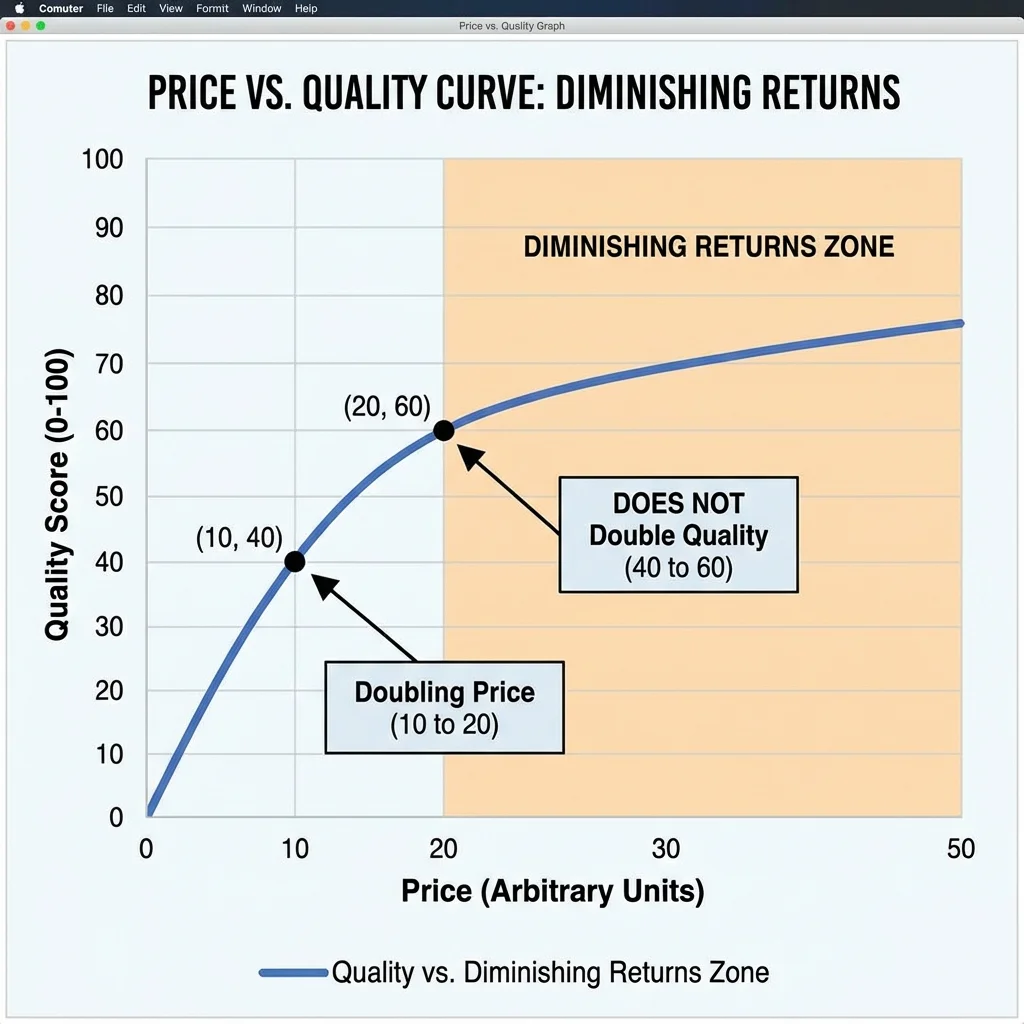
When I picture the durability curve in my head, this is what I’m looking at. Quality rises fast when you escape the cheapest construction, then it starts to level off, and by around the $3,000 range you often hit a plateau where you can still spend more, but you are no longer buying proportional “won’t-sag” years.
That plateau is not a conspiracy, it is just furniture reality. Foam still softens, fibers still compress, and people still sit in the same two spots every night, so once you are already buying a competent frame, decent support under the seat, and cushions that are not doomed from day one, there is only so much extra performance left to purchase.
What this means for you in a showroom is that you should treat $3,000 as a point where you demand proof, not promises. If a sofa is well above that number, I want to see something physically different that affects lifespan, like a clearly described suspension system, a seat cushion you can unzip and replace, and a frame warranty that is not full of exclusions.
When the salesperson says, “This one is worth it because it’s premium,” I ask a question that forces the plateau conversation: “What part of this sofa is actually different from the $2,500 one next to it, in a way that keeps it from sagging?” If the answer is mostly about fabric, silhouette, being made in a certain country, or being “hand-finished,” I assume I’m in the flat part of the curve and I should only pay extra if I truly want the look.
If they can name a concrete upgrade that affects long term structure, I try to verify it with my hands. I do the same wiggle test for frame racking, I press along the front edge of the seat to feel whether the support disappears right where your legs load it, and I sit, stand, and check how the cushion recovers, because those are the behaviors that separate a durable build from a pretty one.
I also use the plateau to set a hard rule for myself about serviceability. Once I’m shopping in that “sweet spot” price zone or above, I will not buy a sofa that makes normal wear a total replacement event, which usually means I avoid sealed, non removable seat cores and anything where the store cannot explain how I would refresh the seating in a few years without buying a whole new piece.
The other trick I use is to treat comfort upgrades as comfort upgrades, not durability upgrades. A plusher top layer, a deeper seat, or a softer back cushion can be exactly what you want, but those choices can also make a sofa look tired sooner, so I make sure I’m paying for them because I like them, not because I think they secretly add lifespan.
If your budget is below the plateau, the graph is still useful, because it tells you where not to compromise. I would rather you buy a simpler looking sofa with a basic, competent build than a showy one with mystery specs, because you can live with plain styling, but you cannot talk yourself into enjoying sag.
If your budget is above the plateau, the graph gives you permission to be picky instead of impressed. At that point, I’d rather you spend extra on something you can actually feel and verify, like a seating feel you love and a layout that fits your life, while staying ruthless about the hidden basics so you do not pay luxury money for ordinary aging.
Phase 1: The “Junk” Zone ($300 - $900)
This is the range where I see the biggest difference per dollar, because you are not buying “nicer,” you are buying your way out of fake furniture. If you are anywhere near the bottom of this range, I want you to assume you are looking at something closer to a stage prop than a long term household object.
Around $300, the risk is not just that it wears out fast, it is that it is built from materials that do not tolerate normal life. When I’ve looked under and behind sofas at this level, I keep finding thin panels, lots of staples, and cushions that feel fine for a few weeks and then start to compress into a permanent dip.
If you are shopping this low, the most actionable move you can make is to decide what you are actually buying it for. If you need something temporary for a short lease, a guest room that rarely gets used, or a space where you truly do not care, then fine, but I would treat it like a consumable and stop expecting it to behave like furniture.
As you move toward $900, you often see a real structural upgrade, usually some plywood in the frame instead of the flimsy stuff, plus slightly better foam in the cushions. That shift matters, because it is the difference between a sofa that starts loosening and sagging almost immediately and one that at least stays basically intact while the cushions slowly give up.
The catch is that “structurally sound” in this zone still tends to mean disposable. In my experience, a lot of sofas that look like a responsible purchase at this level still end up feeling tired in a few years, because the foam softens and the seat support under it stretches, and neither of those problems is easy to undo if the cushions are not designed to be serviced.
So in this price range, I focus less on finding “the best sofa” and more on clearing a minimum bar. I want you to leave the store knowing the sofa is not built out of paper thin panels, and knowing you are not buying the kind of cushion that will turn into a dent you stare at every night.
When you’re standing in front of one of these sofas, I would ask very plain questions and listen for plain answers. “Is the frame plywood, solid wood, or something else?” and “Are the seat cushions removable and zippered, or are they attached and sealed?” are my two fastest filters, because vague answers here usually mean you are looking at the lower end of the range, even if the styling is trying hard.
Then I would do two physical checks that tell you more than the fabric swatch ever will. First, I sit in the same spot for a full minute, then I stand up and see if the cushion rebounds or if it holds a clear impression, because that “footprint” look is what you will be living with later. Second, I press down hard near the front edge of the seat, and if I feel a sharp drop or I can quickly find something hard underneath, I assume the support system is barely there and the cushion is doing all the work.
If you land in the middle of this zone and you are torn between two sofas, I would pick the one that is simpler but feels heavier and more stable when you grab the arm and the back and give it a firm shake. In this range, weight and stiffness are not perfect signals, but they are often the only showroom clues you can get without taking the sofa apart.
My honest verdict is that spending more here is not “paying up,” it is escaping junk. If your budget is tight, I would rather you buy less sofa, like a loveseat instead of a sectional, than buy a big piece with weak bones that you cannot fix when it sags.
Phase 2: The “Sweet Spot” Plateau ($2,000 - $4,000)
This is the range where, if you shop carefully, you can stop paying to “escape junk” and start paying for a sofa that is built like a real household object. Around the mid to high $2,000s, you have usually already reached the practical ceiling of what standard manufacturing can do with the core materials that matter for longevity.
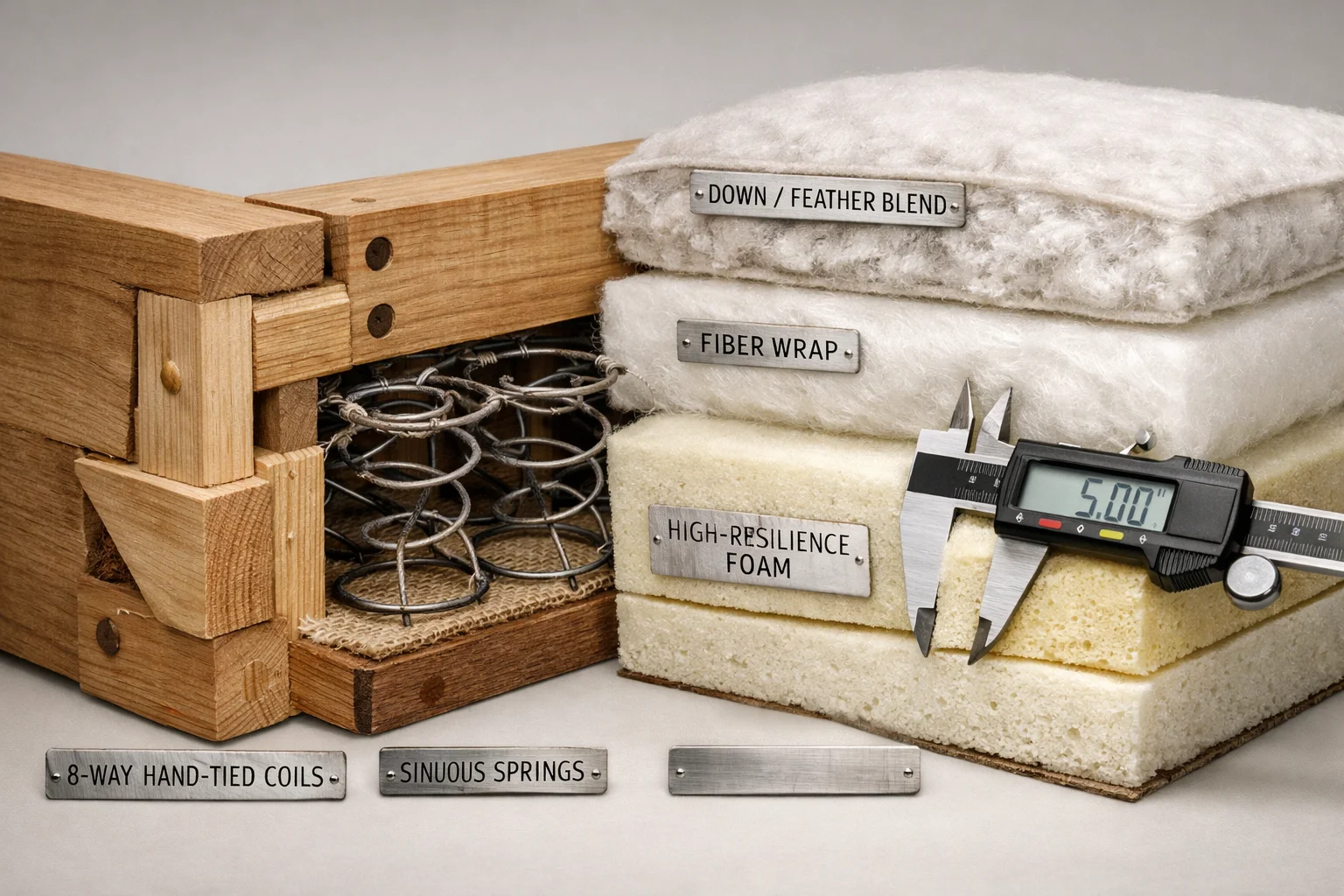
What I mean is that you can buy kiln dried hardwood, like maple or oak, and at that point you are not unlocking a secret extra tier of maple by spending more. You can also get a serious steel support system under the seat, and paying extra does not turn steel into a new element. You can also get high resiliency foam around the 2.5 lb range, and in day to day life that tends to be the point where you are no longer buying “better chemistry,” you are mostly buying different feel.
In this phase, my goal is simple: I want you to find the lowest price where the sofa has those real bones, then I want you to stop assuming the next $1,000 automatically buys extra lifespan. A well built $3,000 sofa can be about as durable as a much more expensive one, and the difference you pay above that is often about appearance, brand, customization, and fabric choices.
In a showroom, I treat this as the “prove it” zone. I ask what the frame is made of and I specifically listen for kiln dried hardwood, not just “hardwood,” because salespeople will say hardwood even when it is a mix of small wood parts and panels. If they can only give you a vague answer like “engineered wood” or “hardwood and plywood,” I do not automatically walk, but I stop thinking of it as a plateau level build and I adjust what I’m willing to pay.
Then I move to the seat support, because this is where a lot of expensive sofas still quietly cut corners. I ask what is under the seat cushions, and I want to hear a clear description of the suspension, not a mood word like “supportive.” If they can’t explain it, I ask if the manufacturer provides a spec sheet, because in this price band a good brand usually has one.
After that, I go straight to the cushions, because cushions are still what you will replace first even on a great frame. I ask what the seat core is, and I listen for high resiliency foam as the base, sometimes with a softer wrap for comfort. I also ask whether the seat cores are zippered and orderable later, because a replaceable seat core is the difference between refreshing a sofa and throwing a sofa away.
Here is how I personally verify all that without tools. I do my normal sit in the spot I would actually use, then I stand and look for fast recovery. I am not expecting perfection, especially on softer “sink in” seating, but I am looking for whether the cushion is springing back like it wants to keep its shape, or whether it stays slumped like it is already negotiating with gravity.
Then I do the front edge test again, but I am pickier here than I was in the cheaper phase. I press down hard near the front rail, right where your thighs load the seat, and I’m checking for that sudden drop that means the cushion is doing all the work because the support under it is not. In this price range, if it feels like the seat is falling away at the edge, I assume the suspension is weaker than the price suggests.
I also do the frame stiffness check, because the plateau build should feel calm and solid when you handle it. I plant my hands on the arm and back and give a firm wiggle, and I am looking for racking, twisting, or little squeaks that suggest the box is flexing. A tiny amount of movement can happen in upholstery, but if the whole shape feels like it is wringing itself, I take that as a sign I’m not looking at the “maximum durability” version of that sofa.
This is also the range where I pay attention to whether the sofa is designed to be maintained like a long term object. If the seat and back cushions are loose, I check whether the covers come off and whether the filling situation is realistic for your life, because some ultra soft back cushions look amazing in a showroom and then need constant reshaping at home. If you know you will not baby it, I would rather you choose a slightly more structured back cushion than buy a cloud look that turns messy fast.
If you find a sofa in this phase that actually clears the frame, suspension, and foam bar, then I think the smartest use of extra budget is not chasing “even better materials.” I would spend it on things you can feel and will live with every day, like getting the exact seat depth that fits your legs, choosing an arm style you will not hate leaning on, and picking a fabric that matches how you actually use your home, because those are the upgrades that change your experience without pretending they are magical durability multipliers.
The last thing I do in this zone is ask one question that forces honesty: if I call you in five years because the seats feel tired, what can I replace and what is the process? If they can tell you that new seat cores can be ordered, and they can explain it like it happens all the time, that is what a plateau purchase should feel like. If they act like the idea is strange, or they imply you would just “reupholster,” I assume the sofa is not as serviceable as the price makes it sound.
When you get this phase right, you are buying the most durability you can realistically buy from a standard made sofa, without paying extra for a story. That is why I call it the sweet spot, because you can still absolutely overpay here, but you can also finally stop shopping in fear.
Phase 3: The “Luxury” Premium ($4,000+)
Once you’re north of $4,000, I want you to assume you are no longer paying mainly for extra years. You might still find a legitimately excellent build up here, but the price jump is usually buying you things that photograph well and feel special, not things that make the sofa immune to sag.
The uncomfortable question I keep in my head is this: if durability basically tops out around the plateau, what are you buying at $8,000? In my experience, you’re often buying a luxury story that sits on top of the same physics, and sometimes the same weak links.
The first thing you’re commonly paying for is brand cachet. A famous design house name can be like a luxury handbag logo, it signals taste, not necessarily sturdier seams, better foam, or a stronger seat deck.
In a showroom, the way I cut through that is to ask you to ignore the name for sixty seconds and force the salesperson into specifics. I ask, “If this sofa had no brand tag on it, what exactly about the frame, suspension, and seat cores makes it worth the premium?” If the answer comes back as heritage, iconic design, imported craftsmanship, or “it’s made in Italy,” I treat that as a choice you make for love, not a choice you make for longevity.
The second thing you’re often paying for is complexity. Sculptural shapes, tight curves, and very tailored upholstery simply take more labor, and that labor costs money.
What I don’t want you to confuse is labor with strength. Curves are not automatically stronger than a basic boxy frame, and some of the most dramatic shapes actually leave less room for robust internal bracing and thick, forgiving cushions.
So when you’re looking at a sofa with a dramatic silhouette, I would slow down and do the physical checks even more aggressively than you would on a plain sofa. I put my hands on the arms and back and try to twist the piece, because complex shapes can hide leverage points that loosen over time. I also press along the front edge of the seat and around the inside corners of curved sections, because those are places where support can quietly fall off and the cushion ends up carrying the load alone.
The third thing that surprises people is that some expensive materials are genuinely more fragile in real life. Aniline leather, for example, can be beautiful, but it is less forgiving, it shows wear and stains more easily, and it asks more of you day to day than a more protected leather.
If you’re considering aniline, I would make the store prove you understand what you’re signing up for. I ask what kind of finish is on it, what the care routine is, and what they would expect to happen in the first year if you sit on it in dark jeans, eat on it, or have a pet jump up.
The same “less durable than you’d expect” problem shows up with down. Down filled seats and backs can feel amazing in a showroom, but they compress, migrate, and ask to be fluffed and reshaped constantly, and that maintenance burden is part of what you are buying.
If you want that cloud feel, I think it can be a valid choice, but I want you to choose it with your eyes open. In the showroom, I sit, then I stand up and look at what the cushion did, because down can look rumpled immediately. Then I ask whether there is a foam core inside for structure, and whether the insert is zippered and replaceable, because pure down comfort without a service plan is how expensive sofas start looking tired fast.
Here’s how I personally decide whether a luxury sofa is “worth it” for me, without pretending it will last twice as long. I treat the premium as justified only if I can verify that the hidden build is at least plateau level good, and then I decide whether the look, the comfort, and the tailoring are worth the extra money as a lifestyle choice.
To keep yourself from getting ripped off up here, I would keep circling back to one practical question that sales scripts hate. “What will I do, specifically, when the seat feels tired, and what will it cost?” If they can’t explain how you order replacement seat cores, who does the work, and whether the covers are designed to come off without destroying the sofa, I assume you’re buying a beautiful object that becomes a replacement event the moment normal wear shows up.
I also want you to be careful with the idea that “custom” automatically means “better.” Custom often means you can pick the arm, leg, depth, fabric, and fill, but it can also mean you can accidentally customize your way into a sofa that looks incredible and ages poorly. If you choose a very soft seat, a very low profile, and down heavy cushions, you may be selecting comfort today and visual slump tomorrow, and the price tag will not save you from that tradeoff.
When you’re standing in front of a $6,000 to $12,000 sofa, my best advice is to shop like you’re separating two purchases that got bundled into one. First, you’re buying a durable chassis, meaning a frame, suspension, and serviceable seat cores that can survive your life. Second, you’re buying design, materials, and vibe, and those are allowed to be emotional as long as you stop telling yourself they are structural.
If you can do that, luxury becomes a fun choice instead of an expensive misunderstanding. You can pay for the exact silhouette you love, the leather that makes you happy, or the soft seat you daydream about, and you’ll still be protected from the most common disappointment, which is spending luxury money and ending up with very ordinary aging.
The Physics Ceiling
You cannot bribe physics with money. Foam oxidizes. Fabric wears from friction. Glue dries. No amount of spending can purchase a soft cushion that stays soft for 40 years because the chemistry does not exist.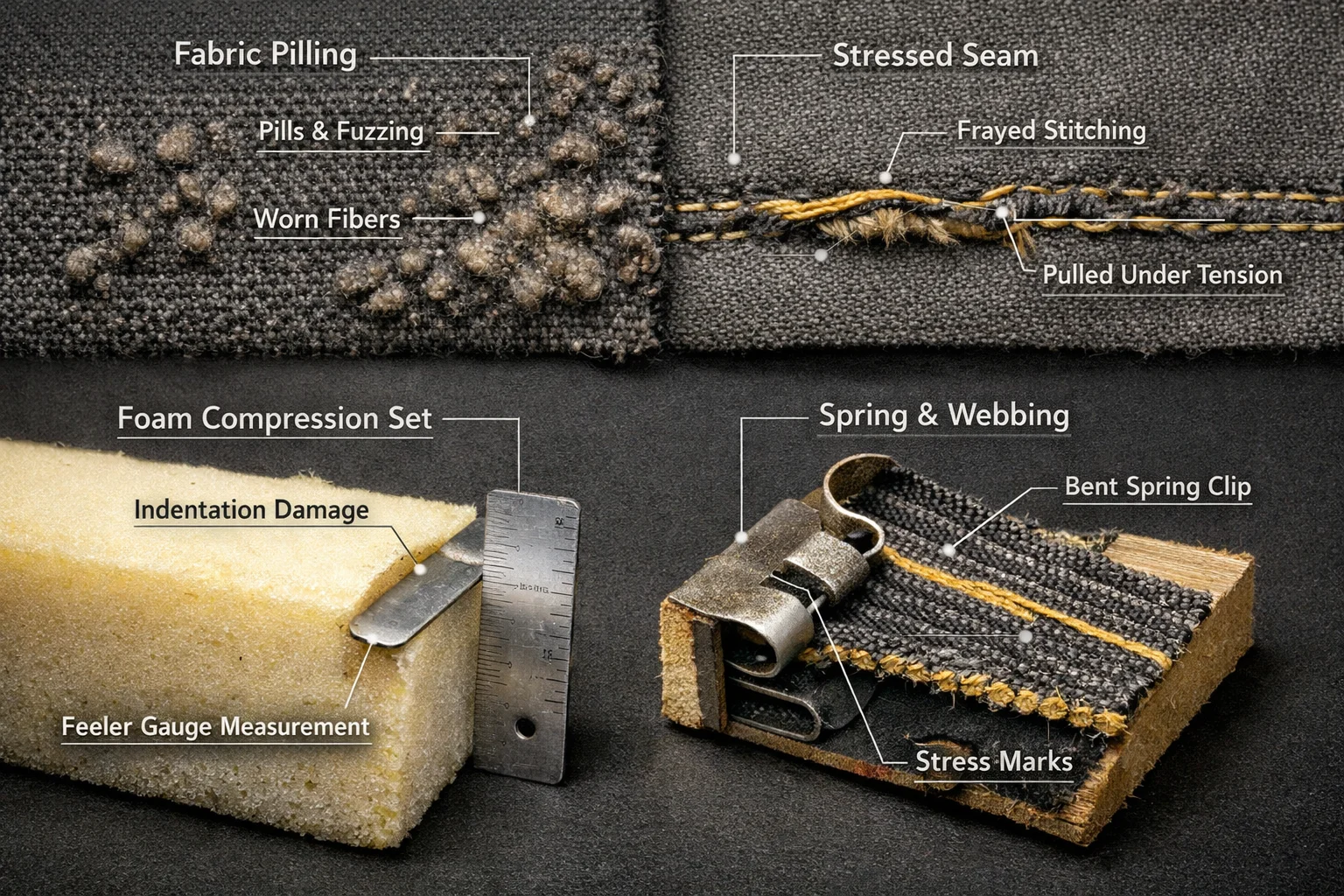
I keep this in my head when a salesperson implies a higher price means you can stop worrying about wear. Even the best foam slowly changes, even strong fabric gets shiny where you rub it, and even good adhesives eventually get more brittle, especially in dry homes and sunny rooms.
The practical takeaway for you is that “lifetime comfort” is not something you can buy, it is something you manage. A sofa lasts when the parts that are guaranteed to wear are either slow-wearing or easy to refresh, and the parts that should not fail, like the frame and seat support, are overbuilt enough that they stay boring.
When I’m evaluating a sofa with this physics ceiling in mind, I stop asking, “How long will this last?” and I start asking, “What is the first thing that will wear out, and will that be a small fix or a full replacement?” If the likely first failure is the seat foam, I can live with that if the seat cores are replaceable and the covers are designed to come off without a fight.
This is also where I get very literal about how the sofa feels right now, because softness today can be tomorrow’s sag. If you want a very soft seat, I try to make you separate softness from support in the showroom by sitting for a few minutes, then shifting your weight forward like you’re getting up, then settling back again. If you feel yourself sinking lower each time, or if you start to notice the frame line under your thighs, you are watching the future happen early.
Fabric has its own ceiling, and the showroom lighting hides it. I rub my hand across the seat edge and the front of the arm, because those are high-friction zones, and I imagine that same rubbing multiplied by years of jeans seams, dog nails, or kids climbing. If the fabric already looks like it will snag, pill, or get shiny, I assume it will, no matter what the price tag says.
Leather has a ceiling too, just a different one. If it is very corrected and plasticky, it may resist stains but crack or peel in a way you cannot unsee, and if it is very natural and unprotected, it may wear beautifully or it may look trashed fast depending on your household. I ask the store to tell me plainly whether it is protected or more natural, and what they expect to happen with denim transfer and body oils, because that is real life, not a rare accident.
Glue and padding ceilings show up in sneaky ways. If the sofa has a lot of crisp, tight tailoring, I press along the edges and corners and listen for any faint crackling or feel for areas that seem overly stiff, because sometimes that is heavy use of adhesive and thin padding doing the shaping. It can look incredible, but it can also mean the comfort layer is thinner than it appears, which makes wear show sooner.
This is the moment where warranties can either help you or distract you. I do not treat a long warranty as proof of long comfort, because warranties usually cover frame breakage, not the slow sag that makes you hate your sofa. I ask what counts as a cushion defect versus “normal softening,” and if they cannot describe that line clearly, I assume the warranty is mostly there to make you feel calm at checkout.
If you accept the physics ceiling, you can shop in a way that is strangely empowering. You can decide that your real goal is a sofa that still looks decent as it ages, and one that you can economically refresh when the predictable stuff gets tired, and that is how you get a long relationship with a sofa instead of a short honeymoon.
So in the showroom, I want you to do one mental move that has saved me money. I want you to picture year five and decide whether you would rather be replacing the seat cores, or replacing the whole sofa, because those are usually the two paths. Then you ask questions and do sit tests that steer you toward the first path, even if you are buying something beautiful and expensive.
The “Eight-Way” Exception
There is one real exception to the plateau that I take seriously, and it is old school suspension work, specifically eight-way hand-tied. This is the one place where I can actually feel and believe that extra labor can translate into extra decades, because the seat support is not just a strip of webbing doing a quick job, it is a grid of coil springs tied together by hand so the whole seat acts like a coordinated system.
When a brand does this the traditional way, a person is literally tying steel coils into a web in multiple directions, and it takes hours. The reason I care is that it tends to resist the two things that make sofas feel awful over time, which are that the seat starts to dip in your favorite spot, and the support starts to feel uneven from left to right.
If you are standing in a showroom and the tag says “eight-way,” I would not just nod and assume it is the good kind. I ask, “Is it eight-way hand-tied with coil springs, or is it a sinuous spring system and the eight-way is describing something else?” because I have seen “hand-tied” language used loosely, and the only version I am willing to pay for is the one with actual coil springs tied by hand.
Then I ask the follow up that tells me whether the store deals with this often or is just repeating a brochure line. I ask, “Can you show me a cut sheet or a build description from the manufacturer that specifically says eight-way hand-tied?” In this price tier, a real brand usually has documentation, and if the salesperson cannot produce anything, I treat the claim as marketing until proven otherwise.
You can also use your body to sanity check what you are being sold. When I sit on a well executed eight-way hand-tied seat, the support feels buoyant and even, and when I shift my weight around, I do not feel the seat deck give up near the front edge. It is not that it feels stiff, it is that it feels consistent, like the sofa is carrying you instead of the cushion trying to do all the work alone.
Here is the part where I keep you from getting seduced by “built like a tank.” Yes, this kind of suspension can last an extremely long time, sometimes a few decades, but that only helps you if you actually want to live with the sofa for that long. I have learned to be brutally honest with myself here, because a trendy shape, a very of-the-moment leg, or a dramatic curved silhouette can look dated long before the internal build gives up, and then you are stuck owning durability you do not even want anymore.
So when you are considering paying for this level of construction, I want you to look at the design and ask yourself one uncomfortable question. If this exact sofa showed up in a friend’s house fifteen years from now, would you still think it looks good, or would you immediately clock it as a time capsule.
If your answer is “timeless,” this is one of the few times I think paying above the plateau can be a rational durability decision, not just a taste decision. If your answer is “I love it right now,” that is still a valid choice, but I would treat it like a luxury enjoyment purchase and stop telling yourself the extra build is saving you money, because you may replace it for style reasons long before the suspension gets to show off.
I also keep one more practical thing in mind with these long-life builds. Even if the suspension can last 25 or more years, you are still going to wear out seat cushions far sooner, so I still ask the boring cushion questions and I still demand serviceability. In other words, even on a sofa with the best under-seat support, I want to know that ordering new seat cores later is normal and straightforward, because that is how you actually get to enjoy the long lifespan you paid for.
If you take a single buying rule from this exception, let it be this. I only pay for eight-way hand-tied when the store can prove it is the real coil-and-twine method, and when the sofa’s style is something you will not be embarrassed to still own when the suspension is quietly outliving everything else in your living room.
Decision Framework: The Budget Strategy
I stopped thinking of sofa shopping as “buy the best one I can afford” and started thinking of it as “buy the strongest chassis I can verify, then plan for the parts that will definitely wear.” That shift alone kept me from overpaying for a fancy label while still ending up with the same sagging seats a few years later.What I’m aiming for is the durability plateau, where the build is already using the materials that actually move the needle, like a kiln dried wood frame and a seat core that is not doomed to collapse early. In real shopping terms, I often see that plateau land in the mid range where the sofa feels boringly solid, the manufacturer can explain what is inside it without dancing around it, and the seat cushions are built in a way that can be renewed instead of turning the whole sofa into trash.
Once you hit that plateau, I want you to stop pouring money into the purchase price as if you can buy your way out of future wear. Instead, I would rather you buy the plateau sofa and deliberately hold back some money as a maintenance fund, because the most common “failure” is not a catastrophic frame snap, it is the slow softening and flattening of seat foam and the gradual loss of that supportive, new sofa feel.
In a showroom, this changes how you talk about the price. If you are comparing a $3,000 sofa to an $8,000 sofa, I want you to ask yourself whether the extra $5,000 is buying anything you can later refresh. If both sofas will need new seat foam someday, the smarter play is usually to make sure the $3,000 one is serviceable, then keep cash available so you can actually do the refresh when the time comes.
This is the part most people miss, including me for years. If you spend every dollar up front on a luxury sofa and it starts feeling tired, you can end up stuck with an expensive, shabby asset that you cannot emotionally replace and cannot afford to fix properly. If you buy a well built mid-range sofa and plan ahead, you can treat the first cushion replacement like normal ownership instead of a crisis.
So when you’re standing there with a salesperson, I would say the quiet part out loud. I ask, “If I call in ten years and I want this to feel new again, can I buy new foam cores for the seats, and are these cushion covers designed to come off and go back on without a fight?” If they look confused by the question, I take that as a signal that the sofa is being sold as a one-and-done object, even if the price is pretending otherwise.
If they say yes, I push just a bit further and ask what “yes” really means. I want to know if they can order inserts by model name, whether the cushions unzip, and whether I can reasonably do the swap at home, because the whole strategy collapses if the only path is a full reupholstery job that costs so much you never do it.
The main idea I want to leave you with is that you are not choosing between “cheap sofa” and “expensive sofa.” You are choosing between a sofa that becomes disposable when it wears, and a sofa that you can refurbish in stages, especially at the seat. If you build your budget around that reality, you can own a sofa longer, hate it less in year five, and avoid paying luxury prices for ordinary aging.
Explore Technical Reference
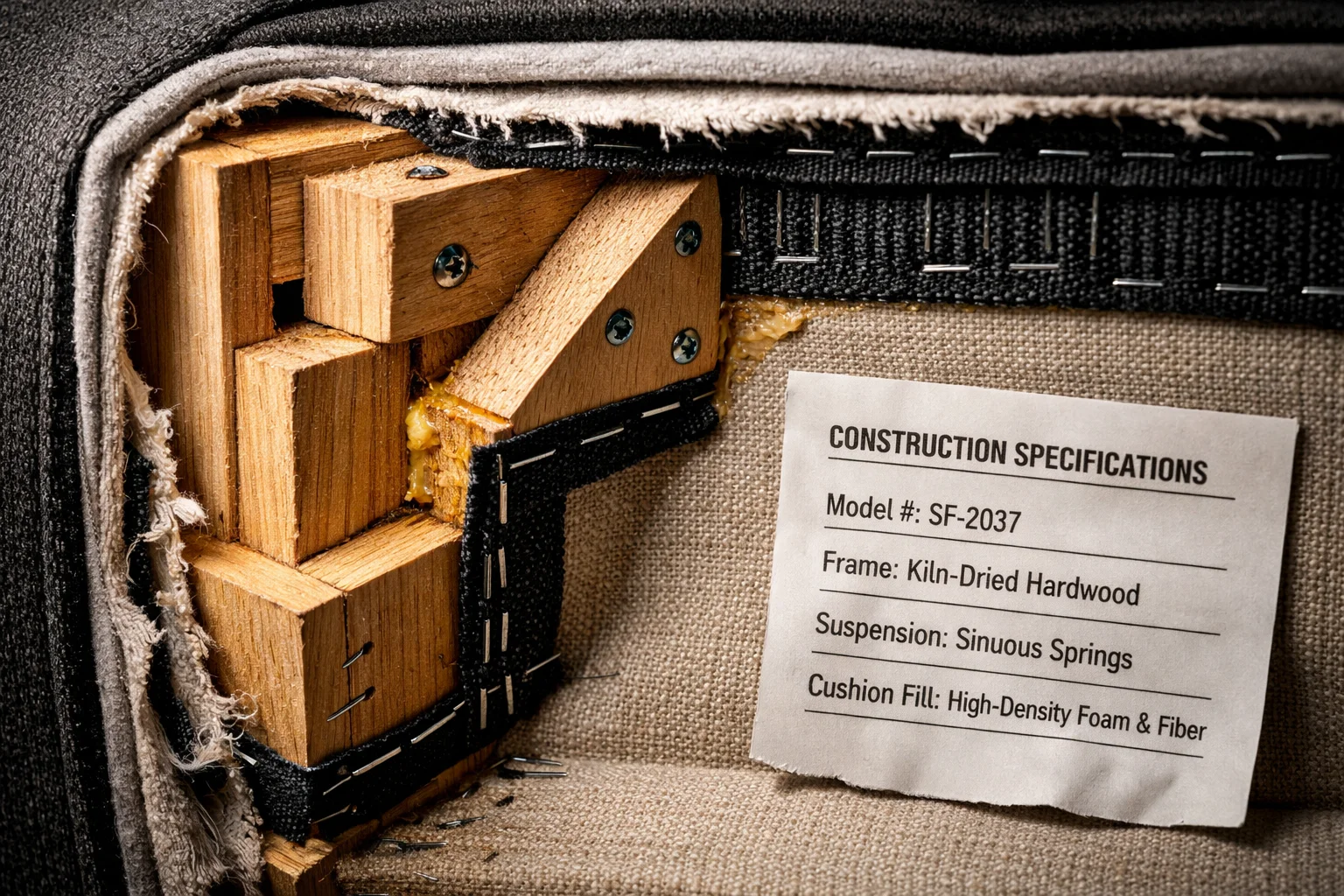
The Showroom Inspection Checklist: What to Verify Before Purchase
The physical and verbal inspection process for evaluating furniture quality in showrooms. How to examine floor models and interrogate specifications.
Analyze Details →
Furniture Delivery Logistics: Understanding the Final Mile
Why free shipping rarely means free delivery. Understanding the difference between curbside, threshold, and white glove service and why the upgrade is worth the cost.
Analyze Details →