How to Buy Durable Furniture: Balancing the Triangle of Failure Points
Introduction
Every time I buy a sofa, it feels like I am taking on a liability instead of gaining something solid. I used to think that feeling came from bad luck or cheap furniture. What I learned the hard way is that it usually comes from not understanding what durability actually means.
Durability is not one thing you can spot with a quick sit test. A sofa is a system, and that system fails in predictable ways. When one part outlasts the others, you still lose, because the weakest part decides when the sofa feels worn out.
I now think of every sofa as a balance between structure, surface, and suspension. Structure is the frame that holds everything together. Surface is the fabric or leather you see and touch. Suspension is what you actually sit on, usually springs, webbing, and foam.
If any one of those three is much weaker than the others, the sofa will disappoint you. It might look fine but feel terrible. It might feel good for a year and then suddenly collapse. This is where most people get ripped off without realizing it.
The "Ferrari Engine in a Pinto" Problem
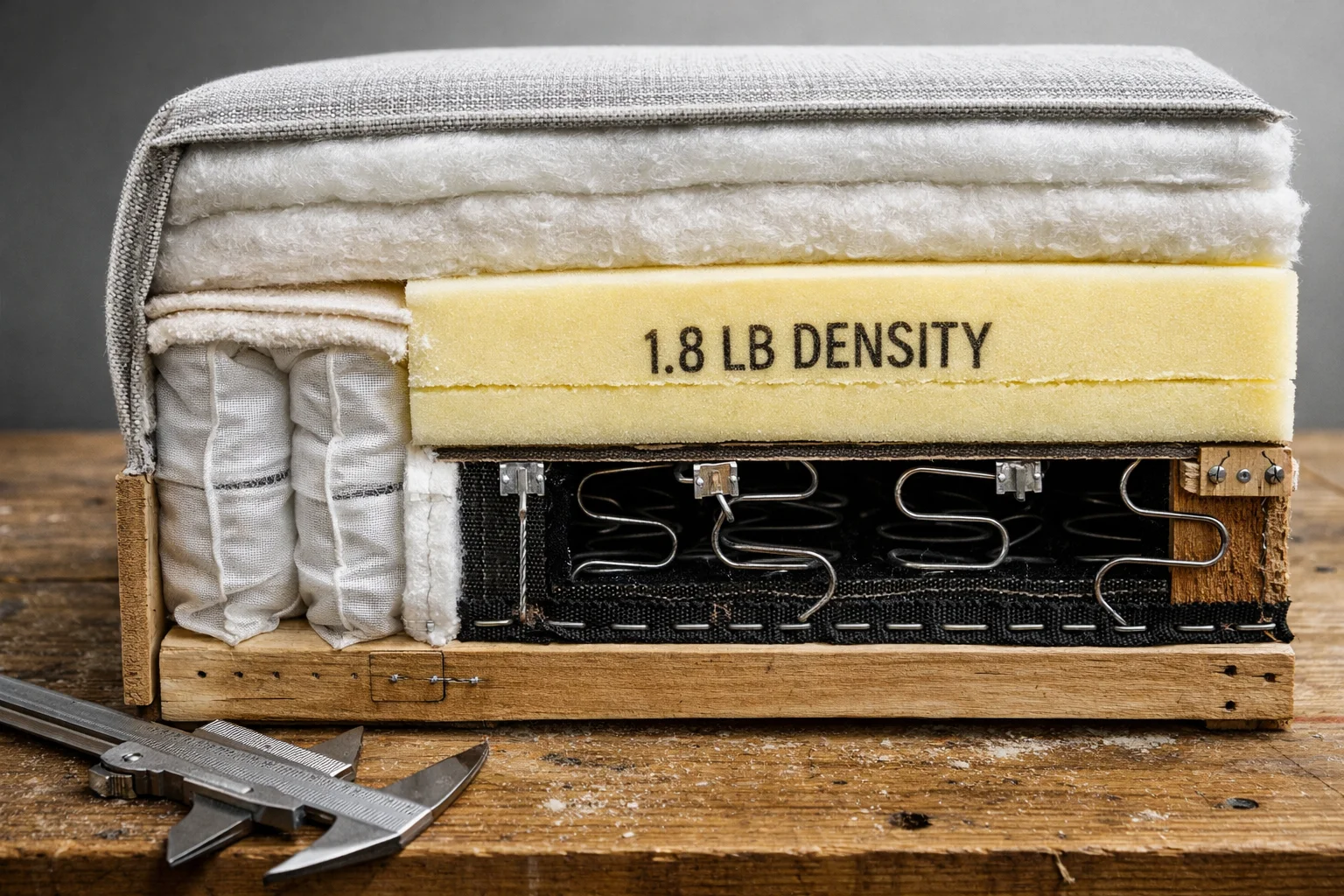
I once spent $3,000 on a sofa with stain-proof [Crypton technology](https://www.crypton.com/). The fabric was engineered to last 20 years, but the 1.5lb density foam inside was engineered to last 4 years. By year five, the fabric still looked pristine, but it was puddling and sagging because the "engine" underneath had collapsed.That experience taught me to stop judging sofas by their best feature. Salespeople love to show you the strongest part because it distracts from the weak one. I fell for it, and you do not have to.
When you are in a showroom, your job is not to decide whether a sofa is comfortable or stylish. Your job is to figure out which part of the triangle is likely to fail first. Comfort can be tuned with cushions and pillows. Failure cannot.
Once you understand how structure, surface, and suspension interact, buying a sofa becomes less emotional and more practical. You stop hoping it will last and start checking whether it actually can.
1. The Structure (The Forever Asset)
The frame is the part of a sofa I expect to outlive everything else. When you see Victorian sofas still standing with original wood exposed, it is not nostalgia, it is proof that a well made frame can survive generations.
When I am in a showroom, I start by ignoring fabric and cushions and asking about the wood. I am listening specifically for kiln dried hardwood, not just hardwood. If the salesperson says maple, oak, or ash but cannot say kiln dried, I assume the frame will move and twist once it lives in my house.
Kiln drying matters because it removes moisture before the sofa is built. Without that step, the wood continues drying after you buy it, which is when joints loosen and creaks start. I have learned that a solid feel on the showroom floor means nothing if the wood was not stabilized first.
Sometimes the spec tag mentions hardwood but feels vague. When that happens, I ask directly how the wood was dried. If the answer is unclear or deflected, I treat that as an answer and move on.
Engineering Rule: Kiln-Dried or Bust
If a specification sheet says hardwood without saying kiln dried, I assume it will warp. The kiln process is what keeps the frame dimensionally stable once it enters your home.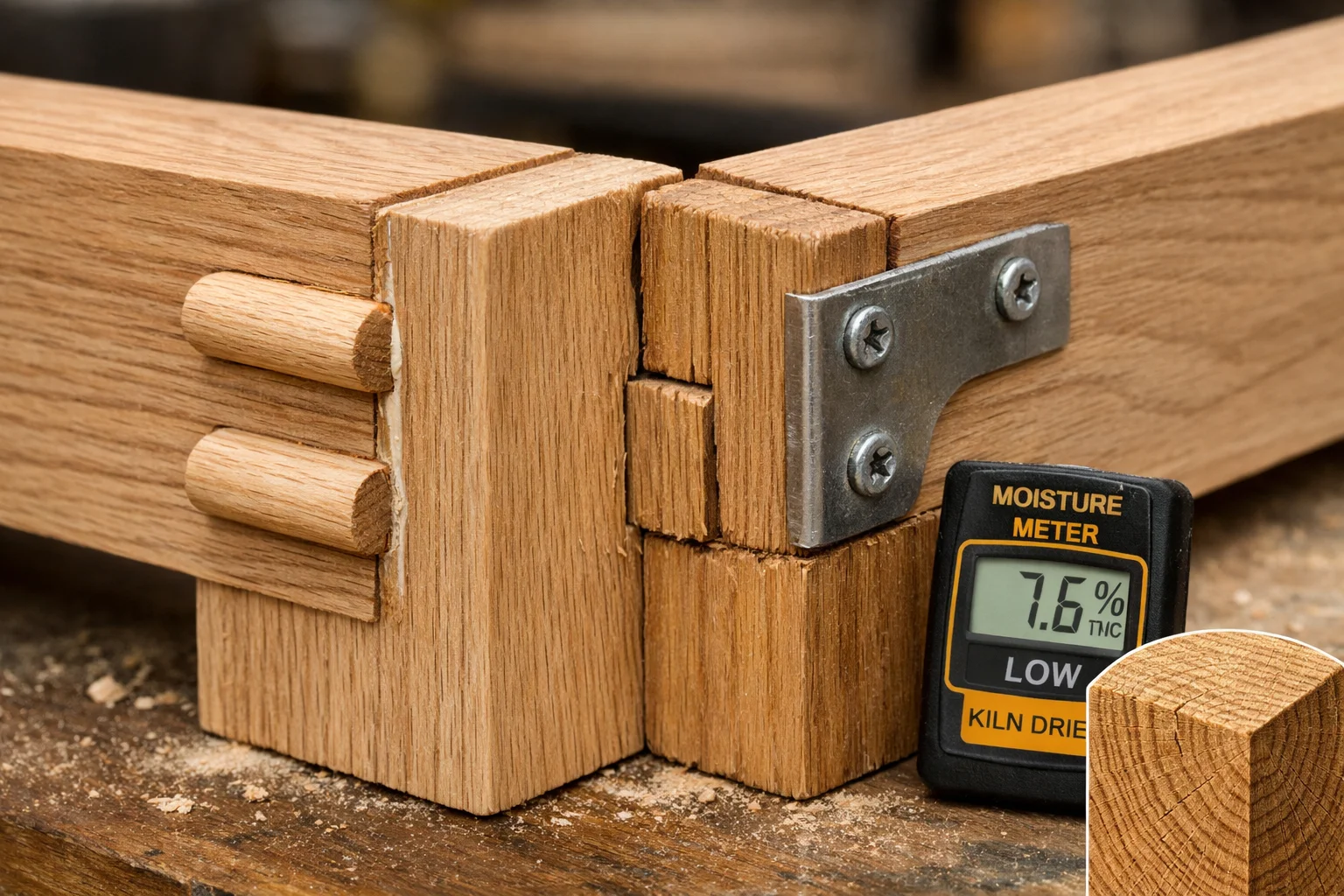
Next, I look for corner blocking, even if I have to crouch down and peer underneath. Proper frames have solid triangular blocks glued and screwed into the corners, not just stapled joints. Those blocks stop the frame from slowly opening up as people sit, shift, and drop into the sofa over years.
You can often feel the difference by lifting one front corner of the sofa slightly. A well blocked frame resists twisting and feels unified. A weak frame flexes and complains, even when it is brand new.
I also pay close attention to the legs. If the legs screw in separately, I know they will eventually loosen, wobble, and stress the frame around them. I look for legs that are a continuous extension of the frame itself, because that load path is much stronger over time.
If the sofa is skirted and you cannot see the legs, I still ask how they are constructed. I have learned that hidden weaknesses are still weaknesses, even when fabric hides them.
A strong frame is not exciting, and salespeople rarely highlight it. That is exactly why I treat it as the forever asset. If the structure is right, everything else can be repaired or replaced. If the structure is wrong, the sofa is already on a countdown.
2. The Suspension (The Energy Absorbers)
If the frame is the bones, the suspension is the muscle. This is the part that actually takes the hit every time you sit, flop, or shift your weight, and it is where most modern sofas quietly fail.
I learned to stop trusting the first sit. Almost any suspension can feel good for ten minutes under showroom lighting. What matters is whether it still pushes back after thousands of sits, because once suspension loses energy, the sofa feels dead no matter how new the fabric looks.
The best suspension I have ever lived with is eight way hand tied springs. That phrase sounds like marketing until you understand what it does for you. Individual steel coils are tied together in multiple directions, so when you sit, the load spreads instead of collapsing one spot.
In a showroom, you usually cannot see this system, but you can ask directly if the springs are hand tied or machine tied. If the salesperson hesitates or switches topics, I assume it is not there. When it is there, they tend to say it confidently because it costs real time and money to build.
When eight way hand tied is not on the table, I look very carefully at sinuous springs. These are the S shaped wires running from front to back, and they can be either decent or terrible depending on thickness. What I want to hear is 8 gauge steel, because thinner wire stretches out and never fully recovers.
You can do a simple check by sitting down hard and then standing up. If the seat pops back immediately and evenly, that is a good sign. If it lags, ripples, or feels like it stayed tired after one sit, that is exactly what it will feel like in three years.
Webbing is the one suspension type I approach with suspicion. Unless it is very high quality elastic webbing, it tends to age even if you barely use the sofa. Rubber dries out, loses tension, and eventually snaps, and that process does not care how careful you are.
If a sofa uses webbing, I ask what kind and how it is attached. If the answer is vague or brushed off as standard, I move on. I have owned webbed seats that looked fine until the day they suddenly felt like a hammock.
One trick I use in the showroom is to press down with my hand between my knees and feel for resistance across the width of the seat. Good suspension pushes back evenly. Weak suspension gives way in the middle first.
I also pay attention to noise. Springs that creak or ping when new are not going to get quieter with age. Silence under load usually means the parts are working together instead of rubbing themselves loose.
Suspension is rarely advertised because it is hidden and expensive to do well. That is exactly why I focus on it. When suspension fails, the sofa does not slowly age, it suddenly feels wrong, and no amount of cushion fluffing fixes it.
If you remember one thing while shopping, remember this. A sofa with great fabric and weak suspension is already on borrowed time. I learned that lesson by sitting lower and lower each year, until one day I realized the sofa was not worn in, it was worn out.
3. The Surface (The Consumable)
Fabric is where most people focus first, and I understand why. It is the part you see, touch, and live with every day. It is also the only part that is guaranteed to wear out, no matter how careful you are.
I think of fabric as a consumable, not an asset. Sunlight, friction, skin oils, pets, and cleaning all attack it directly. That means my goal is not to find fabric that never wears, but fabric that wears slowly and predictably.

When I am in a showroom, I ask what kind of dye process the fabric uses. If the answer is solution dyed acrylic, I pay attention. Fabrics like Sunbrella are made with color all the way through the fiber, which means sunlight cannot bleach the surface away.
The easiest way I explain this to myself is the carrot versus radish idea. A carrot is orange all the way through, so scratches do not reveal a different color. A radish is red on the outside and white inside, so wear shows quickly. Most upholstery fabrics are radishes.
This matters even if you do not have a sunny room. UV light sneaks in more than people realize, and fading rarely happens evenly. One arm or cushion usually goes first, which makes the whole sofa look older than it is.
Durability is also about abrasion, not just fading. Fabric strength is tested using something called the Wyzenbeek method, which measures how many back and forth rubs a fabric survives before it breaks down. I do not memorize standards, but I do remember one number that helps me shop.
For a sofa that gets real daily use, I look for a rating around 50,000 double rubs. That threshold tells me the fabric can handle sliding, shifting, and people sitting in the same spot without thinning out immediately. If the salesperson cannot tell me the abrasion rating, I assume it is low and move on.
You can often feel abrasion resistance with your hands. I rub the fabric between my fingers and notice whether it feels tight and resilient or loose and fuzzy. Fuzziness in a new fabric usually means pilling later, even if it feels soft at first.
I also look closely at weave and texture. Very loose weaves snag easily, especially if you have pets or denim in your household. Extremely smooth fabrics show wear paths and shine where people sit most, which is another kind of aging people do not expect.
Cleaning matters more than stain resistance marketing. I ask what the recommended cleaning method is, and I listen for confidence. If the answer involves special kits, professional-only cleaning, or vague warnings, I know ownership will be stressful.
Some fabrics can tolerate stronger cleaners, even diluted bleach, without losing color. That does not mean you will use bleach often, but it tells you the fabric is not fragile. Fragile fabrics age you as much as they age themselves.
The Flip Factor
If a sofa has cushions velcroed in place or sewn to the frame, you lose half the usable life immediately. Being able to flip and rotate cushions is how you spread wear across the foam and fabric instead of destroying one spot.This is one of the first physical checks I do. I lift the seat cushions and see if they are loose, reversible, and identical. If they are locked in place or shaped so they only fit one way, I know the favorite seat will die early.
I also check whether the back cushions can be flipped or at least rotated. Even backs wear from heads, shoulders, and oils, and uneven fading on the back is surprisingly noticeable over time.
Fabric should match the strength of what is underneath it. There is no point in buying indestructible fabric stretched over weak foam, or plush foam wrapped in fabric that pills in a year. I remind myself that the triangle only holds if all three corners age together.
When I leave a showroom, I want to feel like the fabric choice was boring in the best way. It should not scare me with maintenance rules or impress me with buzzwords. It should quietly do its job while everything else in the sofa does theirs.
If you treat the surface as a consumable and shop for it that way, you stop being disappointed when time passes. You are no longer hoping the fabric will last forever. You are making sure it lasts long enough to keep pace with the frame and suspension underneath it.
The Chassis Strategy
At some point I stopped thinking about sofas as finished objects and started thinking about them the way I think about cars. The frame and suspension are the chassis, and everything soft or visible is a consumable. That mental shift saved me money and frustration because it changed where I put my trust.
When you treat the chassis as the real purchase, the rest of the decisions get clearer. I am no longer impressed by premium fabric or cloud like cushions if the underlying structure is ordinary. I would rather sit on boring foam over a serious frame than luxury foam over something that cannot be fixed.
In a showroom, this means I consciously spend my attention and budget on the parts I cannot easily replace. Kiln dried hardwood and real steel springs are expensive up front, but they are the reason a sofa can still make sense ten or fifteen years later. Foam and fabric will wear no matter what, and that is not a failure, it is normal ownership.
Once I accepted that cushions are temporary, I stopped expecting miracles from them. Foam breaks down slowly and then suddenly, and when it does, replacing it should feel reasonable, not absurd. If the frame underneath is solid, new foam feels like maintenance. If the frame is weak, new foam feels like throwing good money after bad.
This is also where the idea of restoration starts to matter. A strong chassis justifies future repair because it gives you something worth saving. I have refoamed cushions before and felt good about it because the sofa snapped back to life instead of revealing deeper problems.
A cheap frame makes repair irrational. Even if a shop is willing to replace cushions or fabric, the result is still a sofa built on compromised bones. I learned that the hard way when a newly upholstered seat started creaking within weeks because the joints underneath were already tired.
When I am deciding between two sofas that look similar, I ask myself which one I would bother fixing in ten years. If the answer is neither, I keep shopping. That question cuts through a lot of marketing noise.
Durability Decision Framework: The Synchronized Failure Audit
Before I commit to a sofa, I do a final mental check to see whether all the major parts are likely to age at roughly the same pace. I want the frame to be kiln dried hardwood with proper corner blocking, and I am willing to verify that by asking directly or checking documentation from sources like the [Forest Products Laboratory](https://www.fpl.fs.usda.gov/). I want the suspension to be either eight way hand tied springs or heavy gauge sinuous steel that pushes back evenly and silently. I want the foam density to be high enough that it does not collapse years before the fabric, which usually means at least 1.8 pound density and ideally closer to 2.5 for daily use. I also want the fabric to have enough abrasion resistance that it does not disintegrate long before the cushions soften, which for normal residential life means a rating comfortably above 30,000 double rubs.What I am really trying to avoid is synchronized disappointment. When all three parts fail together, the sofa simply feels old and done, which is fair. When one part fails early, everything else gets dragged down with it, and that is where regret lives.
If you walk into a showroom with the chassis strategy in mind, you stop being dazzled by surfaces and start asking quieter, better questions. Salespeople may not love those questions, but your future self will.
Explore Technical Reference
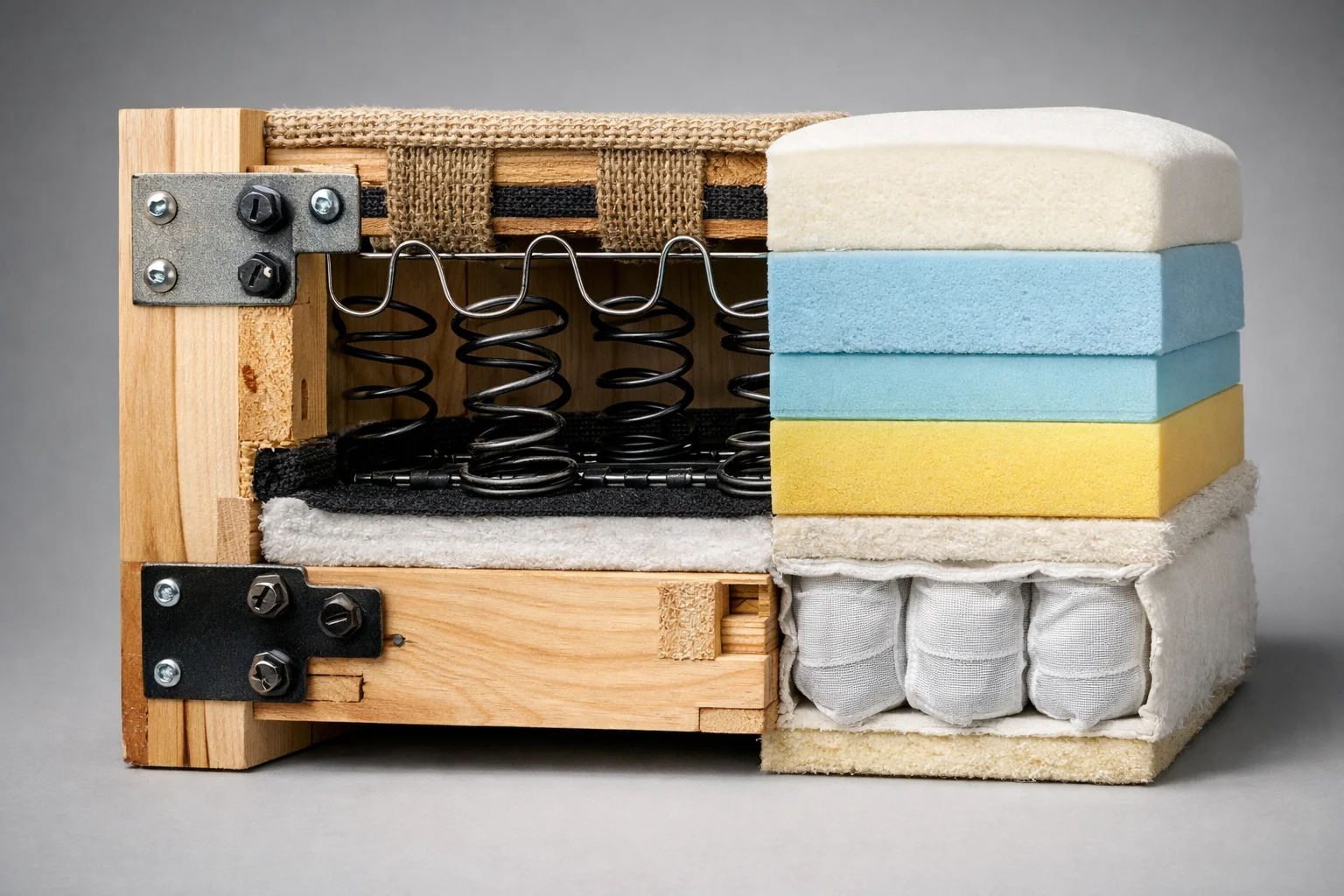
How to Budget for a Sofa
Why two sofas that look identical can behave completely differently. A deep examination of the internal components you cannot see that determine longevity.
Analyze Details →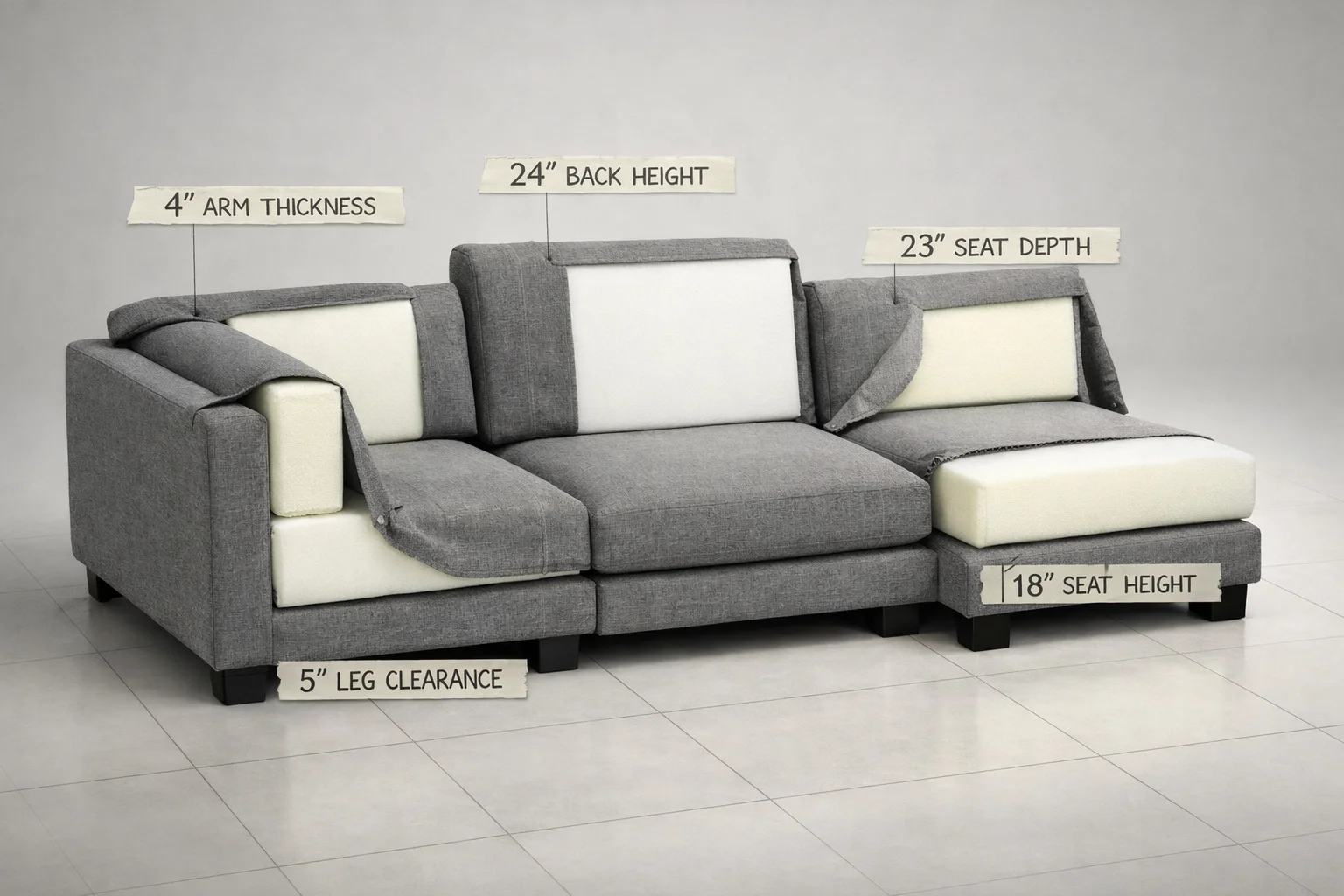
How to Measure for Furniture: Beyond Blue Tape on the Floor
Why sofas look smaller in showrooms. Understanding visual weight, the cardboard mock-up technique, and the depth dimension most buyers overlook.
Analyze Details →