Furniture Delivery Logistics: Understanding the Final Mile
Introduction
I learned the hard way that delivery is not a footnote to the purchase. It is part of the product whether the salesperson treats it that way or not. Before you fall in love with a sofa, you need to understand how it gets from the truck into your living room and what happens if something goes wrong along the way.
When I am in a showroom now, I ask about delivery before I ask about fabric. I want to know whether the price includes full service delivery into the room, basic drop off at the door, or something in between. If the salesperson hesitates or gives vague answers, I slow the whole purchase down until it is clear.
You should also assume that the sofa will be heavier and bulkier than you imagine. Two people can struggle with something that looks modest on the floor. I measure my doorways, hallways, and stair turns, then I ask the store to confirm the packaged dimensions, not just the sofa size listed on the tag.
I also pay attention to who is actually doing the delivery. Some stores use their own crews and some outsource to third parties who are paid by speed, not care. You are allowed to ask if the delivery team can remove packaging, place the sofa exactly where you want it, and take it back out if it does not fit.
If this feels awkward, remember that once the sofa is on your sidewalk, your leverage drops fast. I treat delivery terms like a contract detail, not a courtesy. Getting clear answers upfront has saved me more stress than any stain resistant fabric ever did.
The Free Shipping Illusion
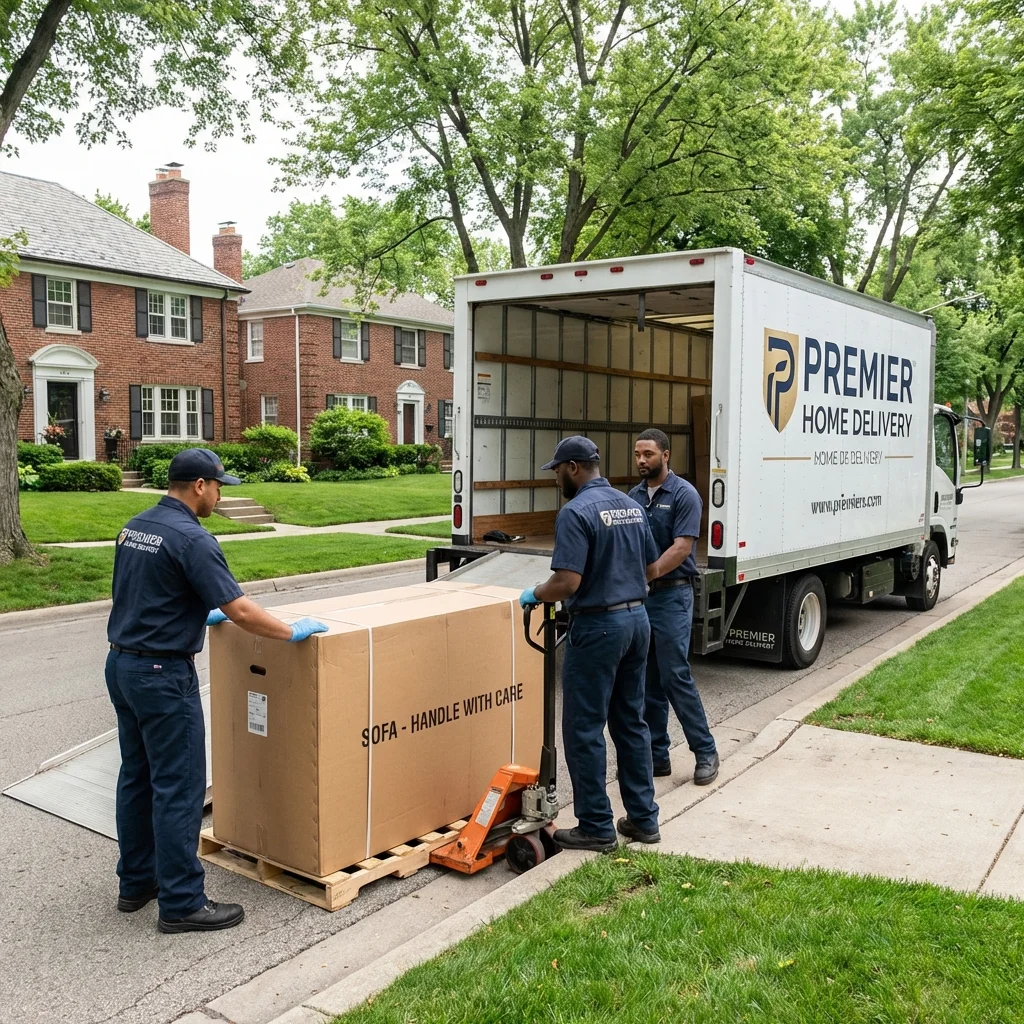
When retailers advertise "Free Shipping," they typically mean curbside delivery. The driver lowers the pallet to the ground at the curb, you sign for it, and the driver leaves. You are now solely responsible for moving a seven foot, 250 pound box from the street to your living room.I used to read “free shipping” as a perk. Now I read it as a warning label. In practice it often means the store paid to get the sofa near your house, not into it.
If you live in an apartment, a townhouse, or anywhere with stairs, curbside delivery is close to useless. I have watched neighbors panic as a massive box sat on the sidewalk with no plan, no tools, and no help beyond a friend who thought it would be easy.
When I see free shipping, I immediately ask what the upgrade cost is for room of choice delivery. I also ask if that includes carrying it up stairs, unboxing it, and removing the packaging. If they cannot give me a clear answer in one sentence, I assume it is not included.
You should also ask what happens if the sofa arrives damaged. With curbside delivery, some retailers consider the job done the moment it hits the pavement. If you sign before opening the box, you may be accepting damage you cannot see yet.
I now ask if I am allowed to inspect the sofa before signing and what exact wording I should write if I see a problem. If they say inspection is not possible at curbside, I treat that as a real risk and factor it into whether the price is actually a good deal.
There is also the question of timing. Free shipping often means a delivery window that spans most of the day. I have taken time off work only to learn the truck was delayed and would come “sometime tomorrow.”
I prefer paying more for scheduled, full service delivery because it shifts responsibility back to the retailer. If the sofa does not fit, gets scratched, or cannot be placed where promised, it stays their problem, not mine.
The illusion is that free shipping saves money. In my experience, it just moves the cost into stress, favors owed, and potential damage. I would rather see the real delivery price upfront than gamble with a 250 pound surprise on my curb.
Delivery Tier Comparison
When I compare delivery options now, I do it with the same seriousness as comparing frame materials. The delivery tier determines who carries the risk, who does the hard labor, and who pays if something goes wrong.
Curbside Delivery
This is the bare minimum service, even when it is advertised as free. The truck stops at the curb, the box comes down, and ownership of every problem transfers to you immediately.
If you choose this option, I want you to picture the worst case, not the best case. Rain, snow, a narrow sidewalk, parked cars, or a box too heavy to tilt safely are all suddenly your responsibility. If you live anywhere other than a single family home with a flat driveway, I consider curbside delivery a gamble.
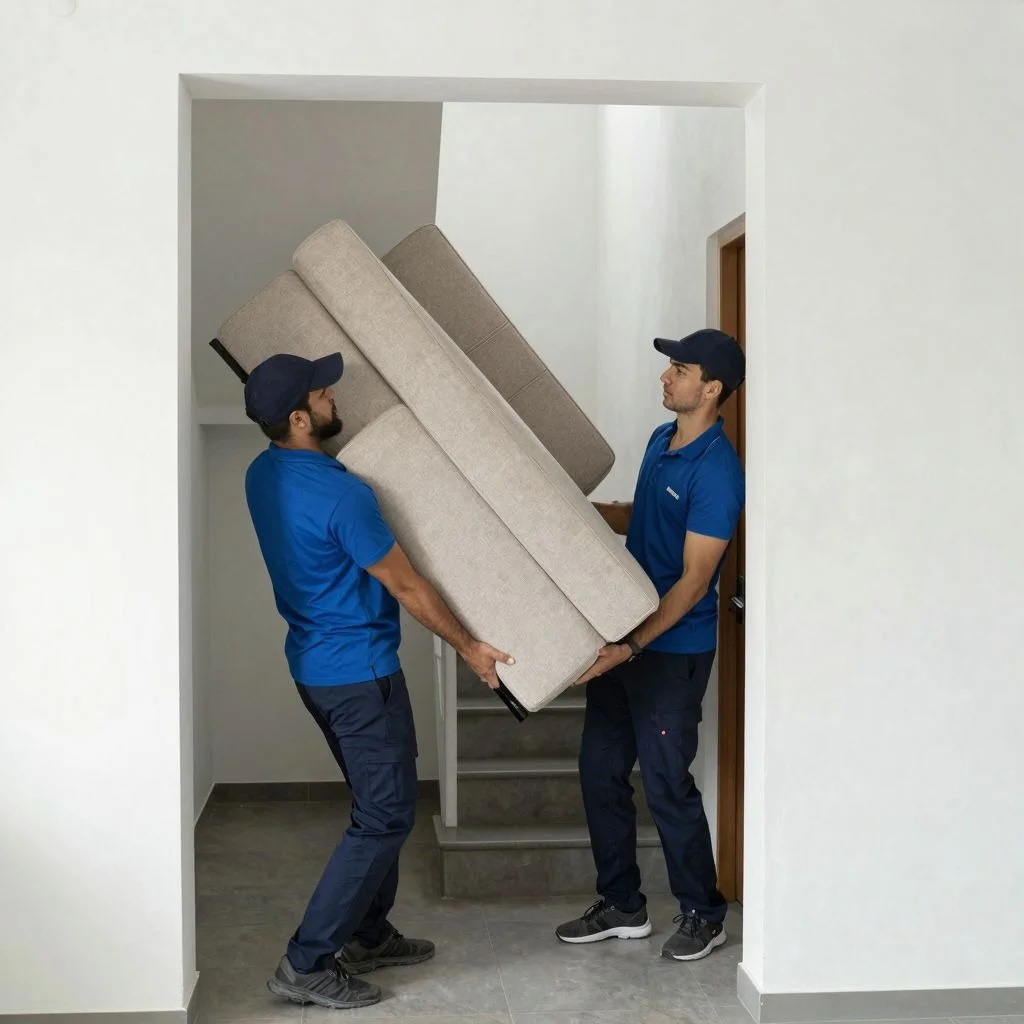
In the showroom, I ask a very blunt question. I ask what happens if the box is damaged before I get it inside. If the answer is unclear or full of exceptions, I assume I will be on my own.
I also ask whether I am allowed to open the box before signing. If the answer is no, I treat curbside delivery as accepting a sealed mystery and I only proceed if the price savings are truly worth that risk to me.
Threshold Delivery
Threshold delivery means the driver brings the sofa just inside the first dry space. That might be your front door, a lobby, or a garage.
This level protects the sofa from weather, but it does not protect your walls, floors, or back. Everything beyond that threshold is on you, including stairs, tight turns, and getting rid of the packaging.
I consider threshold delivery a halfway solution that only works if you already have help lined up. If you are counting on friends or family, I suggest being honest with yourself about their availability and strength before you commit.
In the store, I confirm exactly what the threshold is defined as. I have seen people assume it meant inside their apartment, only to watch the sofa get left in a building lobby.
White Glove Service
This is the only delivery tier where I feel the risk is properly aligned. Two trained movers bring the sofa into the room you choose, unpack it, attach legs or modular connectors, and remove the debris.
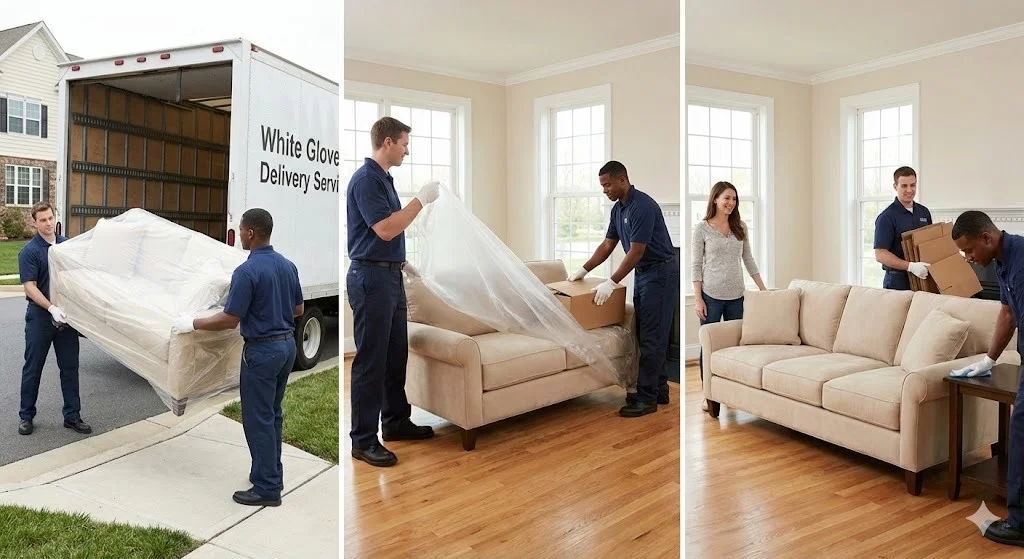
What matters most to me is not the convenience, but the accountability. If the sofa scratches a wall, does not fit, or arrives damaged, it is documented on the spot by people who represent the retailer.
When I hear white glove, I still ask follow up questions. I ask if stairs are included, if tight hallways are covered, and if they will take the sofa back with them if it cannot be placed as promised.
I also ask whether the delivery crew works directly for the store or for a third party. Direct crews usually have more flexibility to solve problems on site instead of walking away.
In my experience, white glove delivery often costs less than repairing a damaged wall or paying movers twice. I now treat it as part of the sofa’s real price, not an optional upgrade.
The key takeaway I want you to remember is simple. The lower the delivery tier, the more risk and labor you personally absorb. Paying more upfront often means paying less in stress, injury, and regret later.
The White Glove Value Proposition
When I look at a sofa priced over two thousand dollars, I stop thinking of white glove delivery as a luxury. I think of it as insurance that I actually understand. Spending an extra hundred and fifty to two hundred and fifty dollars makes sense to me because it moves several real risks off my shoulders and onto the retailer.
The biggest shift is liability. If a delivery crew scratches a wall, chips a door frame, or tears the upholstery while carrying it in, that damage belongs to them, not you. When I tried to move a sofa myself years ago, the repair bill came out of my pocket and the store had no interest in helping.
Packaging is another hidden cost that I underestimated for too long. A single sofa can come wrapped in thick cardboard, foam, plastic, and wooden braces that easily fill a car or clog a small apartment. When white glove teams remove it, I do not have to beg my building for recycling access or make multiple disposal runs.
Assembly is where white glove delivery quietly earns its keep. Sleeper mechanisms, reclining hardware, and modular connectors can look fine at first glance but fail under real use. I like knowing the crew opens, closes, and tests everything before they leave, because it is much harder to argue later that something arrived broken.
What I am really paying for is clarity at the moment of delivery. If the sofa does not fit through the hallway or cannot be placed where promised, that problem is documented immediately. I have watched crews stop, take photos, and call dispatch while I stood there, instead of shrugging and driving away.
I also think about my own body. Lifting a heavy sofa through tight turns is how people get hurt, not how they save money. White glove delivery removes the temptation to push through something unsafe just to avoid an extra fee.
The COI Requirement (Urban Residents)
Managed buildings often require a Certificate of Insurance from any delivery service entering the property. I have learned to ask the retailer for this days before delivery and to confirm that my building manager has it on file. If the truck shows up without it, security can refuse entry and you can still be charged for a failed delivery.If you live in a city building, this paperwork alone can justify white glove service. Retailers who handle this regularly know the process and timing, while do it yourself deliveries can stall out at the front desk with no backup plan.
In the showroom, I frame the cost question differently now. I ask what problems the white glove fee prevents, not what tasks it includes. When the salesperson explains it in terms of responsibility and resolution, I know we are on the same page.
I want you to think of white glove delivery as part of the sofa, not a separate add on. A well built frame and good cushions do not matter much if the piece arrives damaged or stuck in a hallway. Paying a little more to control that moment has been one of the most consistently good decisions I make when buying seating.
If your budget is tight, I would rather see you buy a slightly simpler sofa with proper delivery than stretch for a nicer model and gamble on curbside. In my experience, the value of white glove service shows up exactly when something goes wrong, which is also when you have the least patience to deal with it.
Pre-Departure Inspection Protocol
This is the moment where everything you paid for either becomes real or starts slipping away. I do not let the delivery team rush me, because once they leave, the story changes fast and rarely in your favor.
I learned that inspection before departure is not about being picky. It is about establishing what condition the sofa arrived in while the people responsible are still standing in your living room.
The "No-Signature" Rule for Damage
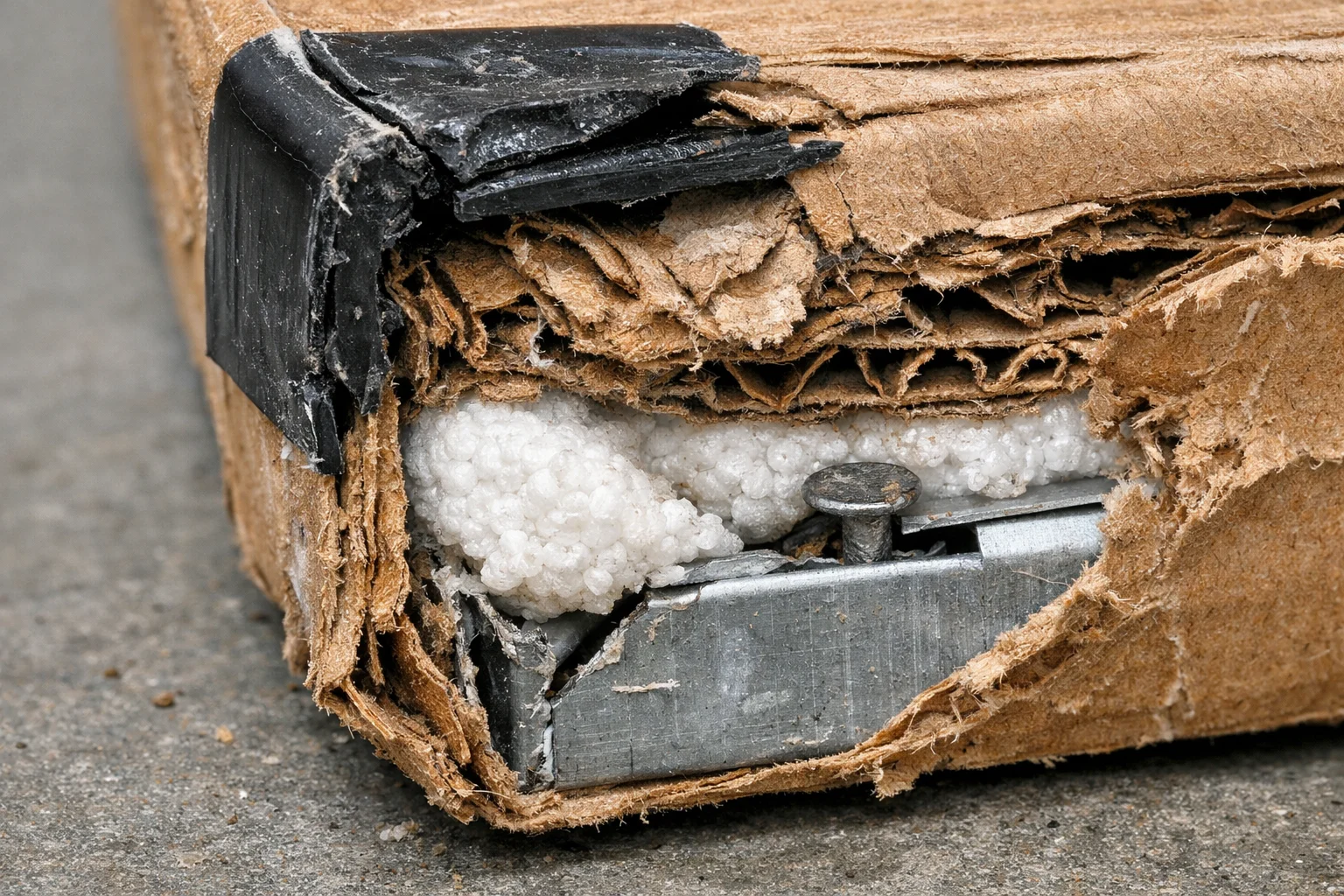
Never sign a delivery receipt until you have performed a complete physical audit. If you observe structural damage or significant fabric tears, you have the right to refuse delivery. I tell the team clearly that I am refusing the item, I ask them to reload it, and I make sure the reason for refusal is written on the paperwork before anyone leaves.I start with the parts that are hardest to argue about later, which are the legs and the exposed frame. I crouch down and look closely for chips, cracks, or uneven finishes on wood or metal. If one leg looks different from the others or feels loose when I press on the arm, I stop the process immediately.
Next I move to the upholstery, and I use my hands, not just my eyes. I slowly run my palms over every reachable surface of the fabric, including the sides and back. Small snags, pulls, or thin spots often do not show up under overhead lighting, but you can feel them right away if something is off. If the sofa is leather, I look for scuffs or cloudy patches that suggest rubbing during transit.
If the sofa has any kind of mechanism, this is non negotiable. I open and close recliners, pull out sleeper sections, and fold everything back in while the crew is still there. I am listening for grinding, resistance, or uneven movement, because those problems rarely fix themselves with use. If something sticks now, it will be worse in six months.
I also pay attention to how the sofa sits on the floor once it is placed where I want it. I gently press on opposite corners to check for rocking or racking. A well built frame should feel stable and planted. If it wobbles, even slightly, that is often a sign of frame stress or a twist that happened during shipping.
Throughout this process, I narrate what I am doing out loud. This is not confrontational, it just makes it clear that inspection is part of the delivery, not an afterthought. Good crews expect this and will usually slow down and give you space.
If I find an issue that I am not sure about, I ask the team to note it on the delivery receipt before I sign anything. Even minor concerns should be written down. That note can be the difference between a smooth warranty claim and a long argument later.
What I want you to remember is that this inspection is your last clean exit. Once you sign, you are agreeing that the sofa arrived in acceptable condition. Taking ten extra minutes now has saved me months of frustration more than once.
I treat this protocol as part of owning the sofa, not as an inconvenience. A retailer that stands behind its product will respect your inspection. If anyone pressures you to sign quickly or dismisses your concerns, that tells you something important about how problems will be handled later.
Logistics Summary: The Final Mile Audit
This is the final stretch where fatigue can undo weeks of smart decision making. I think of it as an audit because this is where assumptions get tested against reality, and small misunderstandings turn into real problems.Before delivery day, I always verify the delivery tier one last time in plain language. I do not accept the word free on its own. I ask whether the sofa is coming to the curb, just inside the door, or into the exact room where it will live. If the answer changes from what I was originally told, I stop and resolve it before the truck is scheduled.
If you live in a multi unit building, I treat insurance paperwork as time sensitive. I request the Certificate of Insurance from the retailer at least forty eight hours ahead and I personally confirm with building management that it is approved and on file. I have seen deliveries turned away because one box was unchecked, and the customer still paid the failed delivery fee.
On the morning of delivery, I clear the path like I am preparing for a large appliance. I remove wall art, roll up rugs, move small tables, and open doors fully. This is not about being polite to the crew, it is about eliminating excuses for scratches and rushed handling in tight spaces.
When the sofa is finally in the room, I slow everything down. I take five focused minutes to touch, test, and look over the piece while the movers are still present. I check the legs, the frame feel, the upholstery surfaces, and any moving parts. If something feels off, I say it immediately and make sure it is written down before I sign.
I have learned that this final mile is where ownership truly transfers. Clear delivery terms, prepared access, and a calm but thorough inspection are what protect you at the exact moment your leverage is highest. Once the door closes behind the truck, everything gets harder, so I treat these last steps as part of buying the sofa, not as an afterthought.
Explore Technical Reference
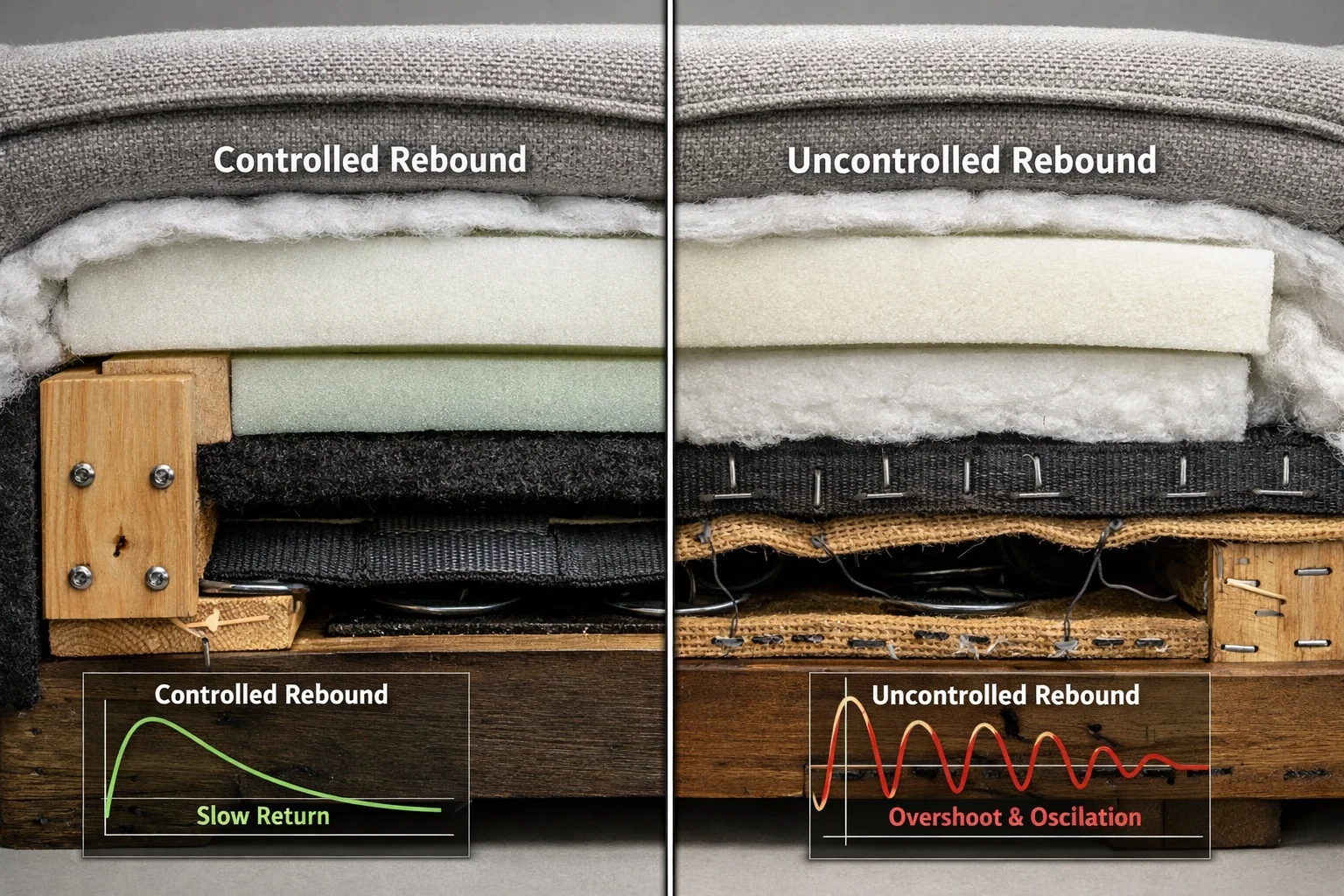
Suspension System Red Flags: Why Support Systems Fail
Squeaks, sags, and bottoming out. How to identify cheap webbing and weak springs before purchasing and why suspension determines comfort longevity.
Analyze Details →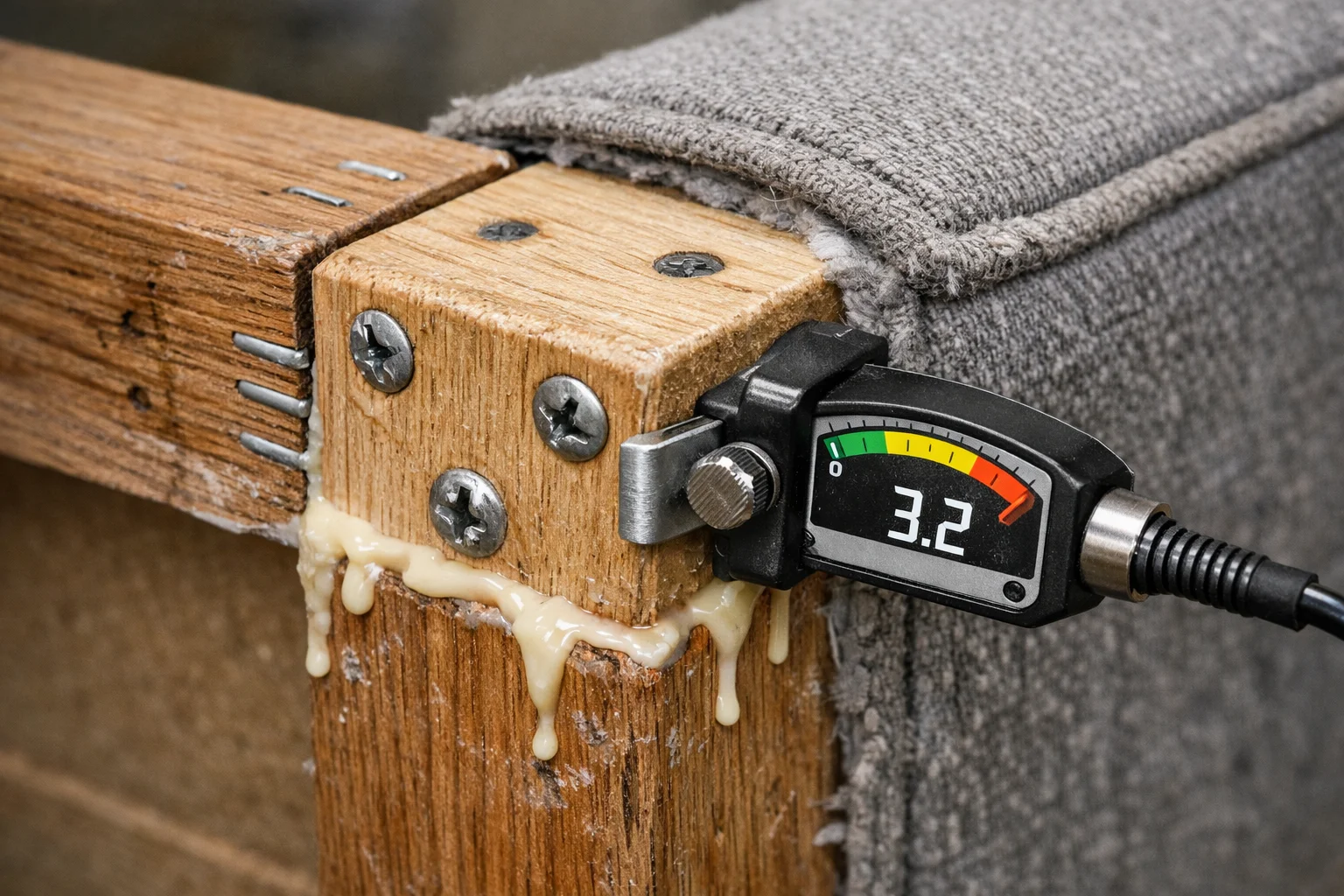
Frame Quality Evaluation: Judging the Skeleton
How to inspect a sofa frame without opening it. The lift test, the squeeze test, and understanding why center legs and joinery matter.
Analyze Details →